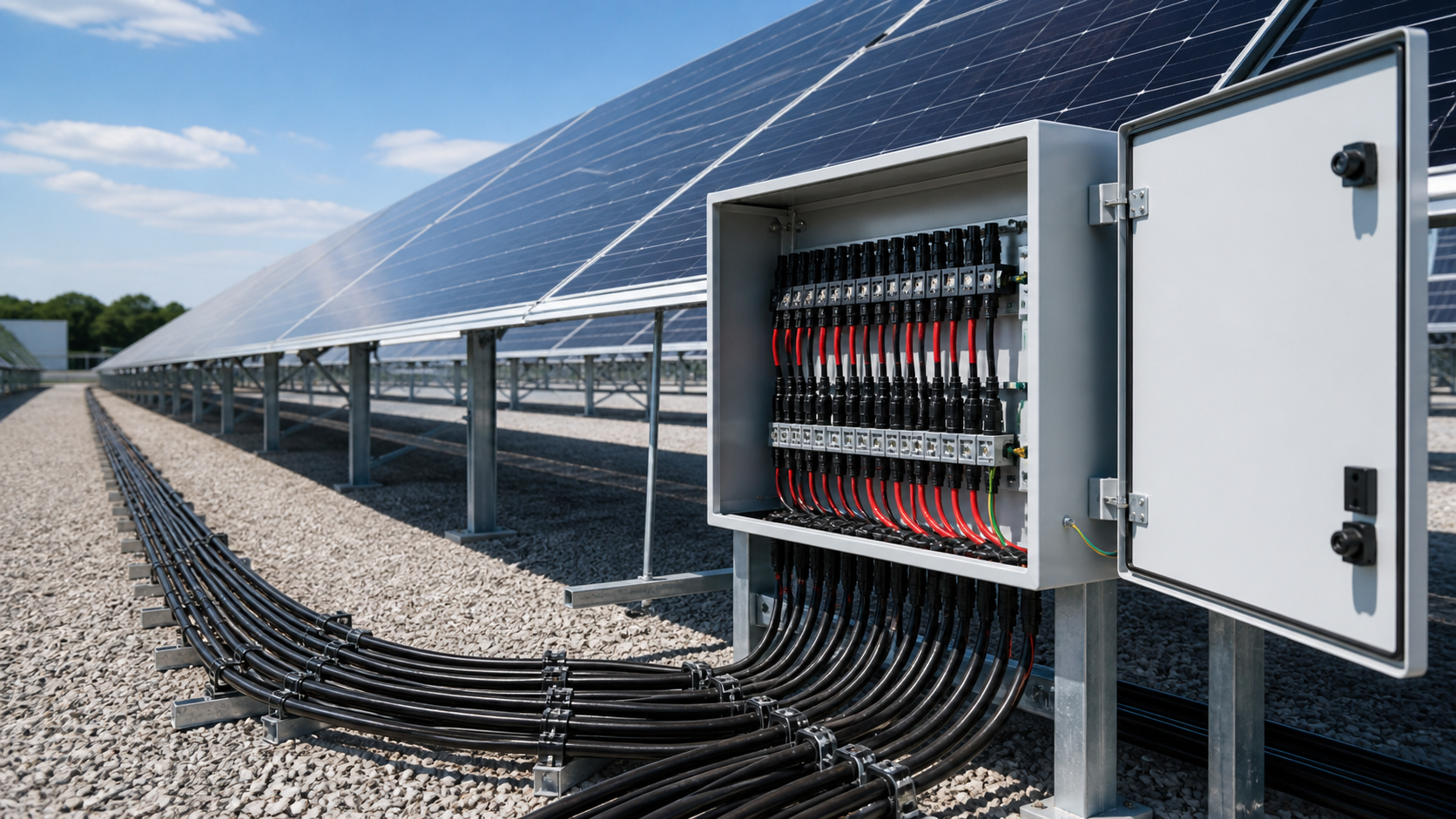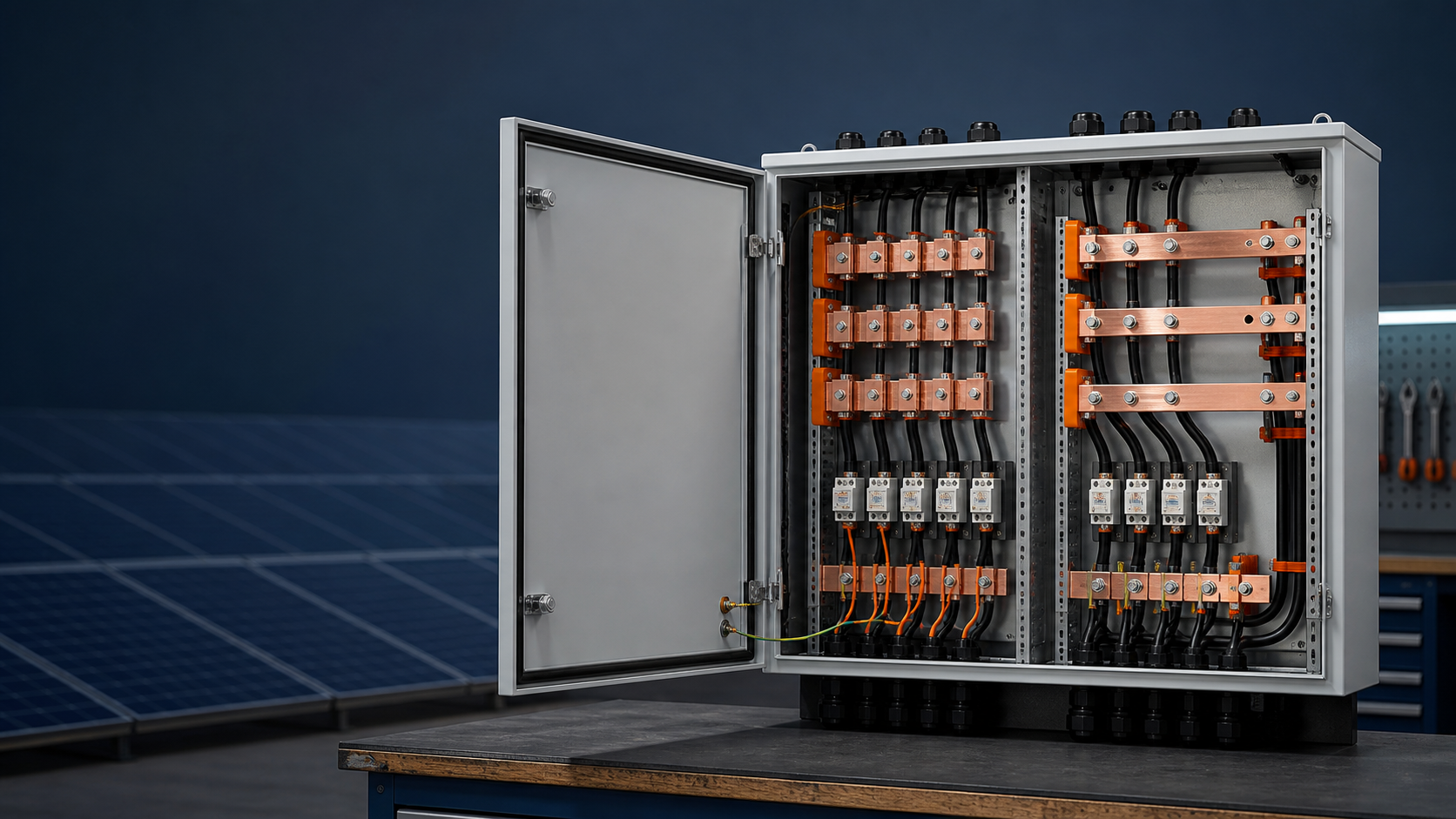
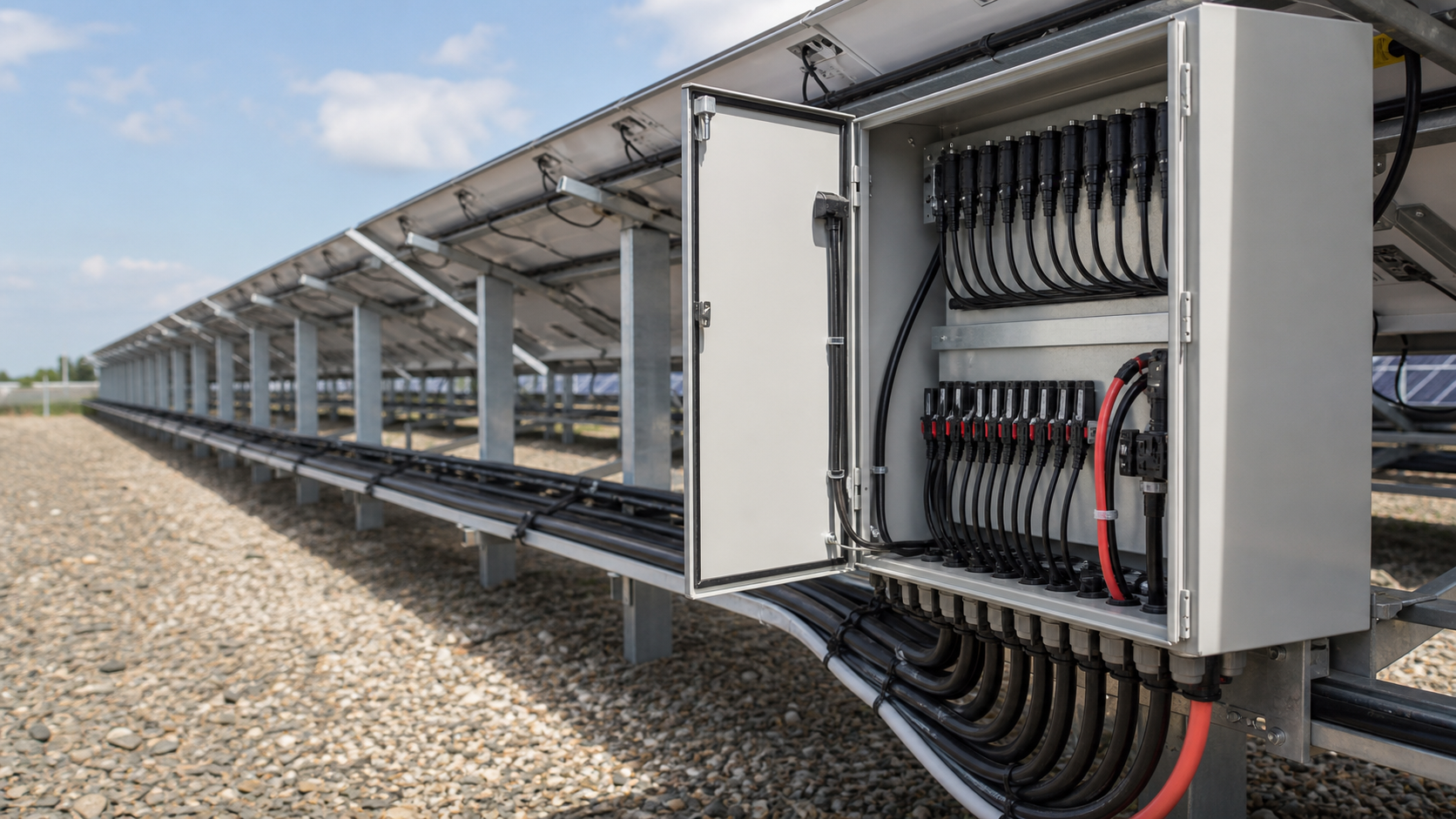
Engineering review scene with an open electrical control cabinet

Solar PV Insights

Technical guidance for PV combiner equipment, AC collection, grid connection and project-ready solar balance-of-system decisions.

Insights categorySolar PV

Project-buyer guidance curated around a specific engineering decision.

Showing 3748 of 103 published guides.

Every guide remains available through the numbered topic pages and its own permanent article URL.

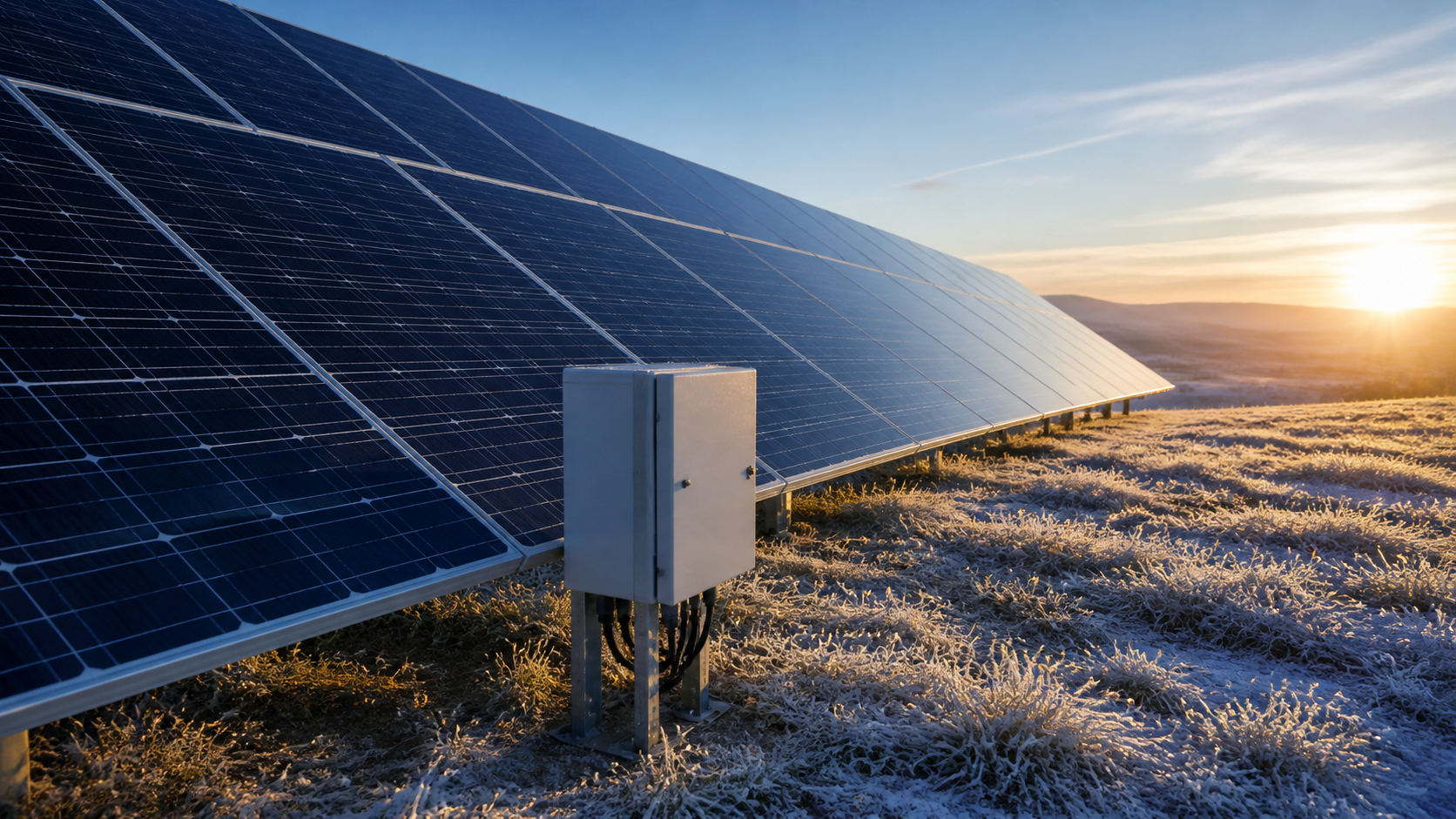
PV modules under crisp winter sunlight with a distant unbranded DC enclosure

Solar PV / Technical guide

How Temperature Changes PV String Voltage and Current

PV module voltage and current both shift with cell temperature. Voltage falls as the module heats and rises as it cools; current rises slightly with heat. The rated values on a datasheet are measured at 25 C cell temperature (STC), not the temperatures a rooftop or field array actually sees.

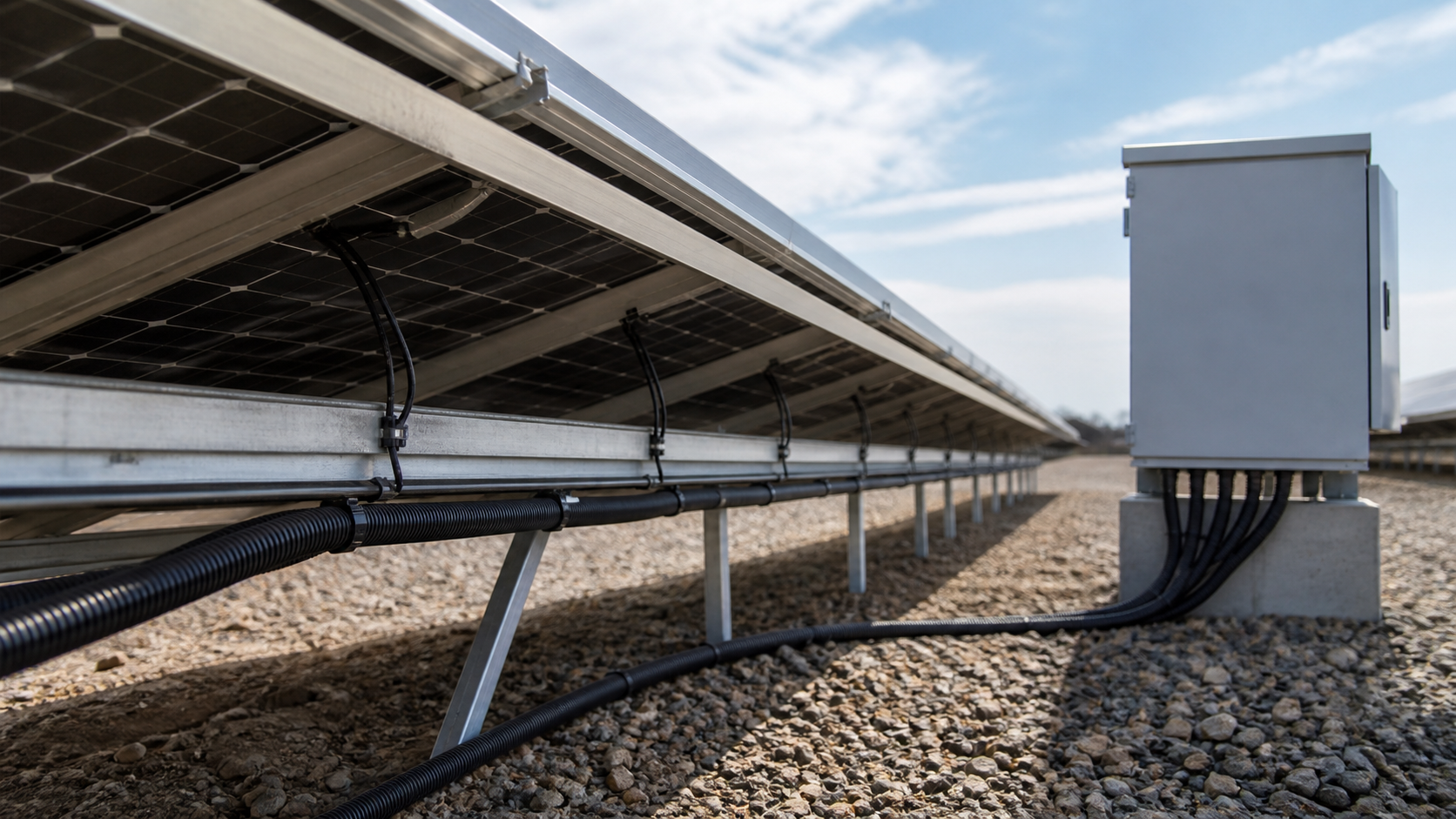
Commercial PV array with clean DC cable routing and unbranded combiner equipment

Solar PV / Technical guide

PV System Losses and Why BOS Quality Matters

A grid-connected PV system output depends on location, panel orientation, shading, temperature, equipment efficiency and system losses. Orientation and tilt decide how much irradiance the array captures through the year.

DC and PV circuit breakers in a clean technical inspection setting

Solar PV / Application guide

Procurement Guide for DC & PV Circuit Breakers

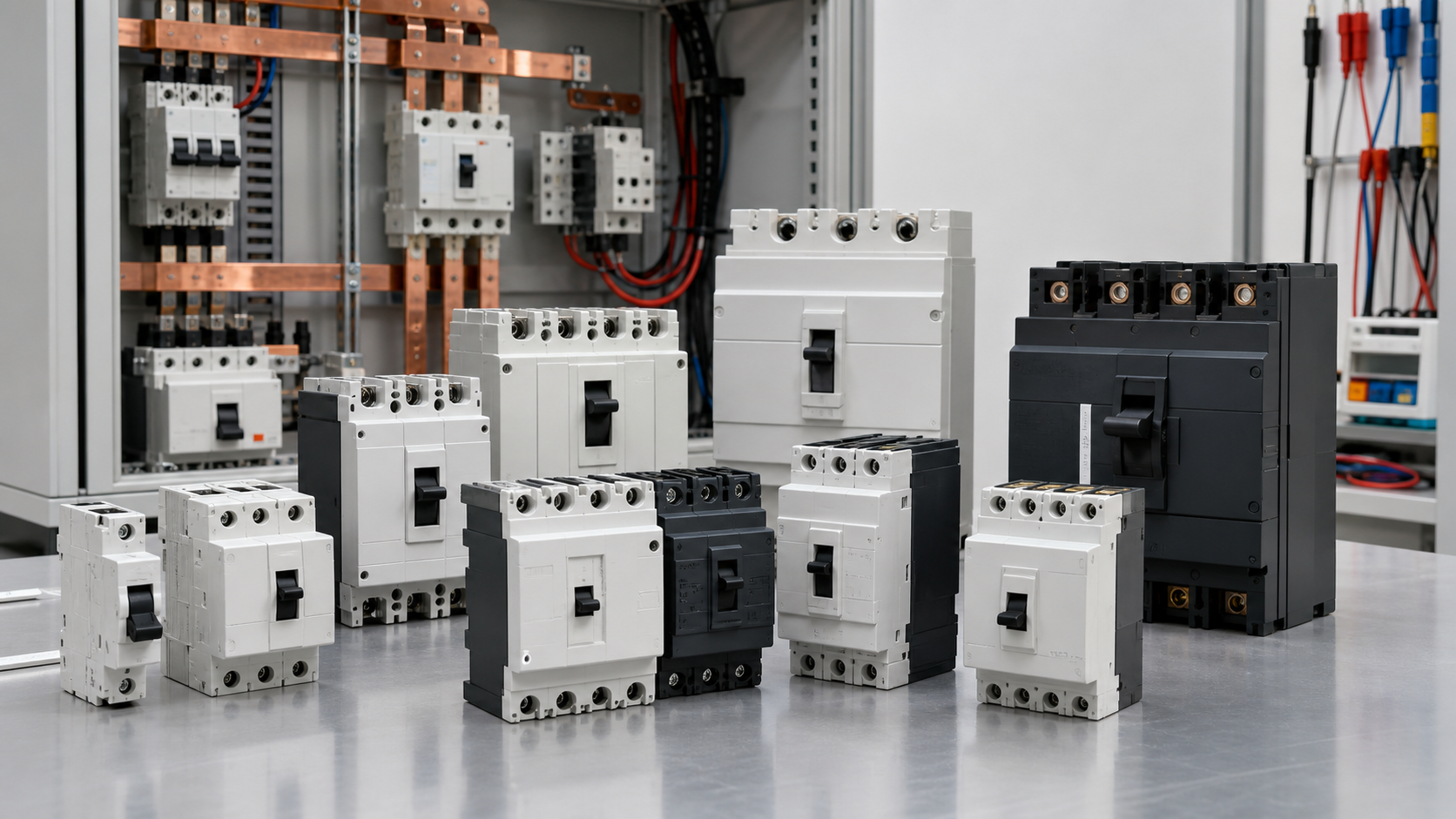
DC breaking is harder than AC breaking: no natural current zero, higher recovery voltage, and polarity-sensitive fault clearing. Specify the DC-rated device, the staged voltage, and the PV-string layout before you buy.

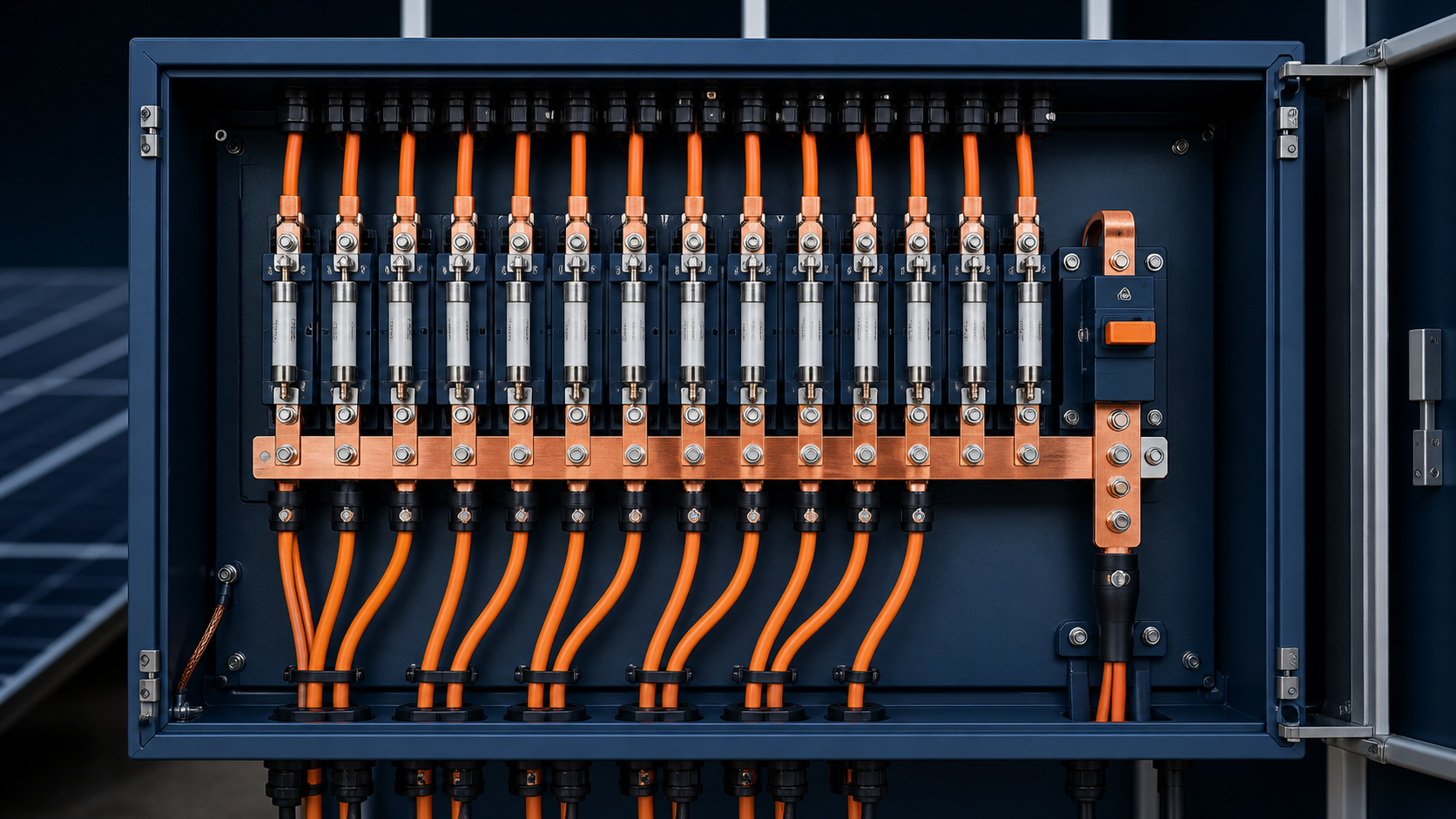
PV combiner engineering context for 1000V vs 1500V Combiner Box Clearance and Insulation

Solar PV

1000V vs 1500V Combiner Box Clearance and Insulation

Utility-scale solar has moved decisively from 1000 V DC to 1500 V DC because the higher voltage class cuts conductor losses and balance-of-system cost across large arrays. That shift lands directly on the combiner box, where every insulated path, air gap and protective device must be rated for the new envelope. Clearance, creepage and insulation coordination are the disciplines that keep a 1500 V box safe under both steady operation and transient stress.

PV combiner engineering context for PV Combiner Box Busbar Sizing Guide for Solar PV Systems

Solar PV

PV Combiner Box Busbar Sizing Guide for Solar PV Systems

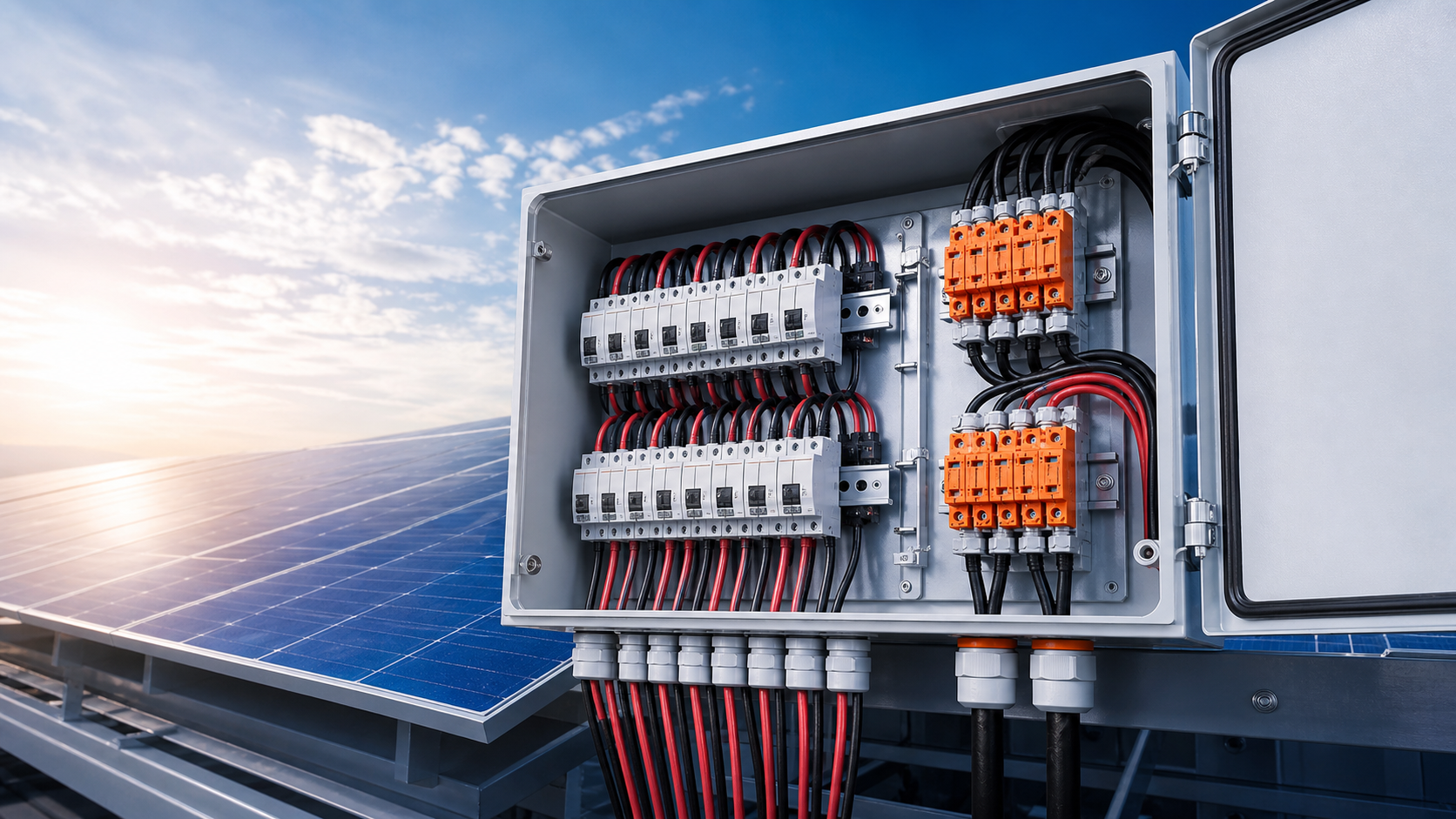
Inside every combiner box, the busbar is the backbone that joins the individually fused string inputs into a single consolidated DC output. If the bus is too small it overheats, loosens its terminations and eventually fails; if it is oversized it simply adds cost and enclosure volume. Sizing the busbar correctly means matching its cross-section and material to the aggregated current and the thermal environment of the installation.

PV combiner engineering context for PV Combiner Box Input Output Configuration Guide Explained

Solar PV

PV Combiner Box Input Output Configuration Guide Explained

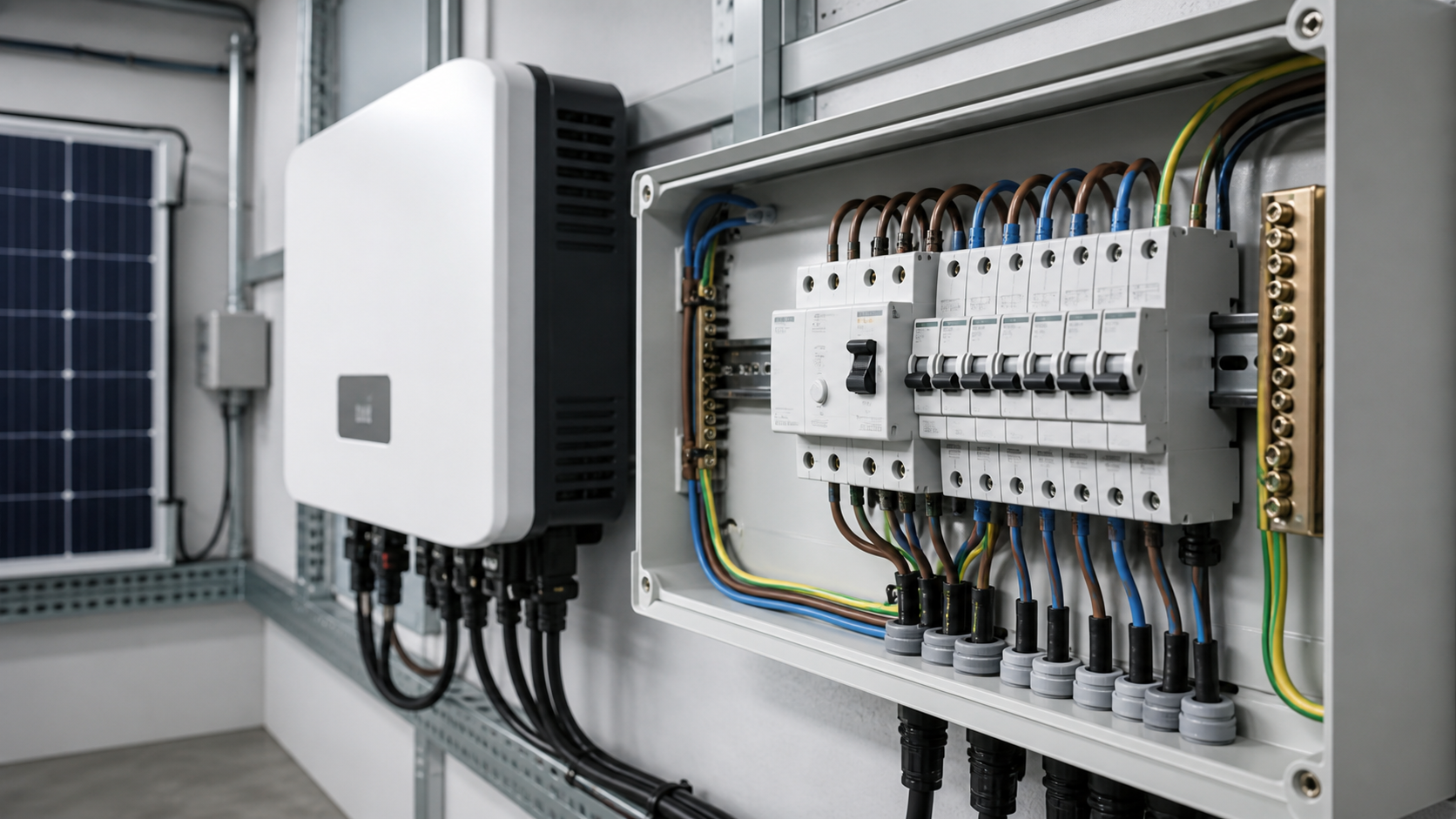
A PV combiner box is the collection point where multiple module strings meet before the direct current flows onward to the inverter or grid-connected cabinet. The way its inputs and outputs are arranged decides how cleanly the array can be wired, how well each string is protected, and how easy the system is to commission and maintain. Getting the configuration right at the specification stage prevents costly rework on site and keeps the balance of system within its rated limits.

PV combiner engineering context for Combiner Box Commissioning Test Checklist

Solar PV

Combiner Box Commissioning Test Checklist

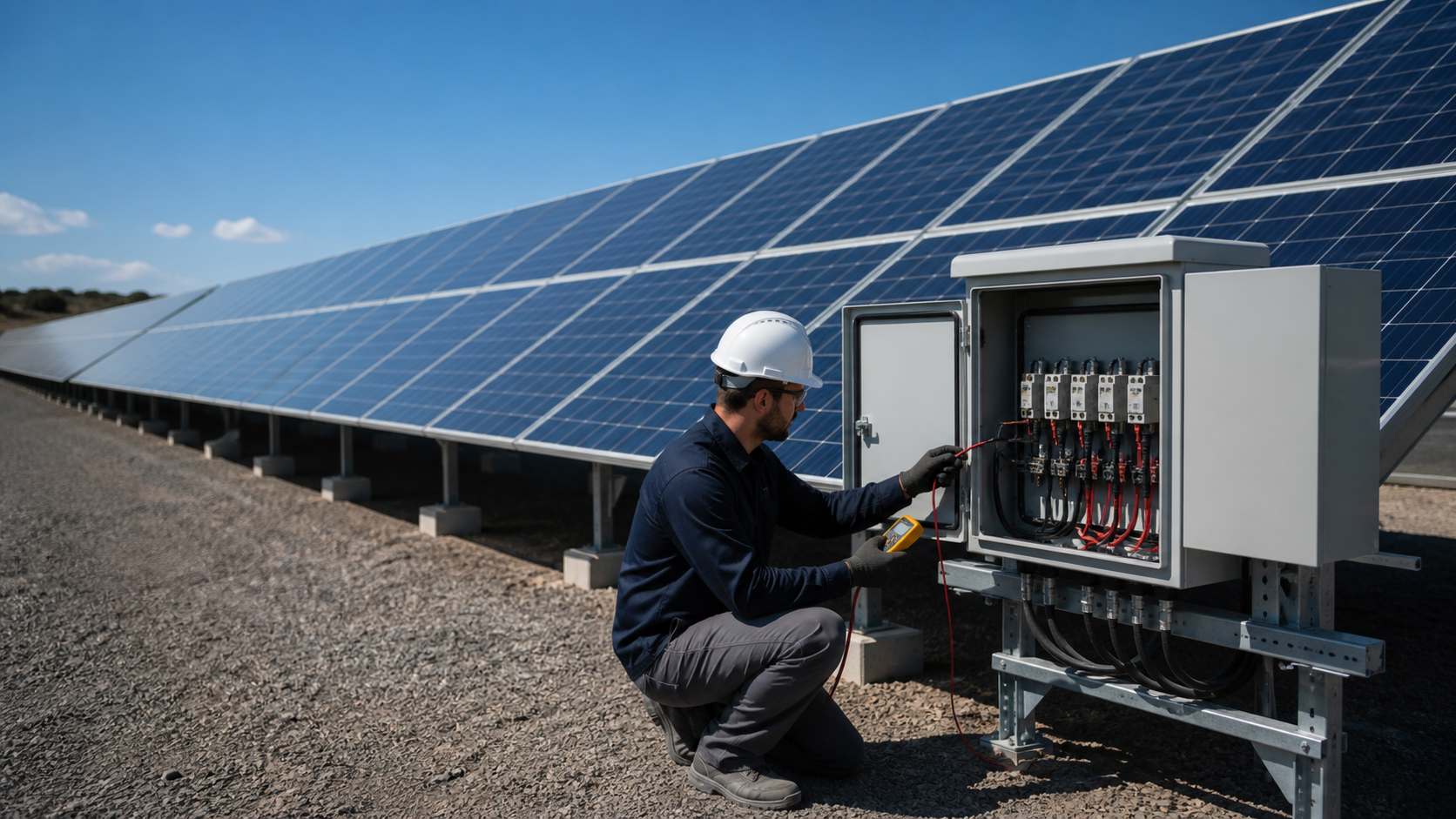
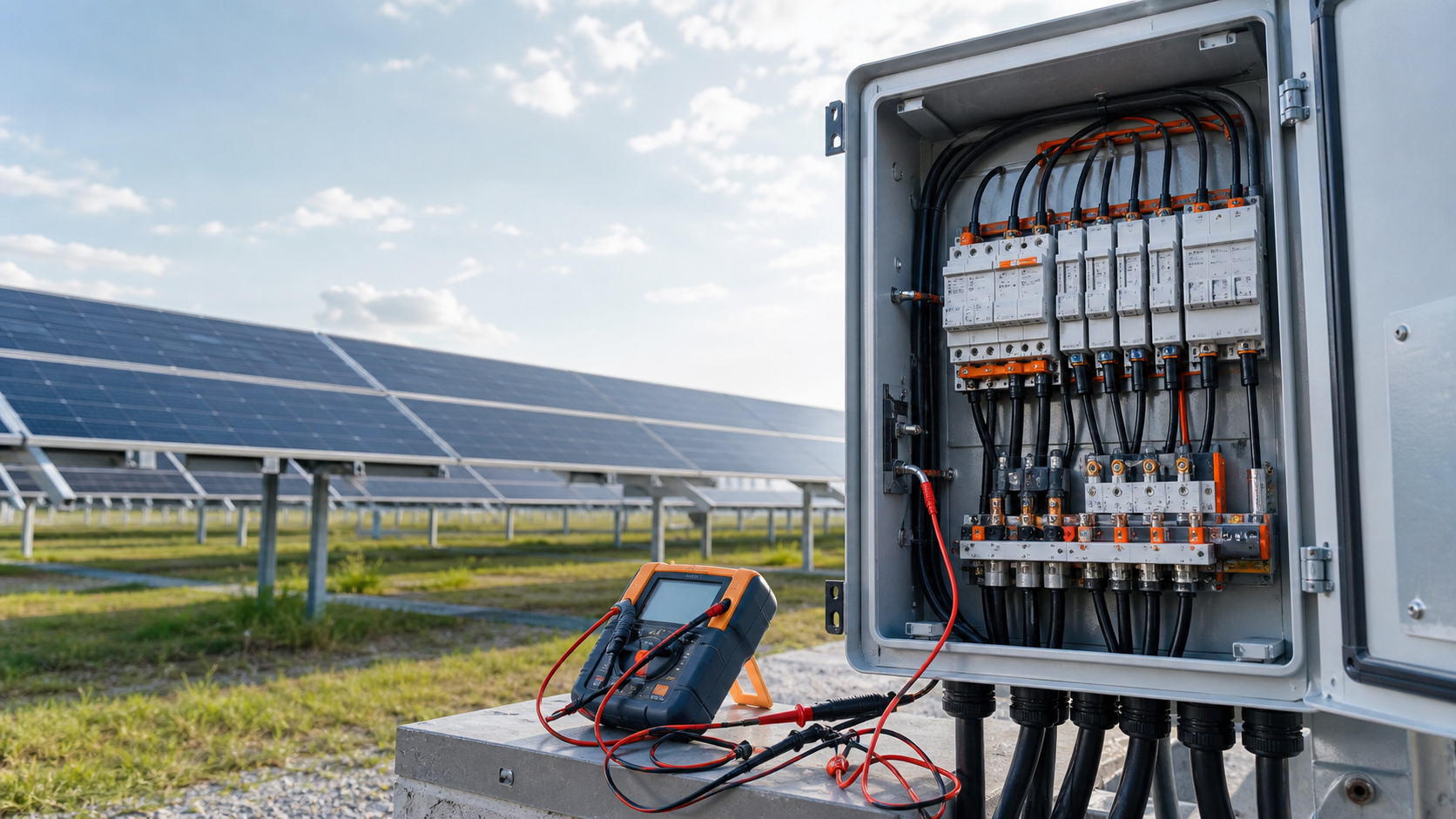
Commissioning is the moment a PV combiner box moves from assembled hardware to a live, protected part of the plant. A disciplined test sequence catches wiring, polarity and earthing faults before they reach the inverter. This checklist follows the order NEUTRON recommends for its combiner boxes and DC protection equipment. The inverter and battery systems are supplied by other parties and are energised only after the DC side is proven safe.