
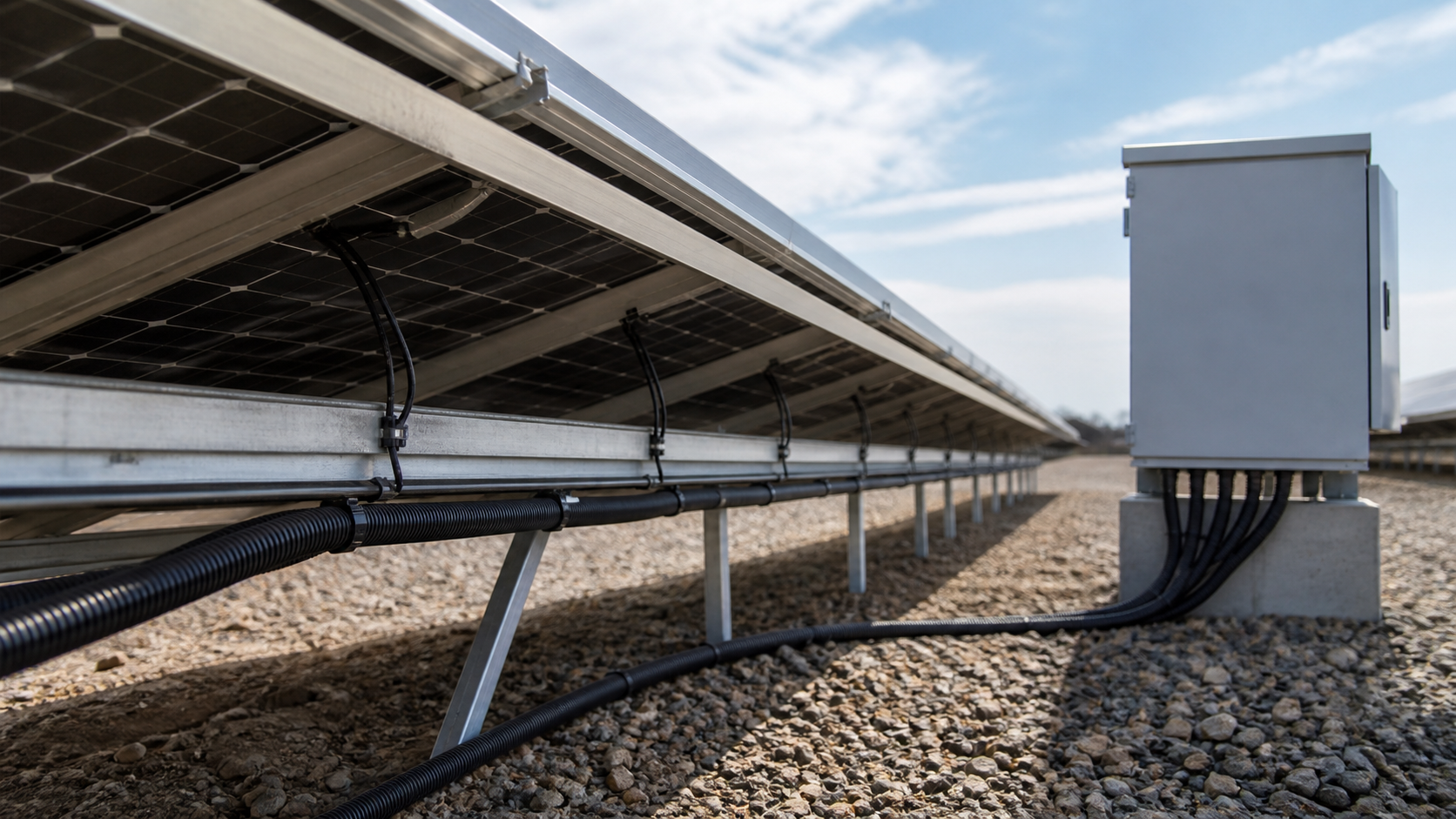
1. The outdoor problem
A PV DC run lives outdoors for decades, exposed to UV, temperature swing and weather. Ordinary PVC cable is not built for that environment and typically cracks on a roof within a few years, creating a shock and fire hazard.
2. What PV wire is
Photovoltaic wire (H1Z2Z2-K per EN 50618) is double-insulated and rated for UV, weather and conductor temperatures up to 120 C. That construction is what lets it survive continuous outdoor service between the array and the combiner box.
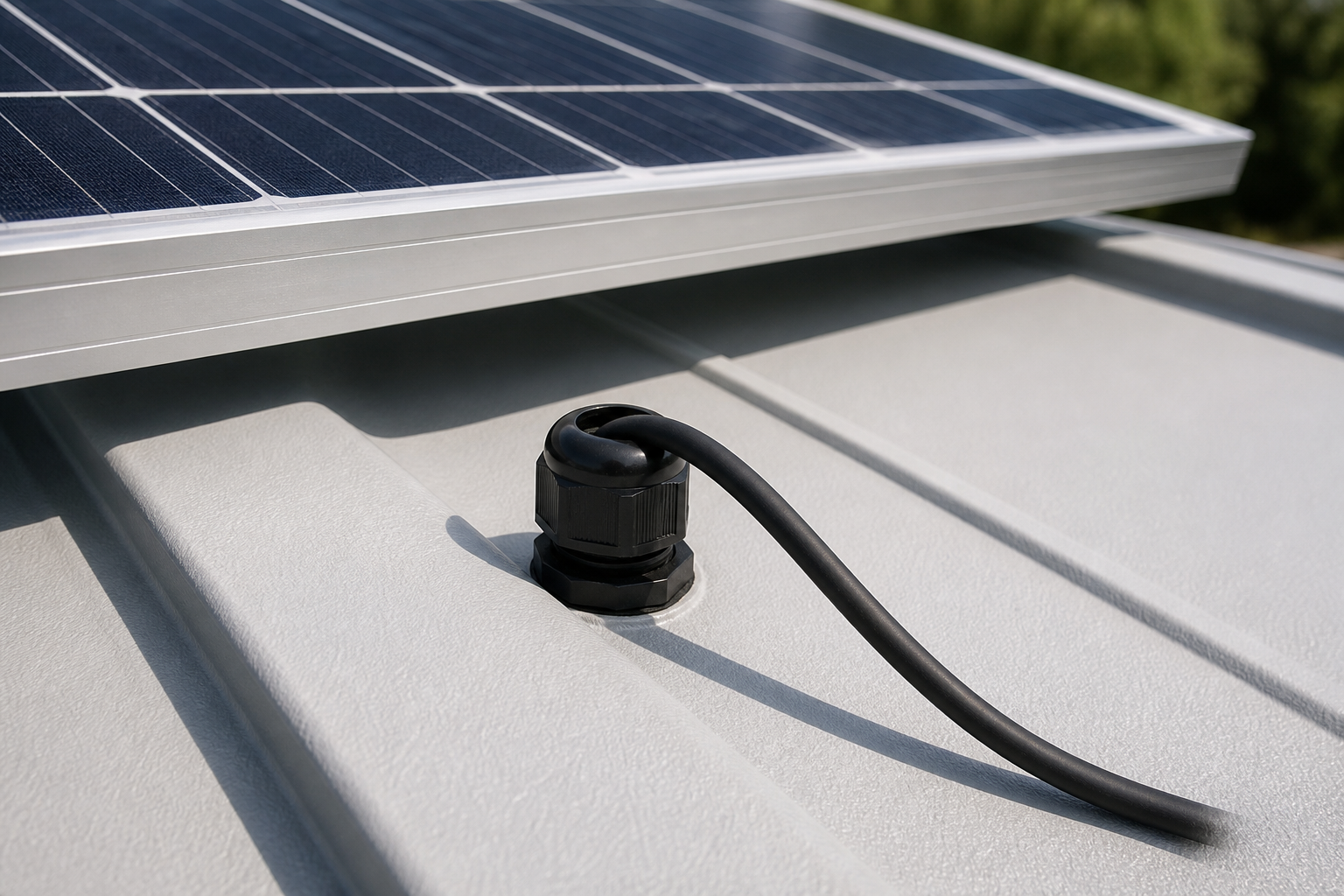
3. After the roof entry
Once the conductor passes the roof entry and runs indoors, regular cable of the same cross-section is acceptable where local rules allow it. The protected indoor section is no longer exposed to UV and weather.
4. Matching by cross-section, not label
When a local code calls for an AWG size, match by actual cross-section, not by the nearest-looking number. 10 AWG is 5.26 mm2, noticeably thinner than 6 mm2; when in doubt, round up.
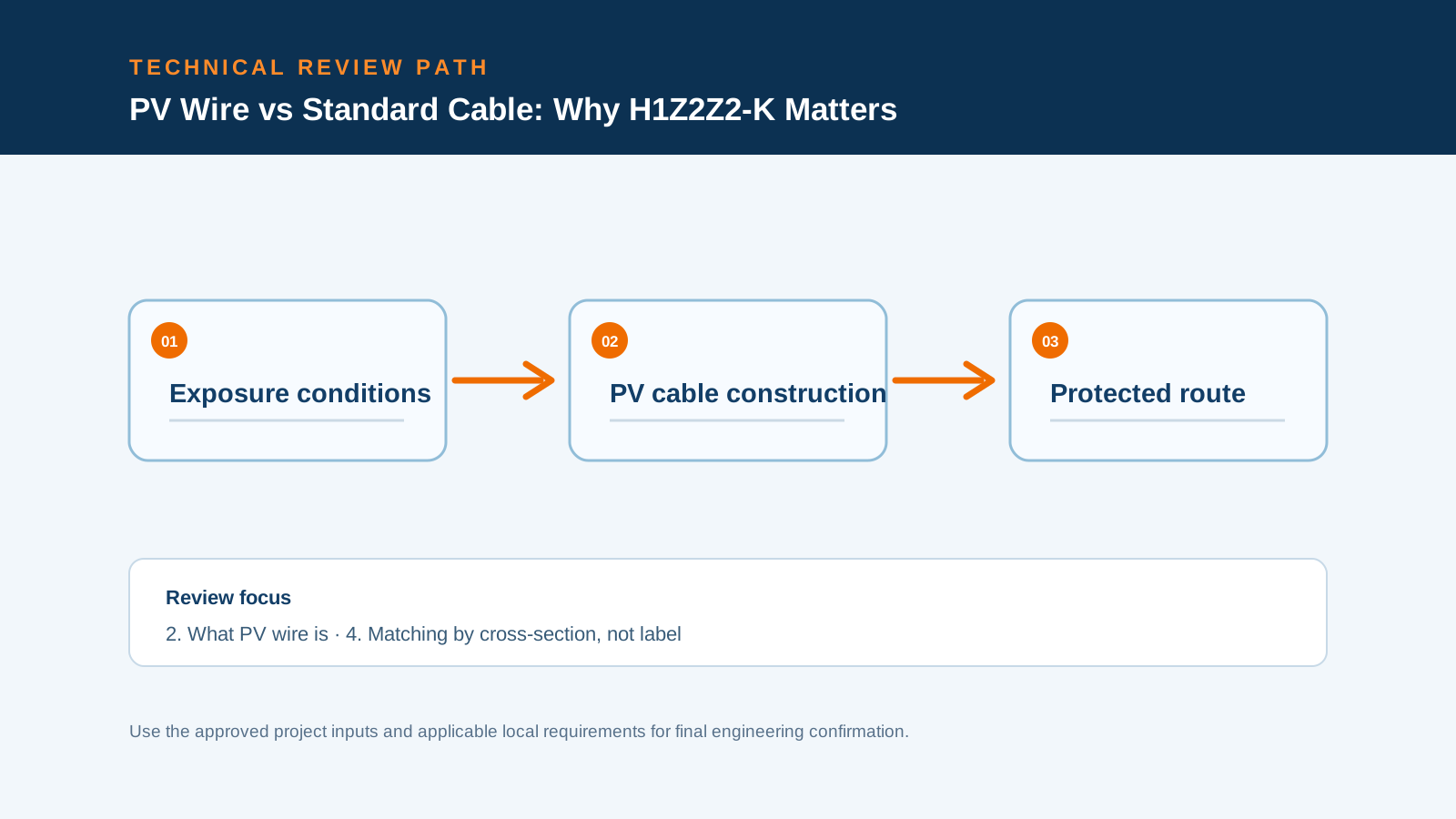
Technical diagram shown at a readable responsive scale.
5. Pairing with the rest of the BOS
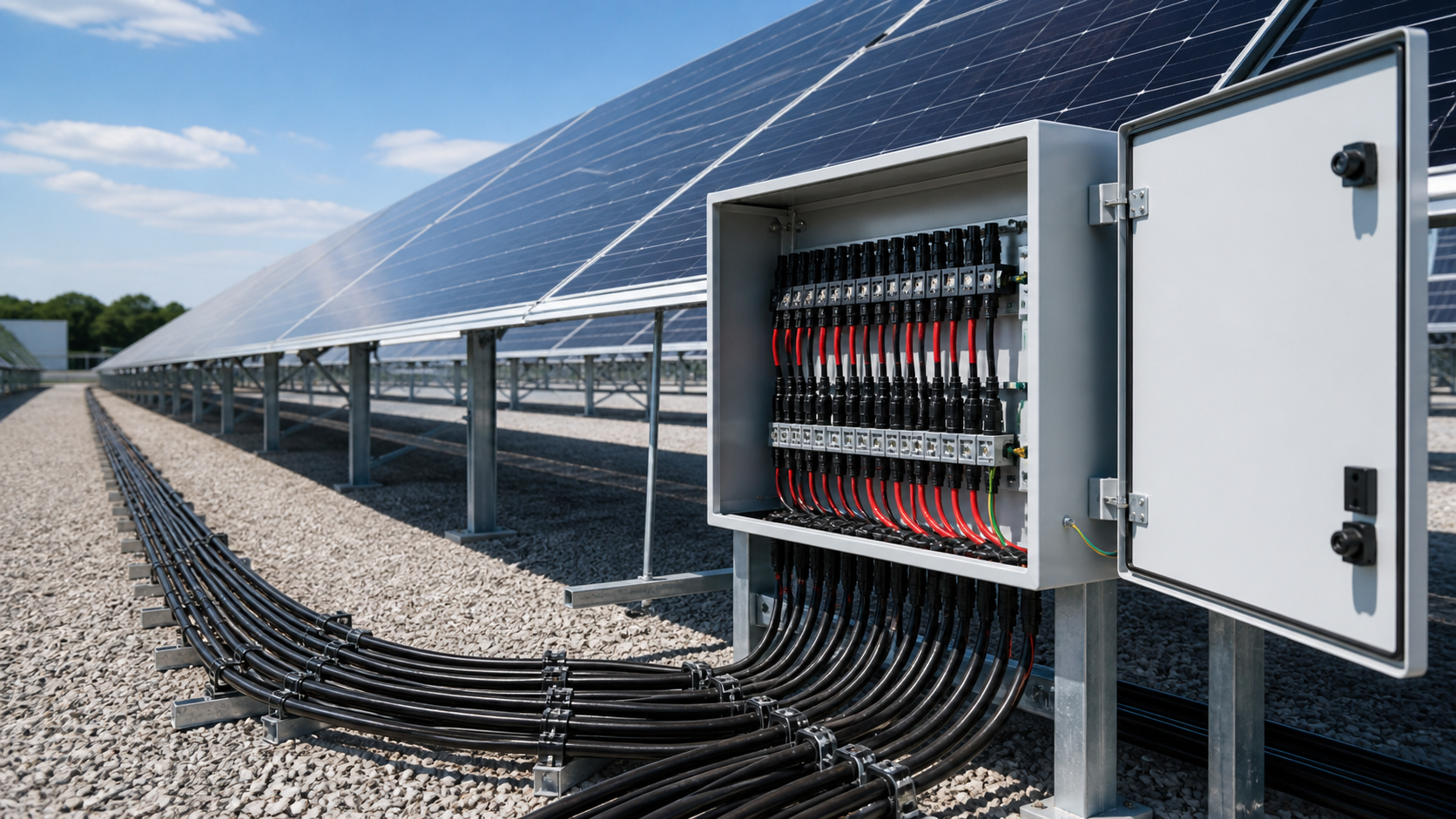
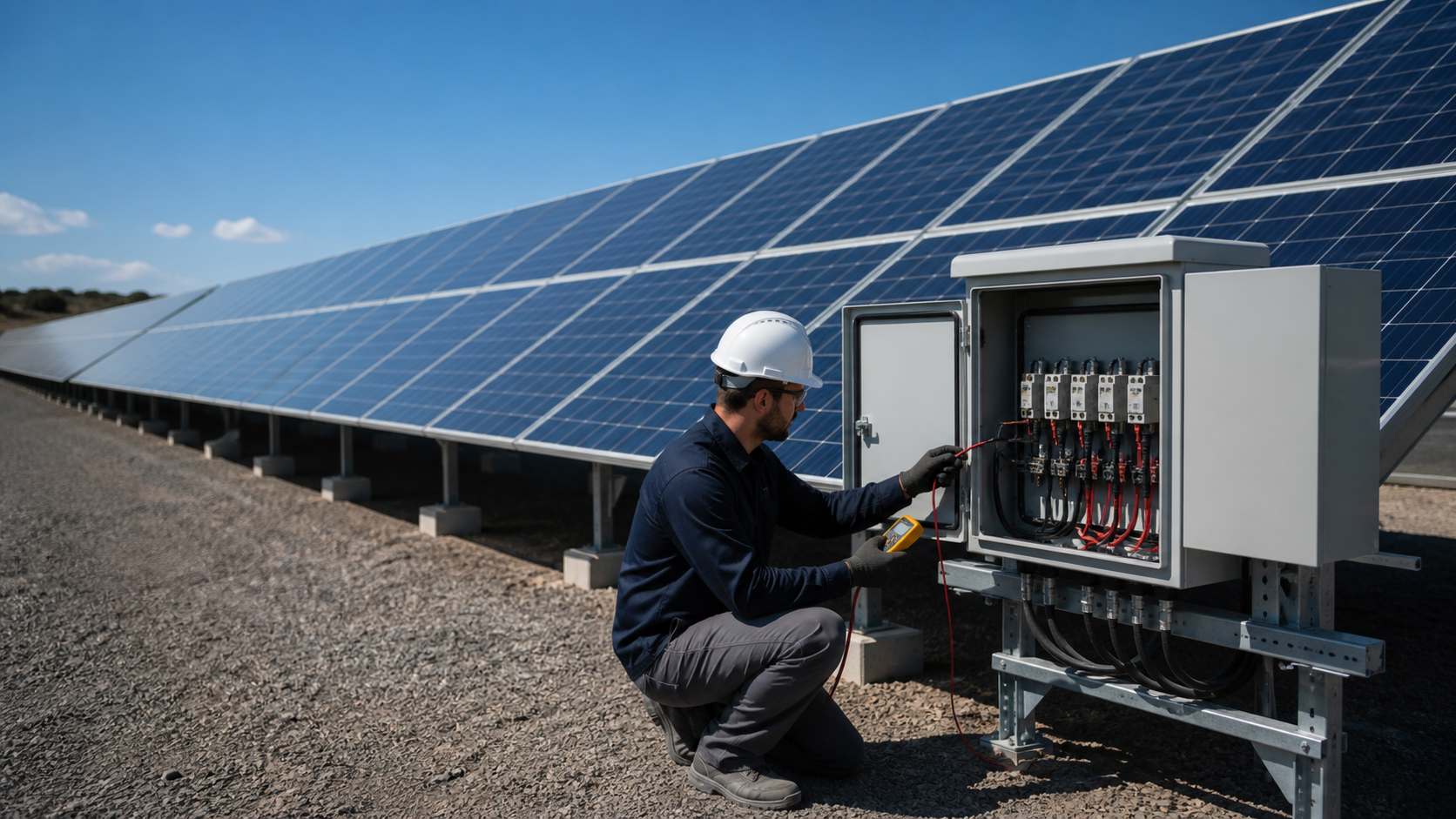
The right wire is only one layer. The combiner box terminals, the string fuse and the surge protective device must all be rated for the same voltage class and current. A correct cable into an under-rated box still fails.
6. Specification checklist
Confirm the wire standard (EN 50618 for H1Z2Z2-K), the temperature rating, the cross-section from the voltage-drop and ampacity checks, and the IP and corrosion class of every outdoor connection.
This is general technical guidance. Confirm final ratings, installation conditions and applicable local requirements against approved project documentation and a qualified engineering review.
Frequently asked questions
Can I use regular cable instead of PV cable outdoors?
Not outdoors. PV wire is double-insulated and UV and weather rated; ordinary PVC cable cracks on a roof within a few years.
What does H1Z2Z2-K mean?
It is the EN 50618 designation for photovoltaic cable: halogens-free, double-insulated solar wire rated for outdoor UV and high conductor temperature.
Is PV wire required after the roof entry?
Indoors, where local rules allow, regular cable of the same cross-section is acceptable because it is no longer exposed to UV and weather.
How do AWG and metric PV wire compare?
Match by real cross-section: 10 AWG is 5.26 mm2, thinner than 6 mm2, so round up rather than trust the closest label.
Bring the electrical inputs to the first review.
Share the approved module data, site temperature range, cable route, string configuration and destination-market requirements. NEUTRON can review the equipment envelope against the project inputs.
Discuss a PV requirementContinue learning
Explore related technical guidance in Solar PV.
Technical note: verify final ratings, standards, documents and configuration against approved project documentation and the applicable local requirements.