
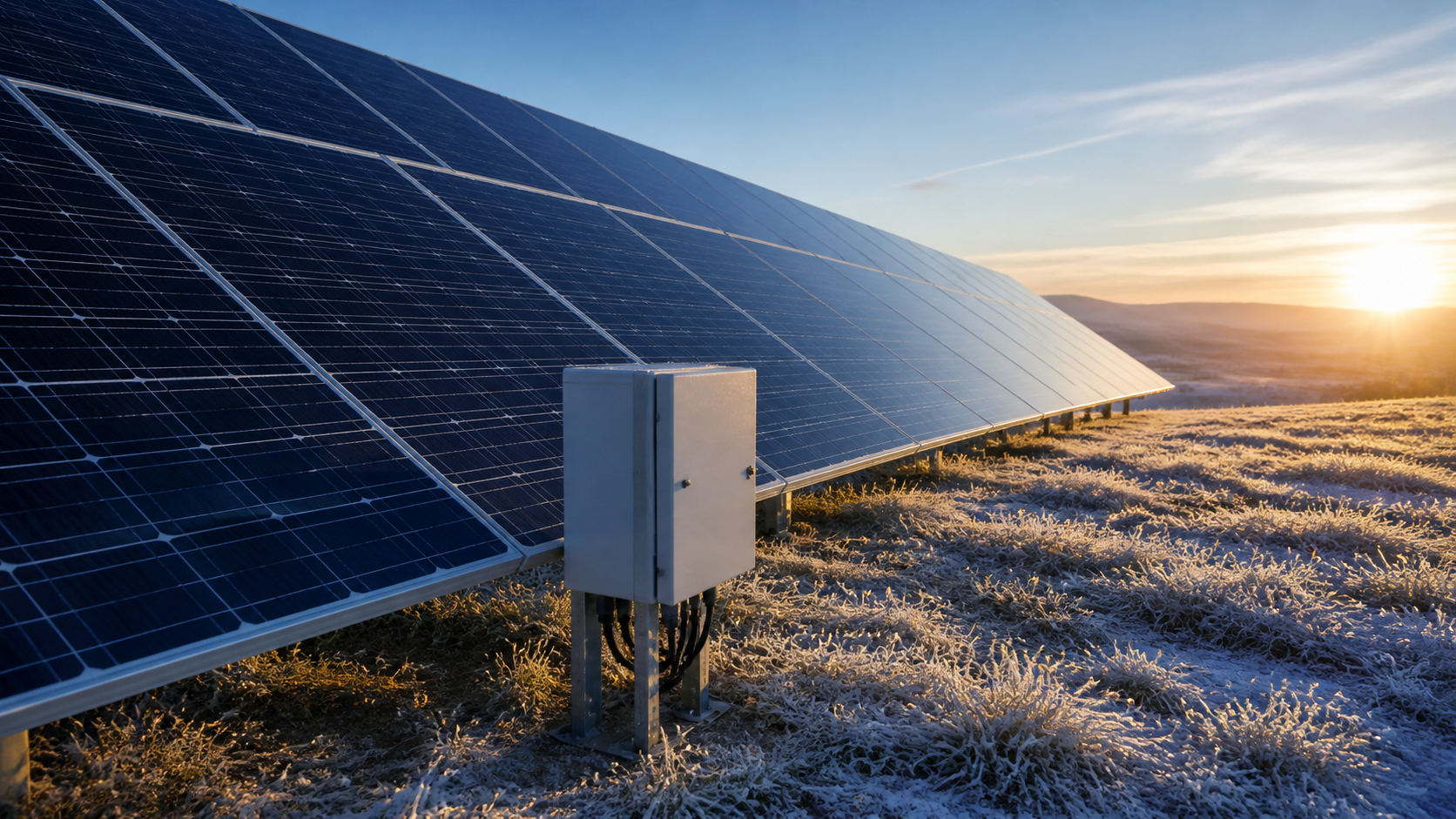
1. Why temperature moves the numbers
PV module voltage and current both shift with cell temperature. Voltage falls as the module heats and rises as it cools; current rises slightly with heat. The rated values on a datasheet are measured at 25 C cell temperature (STC), not the temperatures a rooftop or field array actually sees.
2. Voltage coefficient and the cold-weather peak
Each module carries a temperature coefficient of Voc, typically near -0.27 %/C to -0.35 %/C. At a cold winter ambient the cell temperature can drop well below 25 C, pushing string open-circuit voltage above the nameplate value. A 40 V module at -20 C can exceed 45 V. This is the condition that decides the insulation rating of every downstream component.
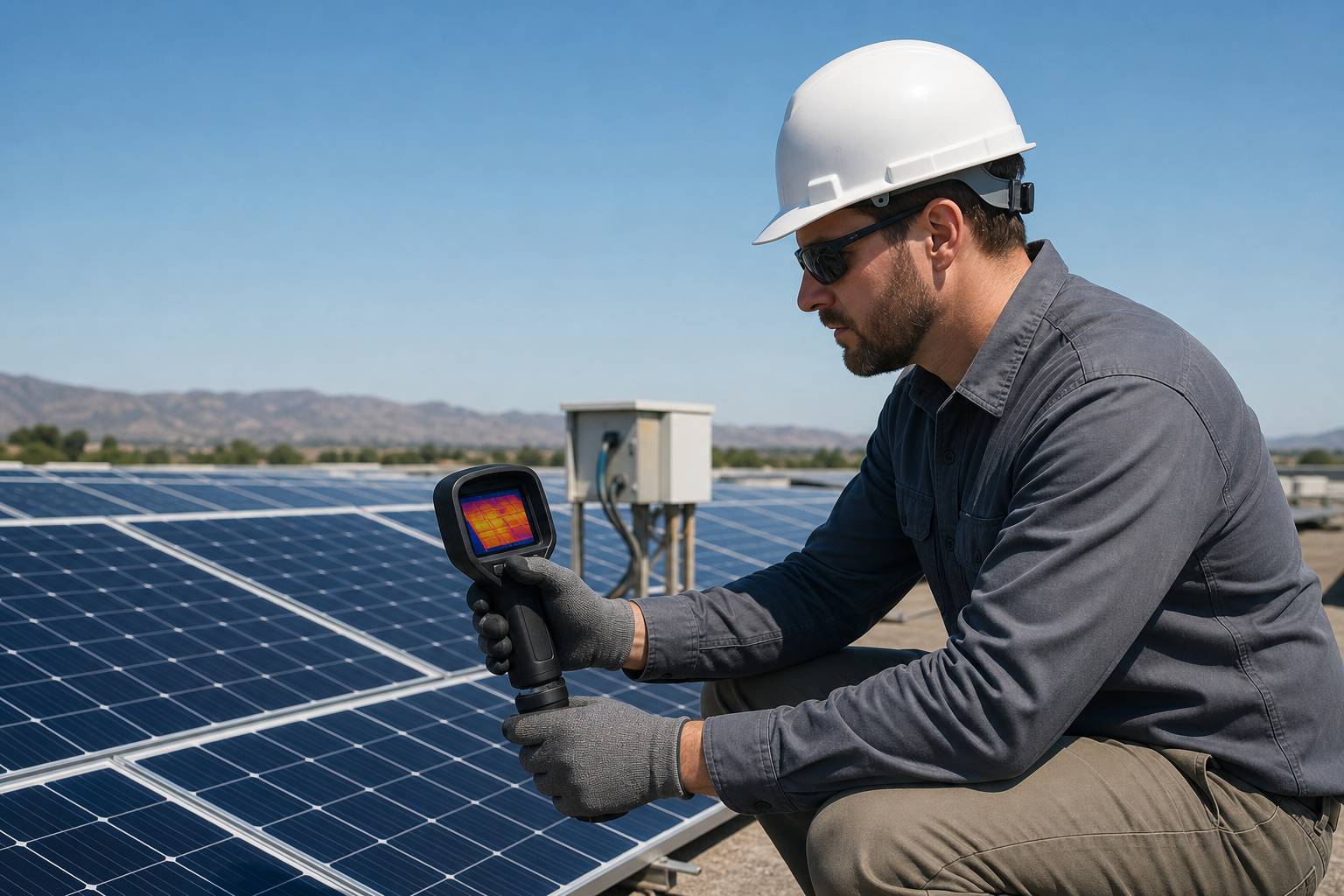
3. What the higher voltage stresses
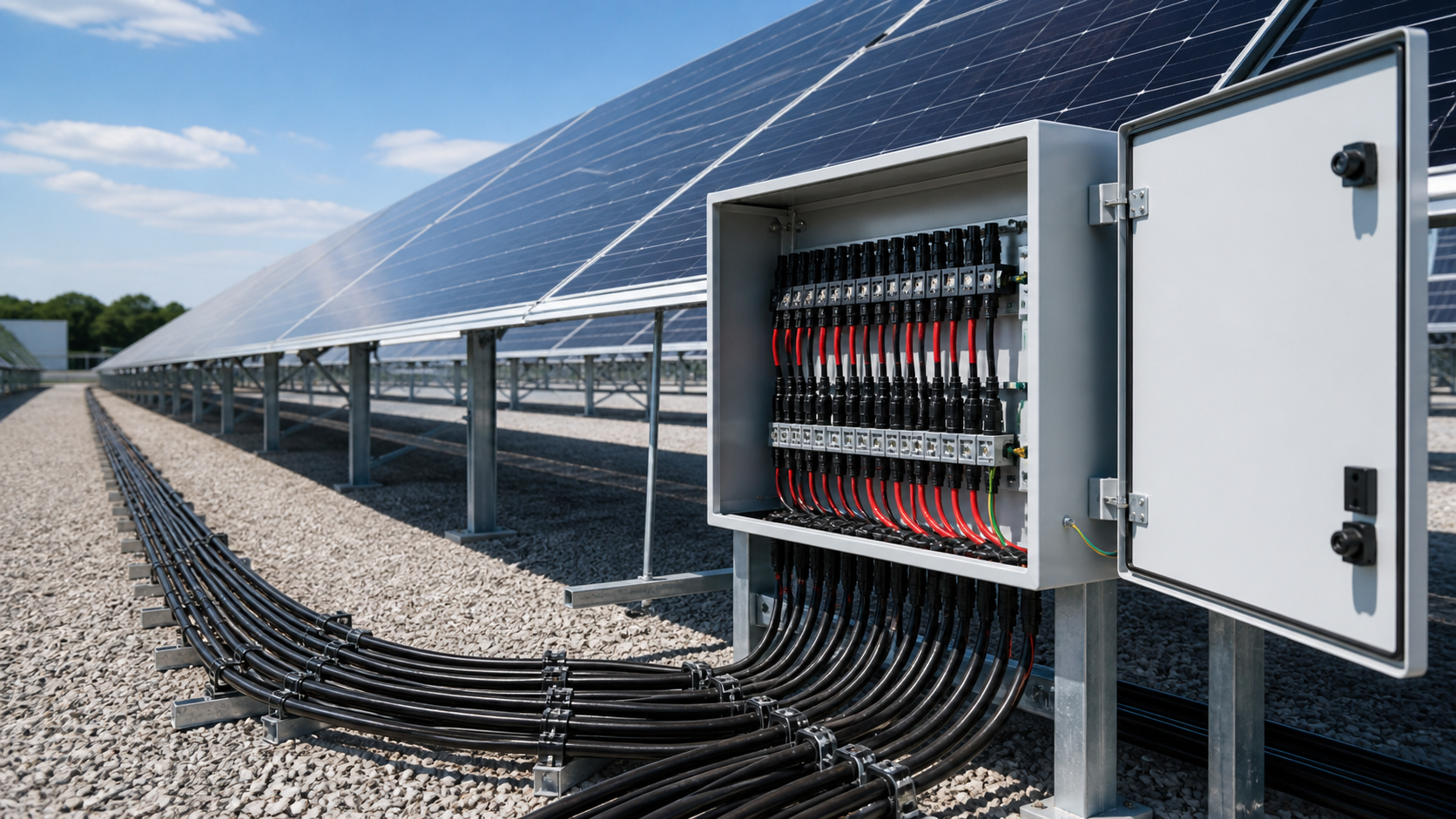
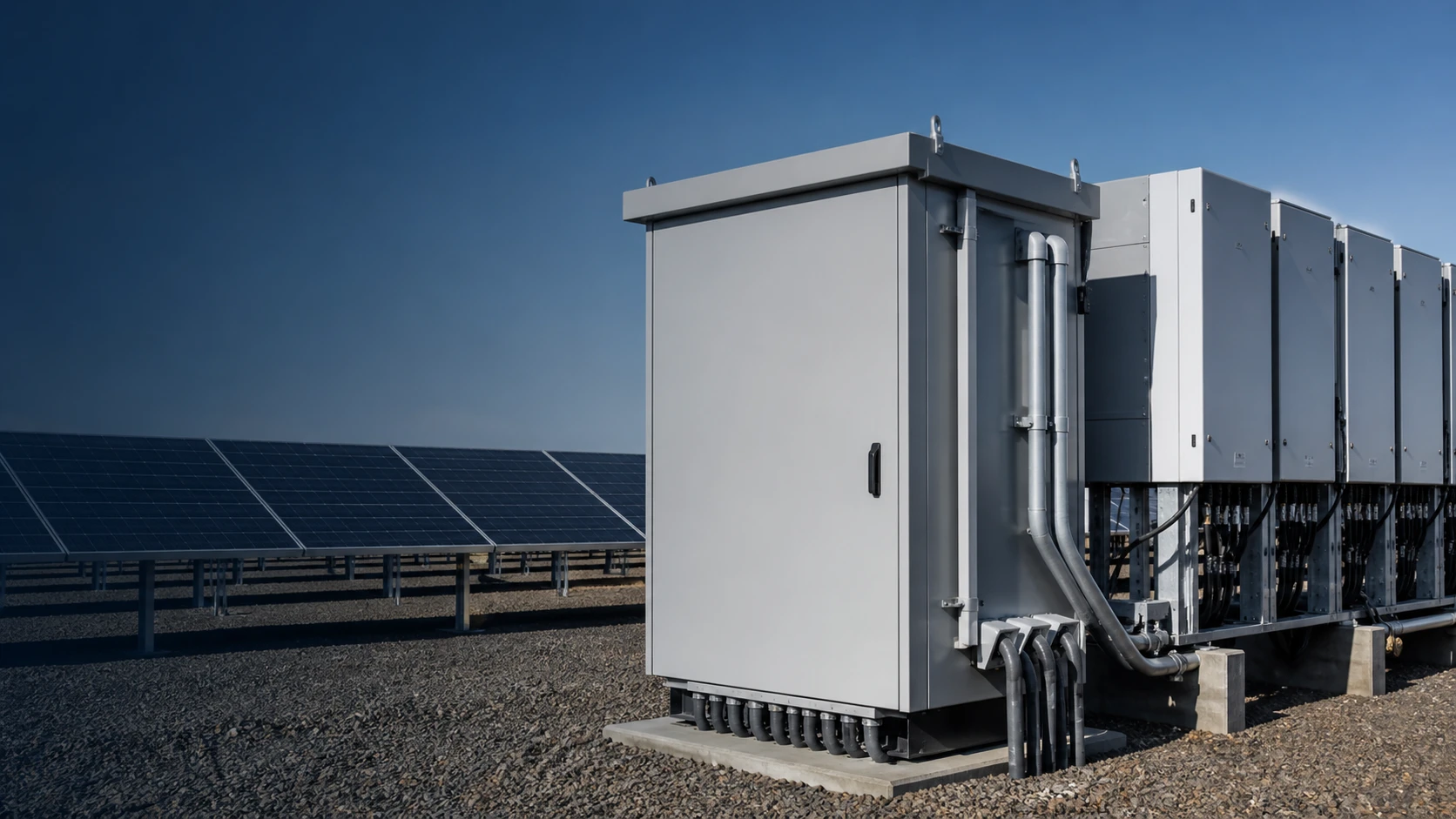
The combiner box, its DC disconnect, the surge protective device and the grid-connected cabinet must all tolerate the coldest-case string voltage. Underrating any of them invites insulation breakdown, arcing and ground faults. For 1500 V systems the margin is even tighter.
4. Current coefficient and the hot-weather peak
Short-circuit current carries a small positive temperature coefficient. Combined with bifacial rear-side gain, the worst-case Isc on the hottest day is what sizes the string fuse and the busbar. Designers protect for the peak, not the annual average.
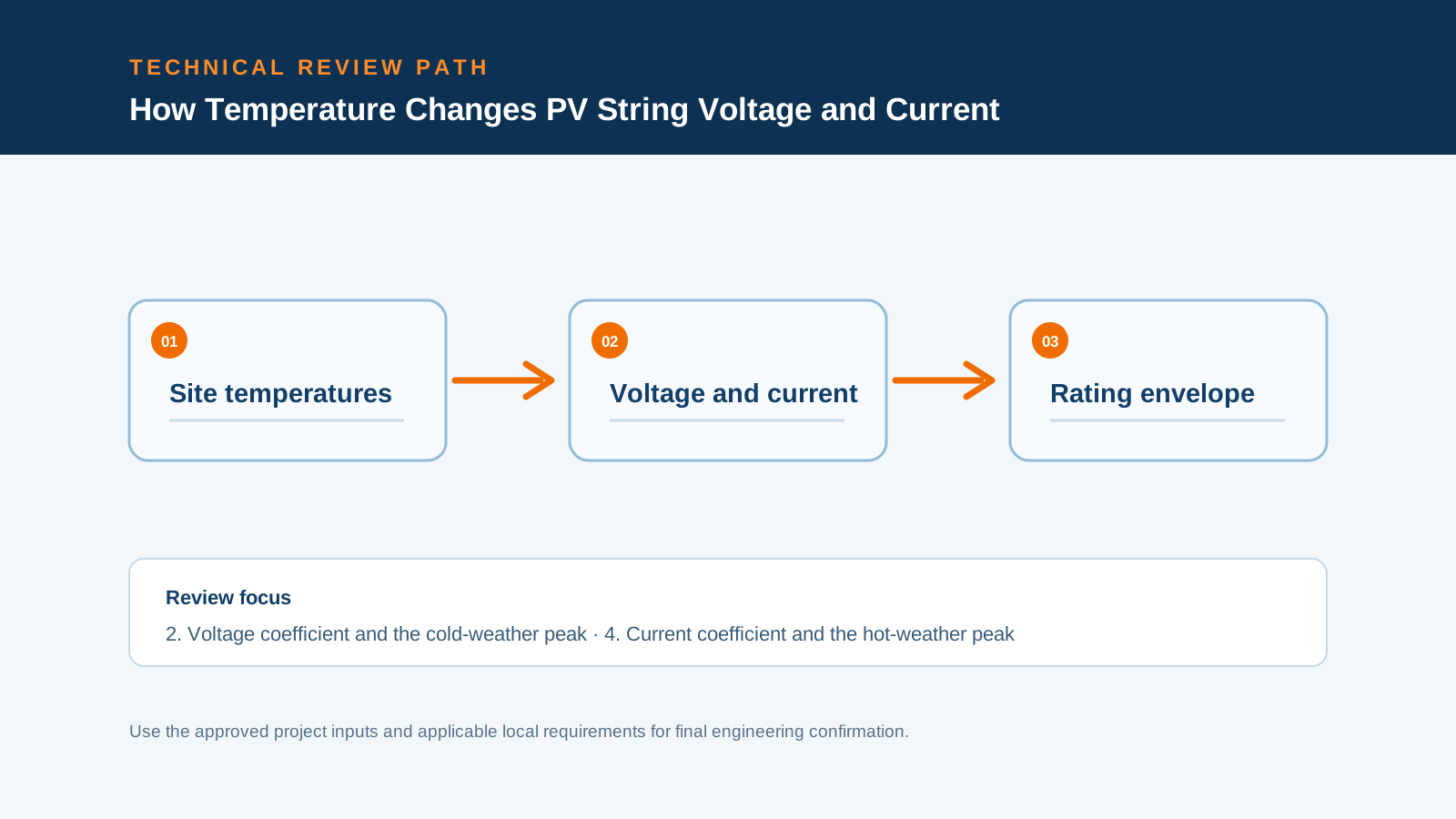
Technical diagram shown at a readable responsive scale.
5. Standards that set the method
IEC 62548 (PV array design) and NEC 690.7 (PV systems) both require temperature-adjusted voltage for the cold extreme and temperature-adjusted current for the hot extreme. NOCT-based cell temperature is the usual bridge from ambient to cell temperature.
6. Designer takeaway
Before specifying a combiner box, fix the coldest and hottest site temperatures, apply the module coefficients, and verify the resulting voltage and current against the equipment ratings. The four numbers that matter are system voltage class, worst-case Voc, worst-case Isc and site temperature range.
This is general technical guidance. Confirm final ratings, installation conditions and applicable local requirements against approved project documentation and a qualified engineering review.
Frequently asked questions
How much does cold weather increase solar panel voltage?
Typically a few percent per 10 C below STC; a -0.30 %/C module at -20 C adds roughly 13.5 % to Voc, so a string sized near the limit at 25 C can exceed it in winter.
Why does PV voltage drop in hot weather?
Semiconductor band behaviour causes the open-circuit and maximum-power voltage to fall as cell temperature rises; the module simply produces a lower voltage when hot.
What is the temperature coefficient of Voc?
The percent change in open-circuit voltage per degree Celsius, usually negative 0.27 to 0.35 %/C for crystalline modules.
Does higher temperature increase PV current?
Slightly, yes; Isc has a small positive coefficient and bifacial gain adds more at the peak, which is why fuse and busbar sizing uses the hot-weather maximum.
Bring the electrical inputs to the first review.
Share the approved module data, site temperature range, cable route, string configuration and destination-market requirements. NEUTRON can review the equipment envelope against the project inputs.
Discuss a PV requirementContinue learning
Explore related technical guidance in Solar PV.
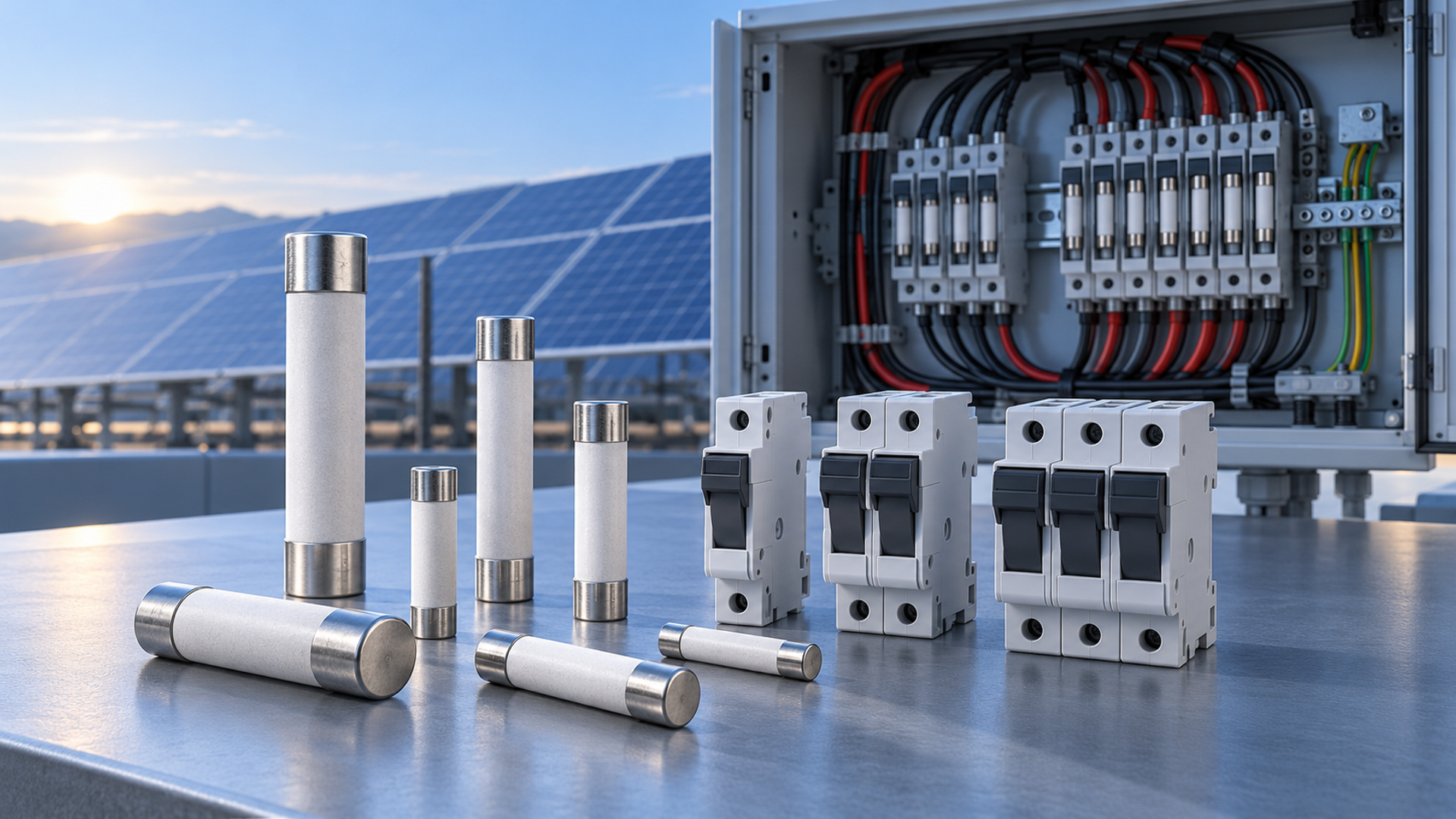
Technical note: verify final ratings, standards, documents and configuration against approved project documentation and the applicable local requirements.