
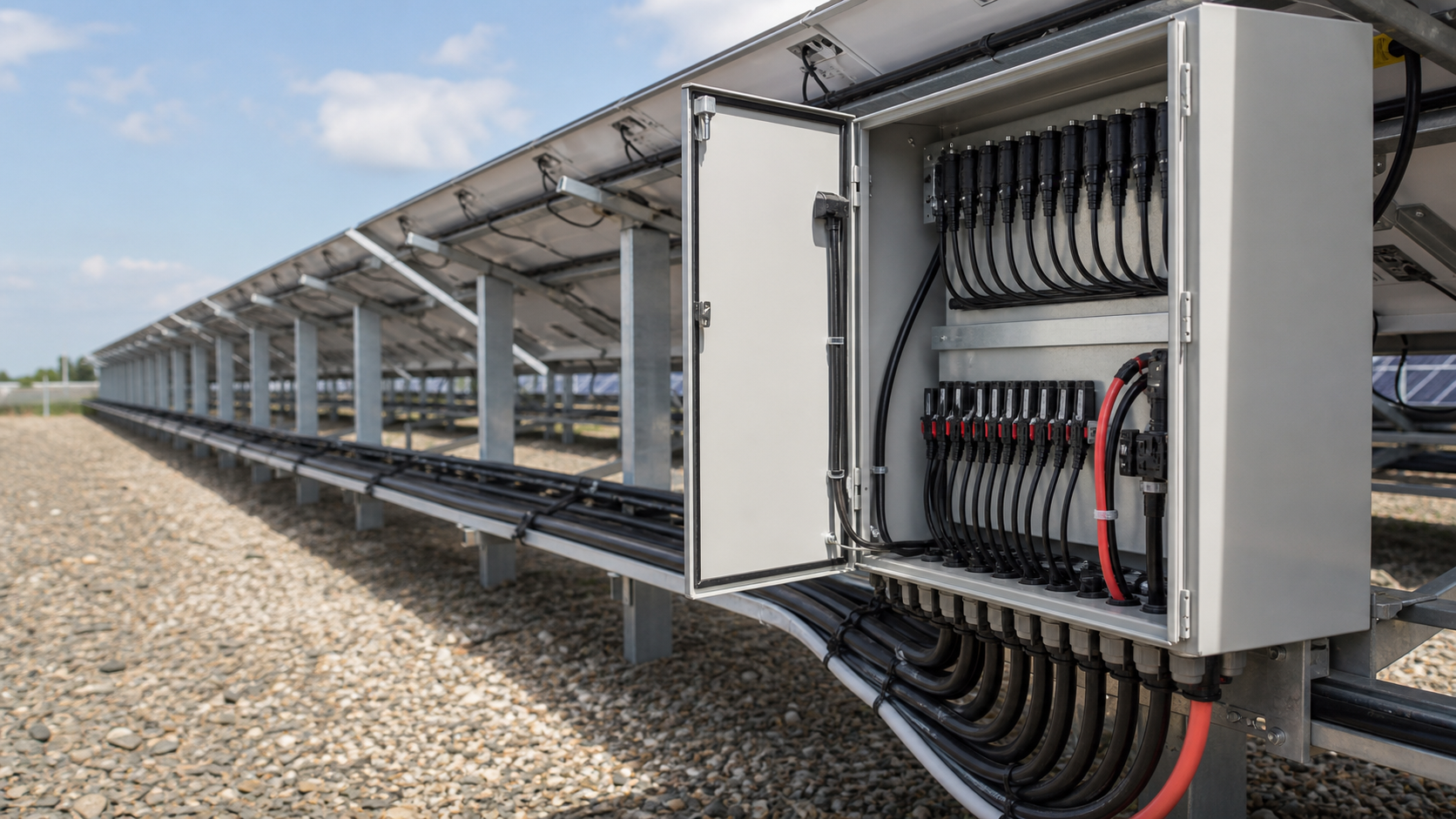
1. Series and parallel, simply
Modules wired in series form a string; voltages add, current stays the same. Several strings wired in parallel form the array; currents add, voltage stays the same. The combiner box collects those parallel strings.
2. How many in one string
The number of modules in series is set by the voltage window: enough to reach a useful working voltage, but the coldest-case Voc must stay inside the limit of every downstream device. Home systems commonly use 8 to 20 modules per string.
3. How many parallel strings
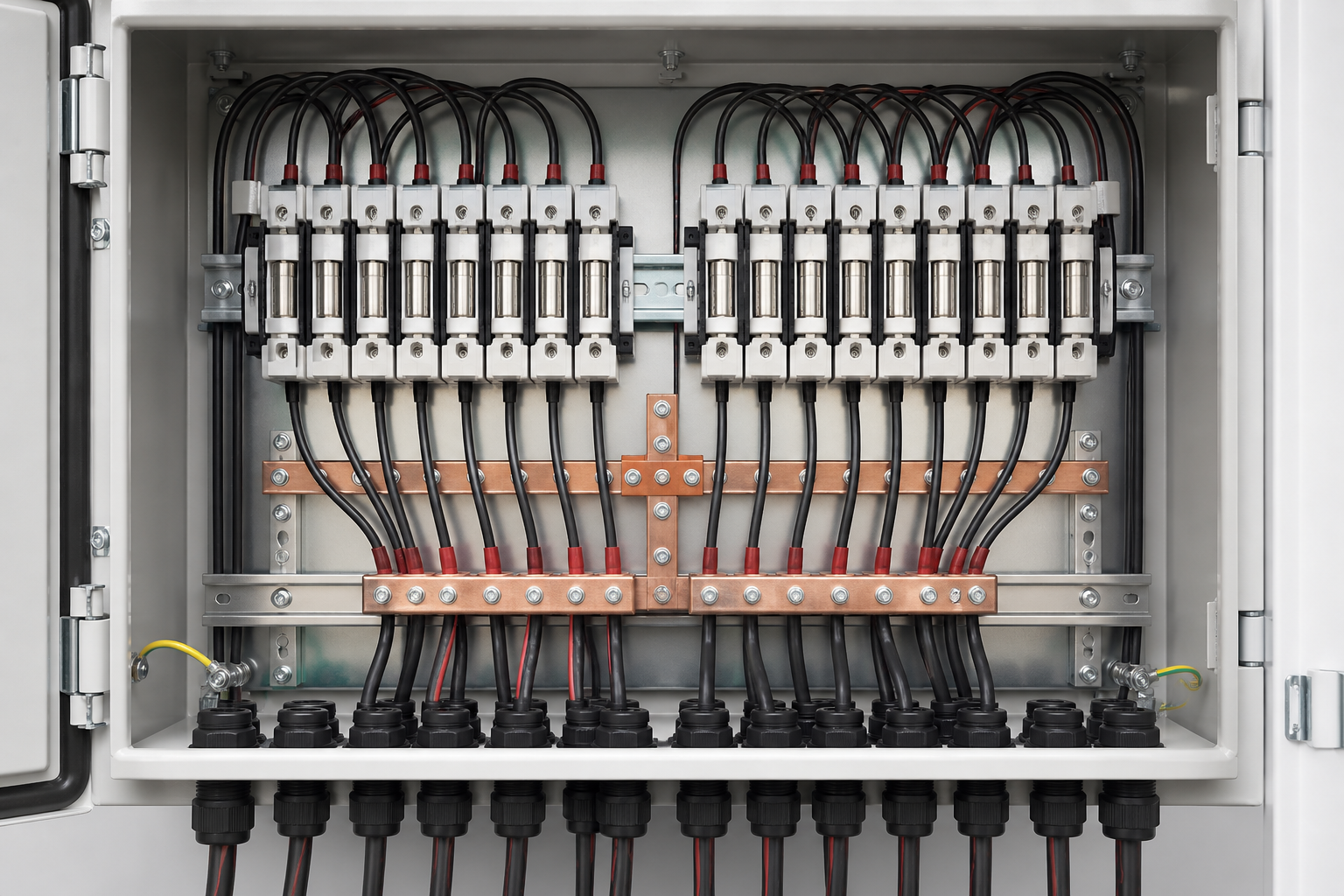
The number of parallel strings sets the array current. Each string usually runs to its own input, and when strings are joined onto one feed they must each carry their own fuse because they back-feed one another under fault.
4. What the combiner box must provide
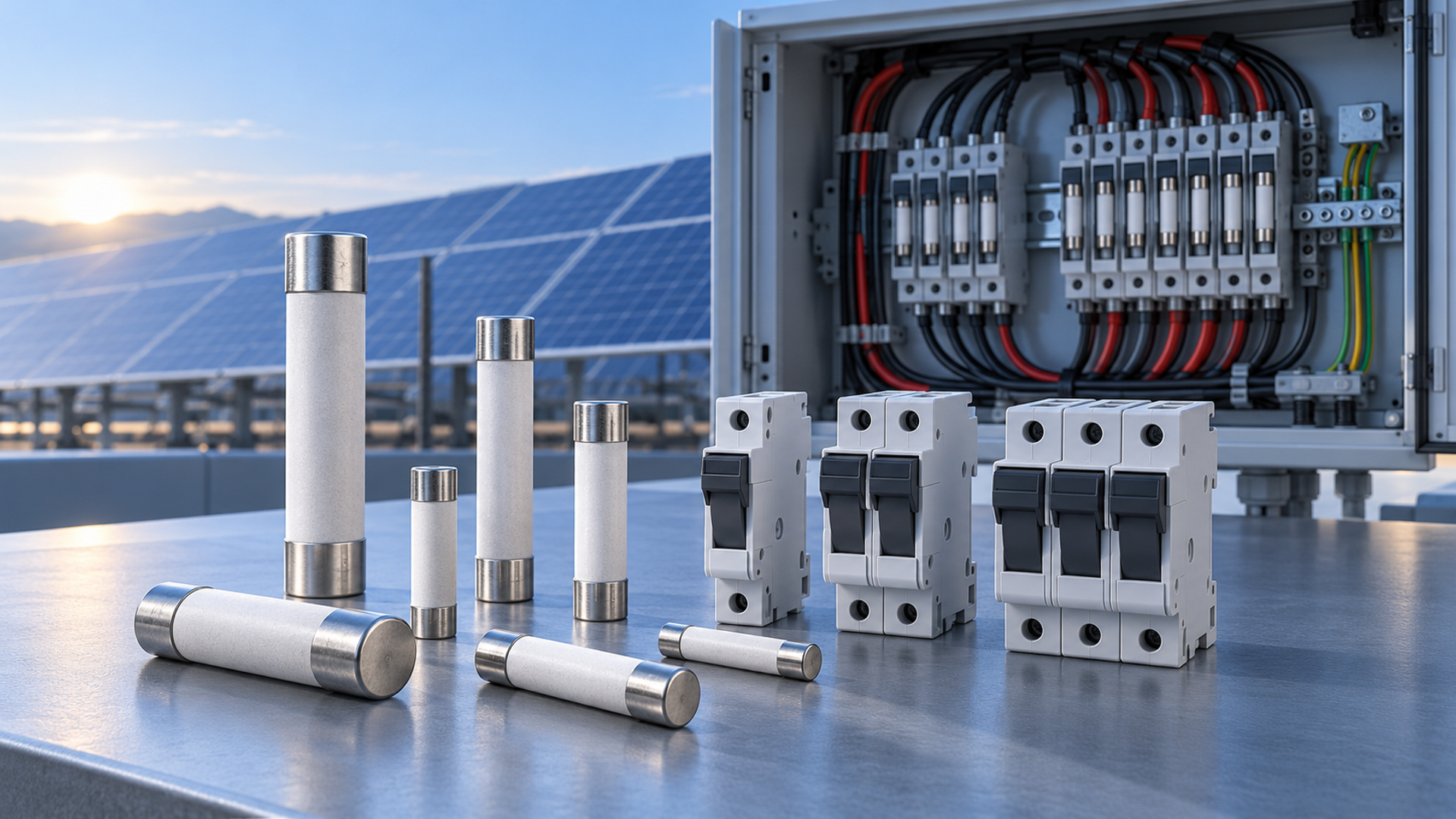
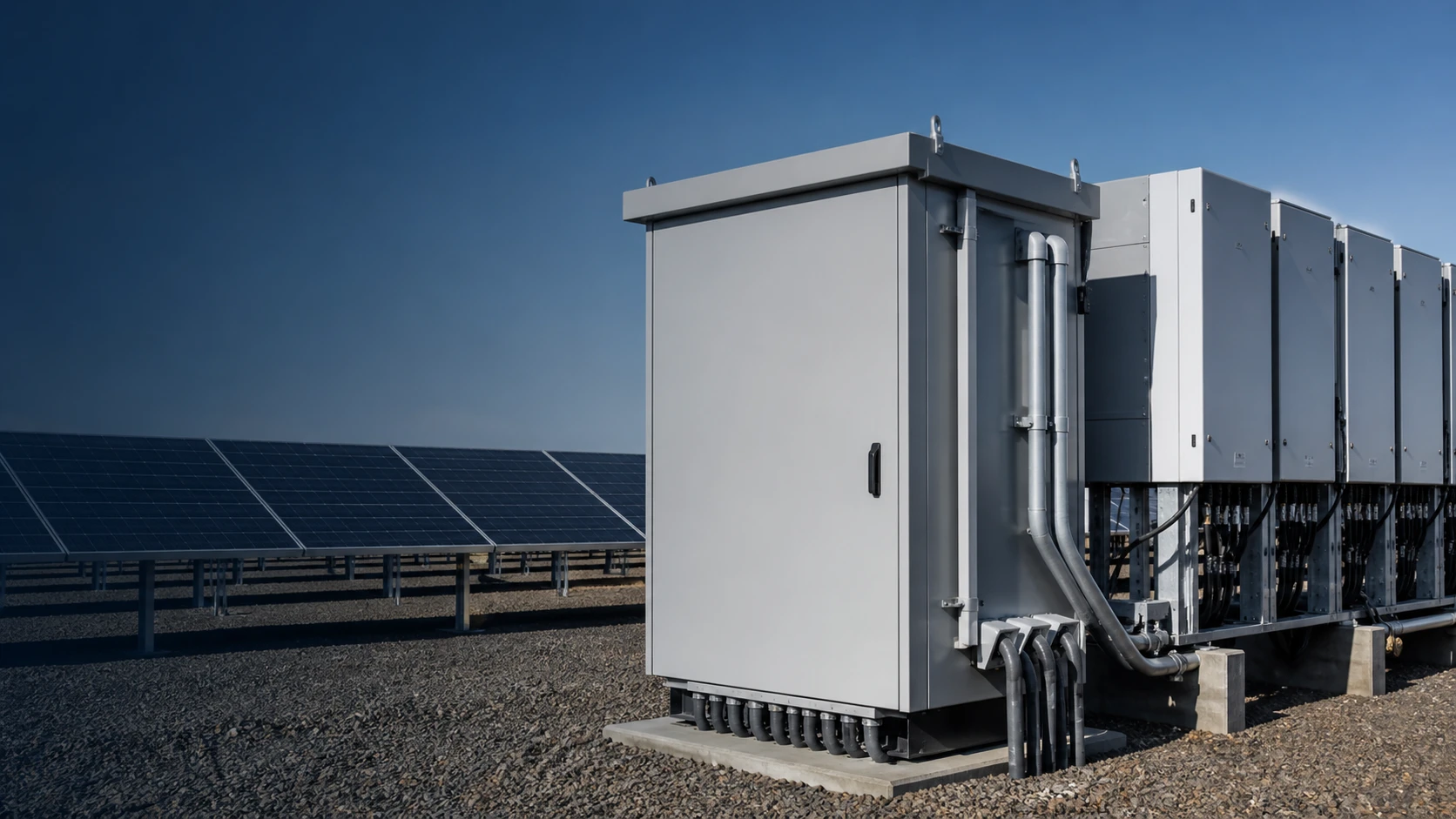
The box needs one input per string, one gPV fuse per input, a DC disconnect, an SPD, and a busbar sized for the sum of all protected string currents. Common configurations range from 4 to 24 strings.
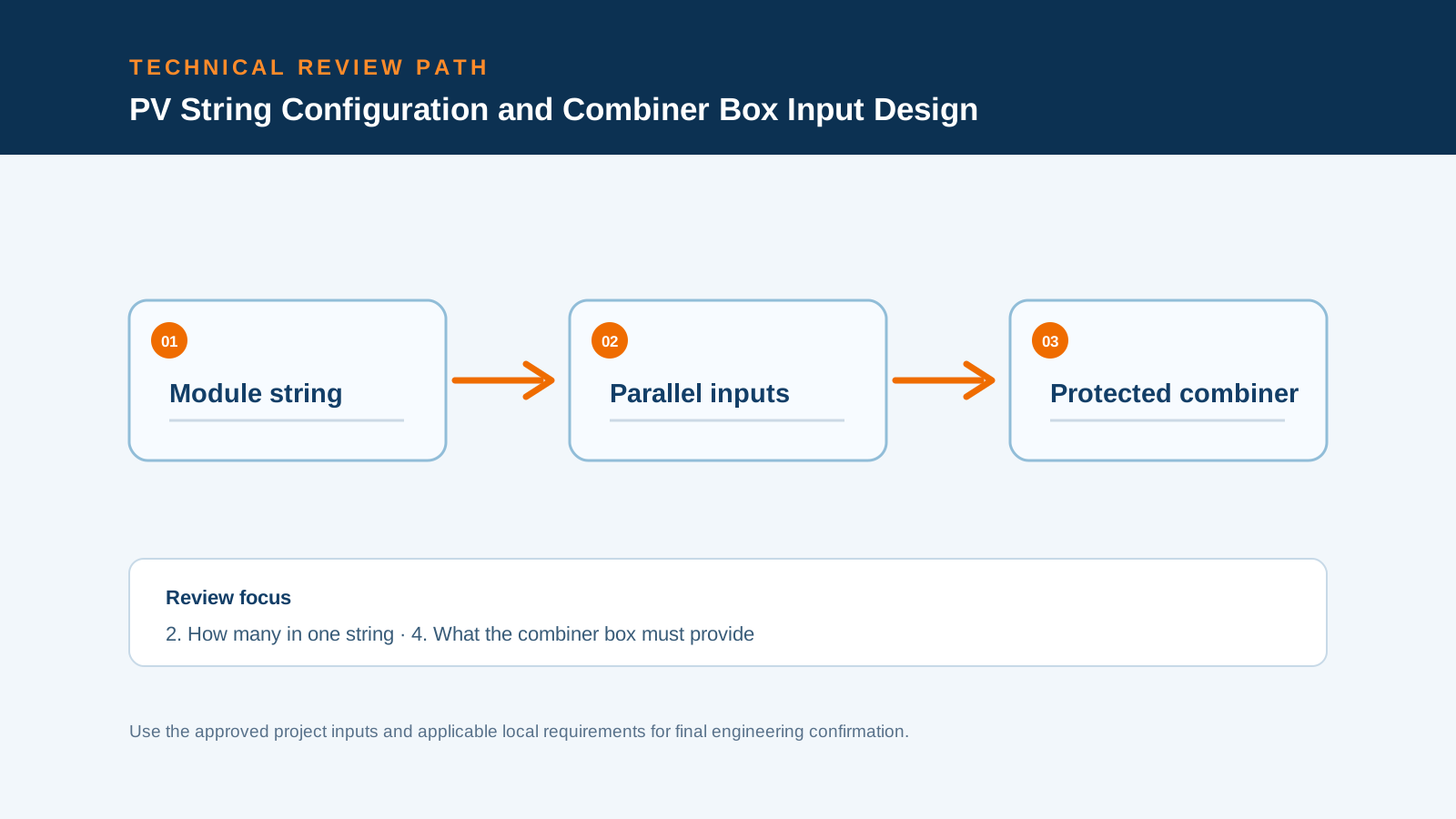
Technical diagram shown at a readable responsive scale.
5. Busbar is the real limit
As string count grows, the aggregated output current can exceed several hundred amperes. The enclosure must provide a busbar cross-section and terminal rating that will not degrade under thermal cycling, not a generic layout reused from a smaller box.
6. Enquiry checklist
Hand the supplier the system voltage class, modules per string, number of parallel strings, worst-case Isc and site protection class. Those five numbers decide the box that is actually built.
This is general technical guidance. Confirm final ratings, installation conditions and applicable local requirements against approved project documentation and a qualified engineering review.
Frequently asked questions
How many solar panels can I connect in series?
Enough to reach a useful working voltage while the coldest-case Voc stays within the limit of the combiner box, disconnect and SPD; commonly 8 to 20 for residential.
How many strings fit in a combiner box?
It depends on the busbar current rating and enclosure size; configurations from 4 to 24 strings are common, each with its own gPV fuse.
Why does each parallel string need a fuse?
Parallel strings back-feed one another under fault, so each needs its own fuse to keep the reverse current within the module rating.
What limits the number of strings?
The aggregated busbar current and the enclosure input count; the busbar must carry the sum of all protected string currents without overheating.
Bring the electrical inputs to the first review.
Share the approved module data, site temperature range, cable route, string configuration and destination-market requirements. NEUTRON can review the equipment envelope against the project inputs.
Discuss a PV requirementContinue learning
Explore related technical guidance in Solar PV.

Technical note: verify final ratings, standards, documents and configuration against approved project documentation and the applicable local requirements.