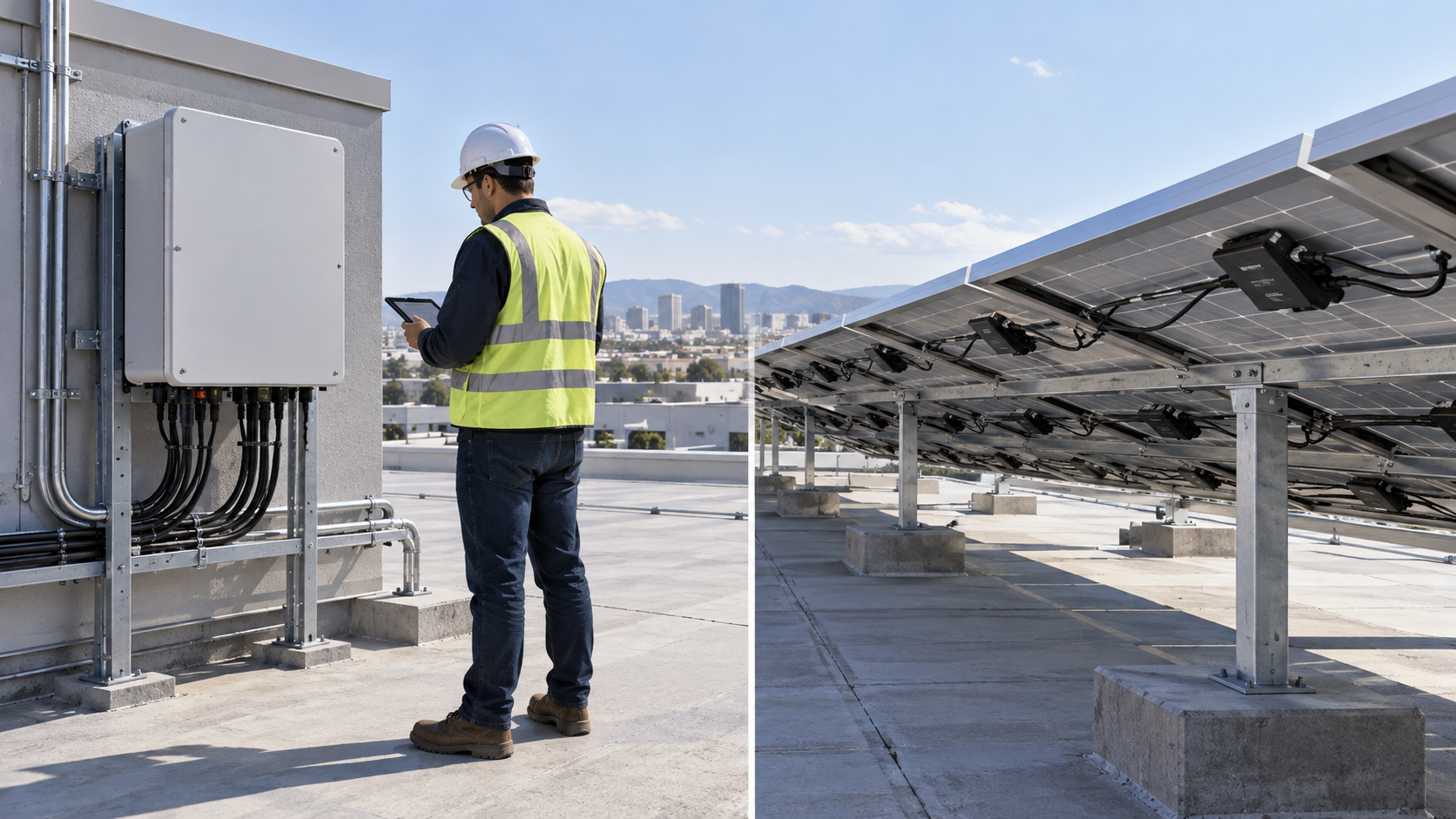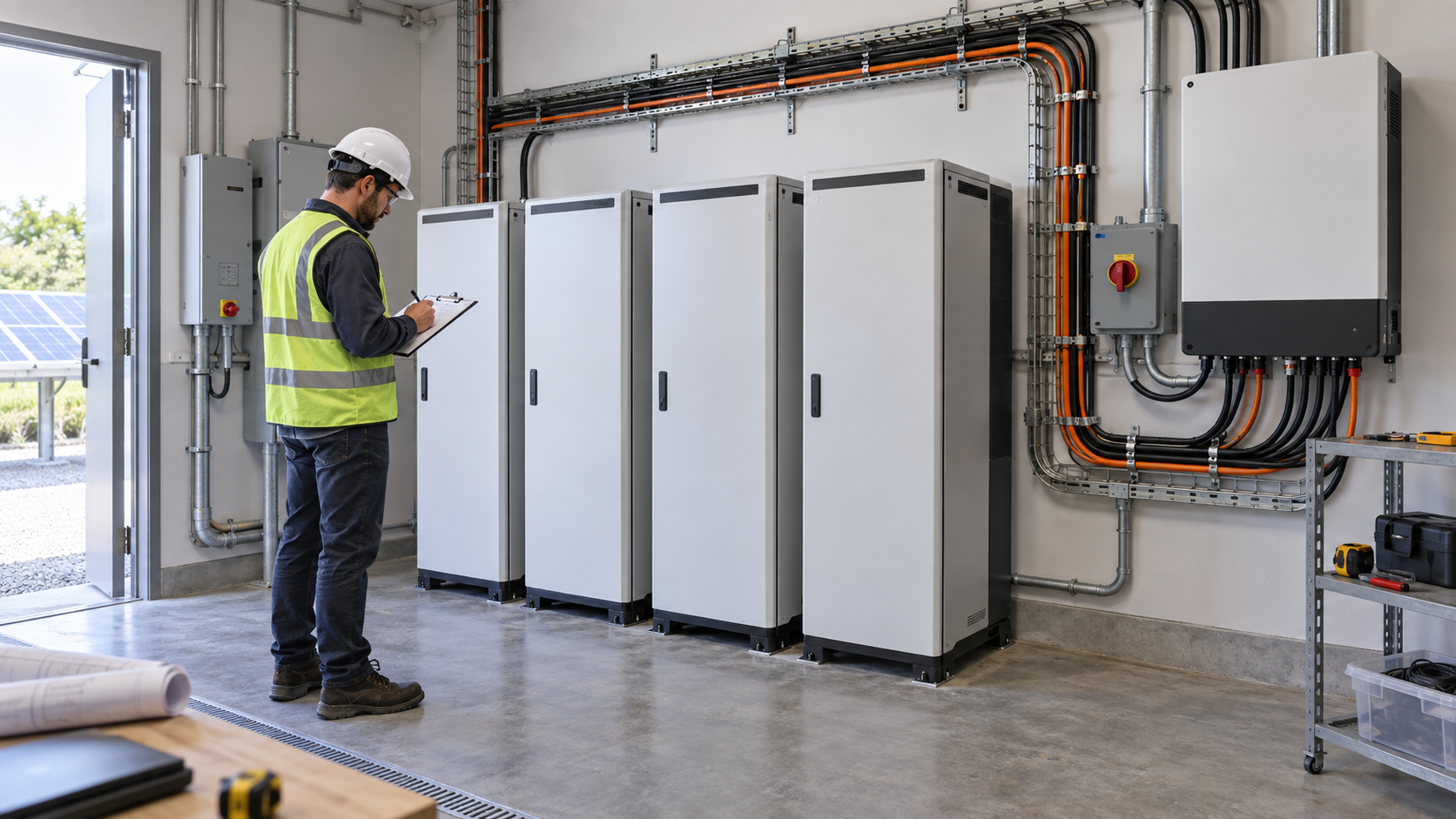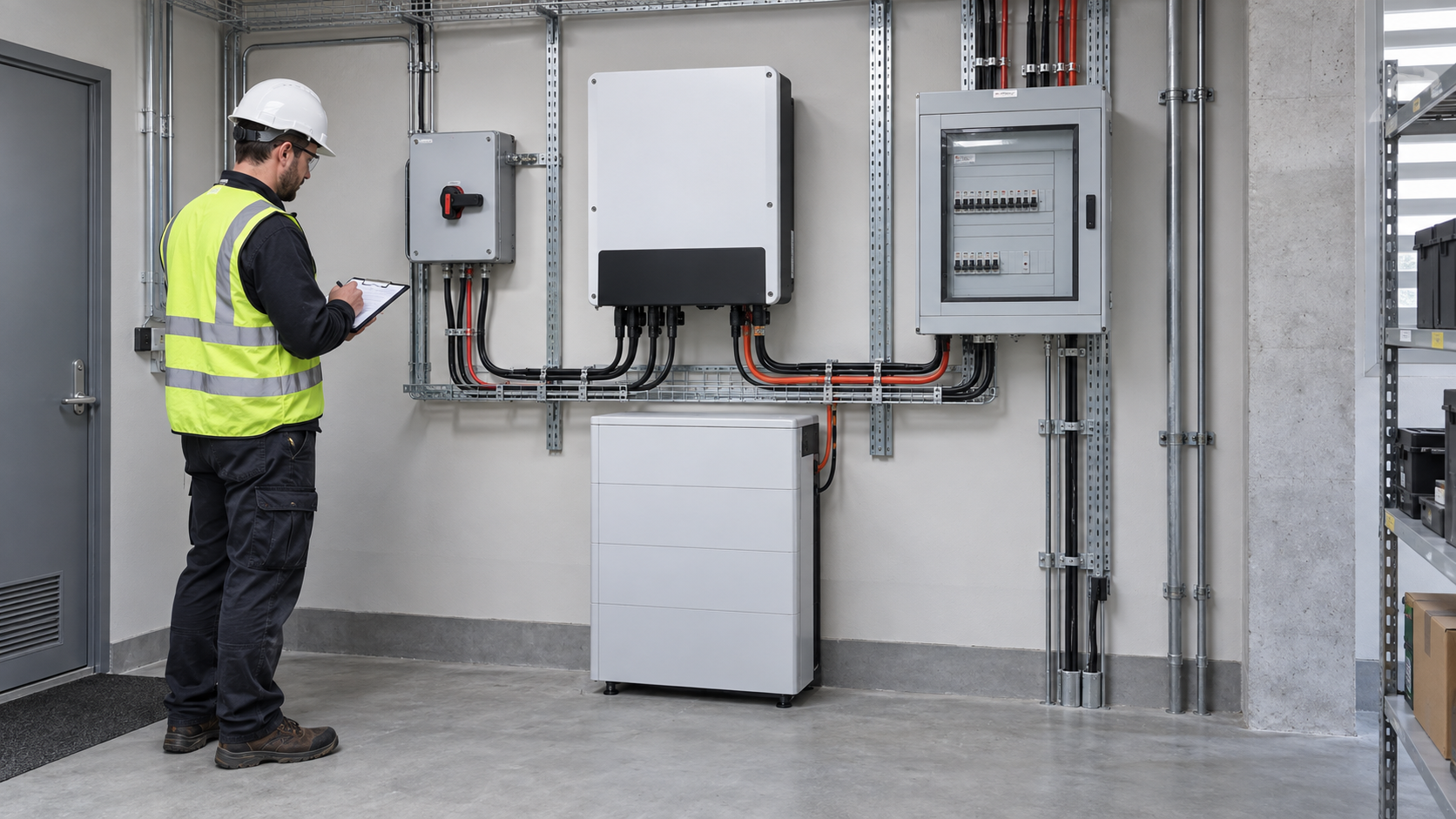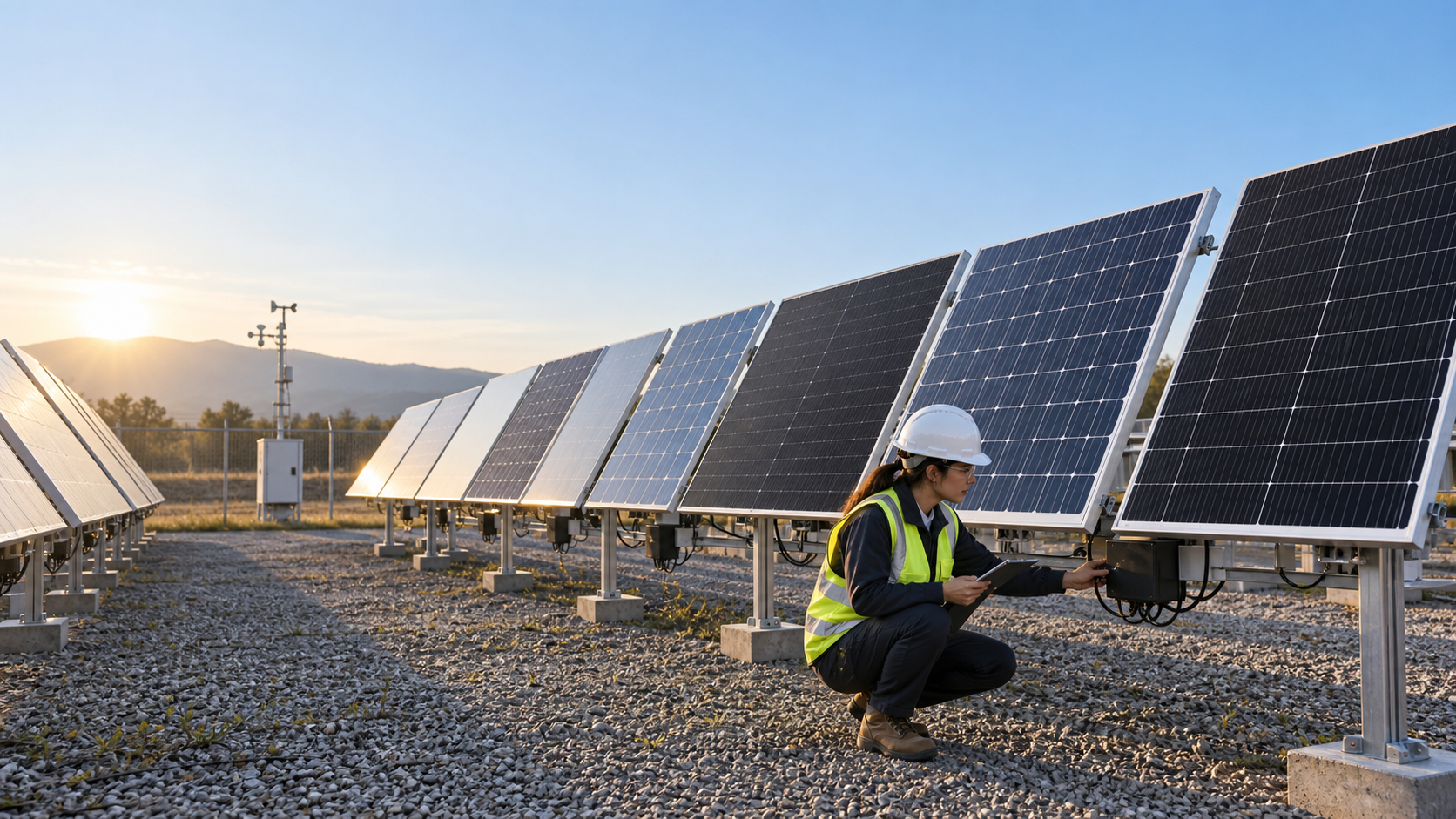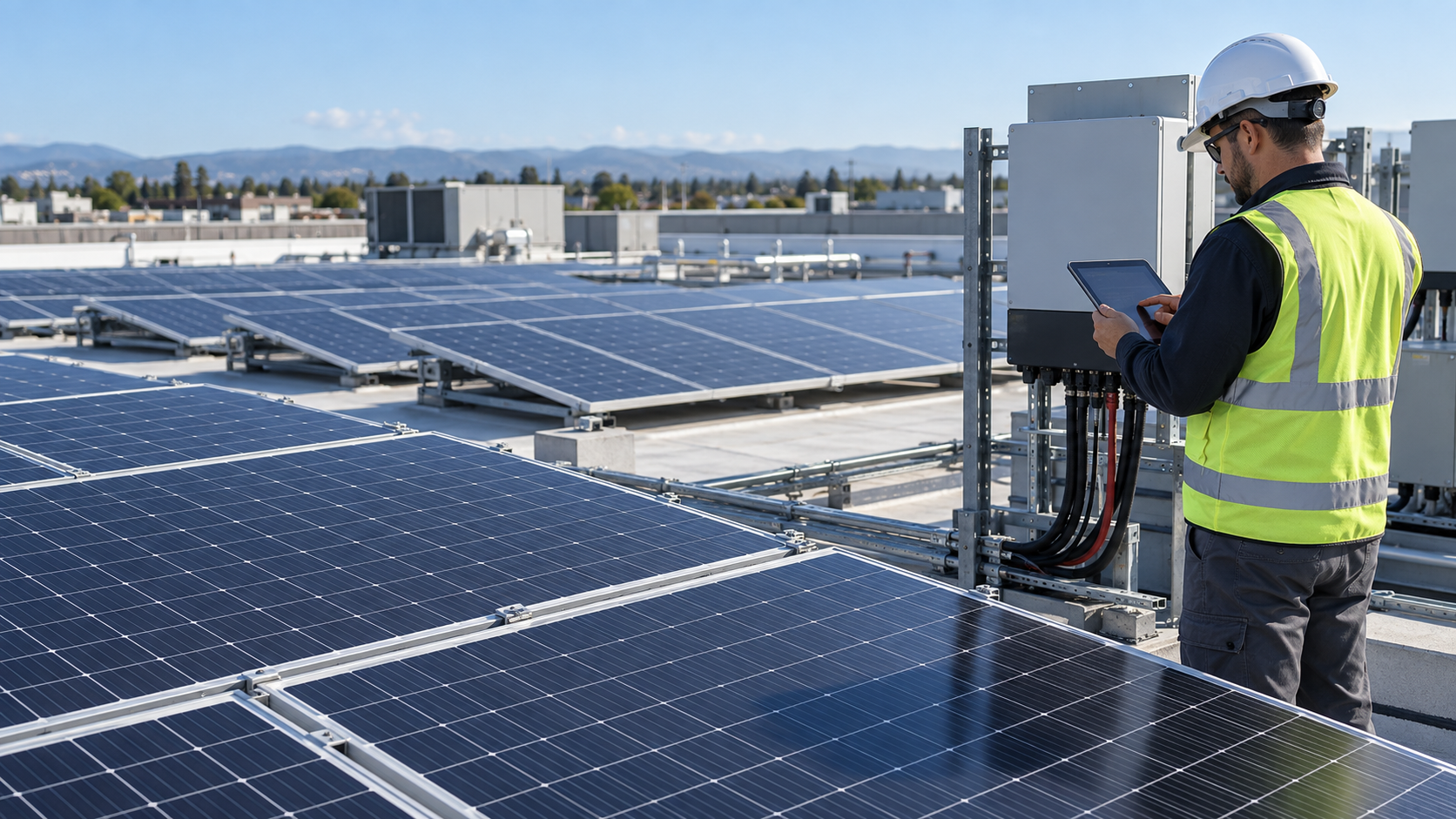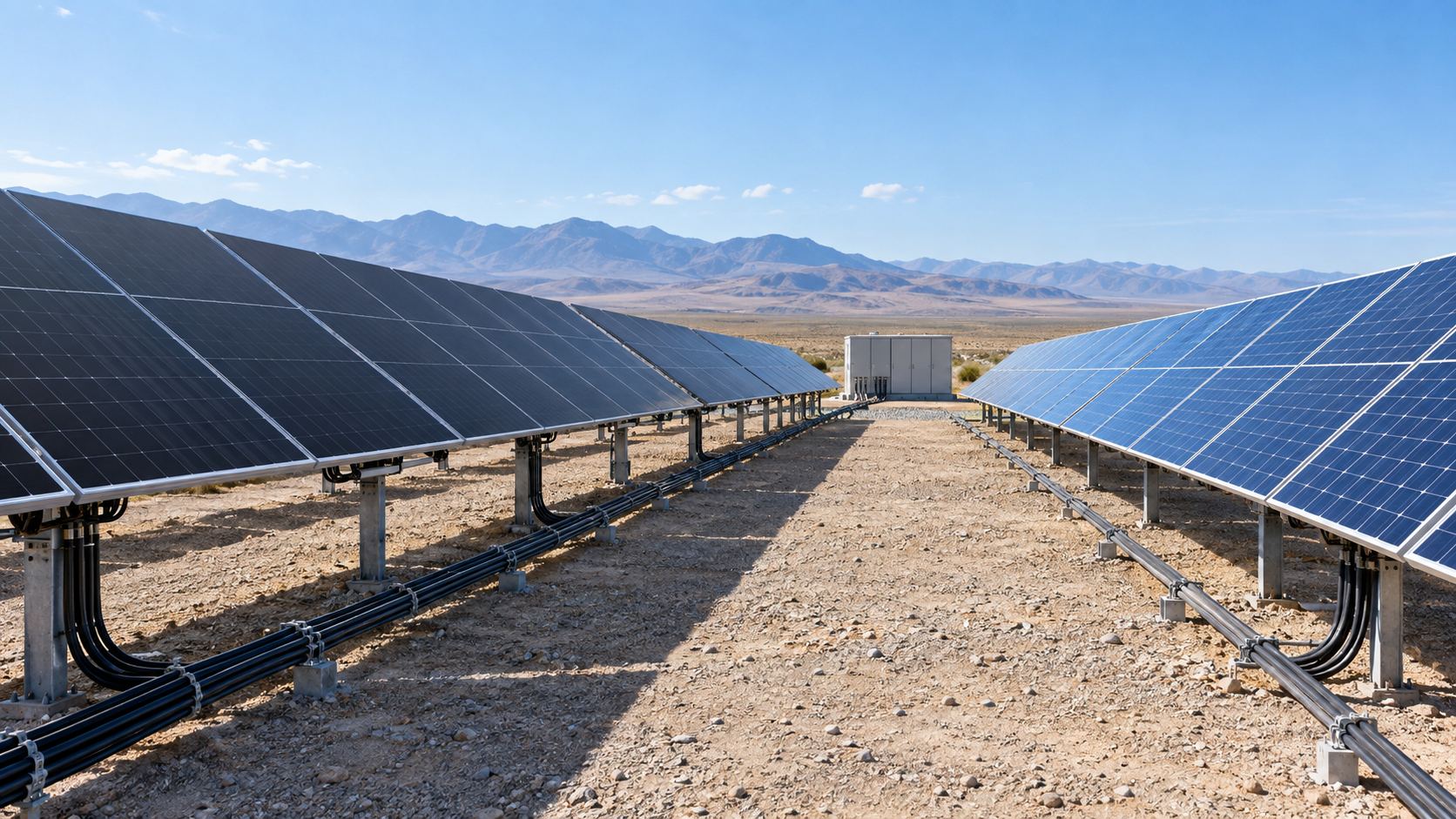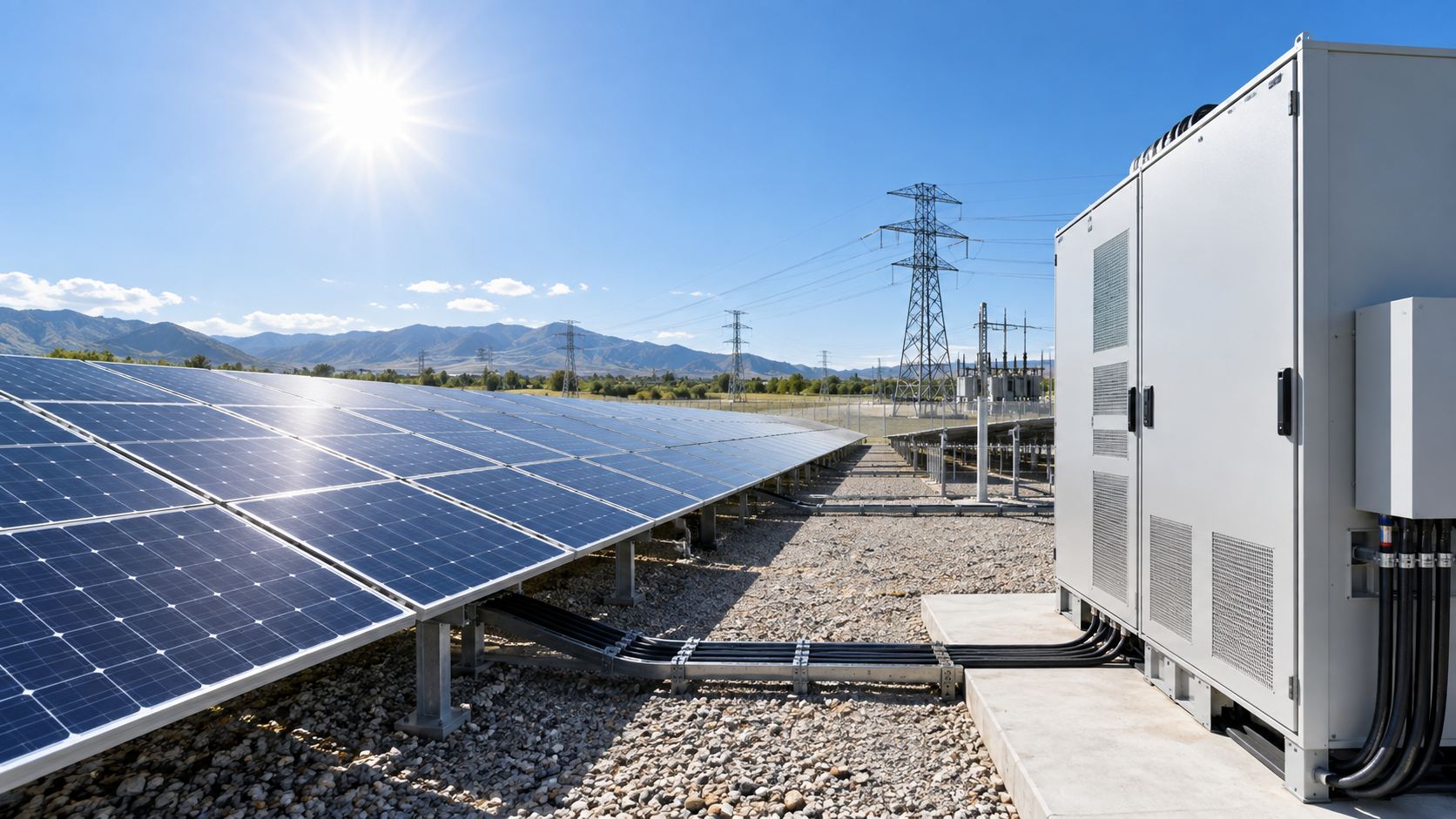
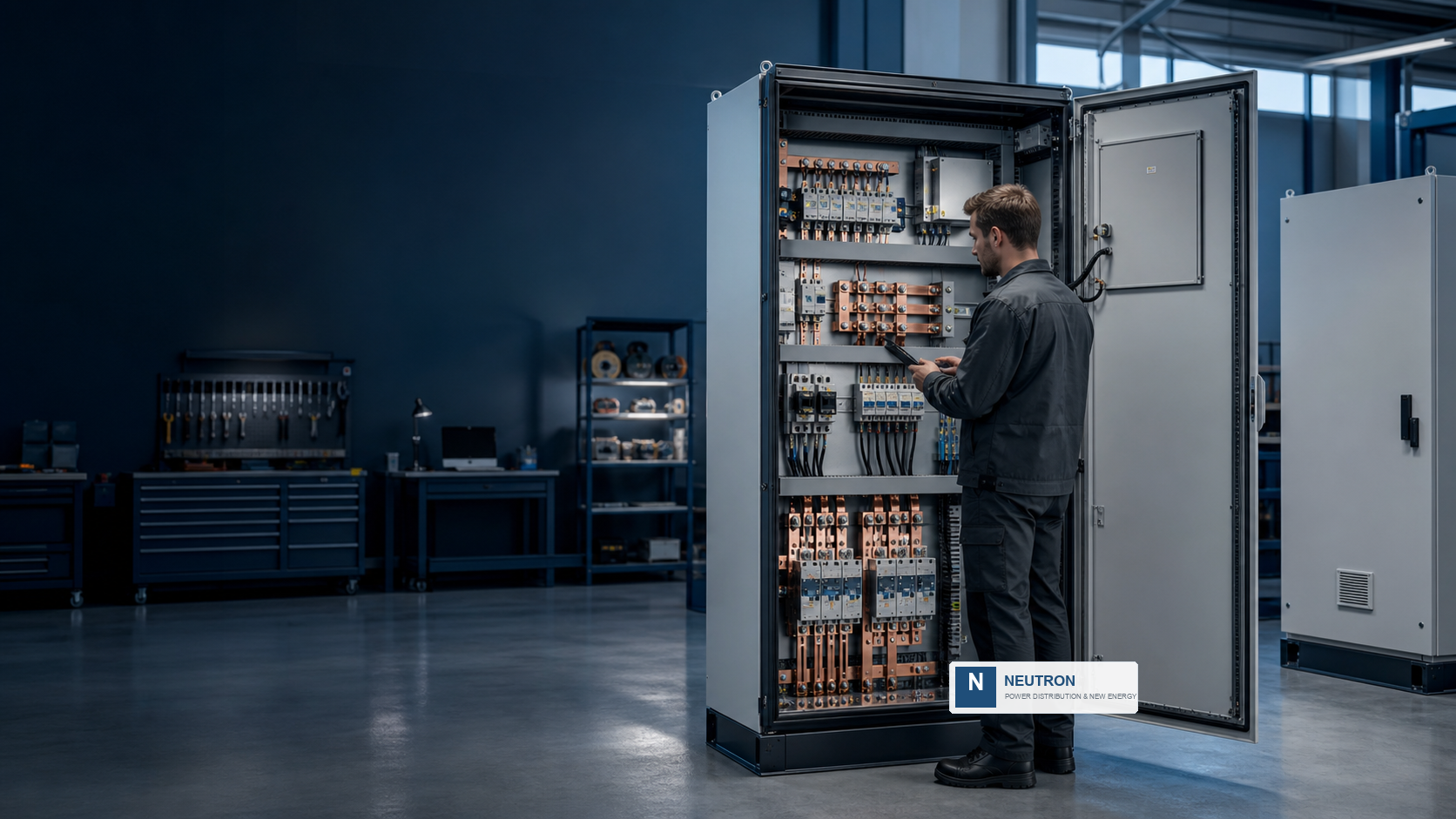

Engineering review scene with an open electrical control cabinet

Solar PV Insights

Technical guidance for PV combiner equipment, AC collection, grid connection and project-ready solar balance-of-system decisions.

Insights categorySolar PV

Project-buyer guidance curated around a specific engineering decision.

Showing 6172 of 103 published guides.

Every guide remains available through the numbered topic pages and its own permanent article URL.

PV engineering context for Sizing Solar Panels for an Off-Grid Inverter (12V/24V/48V)

Solar PV

Sizing Solar Panels for an Off-Grid Inverter (12V/24V/48V)

Off-grid systems fail in one of two ways. Either the array never reaches the voltage the charge controller needs, so the batteries never fully charge, or the array exceeds the maximum input voltage on a cold morning and the electronics shut down or are damaged. Both failures come from the same mistake: sizing the array against nominal figures instead of against the real voltage window at the temperature extremes of the site. NEUTRON supplies the electrical equipment that sits between the array, the charge controller and the battery bank: DC control and protection assemblies, combiner enclosures, isolation switches, surge protective devices and energy-storage control cabinets. We do not build inverters, charge controllers or battery cells. This guide is written from that position, explaining how to match third-party electronics to the array and then protect the connection properly.
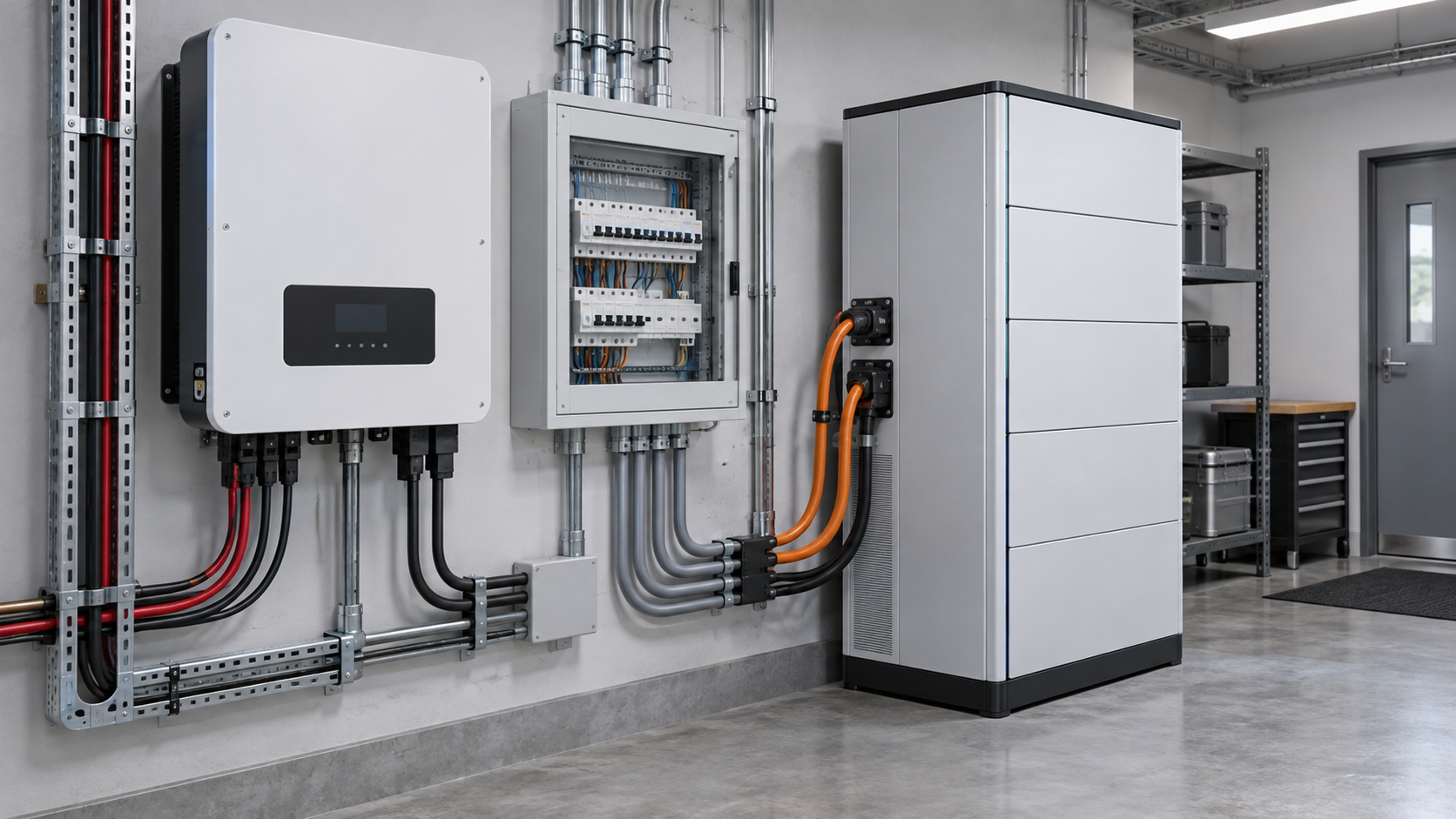

PV engineering context for Adding Battery to Existing Solar: AC vs DC Coupling Explained

Solar PV

Adding Battery to Existing Solar: AC vs DC Coupling Explained

A large installed base of grid-tied arrays was built before storage was affordable, and many of those owners now want backup power and self-consumption. The retrofit question comes down to where the battery is connected: on the alternating-current side of the existing inverter, or on the direct-current bus alongside the array. That single decision determines the equipment list, the installation effort, the round-trip efficiency and the protection scheme. NEUTRON manufactures the electrical equipment that makes either architecture safe and serviceable: energy-storage control cabinets, DC control and protection assemblies, low-voltage switchgear and surge protection. We do not build batteries, inverters or power conversion units. This article explains both coupling methods from that equipment perspective, so the switching and protection can be specified correctly whichever route is chosen.

PV engineering context for How MPPT Works: Algorithms and PWM Comparison

Solar PV

How MPPT Works: Algorithms and PWM Comparison

A photovoltaic module has one operating point at which it delivers its greatest power, and that point moves continuously with irradiance and cell temperature. Maximum power point tracking is the control technique that finds and holds that point. Understanding how it works explains both why it recovers substantially more energy than simple pulse width modulation and why the string configuration feeding it has to be designed with care. NEUTRON does not manufacture charge controllers or inverters. We build the direct-current equipment immediately upstream of them: combiner enclosures, string fuses, isolation switches and surge protective devices, together with the busbar and distribution components that carry the aggregated current. This article explains the tracking function and then covers what the array-side equipment must provide for each tracker input.

PV engineering context for Microinverters vs String Inverters: 2026 Comparison

Solar PV

Microinverters vs String Inverters: 2026 Comparison

Choosing between module-level conversion and a central string architecture shapes far more than the equipment list. It changes where the direct current stops, where the alternating current begins, what has to be protected, and which enclosure sits at the edge of the array. NEUTRON does not build inverters; it supplies the balance of system around them — direct-current combiner boxes and protection for string architectures, and low-voltage switchgear, alternating-current collection and surge protection for module-level architectures. That vantage point makes the practical differences easier to see than a pure conversion-efficiency debate.

PV engineering context for Solar Battery Sizing Guide for Hybrid and Off-Grid (2026)

Solar PV

Solar Battery Sizing Guide for Hybrid and Off-Grid (2026)

Battery capacity is the easiest number in a solar project to get wrong, because it is usually chosen from a brochure rather than calculated from a load. Undersize it and the system runs flat before dawn; oversize it and a large part of the budget sits idle for most of the year. NEUTRON supplies the energy-storage control cabinets, direct-current protection and busbar components that connect and protect third-party battery systems rather than the cells themselves, so this guide works through the sizing arithmetic and then through the electrical boundary that has to be built around the result.

PV engineering context for Most Efficient Solar Panels 2026: Top Modules Ranked

Solar PV

Most Efficient Solar Panels 2026: Top Modules Ranked

Module efficiency has moved fast enough that a datasheet from three years ago now looks conservative. Back-contact and heterojunction designs have pushed the best commercial modules well past 23%, and the ceiling keeps rising. What often goes unnoticed is that efficiency gains arrive as extra current per module, and current is what the collection and protection equipment behind the array must carry. NEUTRON supplies that equipment — combiner boxes, direct-current protection, busbar and distribution components — so this article ranks the technologies and then follows the amperes through to the enclosure.

PV engineering context for Solar Panel Oversizing: Safe DC/AC Ratio Limits

Solar PV

Solar Panel Oversizing: Safe DC/AC Ratio Limits

Installing more module capacity than the inverter can convert is standard practice, not a design error. Because an array only reaches its rated output for a small fraction of the year, matching module capacity exactly to inverter capacity leaves the conversion stage idle most of the time. Oversizing fills that gap, lifting energy yield in the morning, the late afternoon, in winter and under cloud. There are limits, and they are not all about clipping. The array-side equipment — conductors, string protection, isolation devices, surge protection and combining busbars — carries the full oversized current and voltage regardless of what the inverter does with it. NEUTRON supplies that stage, and oversized arrays are where under-rated array-side equipment shows up most often, because the design was checked against inverter capacity instead of array output.

PV engineering context for Mixing Different Solar Panels: Series, Parallel and Power Loss Rules

Solar PV

Mixing Different Solar Panels: Series, Parallel and Power Loss Rules

Mixing modules is one of the most frequent questions in array design, and it usually arises for practical reasons: an expansion two years after the original installation, a replacement for a damaged module that is no longer available, or a batch of surplus panels acquired at a good price. The electrical answer is not a simple yes or no. It depends entirely on whether the modules are combined in series or in parallel, and on which parameter is being mismatched. NEUTRON supplies the DC protection and combining equipment that sits downstream of the array, so mixed strings arrive on our side of the system as a set of currents and voltages that must be protected correctly. This article sets out the rules, quantifies the loss, and explains the protection consequences that are often overlooked when modules are mixed.

PV engineering context for Inverter Clipping: How Much Energy You Actually Lose

Solar PV

Inverter Clipping: How Much Energy You Actually Lose

Clipping is one of the most misunderstood numbers in photovoltaic design. Owners see a flat top on the midday power curve and assume energy is being wasted, while designers deliberately build that flat top in because it lowers the cost of every kilowatt-hour the plant delivers. Both views can be right, and the difference lies entirely in how much array capacity sits behind each kilowatt of alternating-current output. NEUTRON supplies the array-side balance of system — combiner boxes, DC control and protection, busbar and distribution components — so this article looks at clipping from the equipment that has to carry the direct current before the third-party inverter ever sees it.