
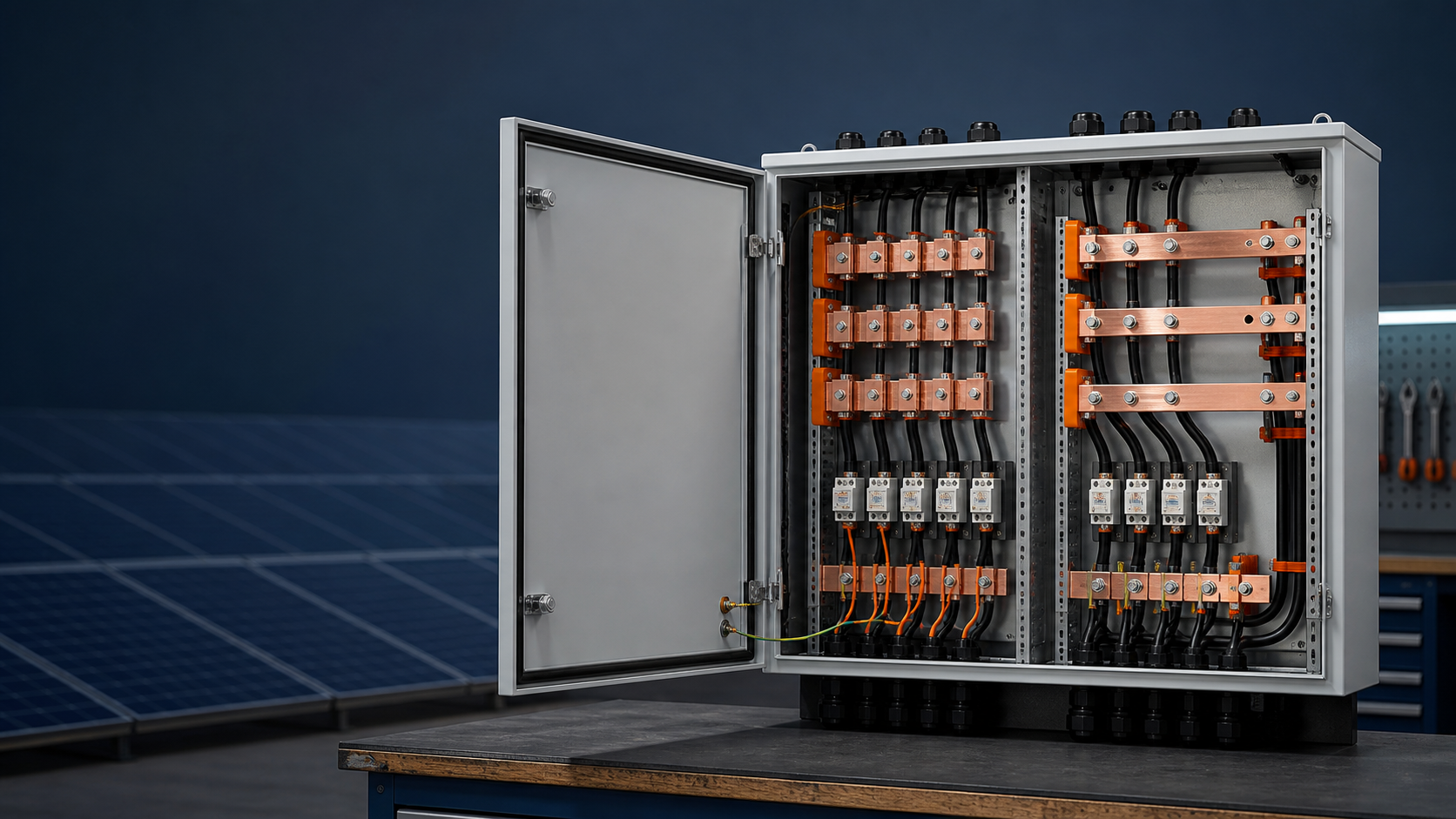
Voltage class and why it matters
The system voltage class sets the dielectric demands on the entire enclosure. A 1000 V box is designed around a lower maximum operating voltage and a smaller transient margin than a 1500 V box. Choosing the class is therefore a system-level decision, not a component tweak, because it cascades into spacing, device ratings and the surge protection strategy.
- 1000 V systems suit many commercial and smaller utility arrays.
- 1500 V systems dominate large utility plants for lower current and thinner cabling.
- The class fixes the minimum clearance and creepage the box must maintain.
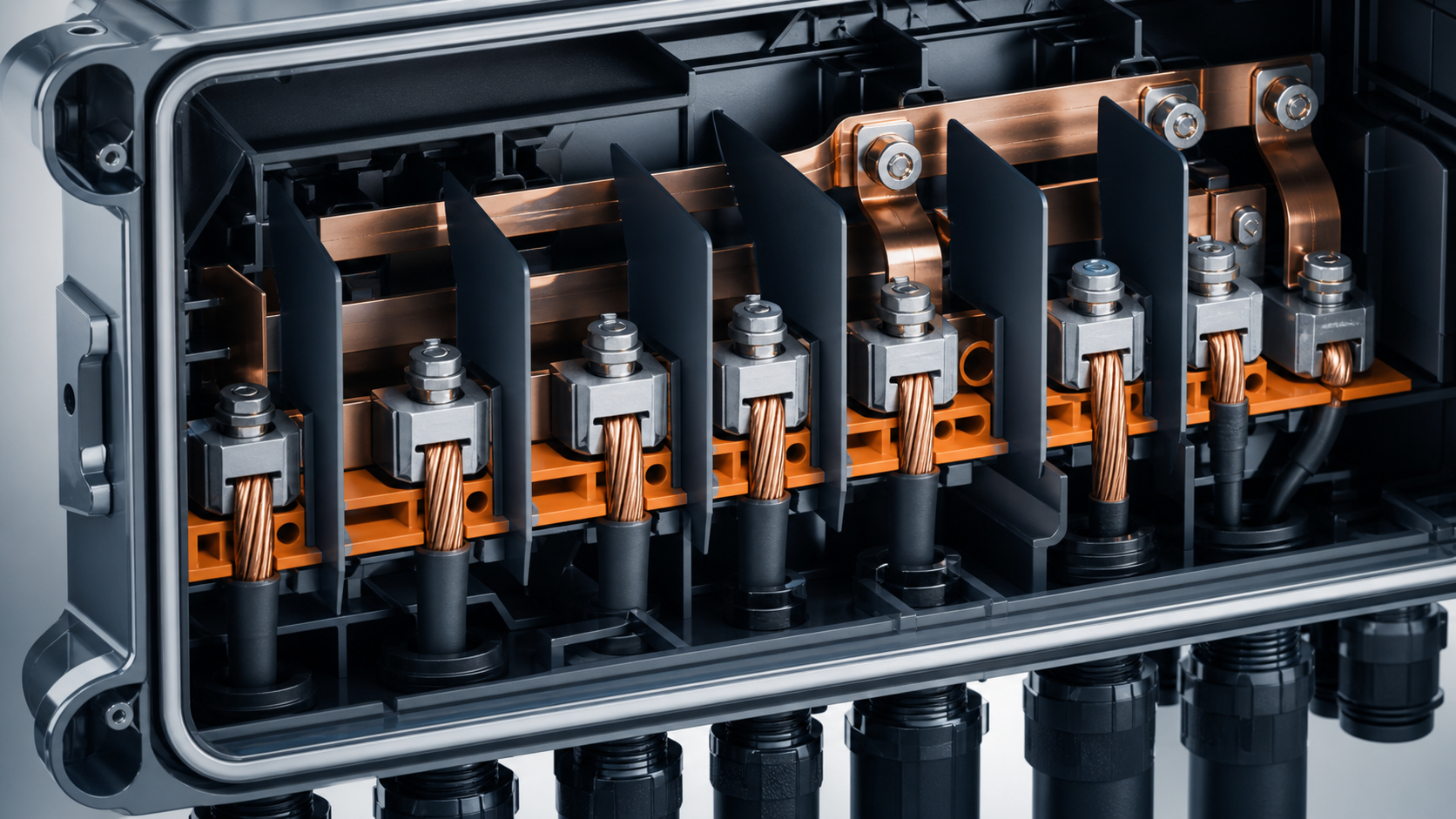
Clearance 8 mm vs 14 mm at 1000V/1500V
Clearance is the shortest air distance between two conductive parts. As a practical rule of thumb, a 1000 V DC combiner box is often specified around 8 mm of clearance for its rated insulation level, while a 1500 V DC box typically requires roughly 14 mm to preserve the same safety margin. The exact figure depends on the pollution degree and the transient overvoltage category, but the directional gap is consistent: more voltage needs more air.
- Clearance protects against flashover through air.
- The 1500 V class roughly doubles the required spacing budget.
- Internal layout must reserve the larger gap before components are placed.
Creepage distance and pollution degree
Creepage is the shortest distance along a surface between conductive parts, and it is governed by the pollution degree of the environment. A dusty, humid or salt-laden site (higher pollution degree) demands a longer creepage path for the same voltage. In a 1500 V box the surface tracking risk is greater, so barriers, grooves or rated insulating materials are used to stretch the path.
- Pollution degree 2 is typical for most sheltered electrical environments.
- Coastal and desert sites push the pollution degree upward.
- Surface path length, not just air gap, must be verified.
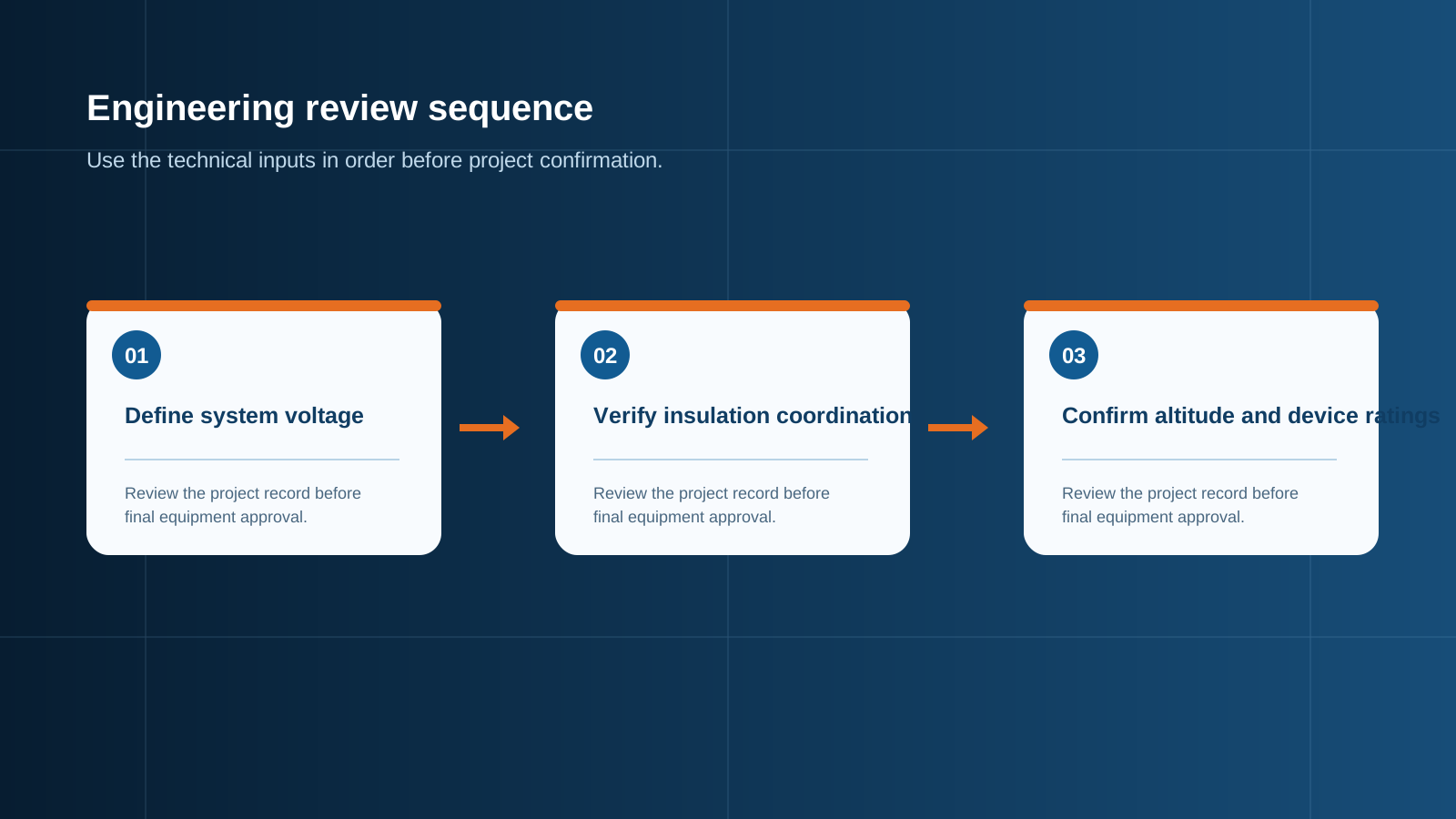
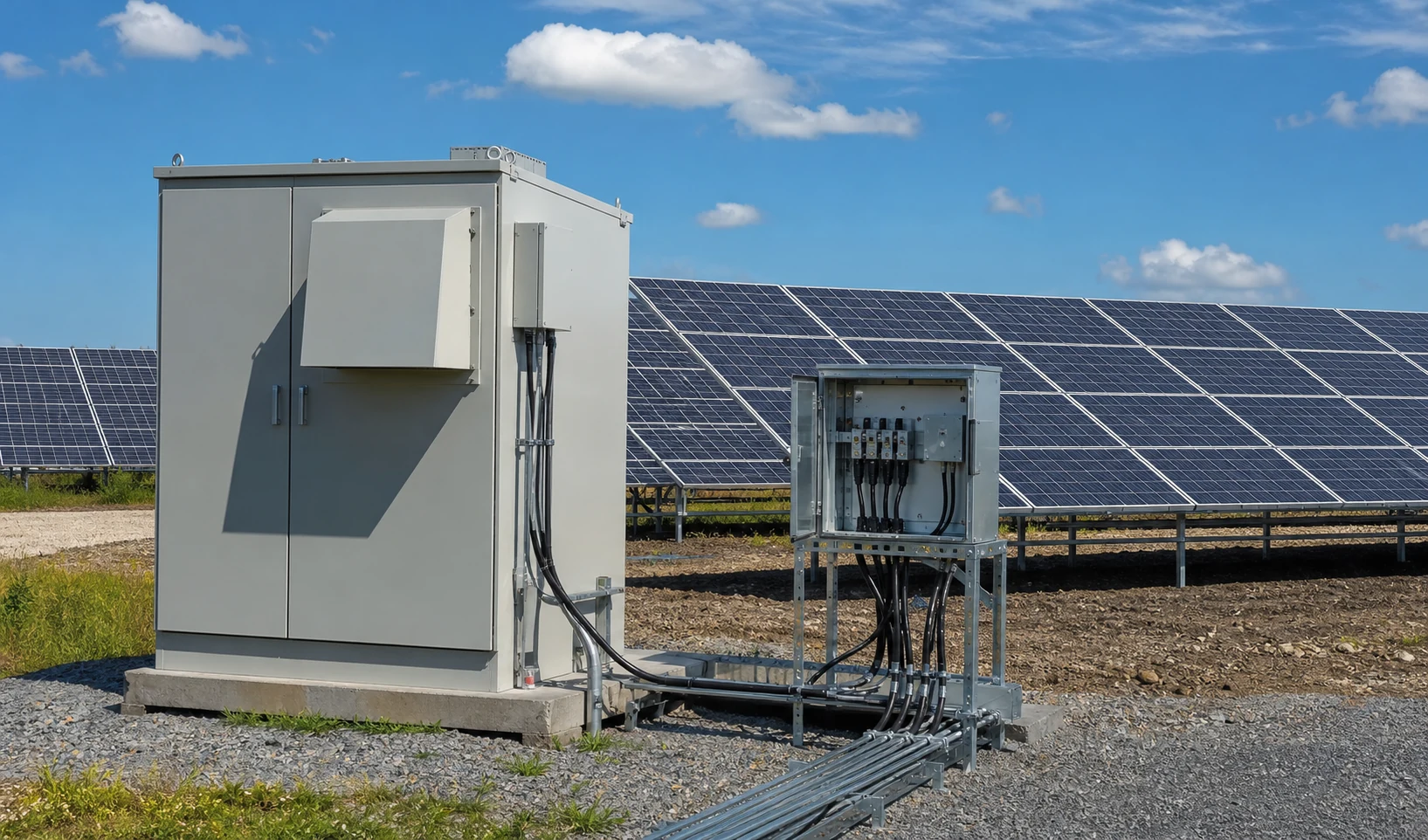
Technical diagram shown at a readable responsive scale.
Insulation coordination across the box
Insulation coordination is the disciplined matching of every insulated gap and protective device to a single overvoltage withstand level. In the combiner box this means the busbar supports, terminal housings, the DC disconnect and the surge protective device all share the same coordination concept, so a transient is either safely clamped or withstood without breaching a gap.
- Define one rated impulse withstand for the assembly.
- Match SPD voltage protection level to the insulated bus.
- Confirm each support and barrier meets the same class.
Component rating chain (fuse, SPD, isolator)
No single part can carry the voltage class alone; the whole chain must be rated. The gPV fuse, the surge protective device and the DC isolation switch each need a 1500 V rating where the system demands it. A box built around a 1500 V bus but fitted with a 1000 V SPD or disconnect is only as strong as its weakest link.
- gPV fuse rated for the system voltage and string current.
- SPD with maximum continuous operating voltage above the 1500 V envelope.
- DC isolator with adequate breaking capacity at the higher class.
Altitude derating per IEC 60947-2
Air becomes a poorer insulator as altitude rises, so clearance must be increased at high sites. IEC 60947-2 provides a derating factor that lengthens the required air distance as atmospheric pressure drops. A box qualified at sea level may need larger gaps or sealed insulation at mountain sites above roughly 2000 m.
- Apply the altitude correction to clearance, not to creepage.
- Document the site elevation on the enquiry.
- Sealed or encapsulated insulation can offset the loss of air strength.
Relevant standards
Specifying to these standards and recording the verification is what makes a voltage-class claim defensible rather than assumed.
- IEC 60947-1 and IEC 60947-2 — low-voltage switchgear, including altitude and dielectric rules.
- IEC 61439 — assembly of switchgear and controlgear, covering verification.
- IEC 61643-31 — surge protective devices for photovoltaic systems.
- IEC 60269-6 — gPV fuses for photovoltaic protection.
When to specify 1500V
Specify 1500 V when the array is large enough that the lower current and thinner cabling offset the extra insulation cost, and when the inverter and string protection are already rated for the higher class. For smaller commercial roofs the 1000 V design often remains the simpler, lower-cost choice. The decision should be made on the full balance-of-system economics, not on a single component.
- Large utility plants: favour 1500 V for cost per watt.
- Small commercial arrays: 1000 V is usually sufficient.
- Confirm the inverter and SPD are rated for the chosen class before ordering.
This is general technical guidance. Confirm final ratings, protection coordination, installation and applicable local requirements against current standards, manufacturer documentation and the approved project design.
Frequently asked questions
What is the difference between clearance and creepage?
Clearance is the shortest distance through air between conductive parts; creepage is the shortest distance along the insulating surface. Both grow with voltage, but creepage is also driven by the pollution degree of the site.
Why does a 1500V box need more insulation margin?
The higher continuous voltage and larger transient overvoltage demand a bigger air gap and surface path to prevent flashover and tracking, so clearance roughly doubles and component ratings must rise with it.
How does altitude affect the voltage rating?
Air insulation weakens with altitude, so IEC 60947-2 requires clearance to be increased at high sites. A sea-level box may need larger gaps or sealed insulation above about 2000 m.
Can a 1000V combiner box be upgraded to 1500V?
Not by swapping a label. The busbar supports, barriers, disconnect and SPD must all be rated for 1500 V, so a true upgrade means replacing the insulated chain rather than a single part.
Which standard applies to the clearance and insulation?
IEC 60947-1 and IEC 60947-2 cover the dielectric and altitude rules, with IEC 61439 for the assembly and IEC 61643-31 for the surge protective device.
Discuss your PV combiner requirement
Share the system voltage, string count, inverter interface and installation environment. NEUTRON can review the equipment configuration around your project documentation.
Discuss a projectContinue learning
Explore related technical guidance in Solar PV.
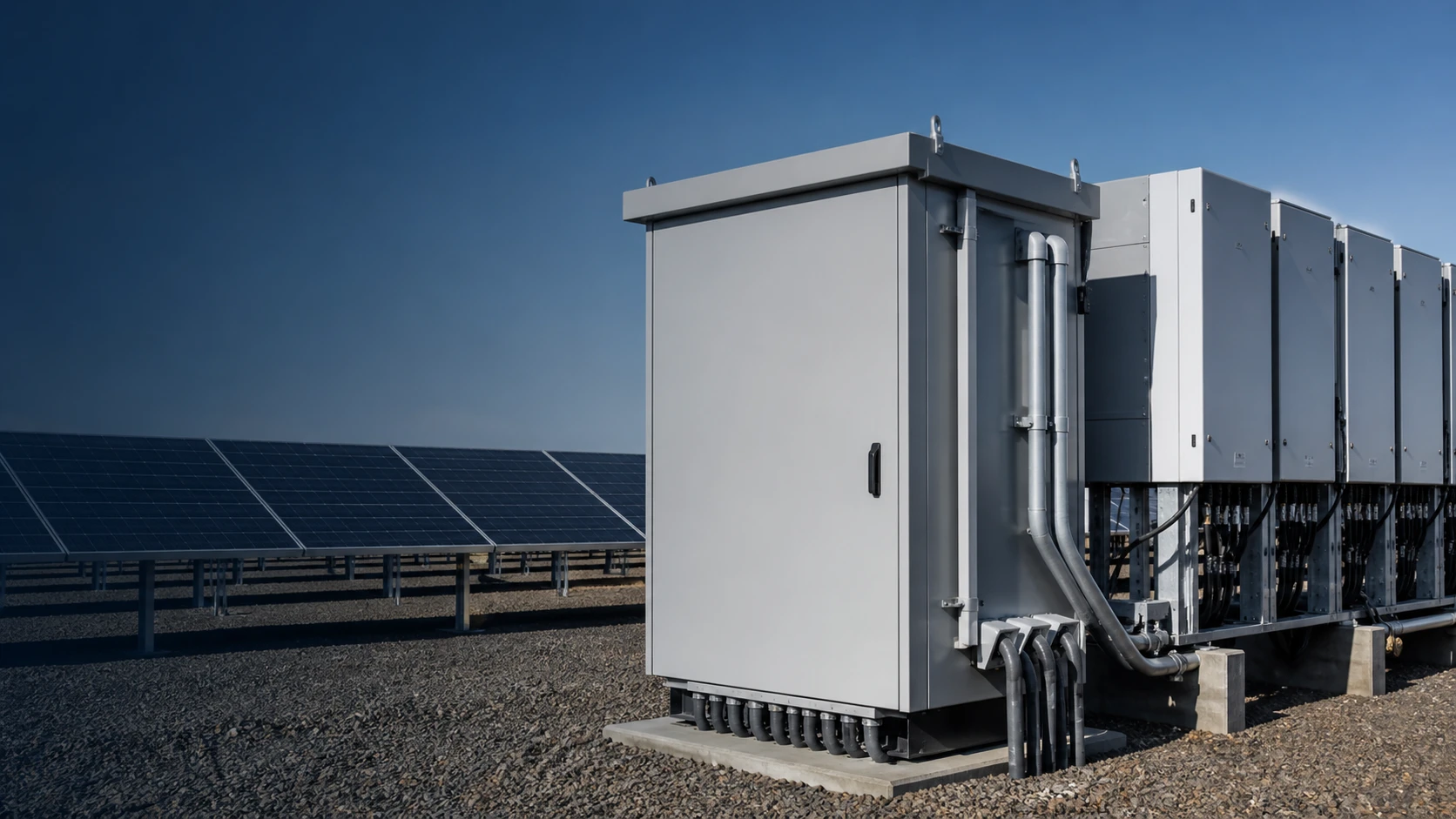
Published from the approved Period 09 source package. Technical values and final design decisions must be verified against the current applicable standard, manufacturer documentation and approved project design.