Engineering review scene with an open electrical control cabinet

Electrical Protection Insights

Selection guidance for residual-current protection, surge protection, transfer switching and low-voltage protection coordination.

Insights categoryElectrical Protection

Project-buyer guidance curated around a specific engineering decision.

Showing 3748 of 75 published guides.

Every guide remains available through the numbered topic pages and its own permanent article URL.

PV engineering context for MC4 Solar Connectors: Types, Selection and Crimping

Electrical Protection

MC4 Solar Connectors: Types, Selection and Crimping

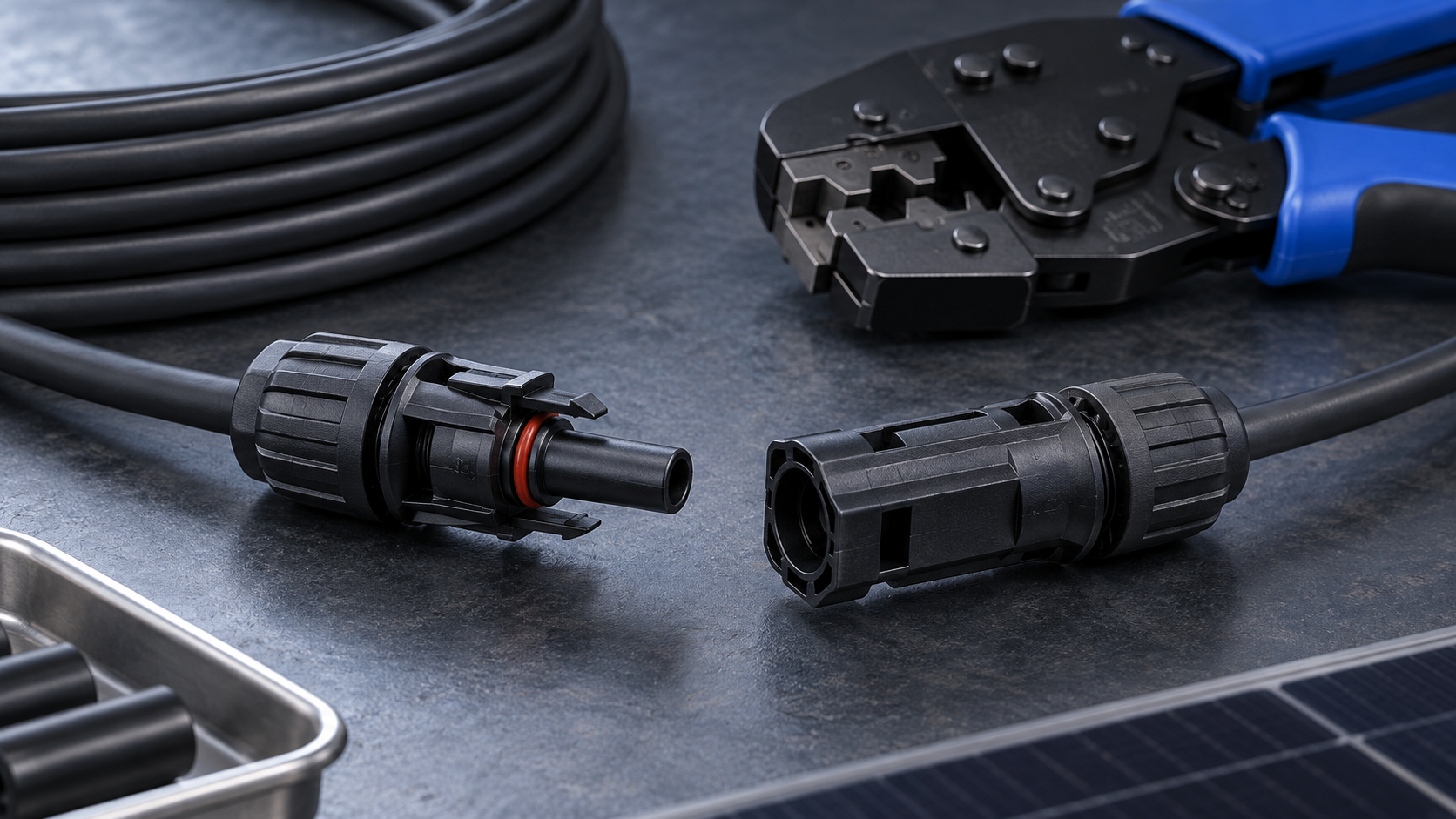
The MC4 style connector is the smallest component in a photovoltaic array and the most frequent point of failure. It carries full string current for decades, sits outdoors in ultraviolet light and driving rain, and is usually terminated by hand on a roof under time pressure. NEUTRON builds the direct-current combiner boxes and protection equipment that these connectors feed, which means every badly crimped contact eventually shows up as a hot terminal or a tripped fuse inside our enclosures. This guide covers selection, termination and inspection from that receiving end.
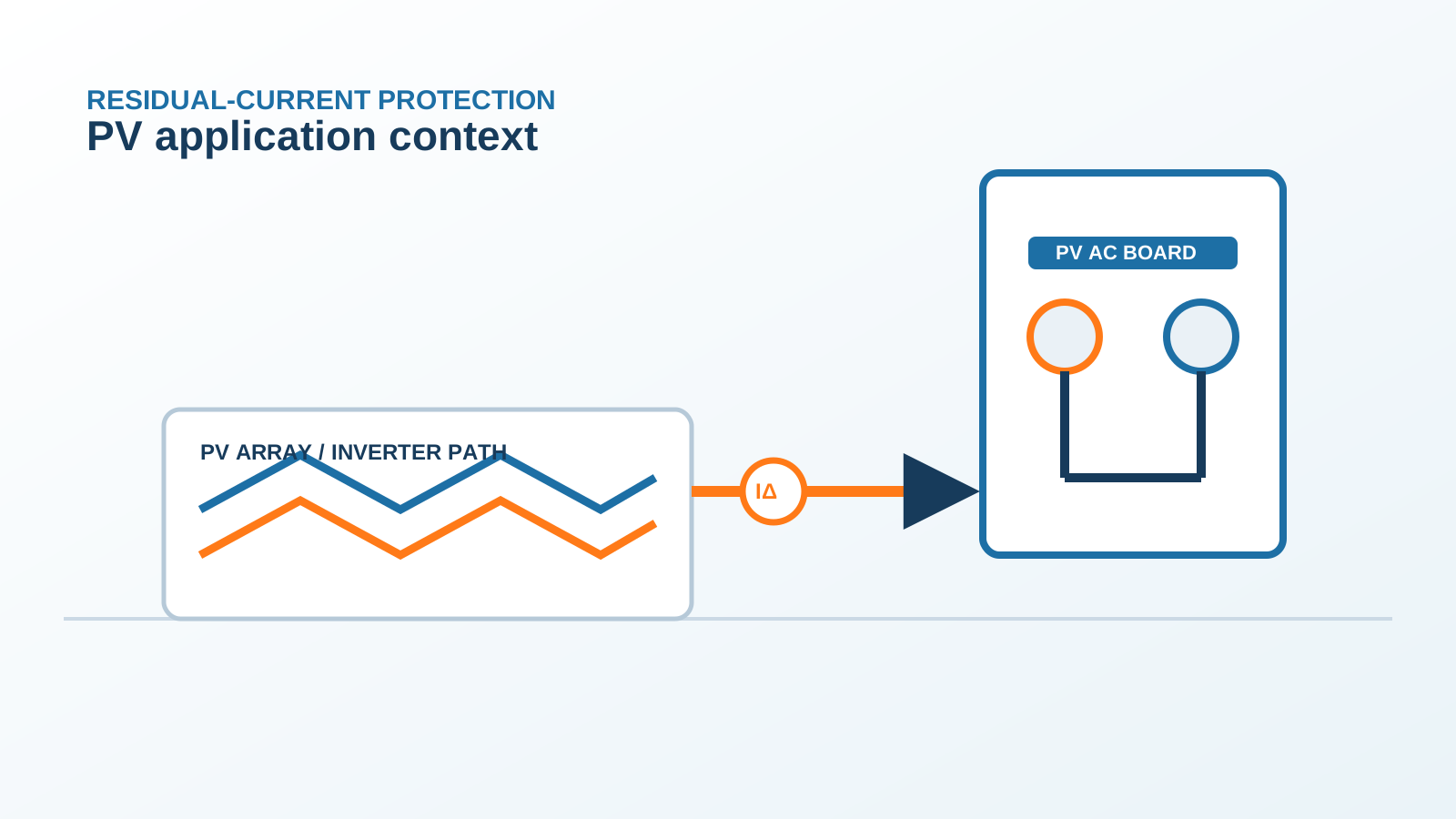
Technical PV residual-current protection context for Type B RCD Smooth DC Detection in PV Inverter Systems

Electrical Protection

Type B RCD Smooth DC Detection in PV Inverter Systems

A residual-current device protects people and equipment by comparing the currents flowing out and back through a circuit. On a conventional AC final circuit that comparison is straightforward. On a photovoltaic AC board fed by a transformerless inverter it is not: the residual current can contain a steady direct component that ordinary devices simply cannot see. This article explains the physics behind that smooth DC component, what a Type B residual-current device does differently, and how to specify and verify one in a PV AC assembly. The inverter itself is supplied by the plant designer; NEUTRON supplies the DC protection and low-voltage switchgear that surround it.

Technical PV residual-current protection context for Why a Type A RCD Fails on Transformerless PV Inverters

Electrical Protection

Why a Type A RCD Fails on Transformerless PV Inverters

A Type A residual-current device is the default choice in most modern low-voltage installations, and for good reason: it covers sinusoidal and pulsating residual currents and therefore suits almost every electronic load. Downstream of a transformerless photovoltaic inverter it is the wrong device, and the failure mode is silent. The device stays closed, the test button still works, and the protection it appears to provide has partly or entirely disappeared. This article explains the mechanism, the symptoms an inspector can actually observe, and how to correct an existing AC board.

Technical PV residual-current protection context for Type B+ RCD for High-Frequency DC in Modern PV Plants

Electrical Protection

Type B+ RCD for High-Frequency DC in Modern PV Plants

Type B is the accepted baseline for residual-current protection downstream of a transformerless photovoltaic inverter. In plants that also contain frequency converters, module-level power electronics or long shielded motor cables, the residual current can carry significant energy well above the frequencies a standard Type B device is required to cover. The Type B+ class exists for exactly that case. This article sets out what the extra letter buys, where it is proportionate, and how to write it into a specification without over-engineering a simple rooftop plant.

Technical PV residual-current protection context for 6 mA Smooth-DC Threshold in PV Residual-Current Protection

Electrical Protection

6 mA Smooth-DC Threshold in PV Residual-Current Protection

Almost every discussion of photovoltaic residual-current protection eventually arrives at one number: 6 mA of smooth direct current. It appears in inverter datasheets, in protective-device specifications and in commissioning reports, often without explanation. The figure is not a shock-hazard limit and it is not an arbitrary product convention. It marks the point at which a steady direct residual current begins to change the behaviour of the magnetic core that conventional residual-current protection depends on. This article explains the reasoning, the measurement method and the design rule that follows from it.

Technical PV residual-current protection context for Inverter Residual-Current Monitor as a Type B Equivalent

Electrical Protection

Inverter Residual-Current Monitor as a Type B Equivalent

Datasheets for transformerless photovoltaic inverters routinely state that the unit contains an integrated residual-current monitor equivalent to a Type B device, and installers reasonably ask whether that removes the need for an external one. The honest answer is that the claim is technically sound but bounded. The integrated function measures direct residual current properly, yet it watches one point in the system. This article explains how the function works, what standard governs it, where its detection zone ends and how to build a scheme that uses it without over-relying on it.

Technical PV residual-current protection context for RCD Tripping Behaviour During PV Inverter Soft-Start

Electrical Protection

RCD Tripping Behaviour During PV Inverter Soft-Start

A residual-current device that trips only in the minutes after a photovoltaic inverter starts, and then holds all day, is one of the most common commissioning complaints on grid-connected plants. The pattern is diagnostic in itself: it points to a transient rather than to a standing insulation fault. Understanding what happens electrically during soft-start makes it possible to distinguish a genuine fault from a transient artefact, and to fix the artefact without reducing the protection the plant actually needs.

Technical PV residual-current protection context for Type F RCD for PV Pumping and Frequency-Converter Loads

Electrical Protection

Type F RCD for PV Pumping and Frequency-Converter Loads

Solar water pumping sits awkwardly between two protection worlds. The load is a motor fed through a frequency converter, which produces mixed-frequency leakage rather than clean mains-frequency leakage. The supply may come from a photovoltaic array through a transformerless conversion stage, which adds a steady direct component. The Type F residual-current class was created for the first of those problems. Whether it is sufficient depends entirely on whether the second is present, and that is a topology question the designer must answer before selecting a device.

Technical PV residual-current protection context for All-Current-Sensitive (ACS) RCD for PV per IEC 62423

Electrical Protection

All-Current-Sensitive (ACS) RCD for PV per IEC 62423

The phrase all-current-sensitive appears in photovoltaic specifications far more often than it is defined. It is not marketing language and it is not a synonym for high quality: it is a precise statement about which residual-current waveforms a device measures and at what sensitivity. For a plant fed by transformerless inverters, that statement is the difference between protection that works and protection that only appears to. This article defines the term, places it in the IEC 62423 framework, and gives the label-reading and specification wording needed to buy the right device.