
1. Beyond Type B: what the B+ class adds
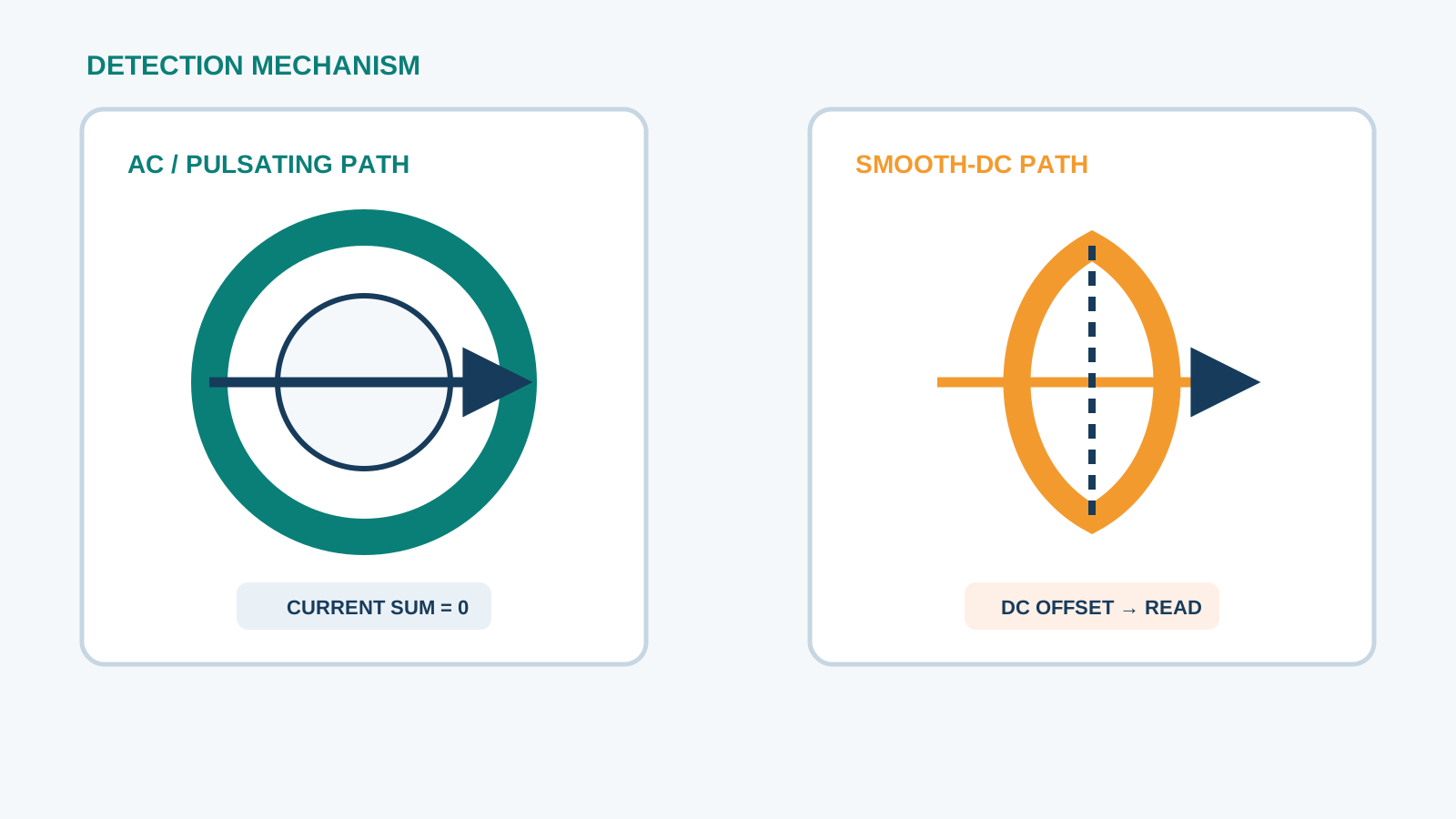
The residual-current type classes are defined by the waveforms a device must detect and the sensitivity it must retain while doing so. A Type B device covers sinusoidal residual current, pulsating direct current, smooth direct current and mixed frequencies, with its declared frequency performance specified up to the low kilohertz region. A Type B+ device keeps all of that and extends the guaranteed detection band substantially higher, typically to around 20 kHz, while also constraining how much the tripping threshold may rise across that band.
The distinction matters because sensitivity naturally degrades with frequency. Every residual-current device has a rising threshold curve as the residual frequency increases, since the sensing path and the evaluation electronics both have finite bandwidth. A B+ device is one whose curve is characterised and bounded across a wider band, so the designer knows what protection remains at, say, 5 kHz rather than assuming it.
Technical diagram shown at a readable responsive scale.
2. High-frequency DC contributions from PV pumps and optimisers
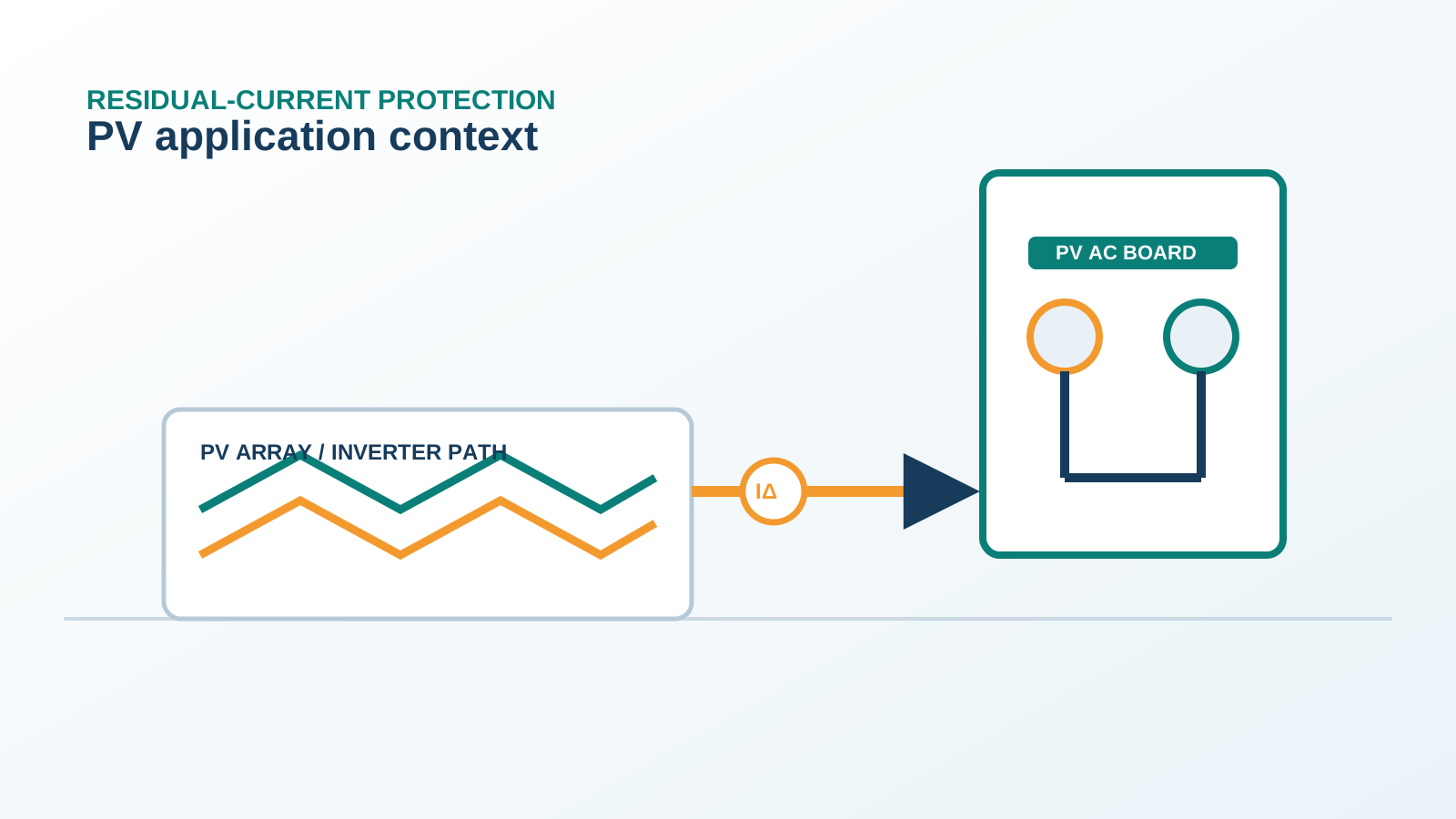
Three arrangements commonly produce high-frequency residual current in a PV plant. A solar pumping station drives an induction or permanent-magnet motor through a frequency converter whose output carries steep voltage edges; the capacitance of the motor cable and the motor windings to earth converts those edges into a common-mode current at the switching frequency and its harmonics. Module-level electronics such as optimisers add a second switching layer directly on the array, injecting common-mode current through the module parasitic capacitance. Long DC runs then act as an efficient antenna for both effects.
The resulting residual-current spectrum is not a clean tone. It contains a smooth direct component from the transformerless conversion stage, mains-frequency and low-order harmonic content, and a broad cluster of energy around the converter switching frequency with sidebands. A device characterised only to the low kilohertz region may under-read the total, because the part of the spectrum it attenuates most is exactly the part these installations produce most of.
3. Detection bandwidth up to several kilohertz
Physiological effect of current on the human body falls with frequency, which is why standards permit a rising tripping threshold rather than demanding flat sensitivity. That permission is not unlimited: a device must still trip at a defined multiple of its rated residual current at the top of its declared band. A B+ device declares and bounds that behaviour up to roughly 20 kHz, so the protection at the converter switching frequency is a specified quantity rather than an unknown one.
Mains frequency to a few hundred hertz: sensitivity close to the rated residual current for both Type B and Type B+.
One to a few kilohertz: both classes show a rising threshold, but only B+ has it characterised and bounded to the upper limit of its band.
Above a few kilohertz: outside the declared performance of a standard Type B device; within the B+ band up to about 20 kHz.
Above the B+ band: no residual-current class provides declared protection — control the emission at the converter instead.
4. Where B+ is justified and where standard Type B is enough
B+ is proportionate where a frequency converter feeds a motor over a cable of appreciable length inside the protected circuit — solar pumping, tracker drives with large motors, and industrial PV plants with converter-fed process loads on the same board. It is also worth considering where measurement shows substantial residual energy above one kilohertz, or where the plant has already suffered unexplained tripping behaviour that low-frequency measurement cannot account for.
A standard Type B device remains the correct and sufficient choice for a plain grid-connected rooftop or ground-mount plant where the inverter output feeds an AC board with no converter-fed motor load. Specifying B+ there adds cost and a wider device without adding meaningful protection, and it does not remove any obligation elsewhere in the scheme.
5. Coordination with drive isolation and filtering
A residual-current device is the last line, not the first. High-frequency common-mode current should be limited at its origin: a correctly terminated shielded motor cable with the shield bonded at both ends over a full circumference, the converter earthing point kept short and direct, and the converter internal filter left in service unless the manufacturer specifically permits otherwise. Where the filter is disconnected to reduce leakage, that decision moves emission out of the filter and into the earthing system, so it must be evaluated rather than assumed to help.
An isolating transformer between the converter and the protected circuit is the strongest measure, because it breaks the common-mode path entirely and allows a simpler protective device downstream. It costs efficiency and space, so it is normally reserved for cases where the converter cannot be tamed by filtering and cable practice alone.
6. Testing B+ tripping on site
Standard multi-function installation testers inject sinusoidal, pulsating and smooth direct residual current. Very few inject a calibrated high-frequency residual current, so a site test usually cannot verify the upper part of the B+ band directly. The practical approach is to verify what can be verified and to obtain the rest from documentation.
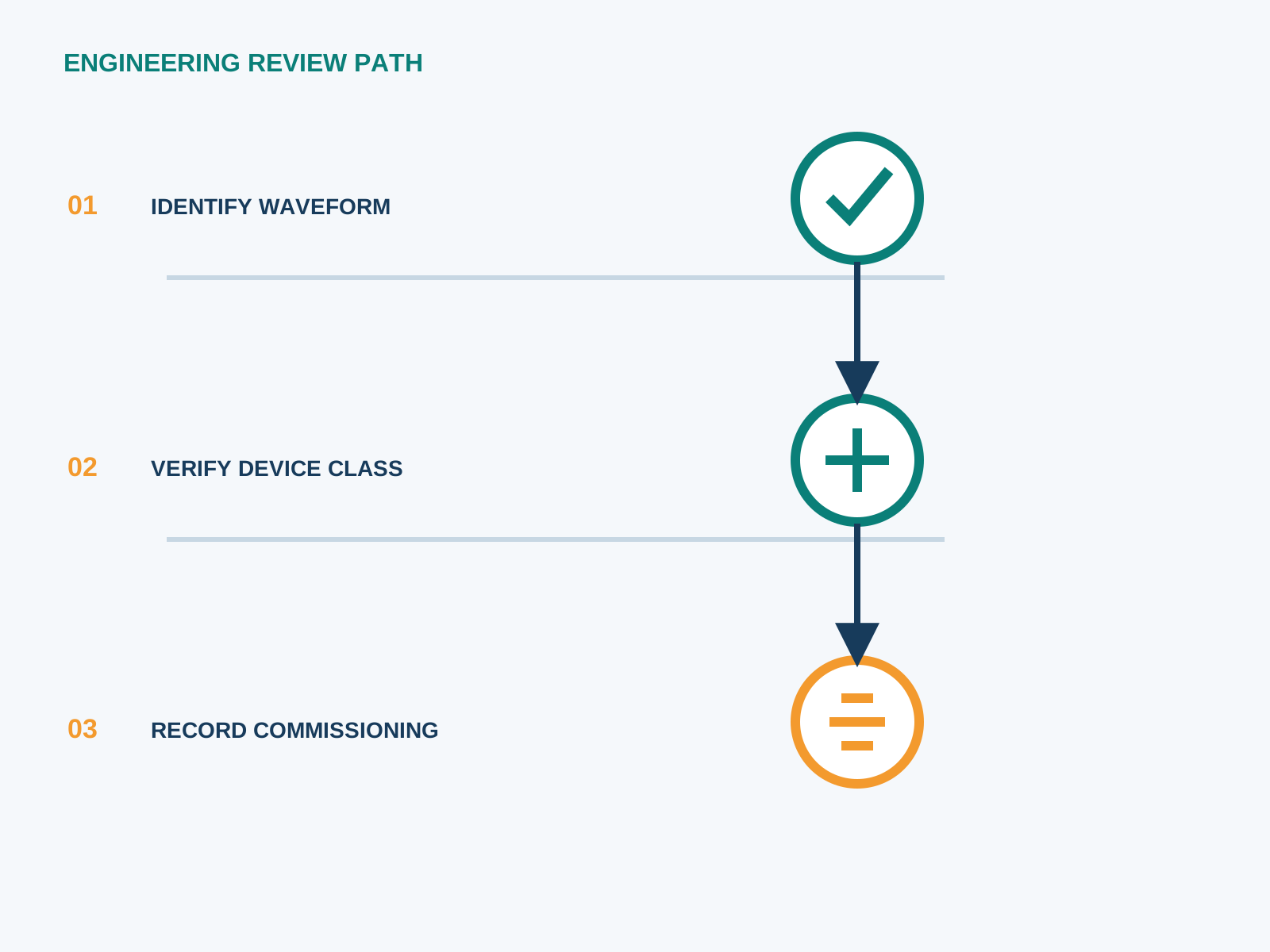
Verify sinusoidal, half-wave pulsating and smooth direct tripping with a calibrated tester and record the times.
Measure the actual residual-current spectrum with a wideband current probe around all live conductors while the converter runs at full load.
Compare the measured spectrum against the manufacturer tripping-threshold curve for the device.
Keep the manufacturer type-test declaration for the B+ band in the handover file as the evidence of high-frequency performance.
Repeat the spectrum measurement after any change to cable routing, shielding or converter settings.
7. Cost against risk
A B+ device costs more per pole than a standard Type B, occupies more DIN modules and needs the same auxiliary supply arrangement. Against that sits the cost of the failure it prevents: an undetected earth fault on a converter-fed motor circuit, or a plant where repeated unexplained tripping leads an operator to bypass the protection altogether. The second outcome is the more common and the more dangerous, and it is the strongest practical argument for characterised high-frequency performance on converter circuits.
The decision is therefore per circuit, not per plant. A pumping feeder may justify B+ while the inverter AC feeder on the same board is correctly served by a standard Type B device.
8. Specifying B+ in procurement
State the class explicitly as Type B+ per IEC 62423 rather than writing "high-frequency capable".
State rated current, pole count, rated residual current and the required upper frequency of the declared detection band.
Require the manufacturer tripping-threshold curve against frequency as a submitted document.
State the auxiliary supply arrangement and whether a status contact for plant monitoring is required.
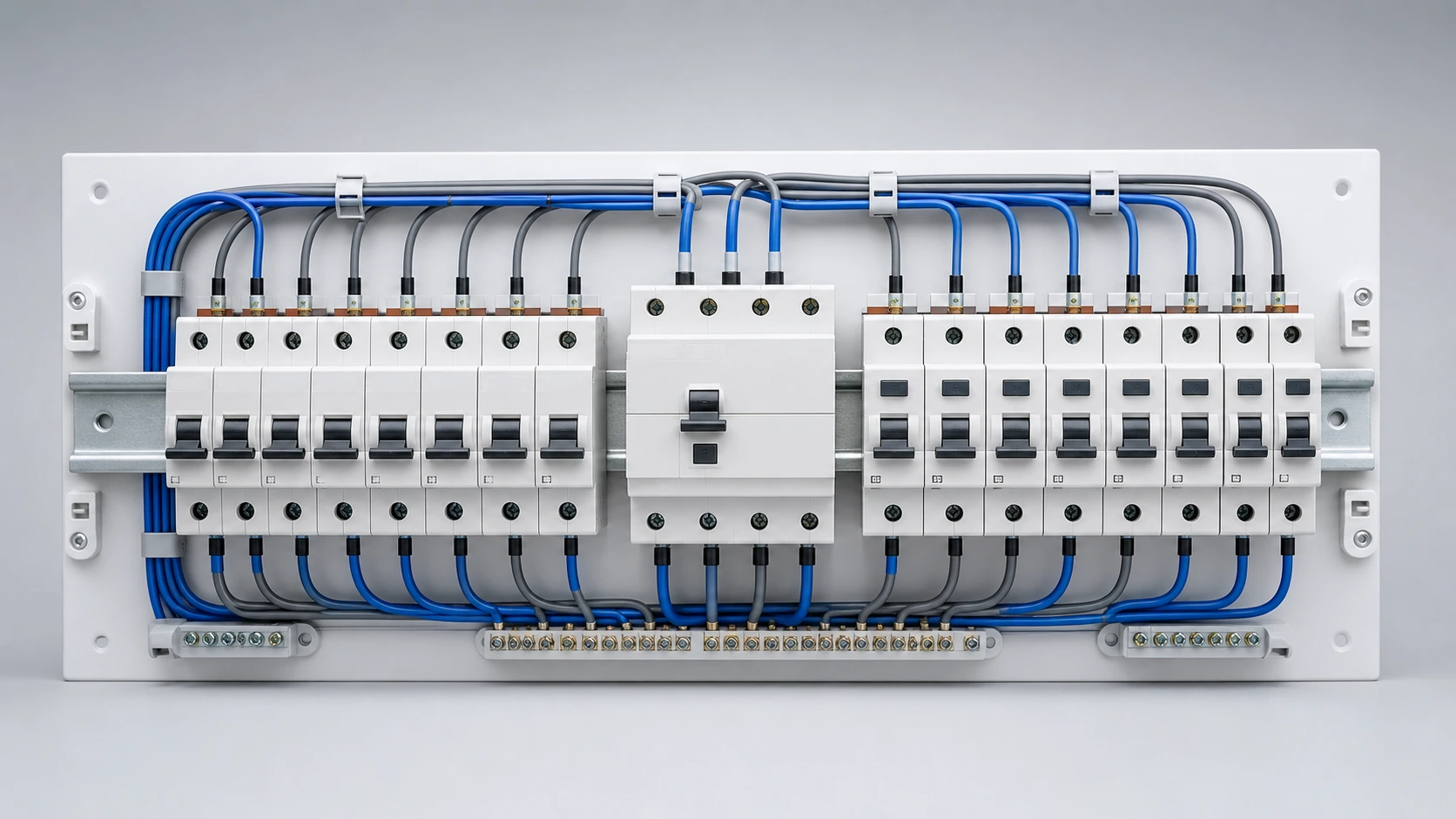
State the enclosure width available, because a B+ device is wider than the Type A it may be replacing.
Require coordination data with the upstream overcurrent device on the same feeder.
NEUTRON supplies the DC protection assemblies and low-voltage switchgear that house these devices and can review a converter-fed PV circuit against the protection classes you have specified.
This is general application guidance. Confirm final ratings, trip settings, standards, inverter instructions and local installation requirements against approved project documentation and a qualified engineer's review.
Frequently asked questions
What is the difference between Type B and Type B+?
Both detect sinusoidal, pulsating, smooth direct and mixed-frequency residual current. The B+ class extends the guaranteed detection band substantially higher — typically to around 20 kHz — and bounds how much the tripping threshold may rise across that band, so high-frequency protection becomes a specified quantity rather than an assumption.
Do PV pumping stations need a Type B+ device?
They are the clearest case for it. A frequency converter driving a motor over an appreciable cable length produces common-mode current at the switching frequency and its harmonics, which sits above the declared band of a standard Type B device. Measure the residual spectrum with a wideband probe before deciding.
Up to what frequency must detection cover?
A Type B+ device typically declares performance to about 20 kHz. Above that band no residual-current class offers declared protection, so the correct response is to limit emission at the converter through shielded cable practice, short earthing paths and the internal filter.
Is Type B+ required by standard?
No standard mandates B+ by application. IEC 62423 defines the classes and their test waveforms; the installation designer selects a class whose declared performance covers the residual current that the circuit can actually produce. For a plain grid-connected rooftop plant a standard Type B device remains sufficient.
Bring the protection inputs to the first review.
{ "@context": "https://schema.org", "@type": "Article", "headline": "Type B+ RCD for High-Frequency DC in Modern PV Plants", "description": "What Type B+ adds above standard Type B, where high-frequency PV leakage justifies it, and how to test and specify it for pumping and optimiser circuits.", "author": { "@type": "Organization", "name": "NEUTRON LLC" }, "publisher": { "@type": "Organization", "name": "NEUTRON LLC", "logo": { "@type": "ImageObject", "url": "https://www.neutronele.com/logo.png" } }, "datePublished": "2026-09-03", "dateModified": "2026-09-03", "mainEntityOfPage": "https://www.neutronele.com/insights/type-b-plus-rcd-pv-high-frequency-dc", "image": "https://www.neutronele.com/insights/img/type-b-plus-rcd-pv-high-frequency-dc-hero.jpg", "articleSection": "Electrical Protection", "keywords": "Type B+ RCD PV high frequency DC, frequency converter leakage, PV pumping, high-frequency residual current, IEC 62423 Type B+, selective", "inLanguage": "en" }
Discuss a project requirementContinue learning
Explore related technical guidance in Electrical Protection.
Published from the approved period 10 source package; technical claims and source wording are retained for review.