

What a string is
A string is a series connection of panels that adds their voltages while keeping the current equal to a single panel. Strings are the building blocks of any PV array, and how you group them decides the voltage the inverter sees.
Panels wired in series share one current path, which is why a string is protected as a single unit. NEUTRON combiner boxes are built to collect many such strings, fuse each one, and deliver a tidy DC feed toward the inverter.
Technical diagram shown at a readable responsive scale.
Voltage limits you must respect
Two limits govern string voltage. The inverter's maximum DC input voltage sets a hard ceiling, and the system's insulation rating (often 1000 V or 1500 V) sets the design maximum. Exceeding either risks equipment damage and unsafe conditions.
String voltage is therefore a planned value, not an accident. You choose how many panels sit in series so the worst-case voltage stays safely below both limits.
Temperature and cold-weather Voc
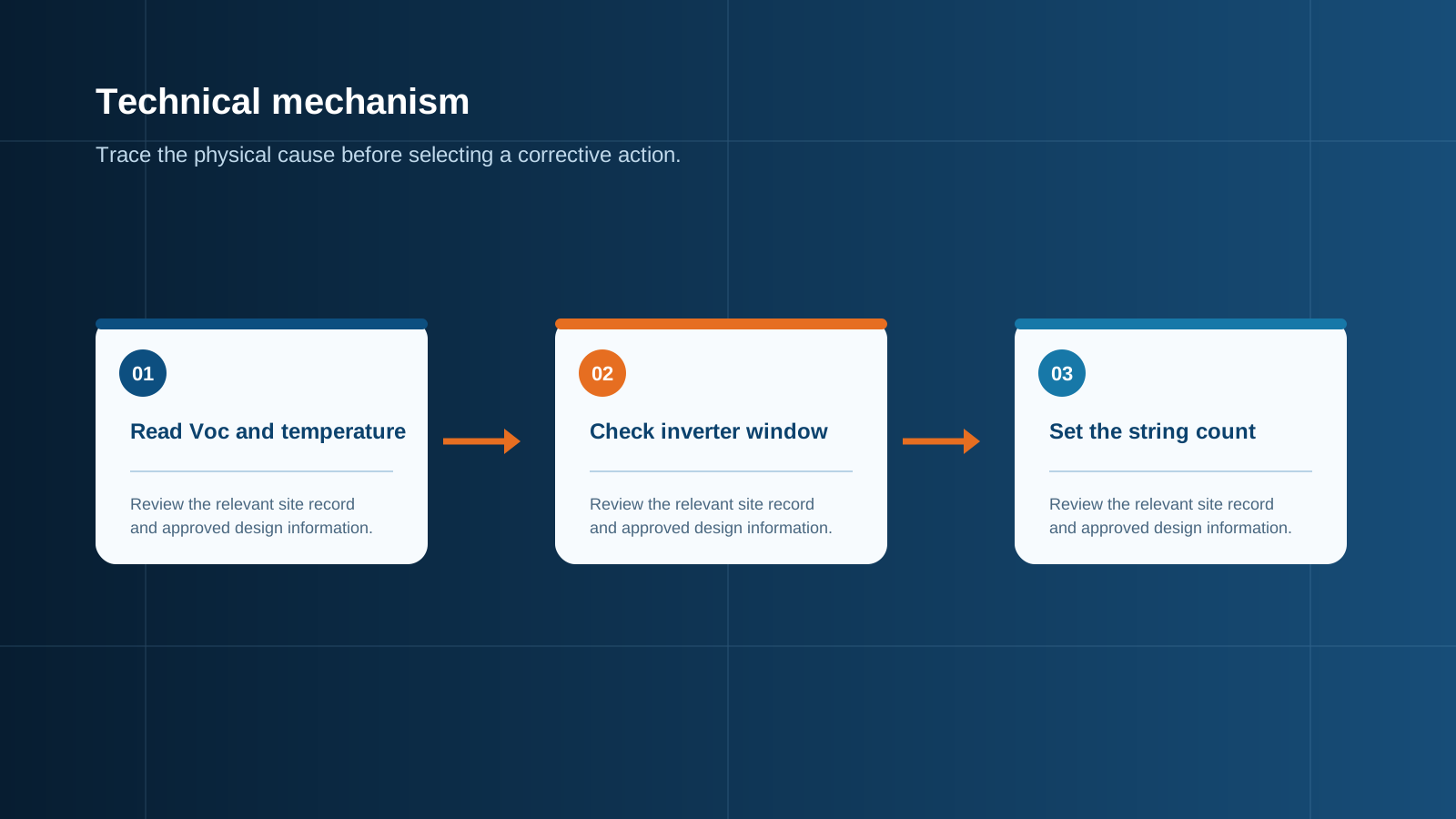
Panel open-circuit voltage rises as temperature falls. The datasheet gives a Voc temperature coefficient; applying it to your coldest local temperature shows the true peak Voc the string can reach.
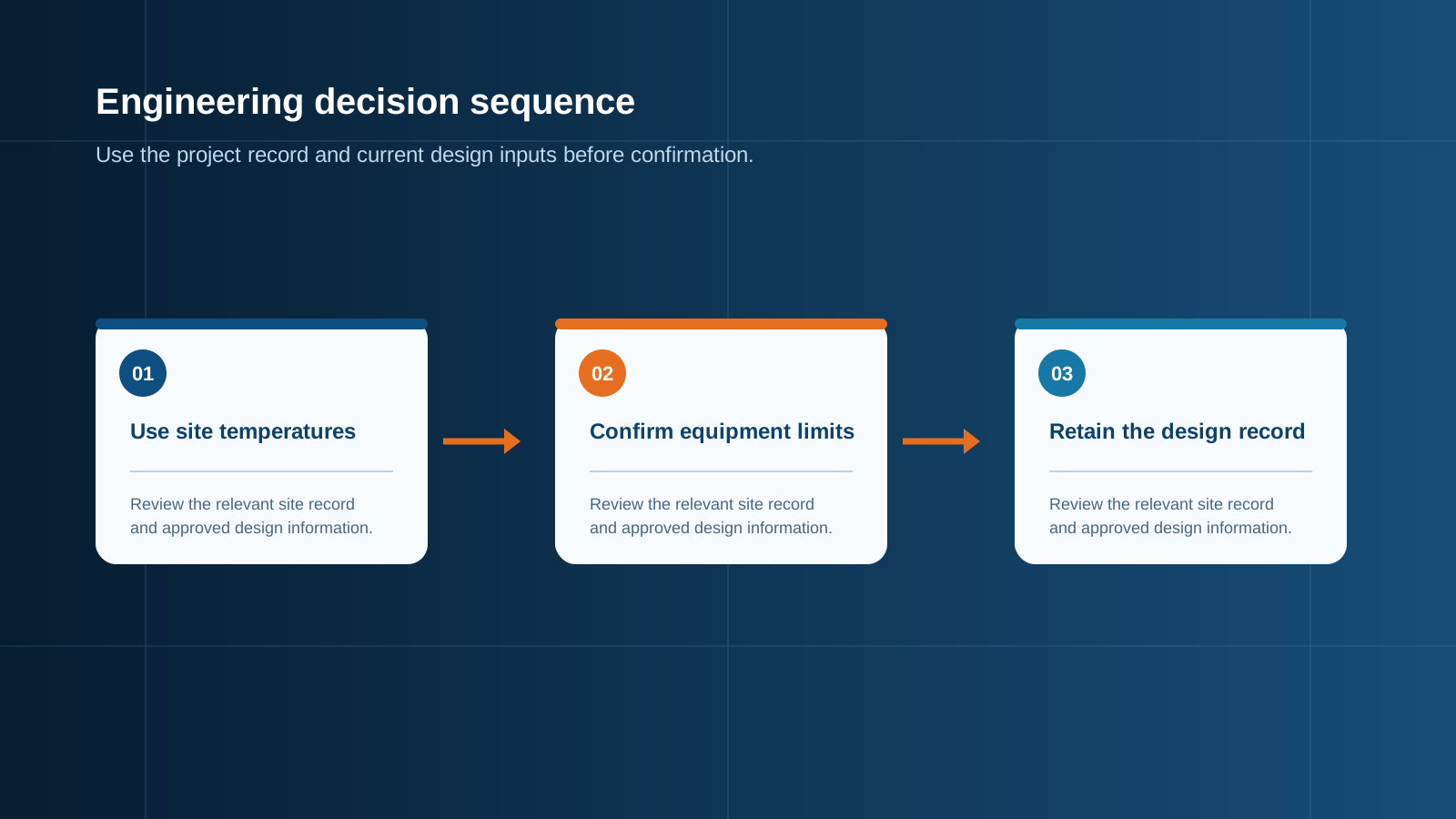
Beginners often size strings from the warm-lab voltage and are surprised when a winter morning pushes the string near the inverter limit. Always size for the cold extreme, not the nameplate at 25 C.
Technical diagram shown at a readable responsive scale.
The MPPT voltage window
The inverter's tracker works best inside a voltage band, typically a wide range such as 200 to 600 V. Your string's operating voltage (Vmp) should sit comfortably inside that window for most of the day.
A string that spends its life near the bottom of the window loses tracking efficiency; one that drifts above the top simply stops producing. The MPPT range is the target you aim the string voltage at.
Calculating panels per string
Take the inverter's maximum DC voltage, subtract your cold-weather Voc safety margin, and divide by the panel's Voc. The result is the maximum panels per string. Then confirm the Vmp of that count lands inside the MPPT window.
Worked simply: if the limit is 600 V and cold Voc is 45 V, you can fit about 12 panels per string. Check that 12 panels' Vmp also sits in the tracker band before committing.
Series vs parallel strings
Series strings add voltage; parallel groups of strings add current while holding voltage. A 10 kW array might use several series strings wired in parallel, each still a separate protected unit.
Combiner boxes shine here: they accept many series strings, fuse each one, and combine them into the higher-current DC output that feeds the inverter.
Fuse and disconnect per string
Every PV string must carry its own overcurrent protection — a gPV fuse — so a fault in one string cannot feed from its neighbours. A disconnect on each string (or at the combiner) lets you isolate for service.
This is not optional protection; it is the core safety function of the DC side. NEUTRON combiner boxes integrate the fuse holders and disconnect switches the standard calls for.
Planning the combiner box layout
Once you know the number of strings, their current and the system voltage, the combiner box follows: one fused input per string, a main DC disconnect, optional SPD, and an output rated for the summed current.
Plan the layout from the string count outward. A tidy combiner design keeps each string identifiable, testable and replaceable — which pays back the moment a single string needs attention.
This is general technical guidance. Confirm final ratings, protection coordination, installation and applicable local requirements against current standards, manufacturer documentation and the approved project design.
Frequently asked questions
How many panels per string?
It depends on panel Voc, your coldest temperature, and the inverter's maximum DC voltage. Size the string for the cold-weather peak Voc to stay under that limit, then confirm the operating voltage sits in the MPPT window.
What is maximum system voltage?
It is the highest DC voltage the system is designed for, often 1000 V or 1500 V, set by the insulation rating of the wiring, combiner box and inverter. String voltage must always stay below it.
How does cold weather affect strings?
Cold raises panel Voc. The colder your site, the higher the peak string voltage, so string length must be limited using the coldest expected temperature rather than the lab value.
Do strings need individual fuses?
Yes. Each string needs its own gPV fuse so a fault is isolated to that string and cannot be back-fed by others. This is a standard DC protection requirement, provided in the combiner box.
Discuss your PV requirement
Share the system voltage, string arrangement, inverter interface and installation environment. NEUTRON can review the equipment configuration around your project documentation.
Discuss a projectContinue learning
Explore related technical guidance in Solar PV.


Published from the approved Period 06 source package. Technical values and final design decisions must be verified against the current applicable standard, manufacturer documentation and approved project design.