
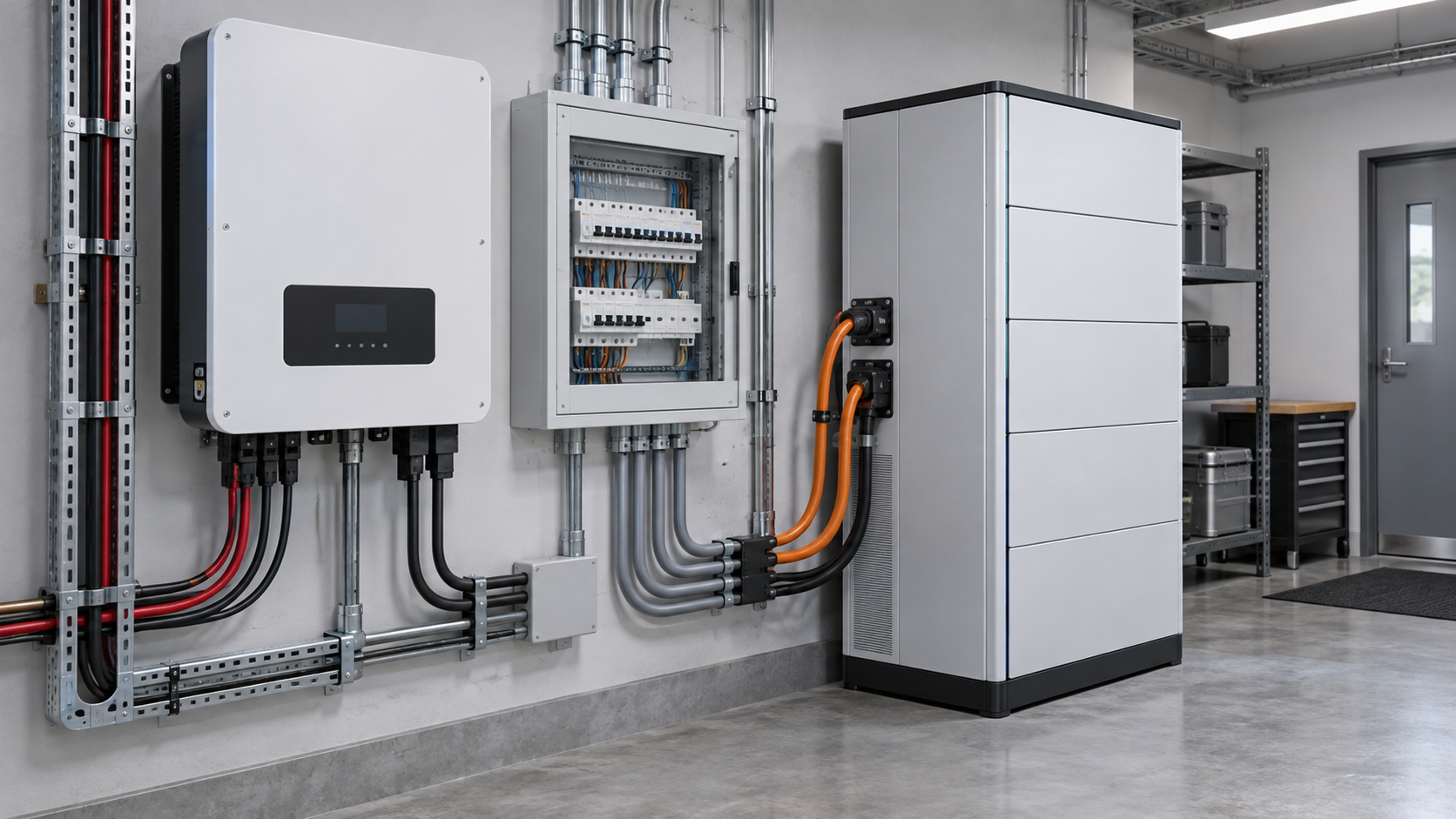
Why add storage to a grid-tied array
The economic case has shifted. Export tariffs in most markets have fallen well below retail electricity prices, so energy sent to the grid earns much less than the same energy consumed on site. Storing midday surplus and discharging it in the evening therefore captures the price difference rather than surrendering it. In markets with time-of-use pricing the spread is larger still.
Backup capability is the second driver, and in some regions the dominant one. A plain grid-tied inverter shuts down during an outage for anti-islanding reasons, so an array without storage produces nothing in a blackout. Adding storage with a backup-capable conversion stage keeps essential circuits alive. A third, growing driver is participation in demand response or capacity programmes, which require a controllable and metered storage asset.
- Self-consumption: use midday surplus in the evening instead of exporting it cheaply.
- Time-of-use arbitrage: charge when prices are low, discharge when they are high.
- Blackout backup: keep essential loads running when the grid is unavailable.
- Grid services: qualify for demand response or capacity payments where they exist.
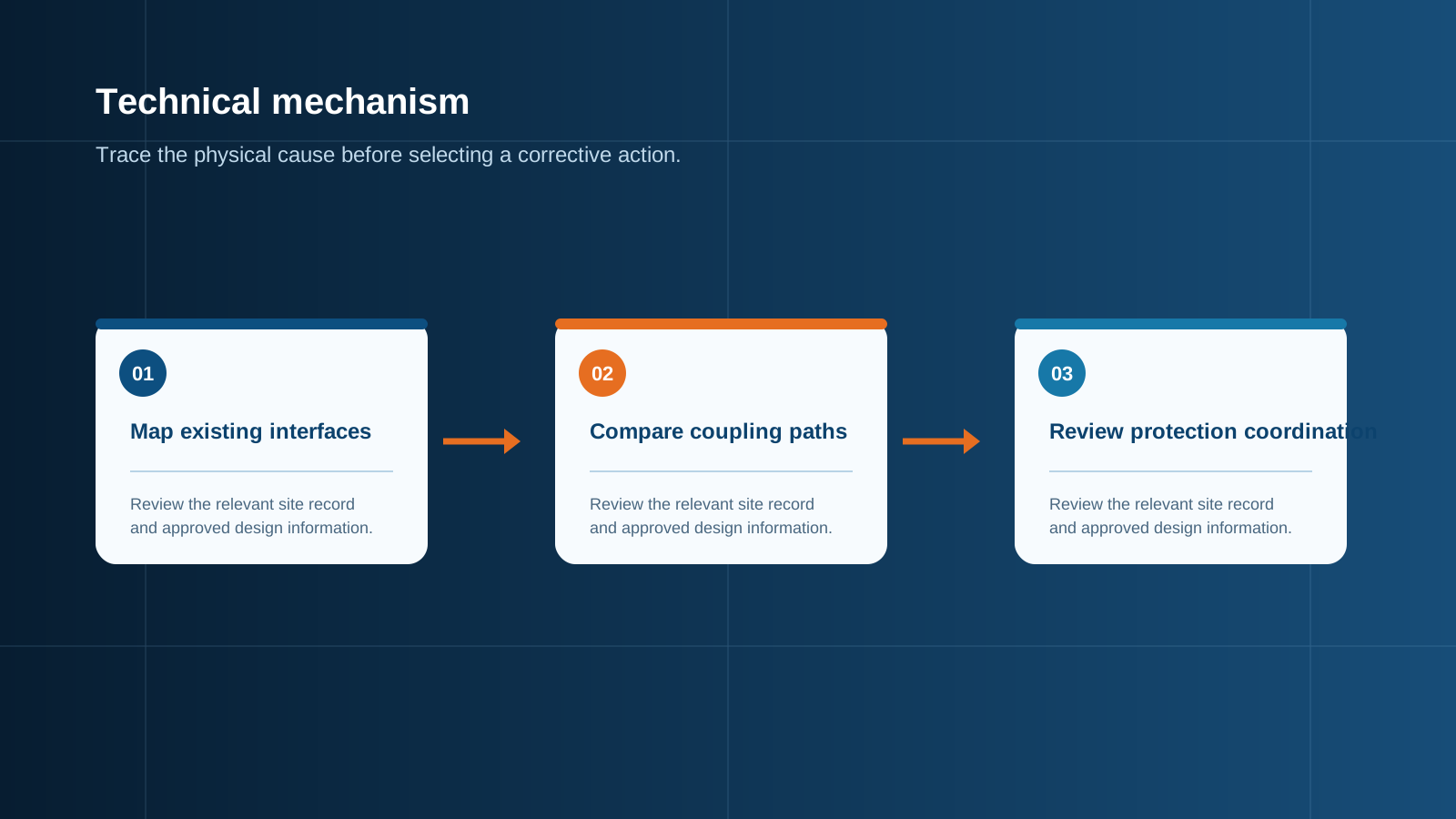
Technical diagram shown at a readable responsive scale.
AC coupling: how it works with an existing inverter
In an AC-coupled retrofit the existing photovoltaic inverter is left exactly as it is. A separate battery inverter, or an integrated battery unit with its own conversion stage, is connected to the alternating-current distribution board. Surplus energy that the site is not consuming is drawn from the board, converted back to direct current and stored, then converted again when it is discharged.
The advantage is that nothing on the existing array is disturbed: no strings are re-terminated, no warranty on the original inverter is affected, and the array continues to operate through the retrofit. The cost is efficiency. Energy is converted from direct to alternating current in the photovoltaic inverter, back to direct current for charging, and to alternating current again on discharge, which typically results in a round-trip efficiency of about eighty-eight to ninety-two percent for the stored portion.
DC coupling: batteries on the direct-current bus
In a DC-coupled arrangement the battery sits on the same direct-current bus as the array, behind a charge controller or on the direct-current input of a hybrid conversion unit. Surplus energy passes from the array to the battery with a single conversion step, so round-trip efficiency for the stored portion is typically ninety-four to ninety-seven percent.
The practical obstacle in a retrofit is that a plain grid-tied inverter has no battery port. Achieving DC coupling generally means replacing the existing inverter with a hybrid unit, or adding a separate charge controller fed from a portion of the array. Either route means re-terminating strings, revisiting the string configuration against a different voltage window, and reworking the direct-current protection to cover both the array and the battery connection.
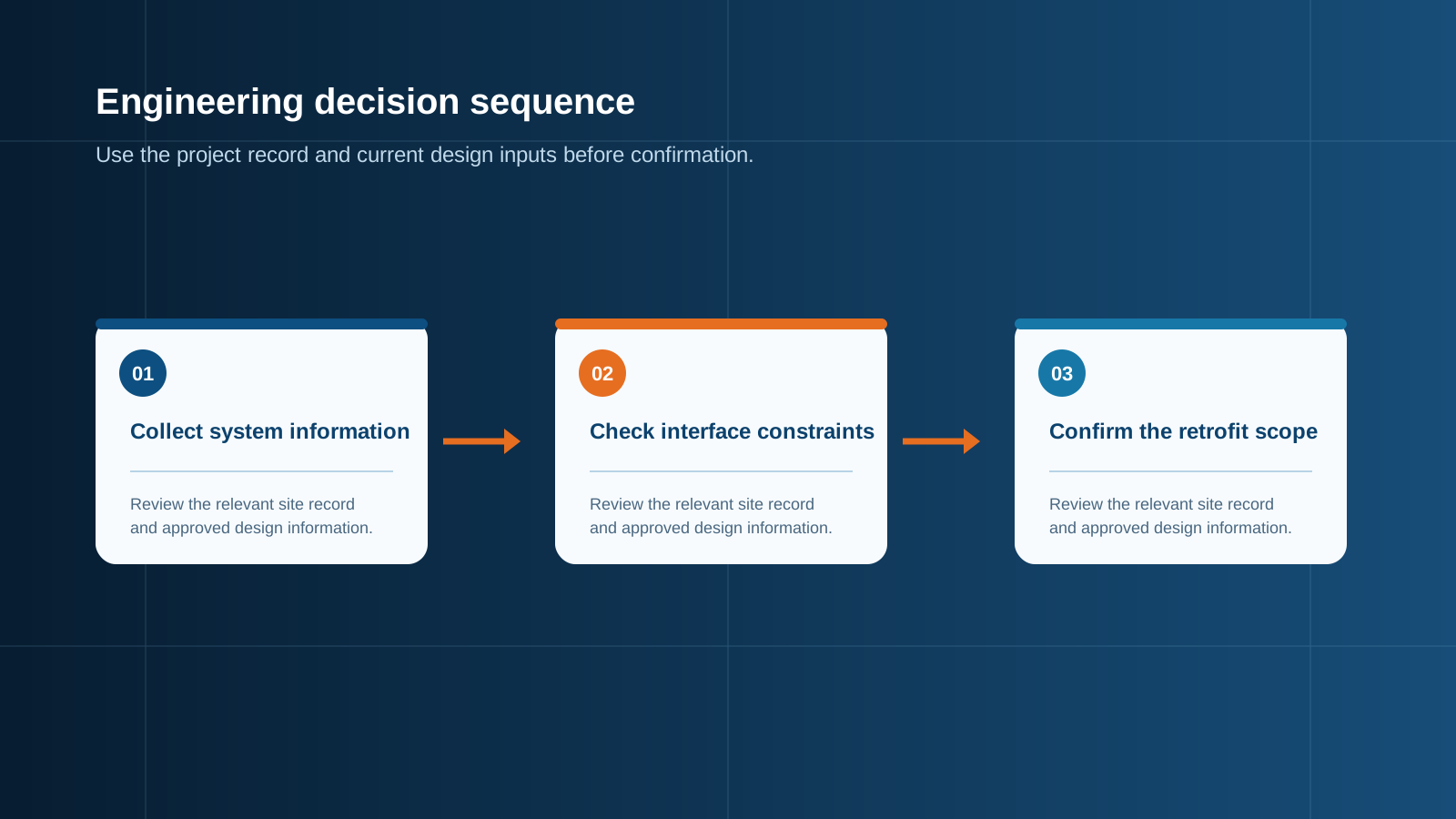
Technical diagram shown at a readable responsive scale.
Which is simpler for an existing installation
For the great majority of retrofits AC coupling is simpler. The existing array and inverter remain untouched, the work is concentrated at the distribution board, and the installation can usually be completed in a day with no change to the direct-current side. It is also the only sensible route when the existing inverter is relatively new and still under warranty.
DC coupling becomes the better option in three situations: when the existing inverter is at end of life and due for replacement anyway, when the array is being expanded at the same time, or when maximising stored-energy efficiency matters because the system will cycle heavily every day. The efficiency advantage of four to seven percentage points on stored energy only repays the extra work when a large fraction of production is actually stored.
- Choose AC coupling when the existing inverter is healthy and in warranty.
- Choose AC coupling when downtime must be minimal and the direct-current side should not be touched.
- Choose DC coupling when the inverter is being replaced or the array is being extended.
- Choose DC coupling when daily cycling is heavy enough for the efficiency gain to matter financially.
Cost and payback considerations in 2026
Installed cost for residential storage in 2026 typically falls between 500 and 900 units of currency per kilowatt-hour of usable capacity, including the conversion stage and installation, with lithium iron phosphate chemistry dominating the residential segment. An AC-coupled retrofit adds a battery conversion unit but avoids inverter replacement. A DC-coupled retrofit avoids the second conversion stage but usually carries the cost of a hybrid inverter and additional direct-current works.
Payback is driven by the spread between the retail electricity price and the export tariff, multiplied by the energy actually cycled each year. Where that spread is wide and the battery cycles most days, simple payback commonly lands in the seven to eleven year range. Where the spread is narrow, storage is bought primarily for backup capability and resilience rather than for a financial return, and it should be evaluated on that basis.
How much battery capacity do you actually need
Start from the load profile rather than from the array size. For evening self-consumption, the relevant figure is the energy consumed between sunset and sunrise, which for a typical household is five to ten kilowatt-hours. For backup, the relevant figure is the essential load multiplied by the required autonomy: a refrigerator, lighting, networking and a few sockets amount to roughly two to four kilowatt-hours per day of essential consumption.
Then adjust for usable capacity. Lithium iron phosphate systems commonly permit ninety to ninety-five percent depth of discharge, so nominal capacity needs only a small uplift, whereas older chemistries required a much larger margin. Oversizing beyond the daily cycled energy adds cost without adding cycles, so capacity that is never discharged earns nothing.
- Evening self-consumption for a typical household: five to ten kilowatt-hours.
- Essential-load backup for one day: roughly two to four kilowatt-hours.
- Whole-home backup for one day: ten to twenty kilowatt-hours or more.
- Capacity that is not cycled regularly generates no return, so size to the daily pattern.
Protection and isolation for coupled storage
Storage changes the protection problem in a fundamental way, because a battery is an energy input that cannot be switched off. On a photovoltaic array, opening an isolator in darkness de-energises the circuit. On a battery, the terminals remain live at all times and can deliver very high fault current. Every battery connection therefore needs a correctly rated direct-current breaker or fuse, a clearly identified means of isolation and unambiguous labelling for anyone who works on the installation later.
AC-coupled systems additionally require attention on the alternating-current side: the backup circuit must be separated from the grid supply by a transfer arrangement that cannot connect both at once, and surge protection should cover both the grid connection and the storage connection. DC-coupled systems need protection coordinated between the array and the battery on a shared bus, where fault current can be contributed from two directions at once.
- A rated direct-current breaker or fuse on every battery connection, sized for the available fault current.
- A lockable means of isolation and clear labelling, since the battery cannot be de-energised.
- A transfer arrangement for backup circuits that cannot bridge grid and storage supply simultaneously.
- Surge protection on both the alternating-current connection and the direct-current bus.
The role of energy-storage control equipment
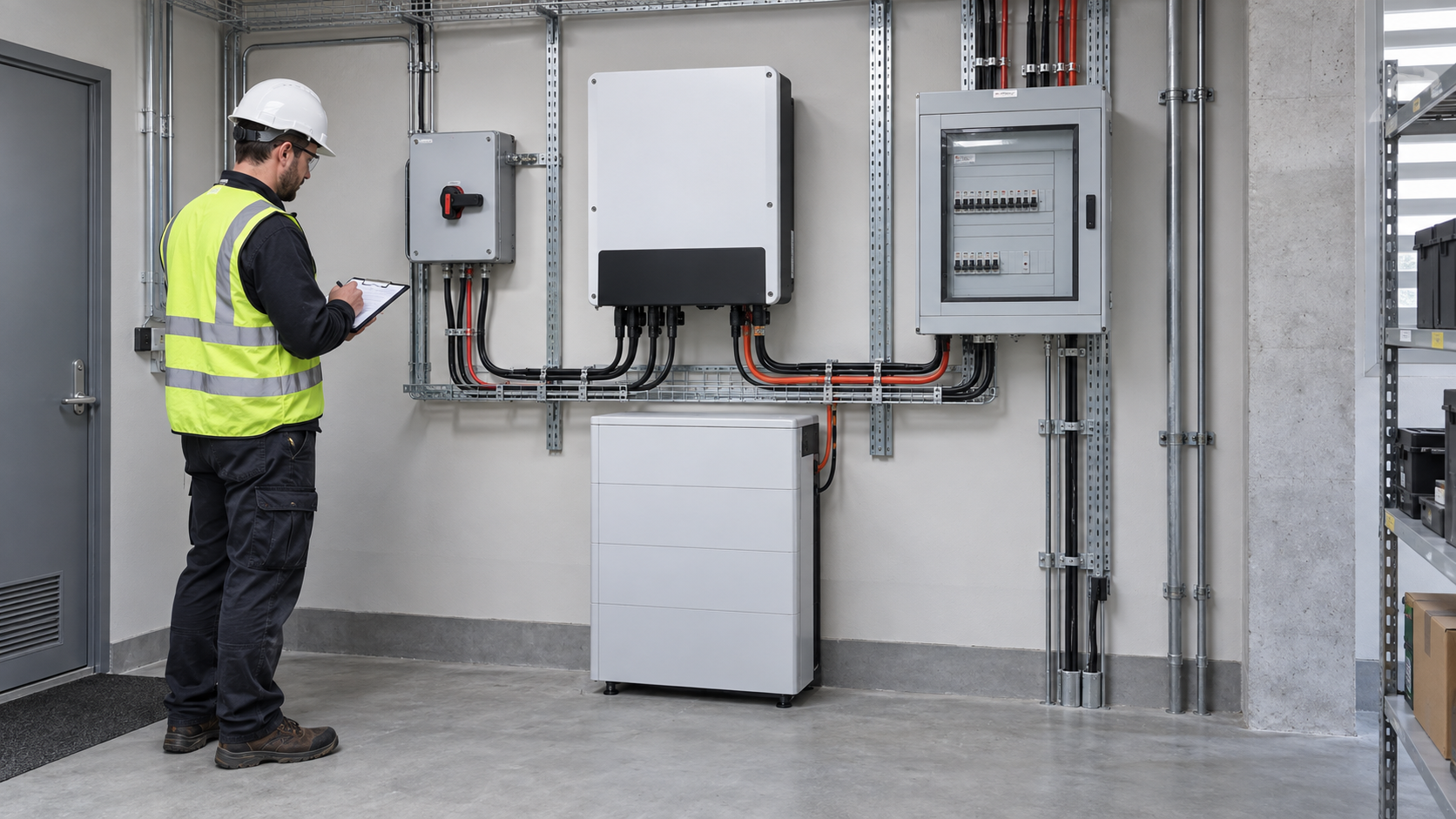
An energy-storage control cabinet consolidates the switching, protection, measurement and status monitoring for the storage connection into one engineered assembly instead of a collection of separately mounted devices. It typically houses the direct-current isolation and overcurrent protection, surge protective devices, current and voltage measurement, control interfaces to the battery management system and the auxiliary supply for those functions.
NEUTRON builds these cabinets to suit both coupling architectures, alongside DC control and protection assemblies, automatic transfer equipment for backup circuits and low-voltage switchgear for the alternating-current side. Because the cabinet is configured against the actual battery voltage, maximum charge and discharge current and available fault current, the protection is matched to the specific third-party battery and conversion equipment installed rather than to a generic assumption.
This is general technical guidance. Confirm final ratings, protection coordination, installation and applicable local requirements against current standards, manufacturer documentation and the approved project design.
Frequently asked questions
Is AC or DC coupling better for a retrofit?
For most retrofits AC coupling is the better choice because the existing array and inverter stay untouched. The work is concentrated at the distribution board, the array keeps operating throughout, and no warranty on the original inverter is affected. The trade-off is a round-trip efficiency of roughly eighty-eight to ninety-two percent on stored energy due to the extra conversion steps.
How big a battery do I need for backup?
Size it from the essential load rather than from the array. A refrigerator, lighting, networking and a few sockets typically consume two to four kilowatt-hours per day, so a small battery covers one day of essential backup. Whole-home backup including heating, cooling or cooking generally requires ten to twenty kilowatt-hours per day.
Discuss your PV requirement
Share the system voltage, string arrangement, inverter interface and installation environment. NEUTRON can review the equipment configuration around your project documentation.
Discuss a projectContinue learning
Explore related technical guidance in Solar PV.
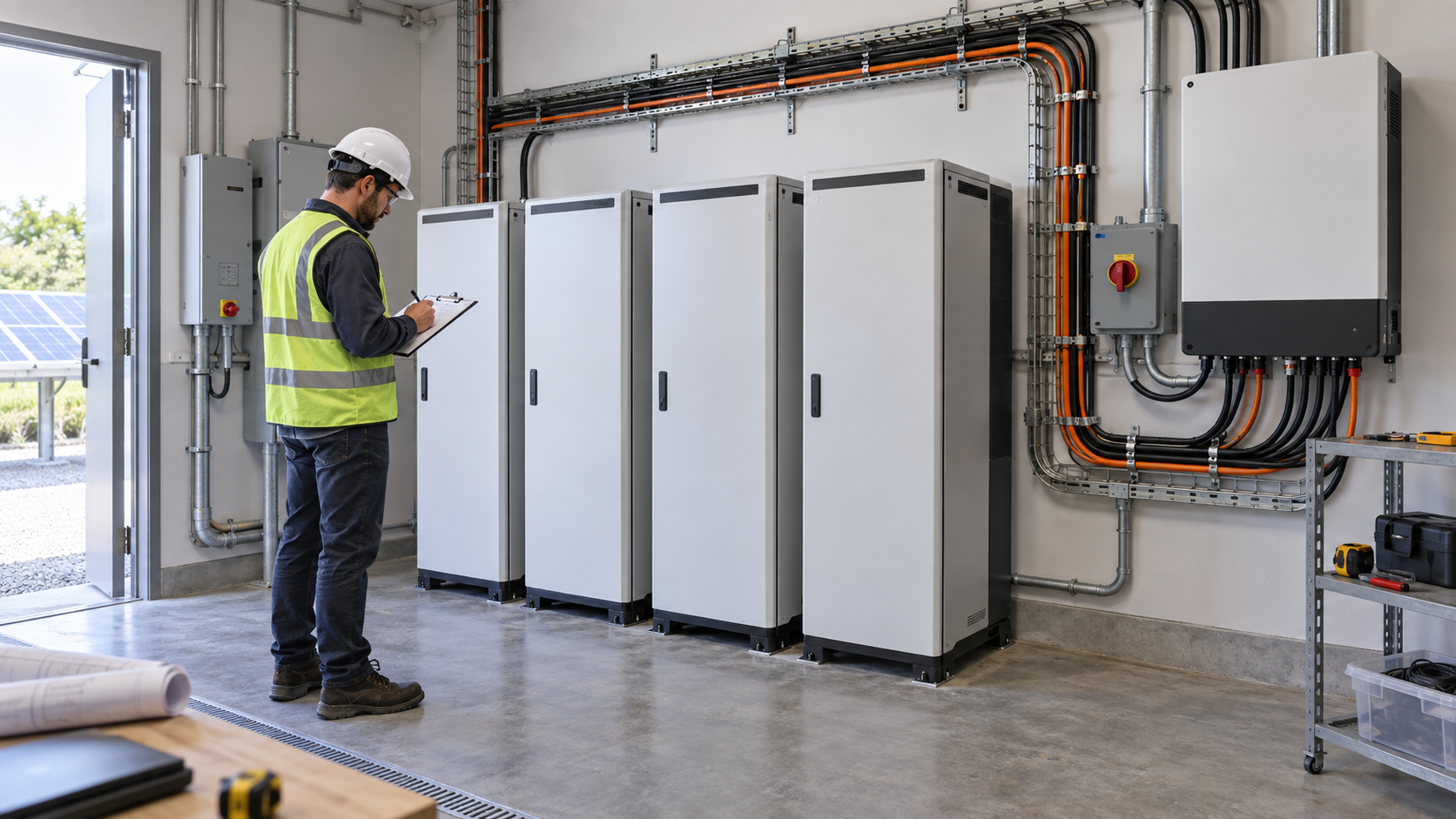
Published from the approved Period 06 source package. Technical values and final design decisions must be verified against the current applicable standard, manufacturer documentation and approved project design.