

Why panels get discontinued
Module lines change as cell technology moves from PERC to TOPCon and HJT, and as wattage classes step up. A panel bought five years ago may no longer be manufactured, yet the array still needs a working replacement after damage or failure. The task is to substitute without disturbing the string’s protection design.
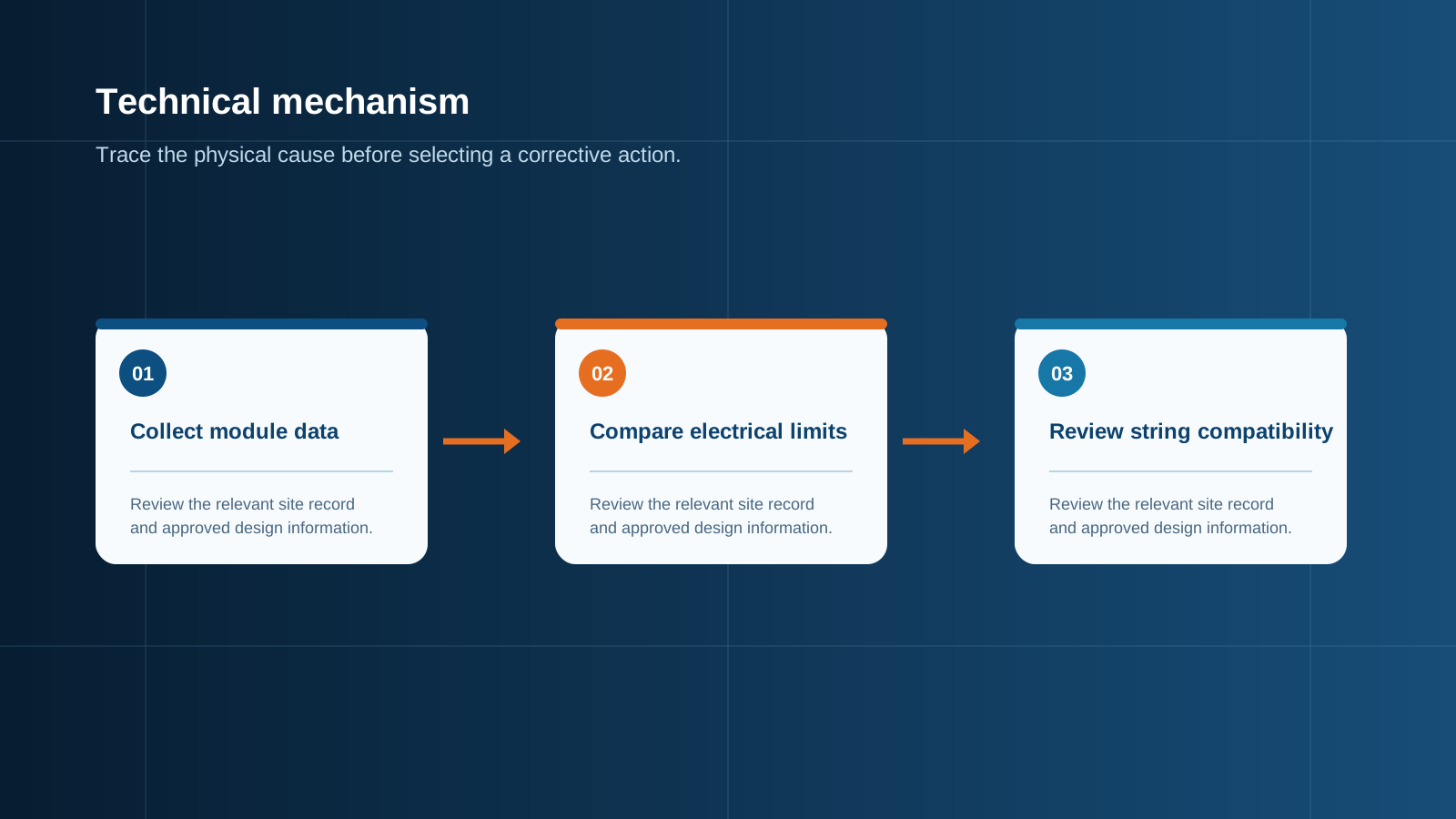
Technical diagram shown at a readable responsive scale.
Which specs must match
For a safe substitution, the replacement should match the original in the parameters that drive string behaviour:
- Rated maximum power (Pmax) and Impp.
- Open-circuit voltage (Voc) and Vmpp.
- Short-circuit current (Isc).
- Maximum system voltage and fuse rating.
Verifying electrical compatibility
Compare the datasheets of the old and new modules. In series, the string current is set by the weakest Isc, so a lower-Isc replacement limits output; in parallel, voltage must match closely or circulating currents appear. Confirm the new Voc keeps the cold-weather string voltage inside the inverter and combiner limits.
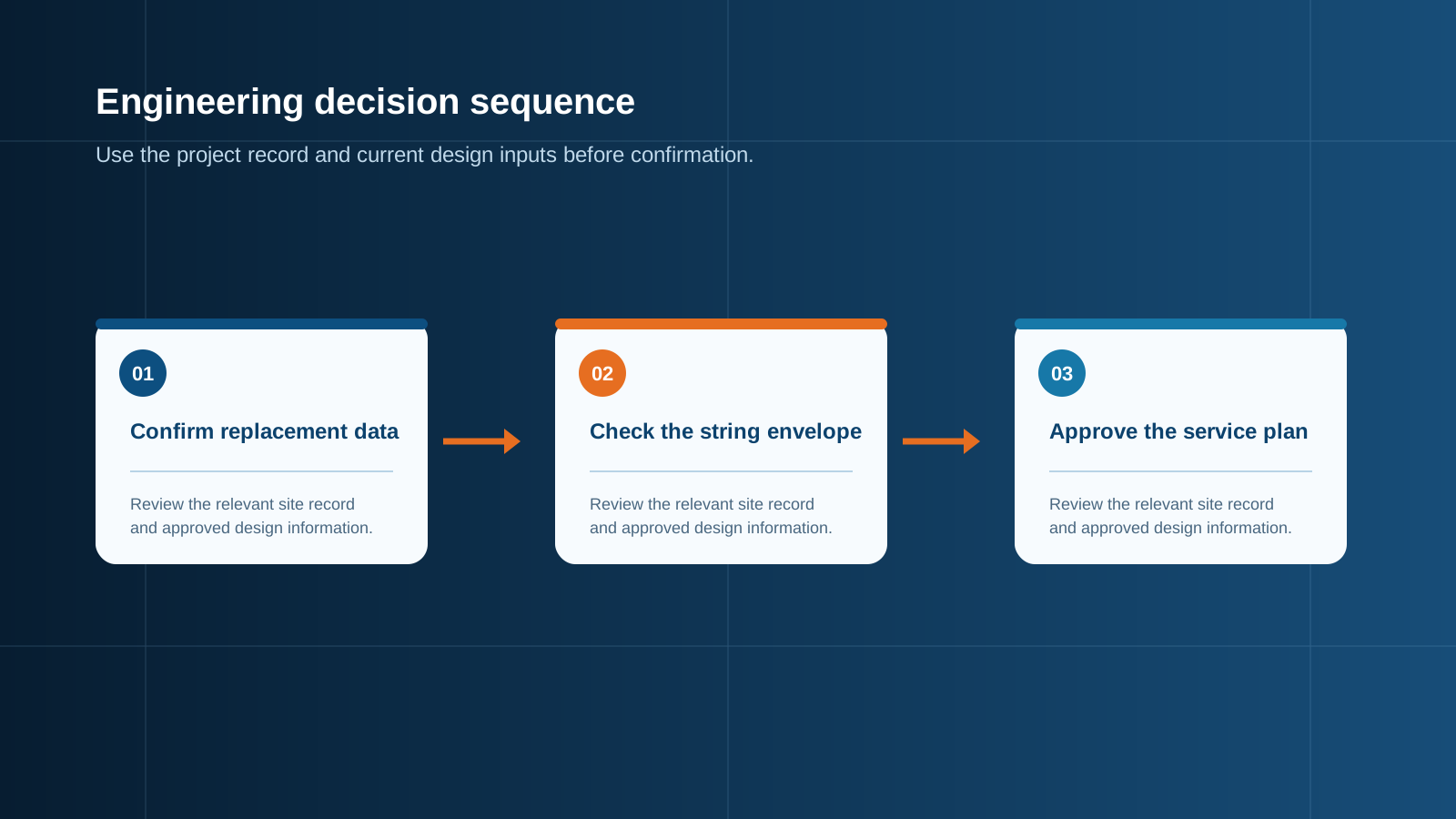
Technical diagram shown at a readable responsive scale.
Series vs parallel replacement rules
In a series string, a replacement with lower Isc simply caps the string current — acceptable if the loss is small. In parallel branches, mismatched voltage causes imbalance and should be avoided. NEUTRON reviews the resulting configuration against the combiner’s per-string fuse and disconnect ratings.
Recalculating fuse and protection
The gPV fuse is sized to 1.25× the string Isc. If the replacement changes Isc, the fuse and the combiner’s rated current path may need adjustment. Never assume the original fuse remains valid after a spec change; re-run the calculation for the new worst case.
Mixed-age string behaviour
An older module and a new one in the same string will degrade at different rates over time, slowly widening the mismatch. Bypass diodes mitigate local shading loss, but the aggregate output will track the weaker member. Document the mix so future maintenance expects the reduced ceiling.
Combiner box adjustments
Inside the combiner box, confirm the replacement string still fits its gPV fuse, DC SPD and busbar rating. If the new module raises Isc or Voc, NEUTRON can re-specify the fuse holder and verify clearance so the enclosure remains compliant.
Documenting the change
Record the new module model, its key specs and the recalculated protection values in the system file. Good documentation turns a one-off swap into a managed retrofit and protects the next technician who opens the combiner box.
This is general technical guidance. Confirm final ratings, protection coordination, installation and applicable local requirements against current standards, manufacturer documentation and the approved project design.
Frequently asked questions
Can I mix old and new panels?
Yes, if the electrical specs are compatible. In series the string current follows the weakest Isc; in parallel the voltages must match. Always verify against the datasheet before connecting.
Which specs must match for replacement?
Match Pmax, Impp, Voc, Vmpp, Isc, maximum system voltage and the module fuse rating. These parameters decide whether the replacement behaves inside the existing string and protection design.
Do I need new fuses?
Only if the replacement changes the string Isc. Recompute the gPV fuse at 1.25× the new Isc; if the value moves up or down a rating step, replace the fuse and confirm the combiner current path.
How do I verify compatibility?
Compare the old and new datasheets for the spec list above, check cold-weather Voc against inverter and combiner limits, and confirm the series or parallel rule. Then recalculate the fuse and document the result.
Discuss your PV requirement
Share the system voltage, string arrangement, inverter interface and installation environment. NEUTRON can review the equipment configuration around your project documentation.
Discuss a projectContinue learning
Explore related technical guidance in Solar PV.


Published from the approved Period 06 source package. Technical values and final design decisions must be verified against the current applicable standard, manufacturer documentation and approved project design.