

Three Different Problems, One Word
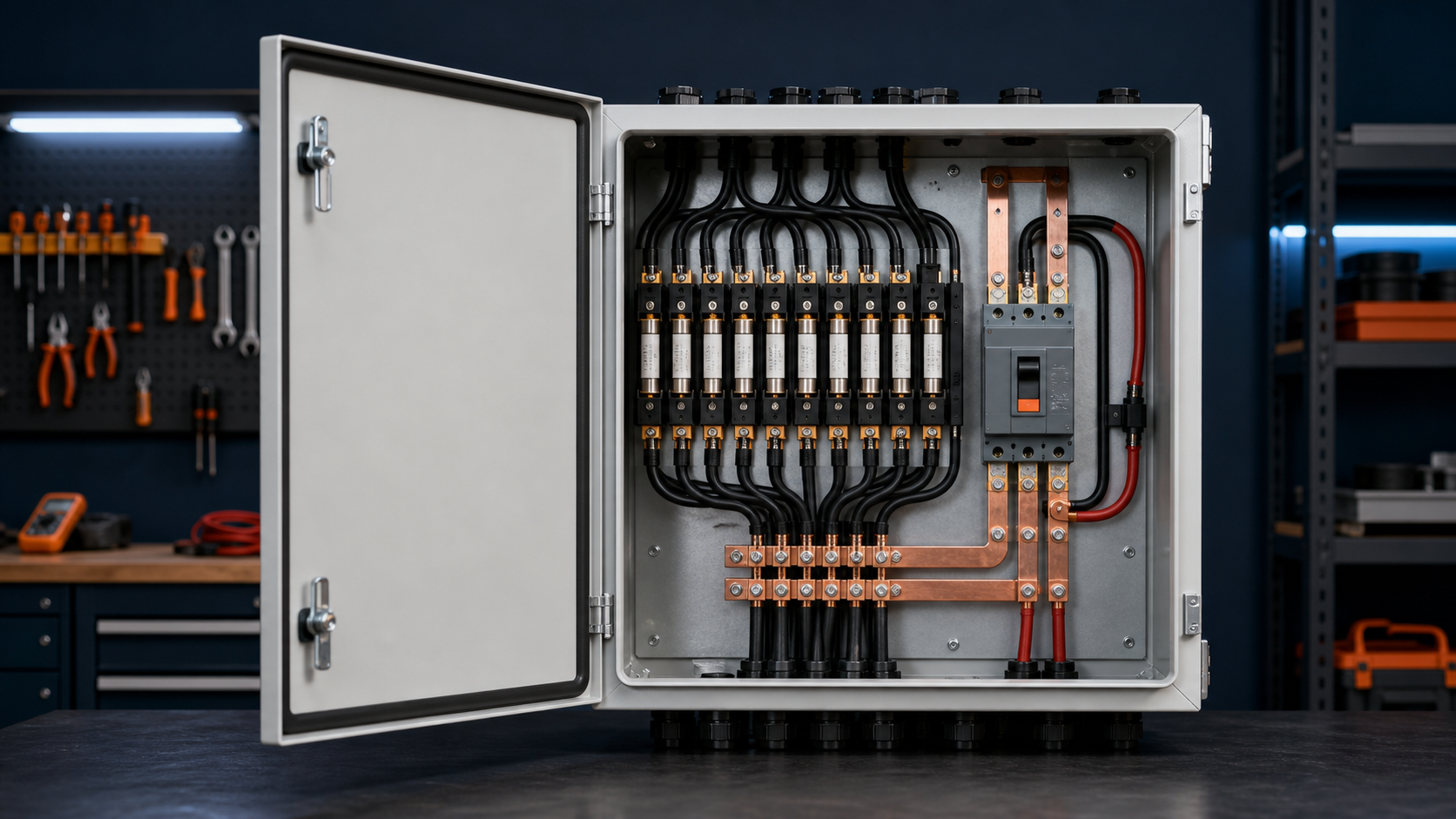
String-current imbalance can mean three different things, and they must not be mixed. Mismatch is a normal difference between strings from irradiance, temperature, or module tolerance. A reverse fault is a polarity or wiring error that biases a branch the wrong way. A measurement metric is the number your monitor reports, which may include sensor error. A PV combiner box (product) parallels strings onto a shared busbar, and the basics in What is a combiner box show why the busbar voltage is common to all strings. Confusing these three leads to wrong alarms.
Normal Difference Is Forward Current
Strings on a shared busbar share the same busbar voltage; what differs is each string's forward current set by its own irradiance and temperature. A Combiner box selection guide may show balanced design currents, but in the field a normal irradiance difference between strings appears as different forward currents, not as a fault. DC control & protection devices see the summed busbar current, not the per-string split.
So a current gap between two strings is expected whenever their planes or shading differ. Only a deviation beyond a set threshold should raise an alarm.

Normalized Deviation and Alarm Threshold
Use a normalized deviation rather than a raw amp gap, because the same gap means more on a small string than on a large one. A common form is: D_n = |I_k - I_mean| / I_mean, where I_mean is the average of the n string currents.
Set the alarm threshold from the approved model and site tolerance, for example a per-string deviation above a defined percentage of the mean after excluding known shading. A Solar combiner box vs junction box comparison notes that boxes without per-string sensing cannot compute this metric.
- Mismatch: normal irradiance or module-tolerance difference.
- Reverse fault: wrong polarity or wiring that biases the branch.
- Measurement metric: the reported number, including sensor error.
- Alarm only on normalized deviation beyond the approved threshold.
Calculate and Verify
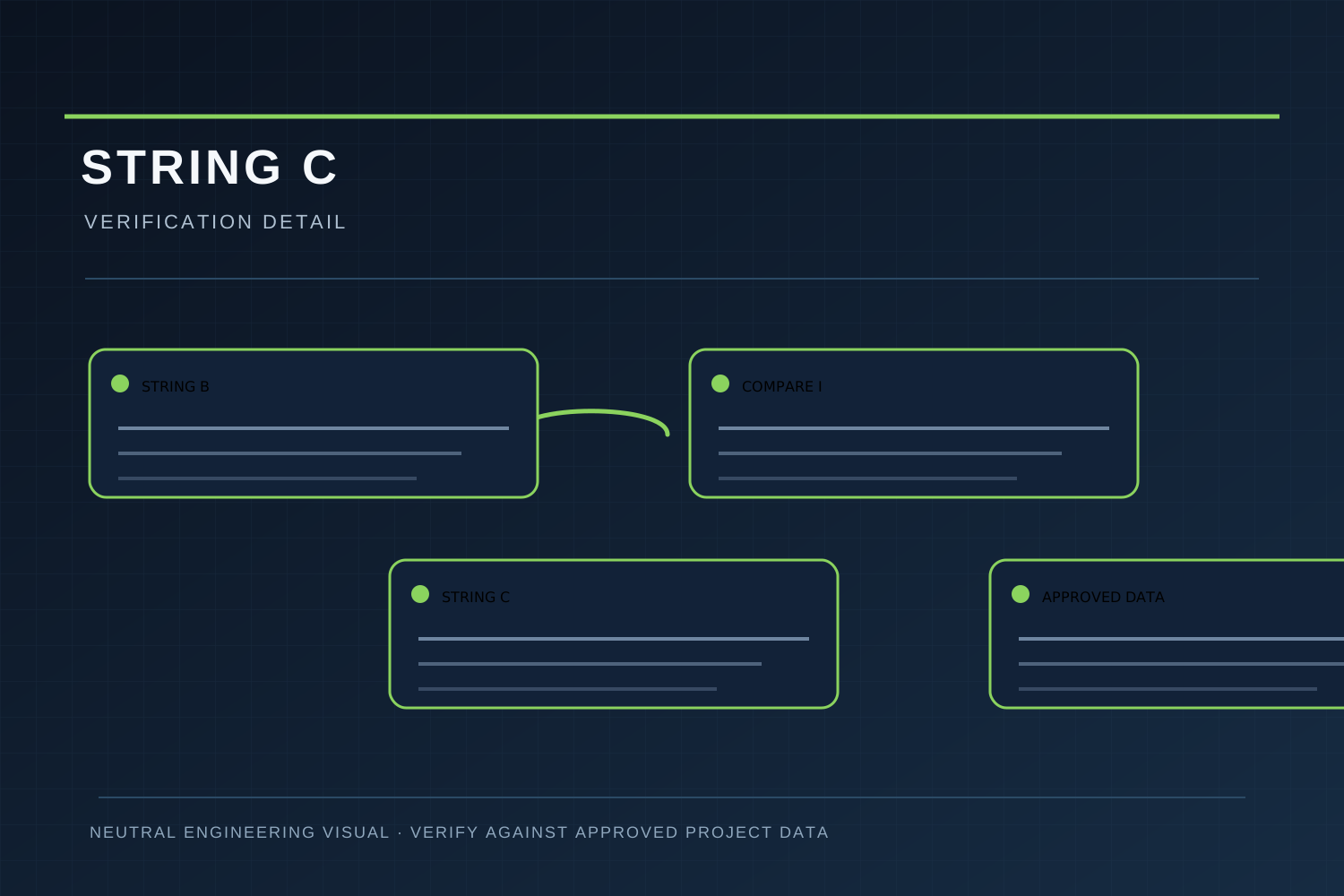
Compute I_mean across the n active strings, then D_n for each. A PV string protection gPV fuse protects overcurrent but does not correct imbalance. Use the Combiner box configurator (tool) for planning, and review DC surge protection for PV systems separately. Verify the calculation and threshold against approved NEUTRON model datasheets and test reports, and treat a reverse-fault flag as a de-energized, verified wiring check, not a live adjustment.
This article preserves the accepted technical guidance but is not a substitute for the applicable local code, approved model datasheet, test report or a qualified engineer's design review.
Frequently asked questions
Why do two strings show different currents?
On a shared busbar the voltage is common; each string's forward current follows its own irradiance and temperature. A normal irradiance difference appears as different forward currents, not a fault.
What is the normalized deviation formula?
D_n equals the absolute difference between a string current and the mean, divided by the mean. Set the alarm threshold from the approved model and site tolerance.
Is imbalance the same as a reverse fault?
No. Imbalance can be normal mismatch; a reverse fault is a polarity or wiring error that biases the branch the wrong way and needs a de-energized wiring check.
Does the string fuse fix imbalance?
No. A gPV fuse clears overcurrent faults. Imbalance is a measurement and wiring issue, verified against approved NEUTRON model datasheets and test reports.
Bring the project inputs to the first review.
Share the array layout, ratings, site conditions and documentation requirements for a coordinated review.
Discuss a projectContinue learning
Explore related technical guidance in Solar PV.


Published from the accepted Period 13 manuscript (1.1); technical meaning and safety boundaries are retained from the approved source package.