
1. When PV strings need overcurrent protection
Where PV strings are paralleled, healthy strings can backfeed a faulted string, so the prospective fault current is not limited to a single module. The protection task is to clear that fault fast while never interrupting normal operation. Three realities drive the design:
- Modules in a healthy string can drive current into a shorted neighbour string — overcurrent protection limits the energy released.
- Reverse-polarity or diode failures can put a whole array section at risk if a string is unprotected.
- Cable and connector ratings are chosen for normal operating current plus margin; only a fuse or breaker keeps a fault within that envelope.
- String-level isolation also makes fault location and maintenance safer for field crews.
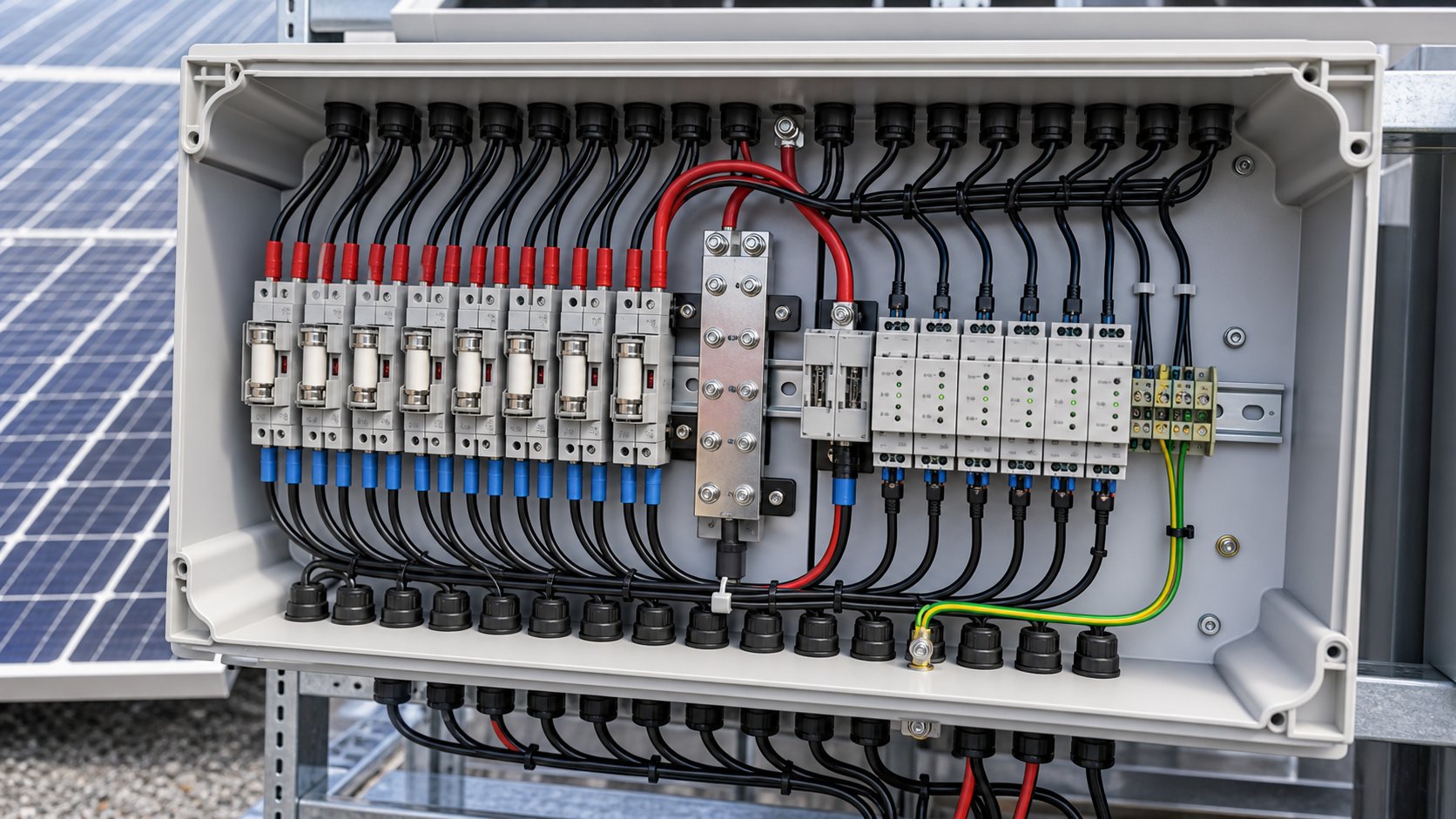
2. gPV fuse role and rating (1.25×Isc, IEC 60269-6)
A gPV fuse is a photovoltaic-specific fuse class defined by IEC 60269-6 for the demanding DC characteristics of PV systems: high available fault current, sustained DC arcing risk, and a wide operating temperature range. Fuse selection should be based on the project design, module data, parallel-string backfeed current, applicable installation rules and the fuse manufacturer's time-current information.
A design current margin may be used in a project calculation, but it is not a substitute for checking the module's maximum series-fuse rating, the available reverse current, temperature derating, voltage class and the selected fuse curve. The final fuse must also interrupt the available backfeed current from parallel strings under the specified fault conditions.
Where the protection study requires string-level fusing, a gPV fuse holder can be provided for each protected input before the collector busbar.

Technical diagram shown at a readable responsive scale.
3. Bifacial gain and peak Isc
Bifacial modules generate additional current from rear-side irradiation. Because albedo, mounting height and soiling vary, the rear contribution is not a fixed number — and it can push the actual operating short-circuit current materially above the front-side nameplate Isc.
The takeaway for PV string protection: use the expected peak Isc including bifacial contribution as one input to the project-specific fuse-selection calculation.
- A bifacial module with a front Isc of 14 A and a 10% rear gain can deliver about 15.4 A under strong albedo.
- That result must be checked against the module maximum series-fuse rating, voltage class, temperature correction and the chosen fuse curve before selecting a nominal fuse rating.
- Designing to the averaged rear gain under-rates the fuse and invites trips when the site is at its brightest, exactly when production matters most.
4. Fuse vs circuit breaker in DC PV
Both devices can protect a DC string, but they behave differently in the PV context:
For string-level protection the gPV fuse remains the practical and code-aligned default; a breaker is selected where reset and remote control outweigh the added size and cost.
- gPV fuses are compact, cheap per pole, and highly reliable at interrupting high DC fault currents; they are single-use and must be replaced after a fault.
- DC circuit breakers can be reset and offer remote trip, but must be rated for the full PV breaking capacity and DC arc extinction, which makes them larger and costlier.
- Fuses hold their rating across a very wide temperature band and do not need regular functional testing; breakers need periodic operability checks.
- Most combiner boxes standardise on per-string gPV fuses for cost and density, reserving breakers for the main DC isolation and inverter interface.
5. String monitoring and fault detection
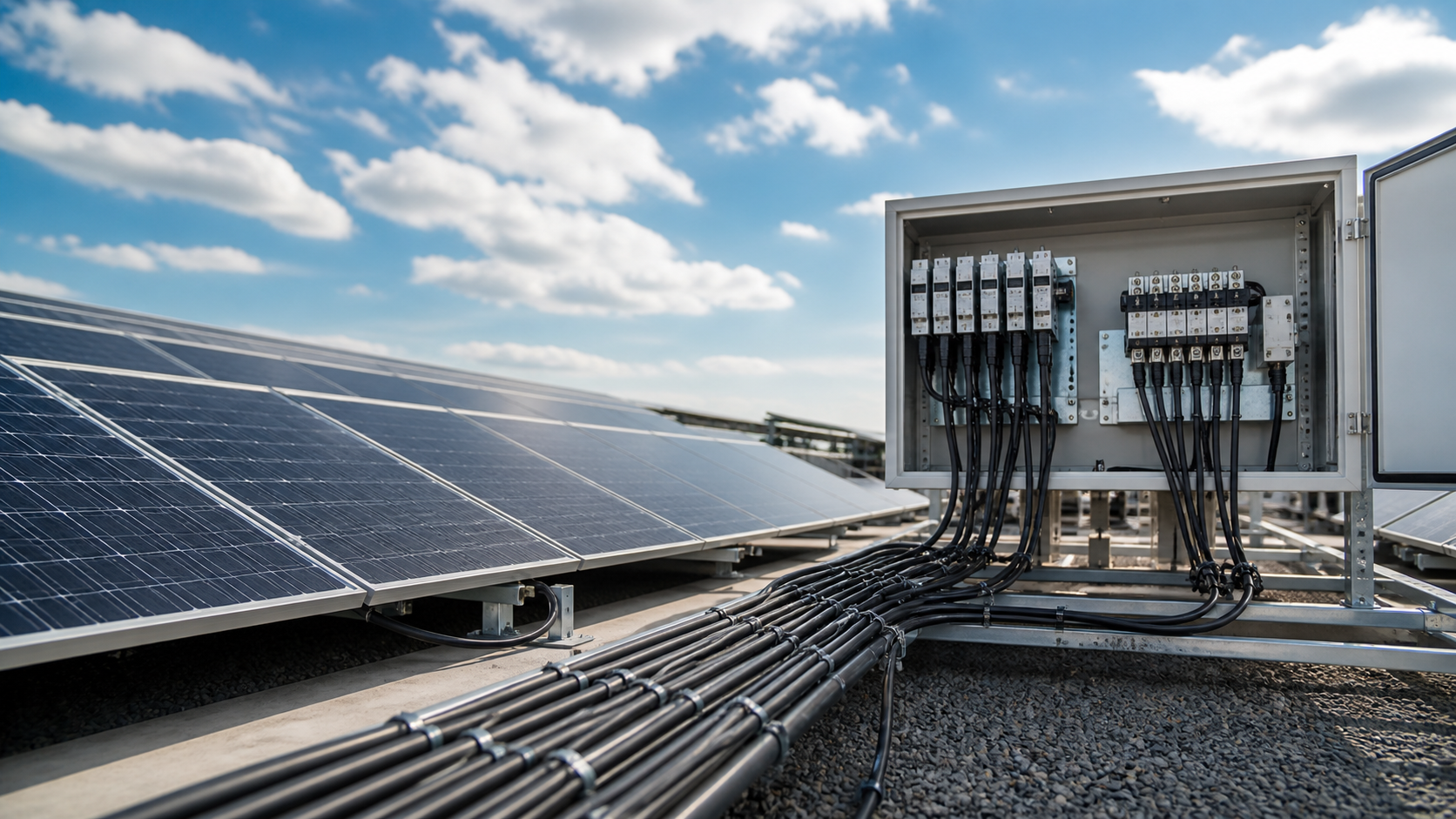
Protection stops a fault from causing damage; monitoring tells you a fault — or a slow drift — has occurred. Modern string monitoring reads the current and voltage of each string so the operator can spot issues before they become outages.
Well-implemented string monitoring turns an invisible fuse event into a logged, locatable alarm.
- Per-string current sensors flag a string running well below its neighbours, indicating a blown fuse, open connector or shaded section.
- Voltage and power trending reveals creeping degradation, soiling or a developing diode fault.
- Combiner-box monitoring aggregates string data and raises alarms on threshold breaches, often via Modbus or a plant SCADA link.
- Pairing monitoring with gPV protection shortens mean-time-to-repair: the alarm points to the exact string, and the fuse confirms the fault was contained.

Technical diagram shown at a readable responsive scale.
6. Nuisance trip causes and fixes
A nuisance trip is a fuse opening under normal conditions — no fault, just lost production. The common causes map directly to the sizing rules above:
Most nuisance trips trace back to a fuse chosen from legacy nameplate values rather than the real peak Isc of the installed modules.
- Under-rated fuse: a fuse selected from front-only Isc can operate during high bifacial gain. Fix: recheck peak current, derating, module limits and the fuse curve.
- Thermal derating: fuses in a poorly ventilated box run hot and age early. Fix: improve enclosure ventilation and respect the temperature correction.
- Mixed string types: combining modules with different Isc on a shared fuse class risks chronic imbalance. Fix: group like strings and fuse to the highest in the group.
- Loose termination: high-resistance contacts heat the fuse holder. Fix: correct torque and periodic infrared inspection.
7. Standards that govern string protection
Specifying and verifying against these standards is what separates a compliant string-protection scheme from a box of generic fuses.
- IEC 60269-6 — gPV fuse links for photovoltaic protection, including the DC breaking and temperature requirements.
- IEC 61439-8 — enclosures and assemblies for PV string combiner boxes, covering internal arrangement and protection coordination.
- IEC 62446 — PV system commissioning, inspection and testing, including verification of string currents and protection.
8. String-protection specification checklist
When you specify or review PV string protection, confirm each item before release:
NEUTRON reviews the application context and prepares a configuration discussion around your project requirements. See the Solar PV equipment range for combiner and DC protection options.
- Maximum system DC voltage (1000 V or 1500 V) and the fuse voltage rating that clears it.
- Peak string Isc including bifacial rear gain, together with module limits, backfeed current, derating and the selected fuse curve.
- One gPV fuse per positive string input, sized and voltage-rated per IEC 60269-6.
- Combiner box enclosure and ventilation rated for site temperature and string count.
- Per-string monitoring so fuse events and drift are visible, not silent.
- Standards alignment: IEC 60269-6, IEC 61439-8 and IEC 62446 referenced on the datasheet.
This is general technical guidance. Final ratings, standard editions, protection coordination and compliance evidence must be confirmed for the actual project and applicable local requirements.
Frequently asked questions
Why use a gPV fuse for PV strings?
A gPV fuse is purpose-built for PV DC conditions under IEC 60269-6: it interrupts high DC fault currents, holds its rating across a wide temperature band, and is sized per string so a fault is contained without taking down the whole array.
What is the 1.25×Isc rule?
It is a commonly used design input in some calculations, but the final fuse selection must also check module maximum series-fuse rating, parallel-string reverse current, temperature derating, the applicable installation rules and the manufacturer's curve. For bifacial modules, use the applicable peak current basis.
How do you monitor PV strings?
Per-string current and voltage sensors in the combiner box report each string to a monitoring system, which alarms when a string deviates from its neighbours — revealing a blown fuse, open connector, shading or a developing diode fault.
What causes nuisance fuse trips?
The usual causes are a fuse undersized to front-only Isc (especially on bifacial modules), thermal derating in a poorly ventilated box, mixed string types on one fuse class, and loose terminations that overheat the holder. All trace back to sizing and installation, not the fuse.
Bring the project inputs to the first review.
NEUTRON reviews the application context and prepares a configuration discussion around project requirements and the applicable document package.
Discuss a projectContinue learning
Explore related technical guidance in Solar PV.
Technical note: confirm the applicable standard edition, project design basis, local requirements and evidence package before final equipment selection or release.