
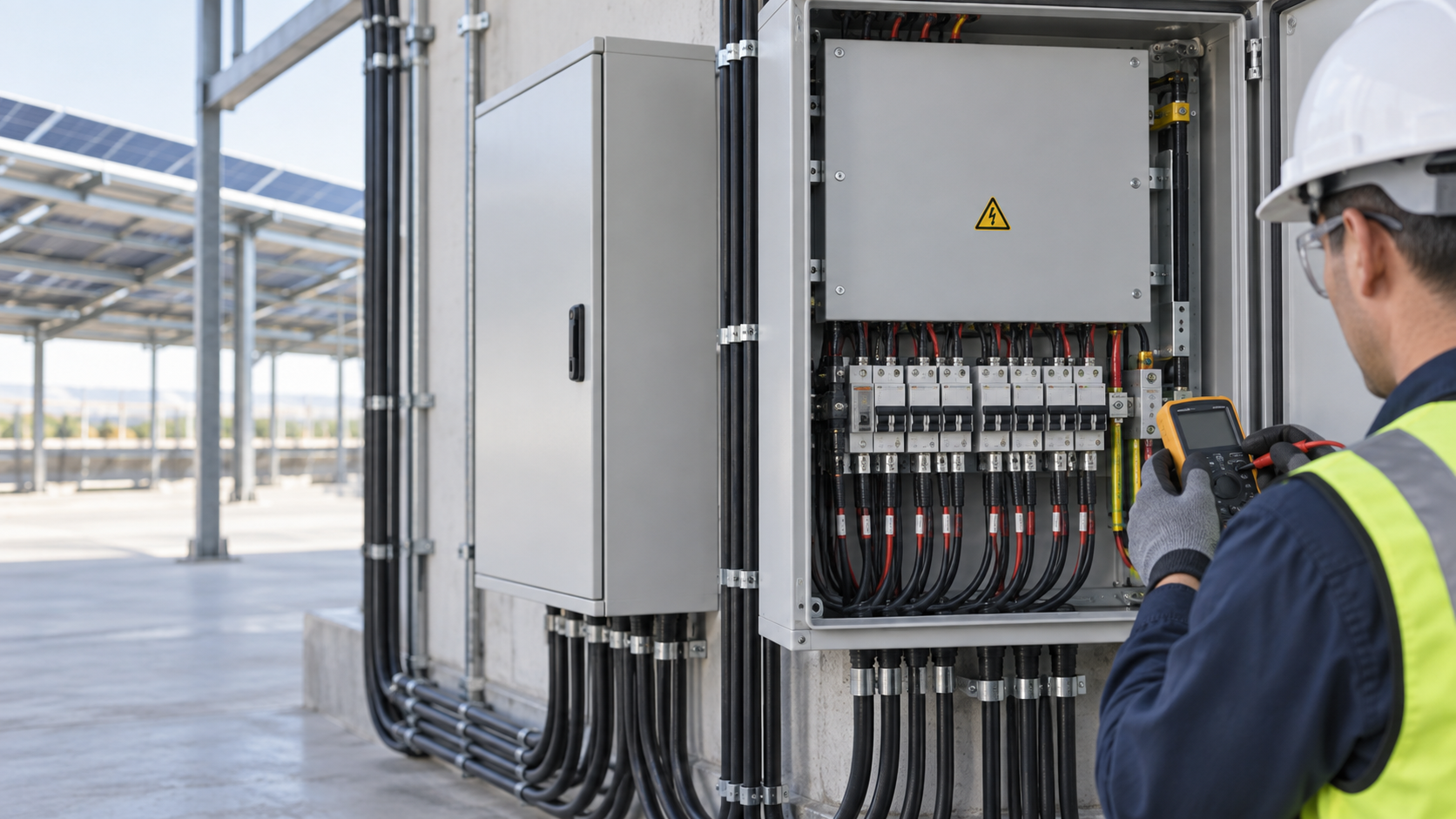
Safety Before Any Arc-Fault Work
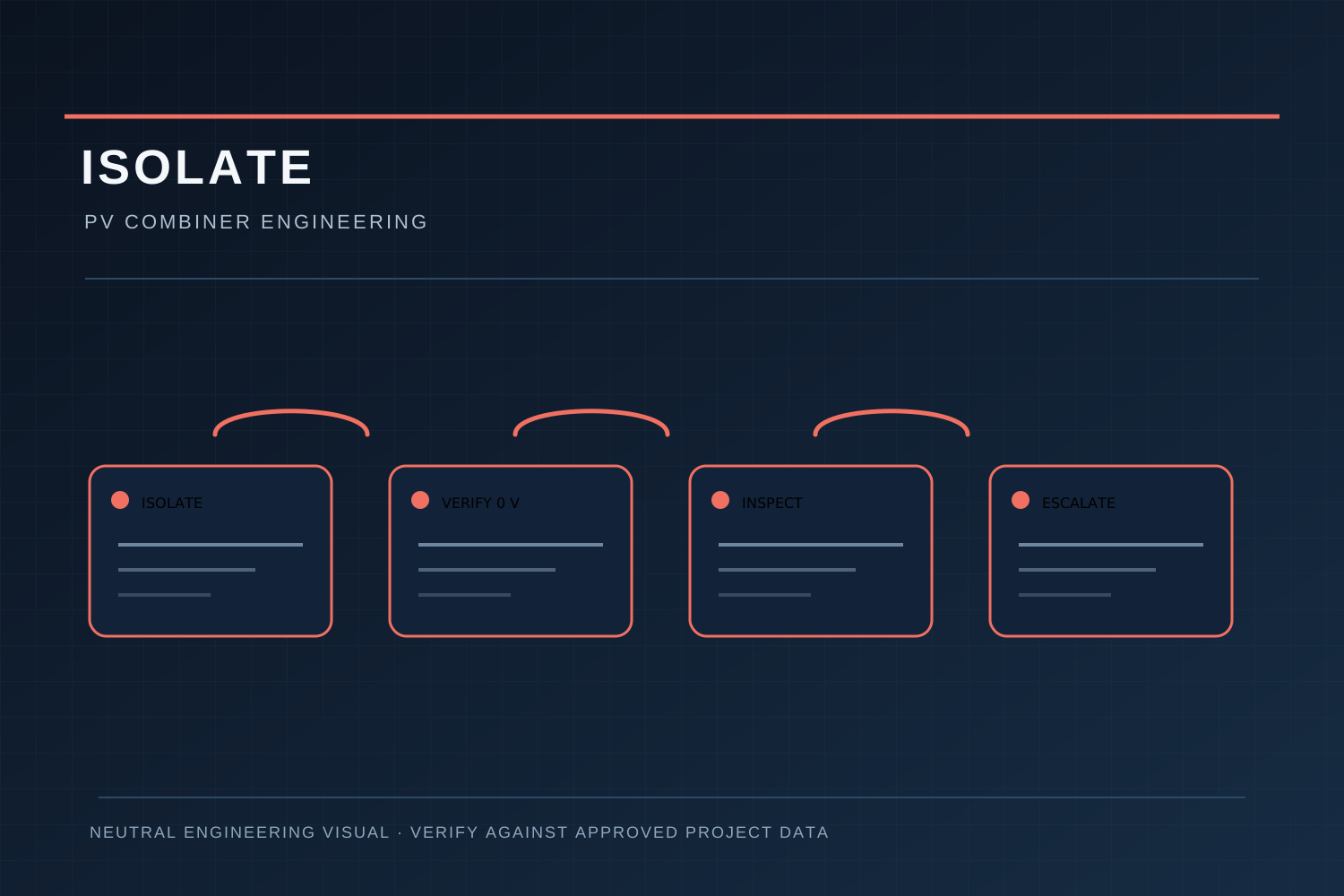
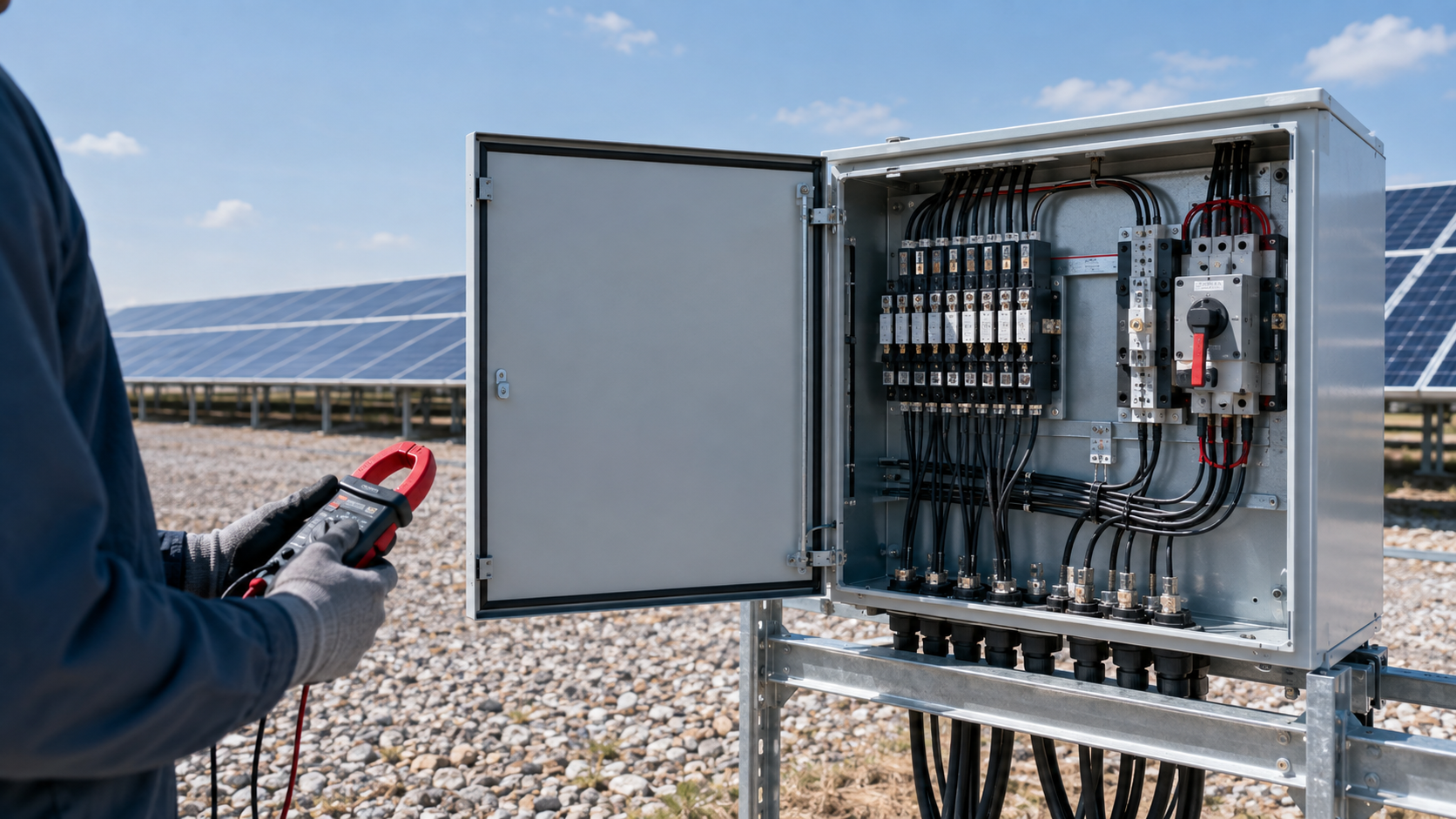
A DC arc fault in a combiner box is a live electrical event. Only qualified personnel may open the enclosure or run diagnostics. Under sunlight the PV strings and the busbar remain energized even after the output disconnect is opened, so the upstream side is not de-energized by a downstream switch. Isolate every PV feed at the array and verify absence of voltage at the box before touch.
Wear rated arc-flash protection and use insulated tools. Never work alone on a faulted DC section, and keep the approved method statement available on site.
Approved Diagnostic Procedure
Follow the diagnostic procedure in the approved model manual and the site's electrical method statement. Typical steps record the tripped string, inspect the suspect joint and connector for heat marks or carbon, and confirm torque and crimp quality against the approved values. Use the manufacturer's recommended test equipment rather than improvised checks.
Do not rebuild an arc by closing the breaker to observe where it strikes. That practice places the worker at risk and can damage healthy conductors.
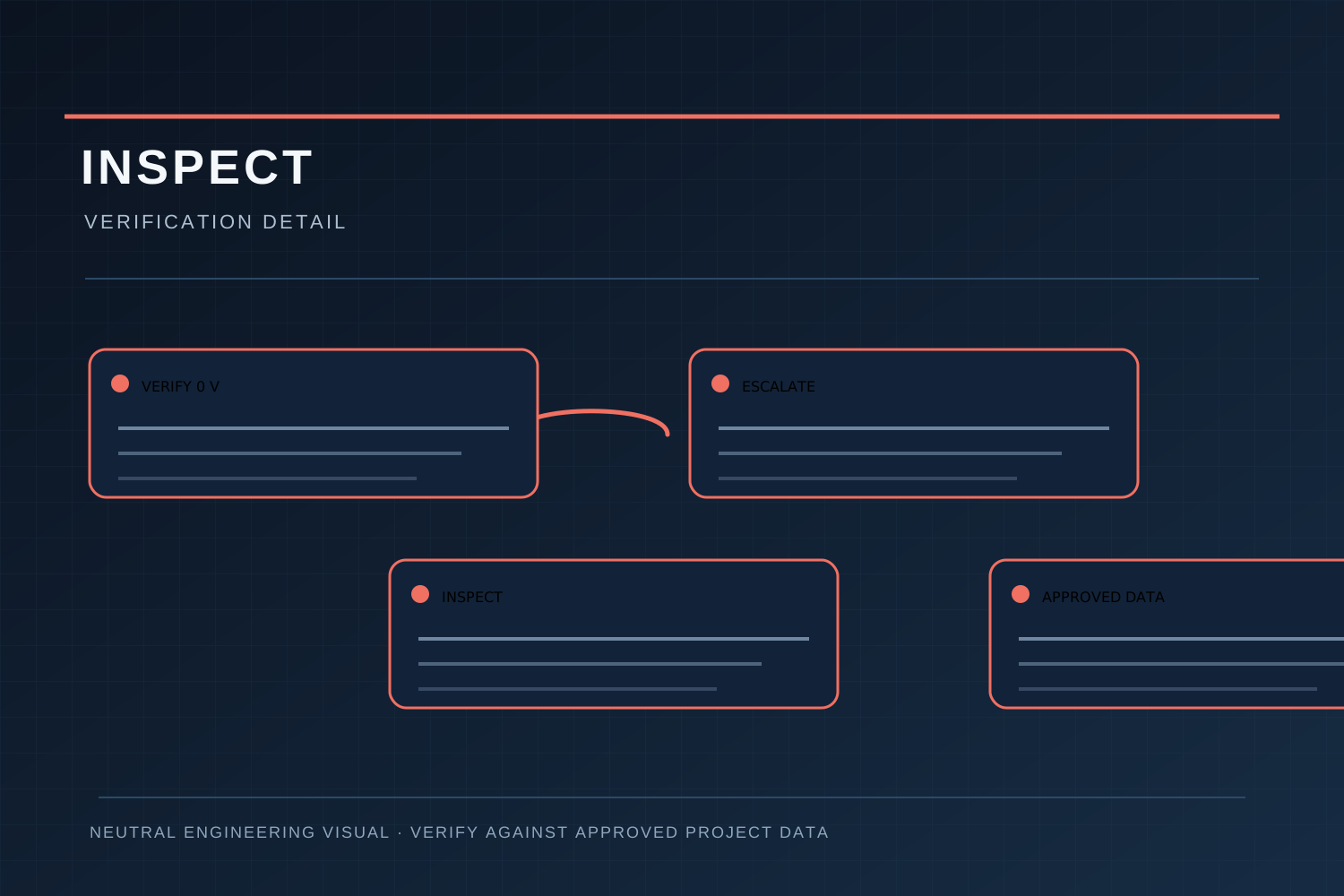
Stop Conditions and Escalation
Stop and withdraw if you find melting, sustained heating, smoke, or a smell of burning insulation; if the fault repeats after one controlled isolation; or if the measured voltage does not fall to zero after isolation. In these cases, quarantine the string, label the fault, and escalate to a senior electrical engineer.
Keep a written record of each stop condition and the action taken. The record supports the approved coordination review and later trend analysis. Never resume work until the cause is found and the protective device is restored by qualified personnel.
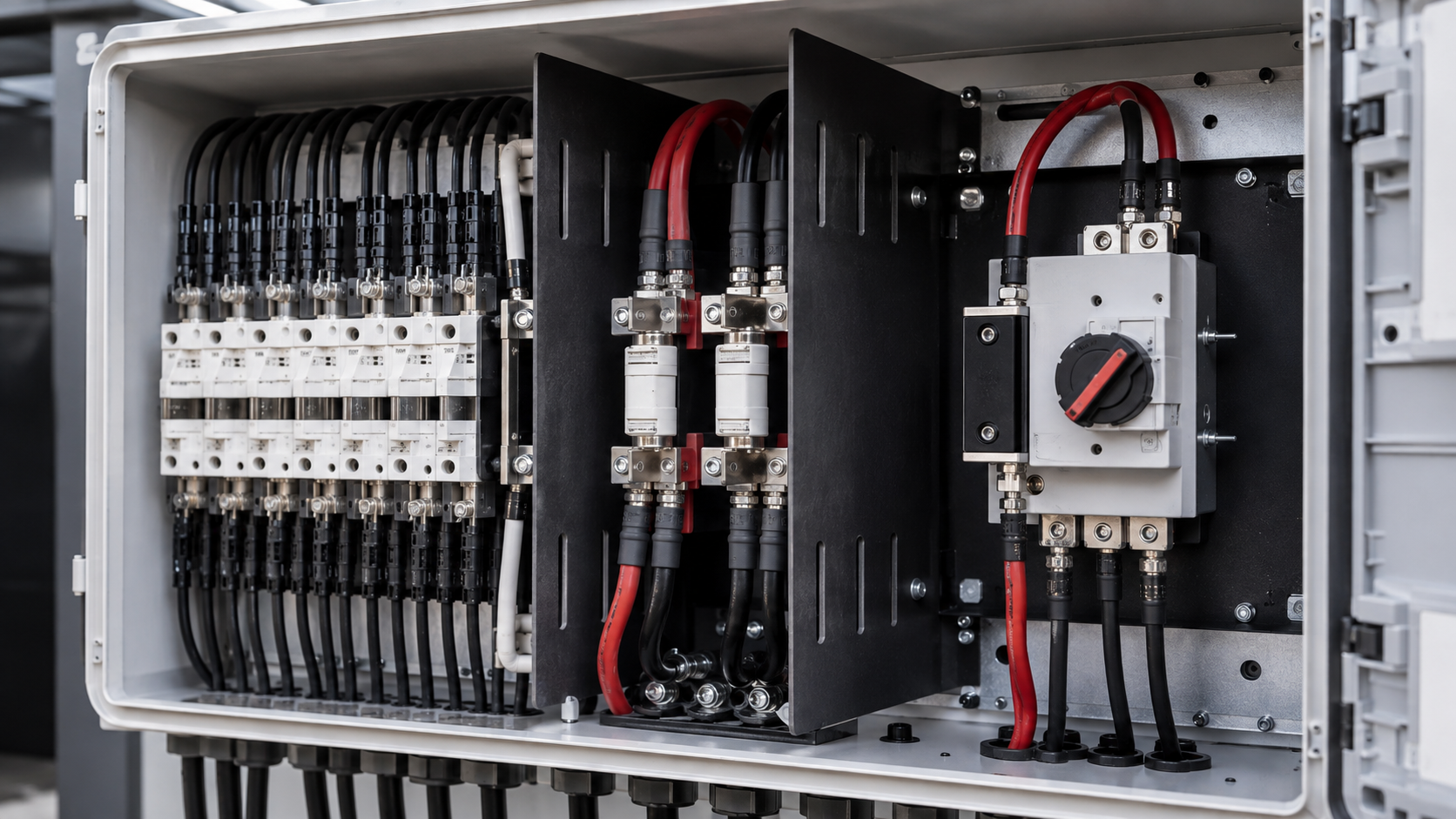
Fuse Bases and Connectors Are Not Switches
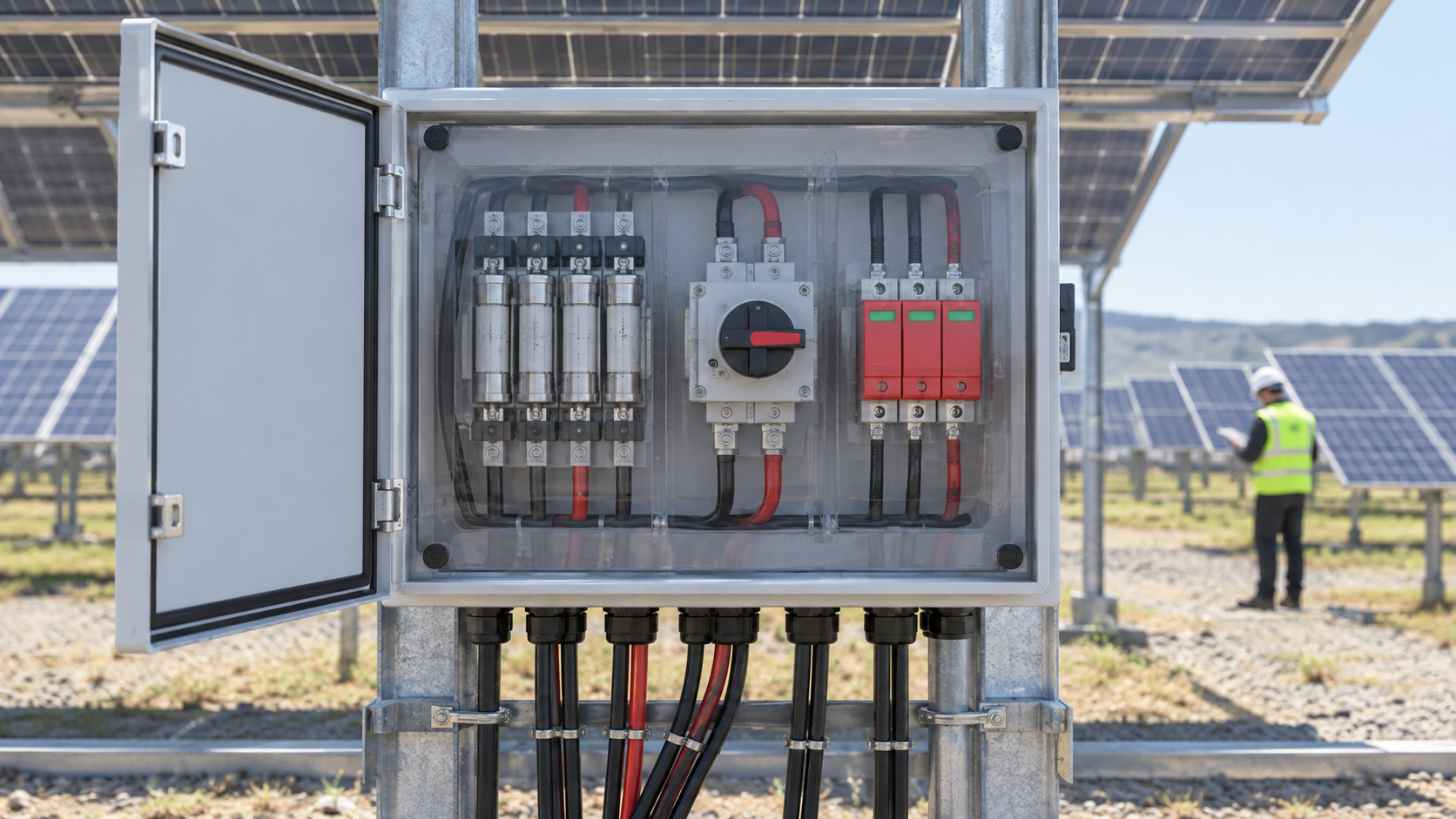
A fuse base, a fuse-holder, and an MC4 connector are connection devices, not load-break switches. They are not rated to open a circuit under load and should never be pulled or unplugged to interrupt current. Use the assigned disconnect or switch-disconnector for breaking, and only after the circuit is proved dead.
For wider protection context, the DC control and protection page and the PV string protection gPV fuse article explain the rated devices and their coordination.
This article preserves the accepted technical guidance but is not a substitute for the applicable local code, approved model datasheet, test report or a qualified engineer's design review.
Frequently asked questions
Who may troubleshoot a DC arc fault in a combiner box?
Only qualified personnel, after all PV feeds are isolated and voltage is verified absent. The upstream side stays live under sunlight even with the output disconnect open.
Should I close the breaker repeatedly to find the arc?
No. Repeated breaker closing to provoke an arc is unsafe and not part of an approved procedure. Inspect joints, connectors, and torque instead.
Can I unplug an MC4 connector to break the fault current?
No. Connectors and fuse bases are not load-break switches. Open the circuit only with the assigned disconnect after proving the section dead.
When must I stop arc-fault troubleshooting?
Stop on melting, smoke, burning smell, repeated faults after isolation, or voltage that will not reach zero. Quarantine the string and escalate.
Bring the project inputs to the first review.
Share the array layout, ratings, site conditions and documentation requirements for a coordinated review.
Discuss a projectContinue learning
Explore related technical guidance in Electrical Protection.
Published from the accepted Period 13 manuscript (1.1); technical meaning and safety boundaries are retained from the approved source package.