
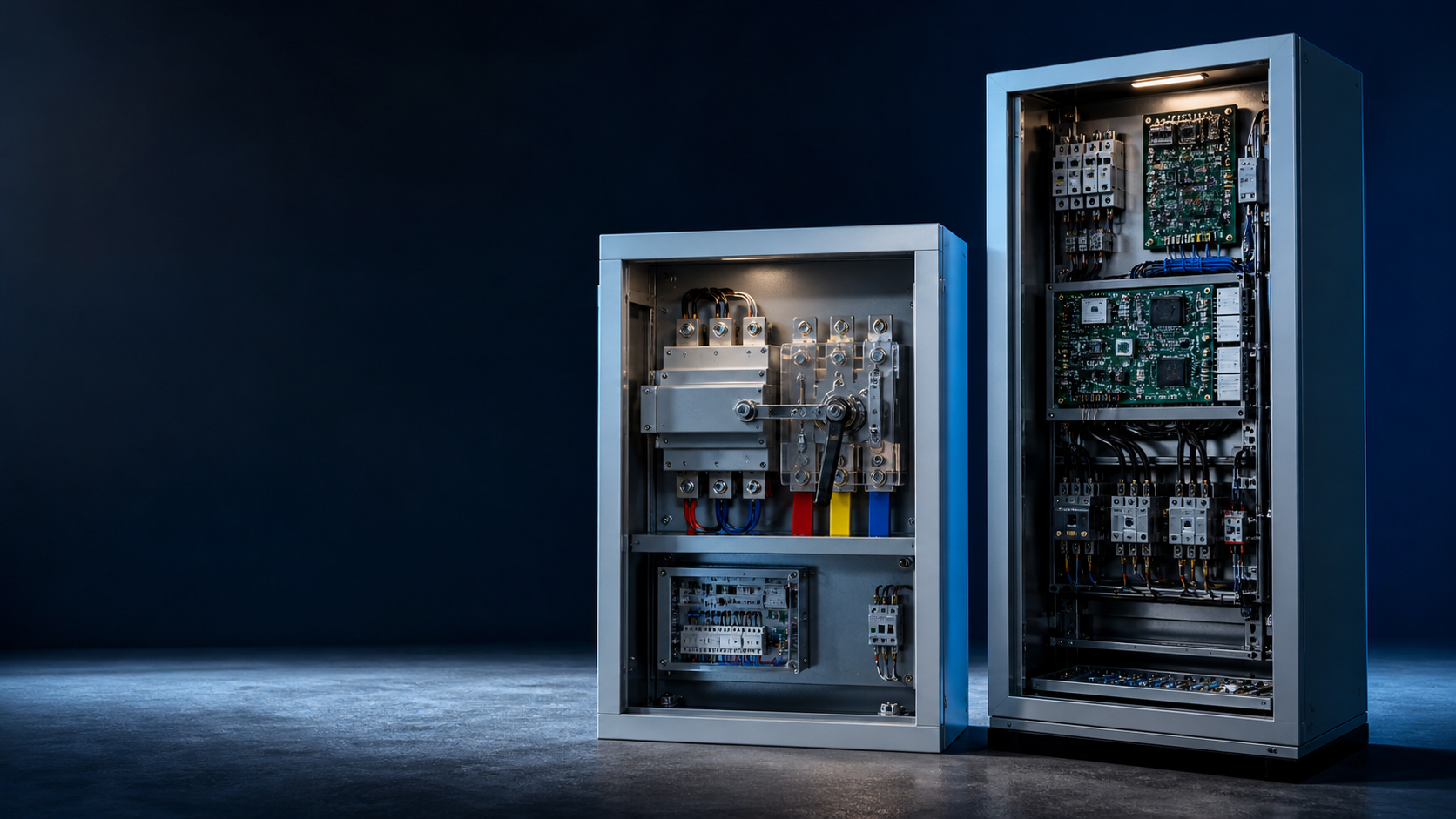
Two switching technologies, two very different jobs
An ATS drives its contacts with an electromagnetic release — a simple mechanical structure that switches the load between two feeds in tens to hundreds of milliseconds. An STS replaces the mechanical contacts with solid-state thyristors (SCRs) that commutate the load to the standby feed in a few milliseconds or less, effectively a zero-break transfer. The choice is not about which is better; it is about what the load actually needs.
ATS vs STS at a glance
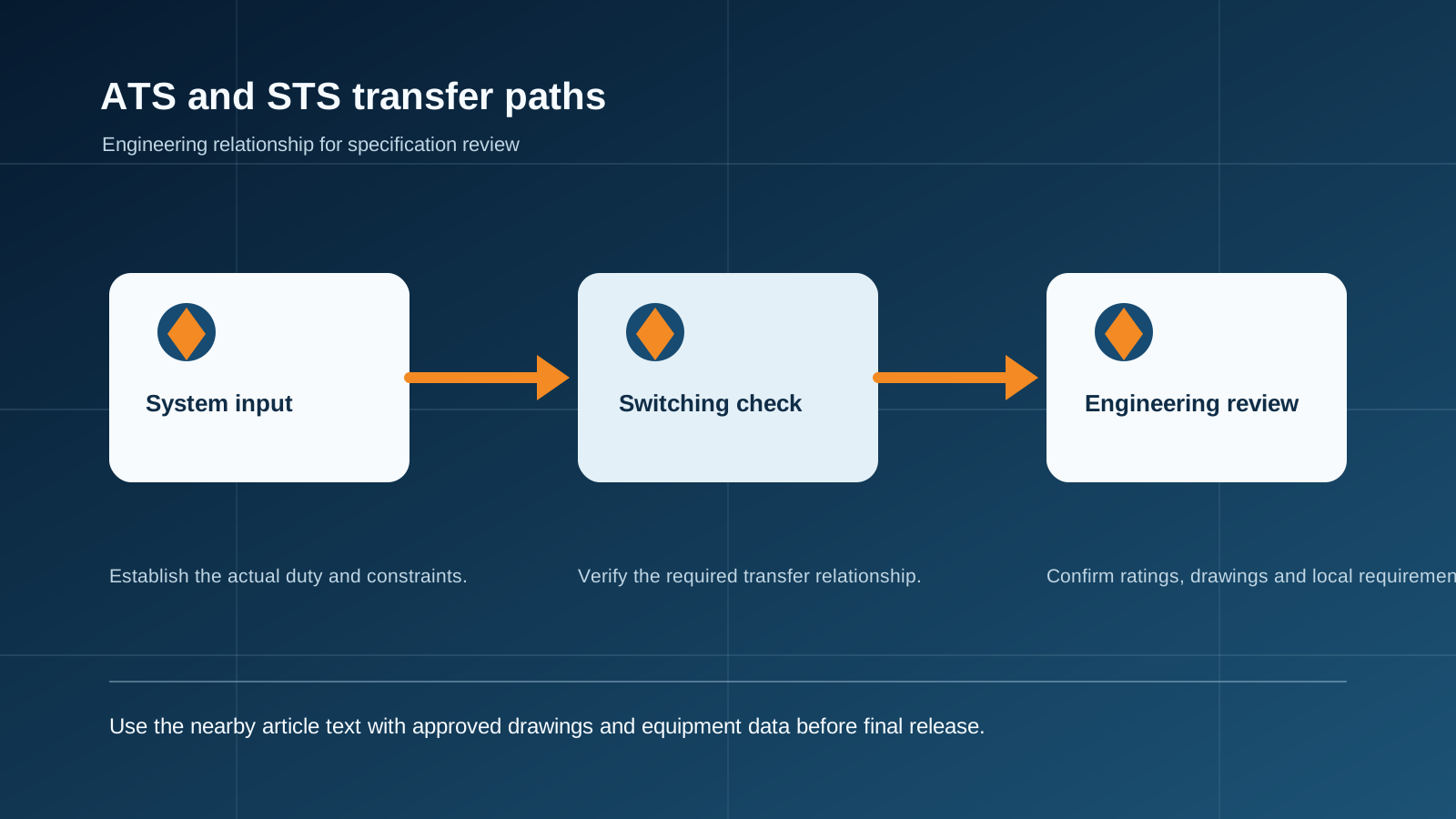
Technical diagram shown at a readable responsive scale.
When an ATS is the right choice
Choose an ATS when the budget is limited, the equipment tolerates a brief interruption, and the load is non-critical.
Budget-driven projects: lower first cost and simpler integration.
Tolerated interruption: ordinary lighting, water pumps and general building power accept the 100 ms-plus break of a mechanical transfer.
Non-critical duty: municipal works and standard commercial buildings rarely justify a static unit.
When an STS is the right choice
Choose an STS when the load cannot be interrupted at all, the application demands seamless changeover, or the supply environment is complex.
Non-interruptible loads: servers, medical equipment and financial systems fail the moment power drops.
Seamless switching: data centers and automated production lines need a transfer invisible to the process.
Complex supply environments: sites with UPS and diesel-generator combinations where a single feed change can cause phase or frequency transients.
How STS achieves zero-break transfer
A static transfer switch monitors voltage, frequency and phase continuously. When the preferred feed degrades, the control logic commutates the load to the standby feed through thyristors within a few milliseconds — too fast for the load to notice. Typical units offer manual and automatic modes, alarm reporting and remote monitoring, and they include phase detection: when the two feeds are not synchronized, the unit blocks the transfer instead of risking damage to downstream equipment.
Industry cases: data centers and manufacturing lines
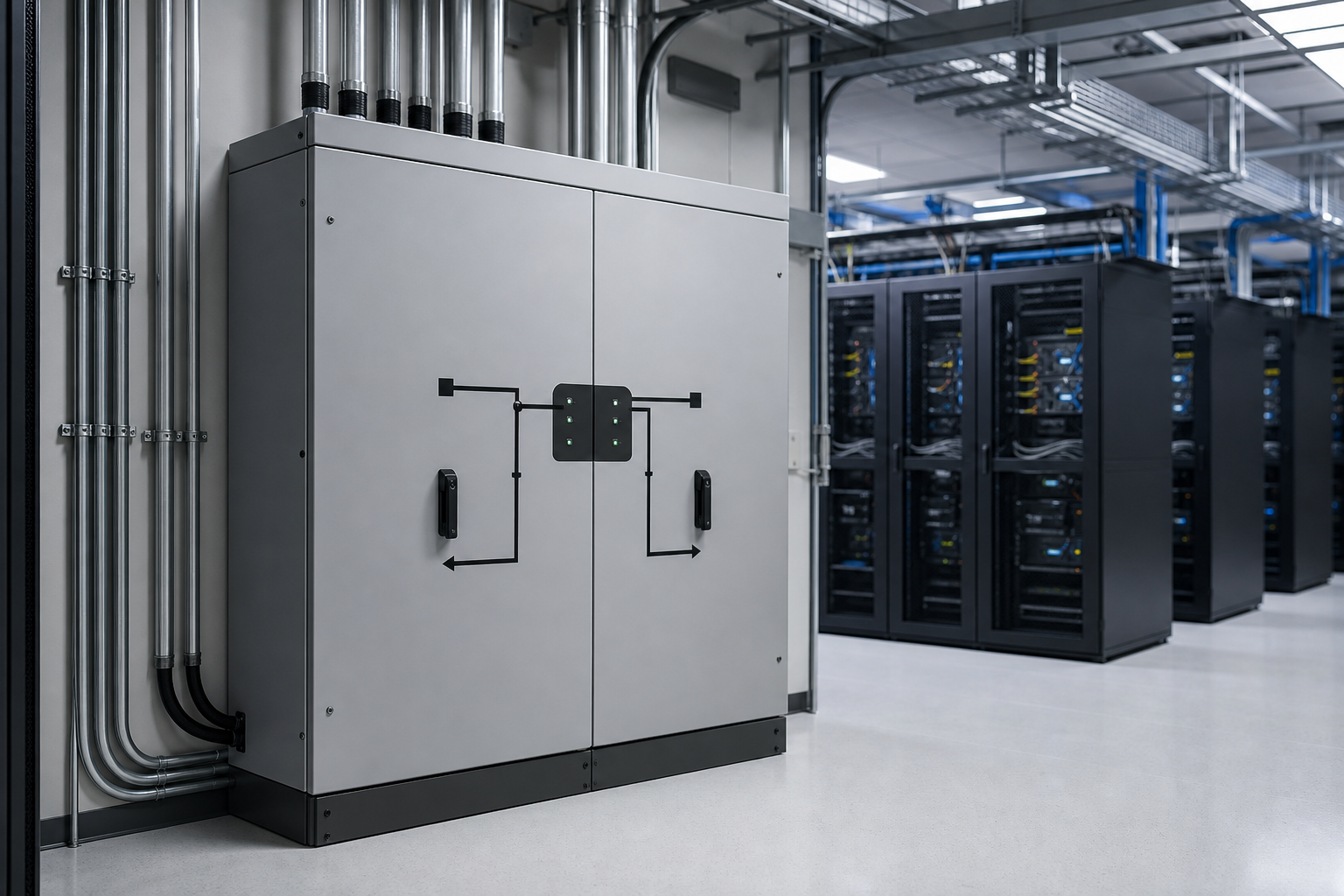
Data centers: servers demand continuous power — any interruption risks data loss. An STS placed between the UPS and the load switches seamlessly between two mains feeds or a generator feed, supporting availability targets in the 99.999% (five nines) range.
Manufacturing: variable-frequency drives are sensitive to voltage dips; a brief voltage sag can stop a production line. STS units with dip-ride-through features keep working through voltage swings around +/-30%, avoiding stoppage losses that can exceed half a million yuan a year in mid-size plants.
A five-point selection checklist
Load type: sensitive or non-sensitive equipment — decide the tolerated interruption first.
Allowed interruption time: above 100 ms -> ATS; below 8 ms -> STS.
Supply topology: does the site include UPS or generator feeds that add transients?
Installation space: an STS needs heat dissipation design — reserve about 1.5x the cabinet footprint.
Budget: accept a 30–50% premium for the static route when the load justifies it.
Maintenance, upgrade paths and phase-sync safety
An STS has no mechanical wear, but its thyristor modules should be performance-tested every two years. An existing ATS can in some cases be upgraded to a static unit through a bypass retrofit, but the existing distribution system must first be assessed for compatibility.
Phase safety deserves emphasis: transferring between two non-synchronized feeds can destroy equipment. An STS detects phase mismatch and blocks the changeover; with a plain ATS the designer must confirm the two feeds are synchronizable or sequence the transfer accordingly.
This guide supports initial technical discussion only. Final ratings, standards, protection coordination, drawings and configuration must be confirmed for the actual project requirement.
Frequently asked questions
What is the main difference between ATS and STS?
An ATS is electromechanical and transfers in tens to hundreds of milliseconds; an STS uses solid-state thyristors and transfers in under 8 ms — effectively a zero-break changeover.
Which applications need an STS rather than an ATS?
Applications where interruption is unacceptable: servers, medical equipment, financial systems and automated process lines. Loads that tolerate a brief break, such as lighting and pumps, are well served by an ATS.
Can an ATS be upgraded to an STS?
In some cases, yes — through a bypass retrofit. The existing distribution system must first be evaluated for compatibility with static transfer and its heat and control requirements.
Does an STS require maintenance?
There is no mechanical wear, but thyristor performance checks are recommended about every two years, along with normal control and alarm verification.
What happens if the two supplies are out of phase?
Transferring between non-synchronized feeds can damage equipment. An STS detects phase mismatch and blocks the changeover; with an ATS the designer must verify feed synchronizability.
Discuss Your Transfer-Switch Requirement
Share the supply arrangement, load duty, operating environment and document requirement so the relevant configuration can be reviewed before quotation.
Discuss a projectContinue learning
Explore related technical guidance in Power Distribution.
Technical note: this article is published from the approved 2026-08-24 source package. Confirm the final electrical design, local code basis and manufacturer documentation for the actual project.