
The working principle in one line
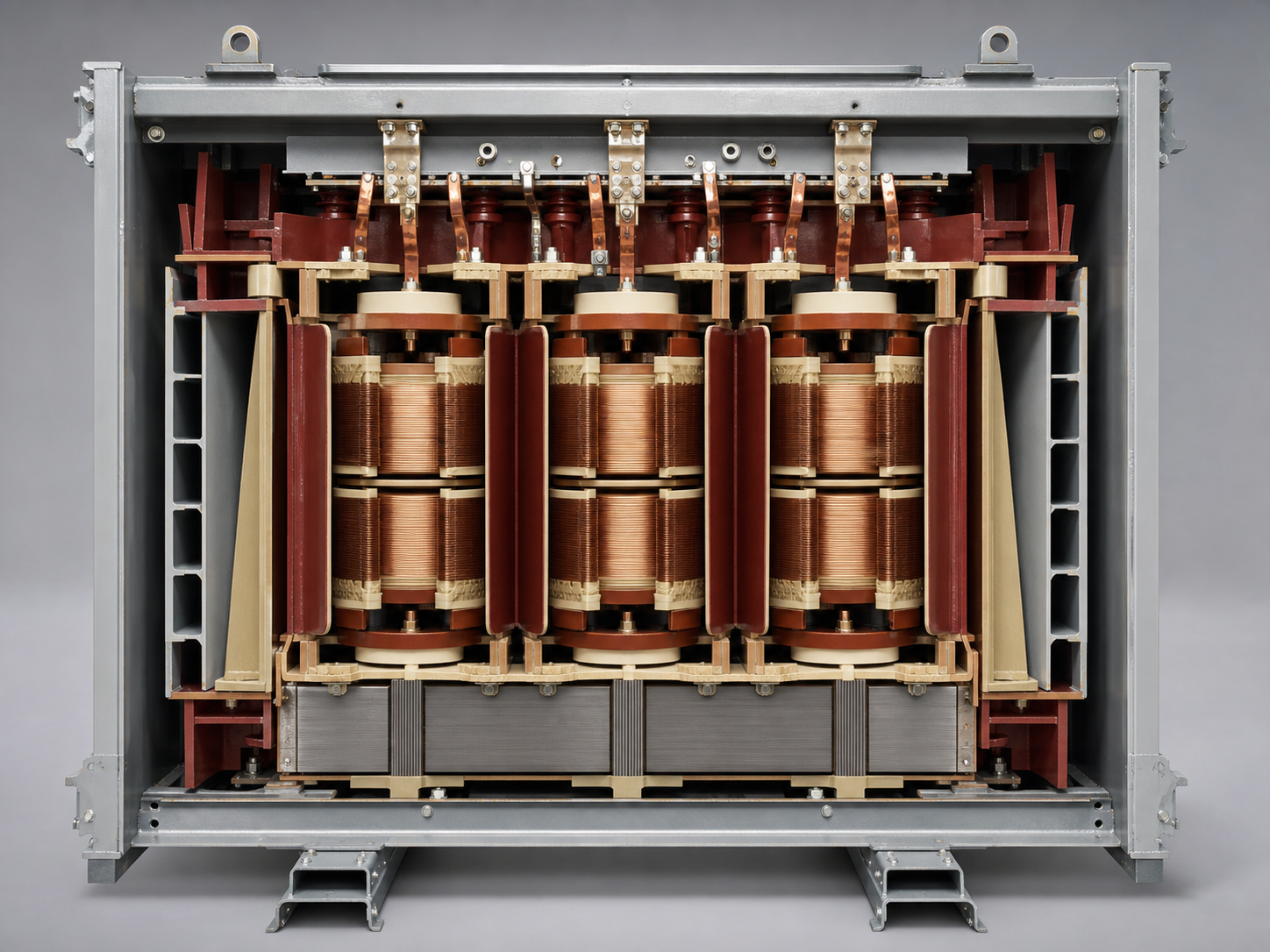
A transformer works on mutual induction. An alternating primary voltage drives a changing flux in the core; the secondary winding intercepts that same flux and induces a proportional output voltage. No electrical connection links the two sides — only the magnetic field does.
The turns ratio sets the voltage relationship. With Np turns on the primary and Ns on the secondary, the secondary voltage scales as Ns/Np, while the VA rating decides how much current the device can deliver without overheating.
Core construction and cooling
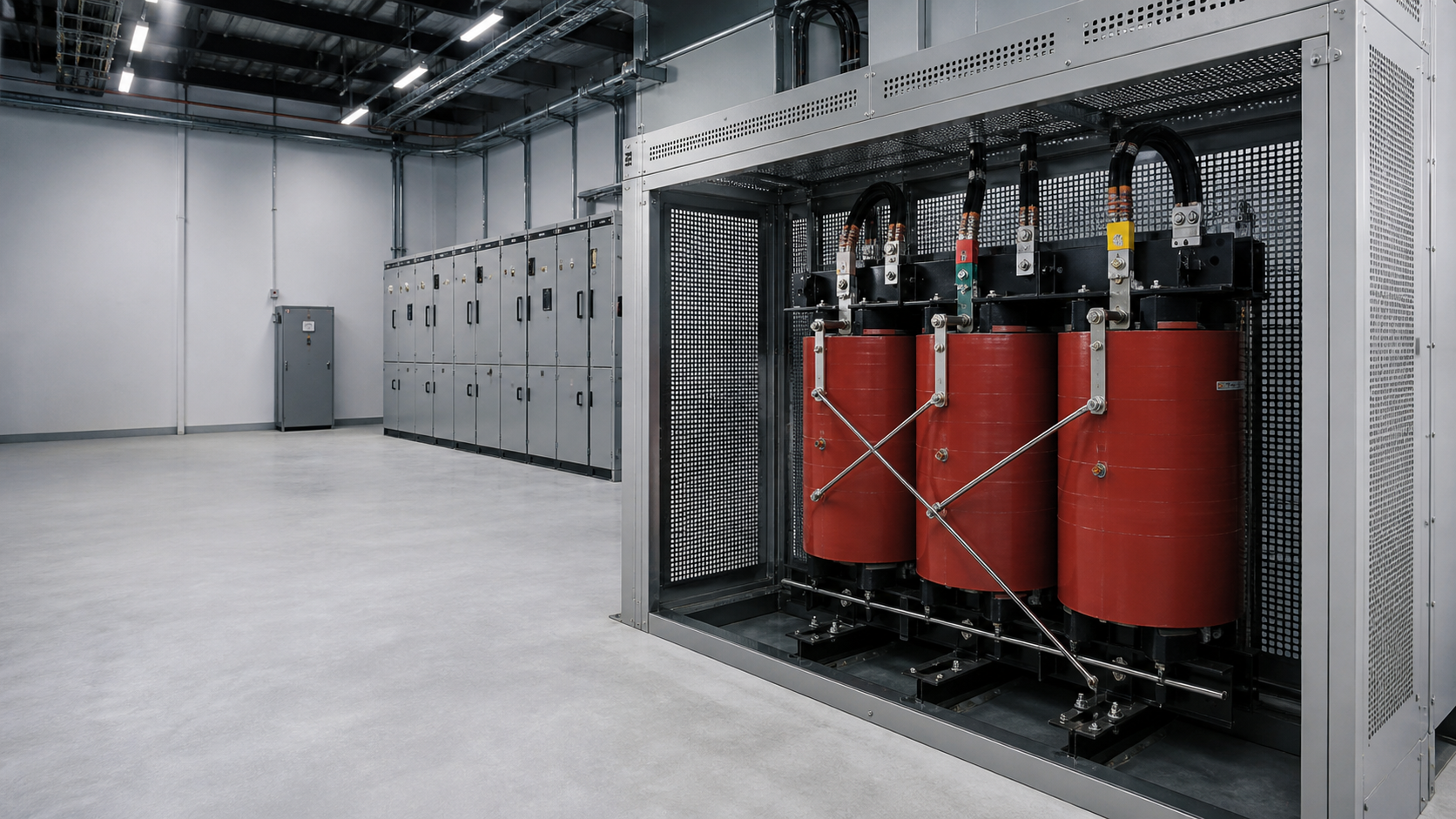
Most units use a laminated silicon-steel core to suppress eddy currents, or a wound amorphous-alloy core for low-loss distribution. Dry-type resin-encapsulated designs dominate indoor and PV-adjacent installations because they need no oil containment.
- Laminated CRGO steel — the default for 50/60 Hz power transformers up to a few MVA.
- Amorphous alloy — 60 to 70 percent lower no-load loss, preferred where efficiency rules apply.
- Cast-resin dry type — class F or H insulation, IP20 to IP65 enclosure depending on the site.
The main families you will specify
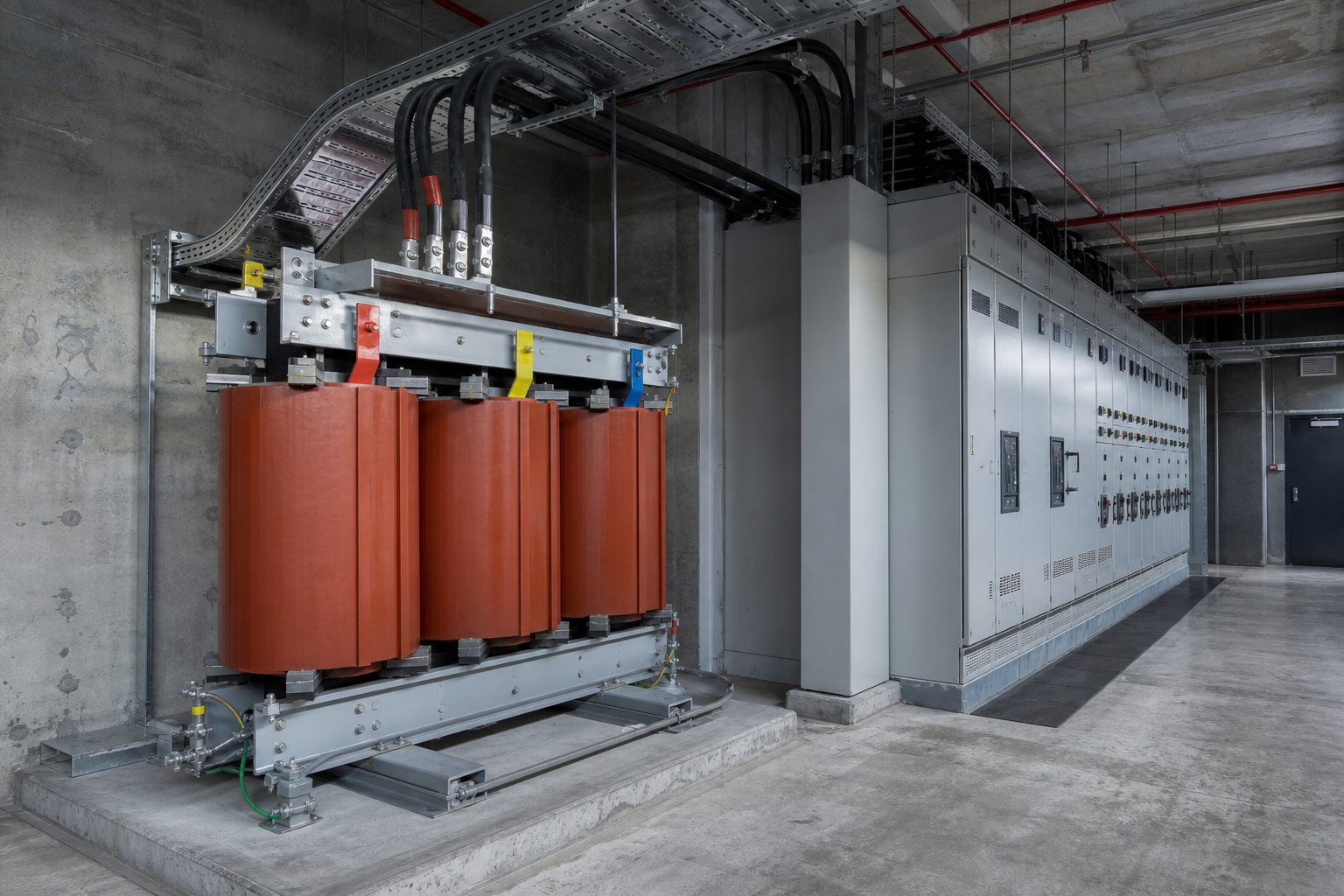
Step-up and step-down units move voltage between levels; isolation units add a safety barrier with a 1:1 ratio; autotransformers trade isolation for size and weight. Drive isolation transformers sit ahead of VFDs to knock down reflected harmonics.
For PV and DC systems the same physics applies, but the winding insulation and the thermal class are chosen for the string voltage and the ambient the cabinet sees.
How the rating is stated
Rated power in VA or kVA, rated primary and secondary voltage, frequency, and the insulation level are the four numbers on the nameplate. IEC 61558 and IEC 60076 govern the safety and performance tests.
Standards and where NEUTRON fits
IEC 61558-1 and IEC 60076 are common references for transformer safety and performance. Confirm the applicable edition, rating, enclosure and requested compliance evidence against the quoted configuration and destination-market requirements.
This is general technical guidance. Confirm final ratings, protection coordination, standards, documentation and configuration against the approved project design and applicable local requirements.
Frequently asked questions
What does a transformer do?
A transformer transfers AC energy between circuits through a shared magnetic field. It can step voltage up or down, provide isolation, or match a distribution interface without changing the supply frequency.
What is the difference between a distribution transformer and an isolation transformer?
A distribution transformer is selected to supply a required voltage and kVA load. An isolation transformer uses separate windings, often with a 1:1 ratio, to create galvanic isolation between the input and output circuits.
Which transformer ratings should be confirmed first?
Confirm rated power, primary and secondary voltage, frequency, vector or winding arrangement where applicable, insulation class, cooling method, enclosure and the installation ambient before final selection.
Which standards are commonly reviewed for transformers?
The applicable standard depends on transformer type, market and project scope. IEC 60076 and IEC 61558 are common reference families; verify the required edition and scope against the approved project documentation.
Bring the project inputs to the first review.
Need a dry-type unit rated to IEC 60076 for your PV or drive application? Talk to NEUTRON engineering and get a coordinated offer.
Request a quoteContinue learning
Explore related technical guidance in Power Distribution.
Source article retained from the approved NEUTRON publishing file. Final ratings, standards, product documents and project configuration must be confirmed against the applicable requirements.