
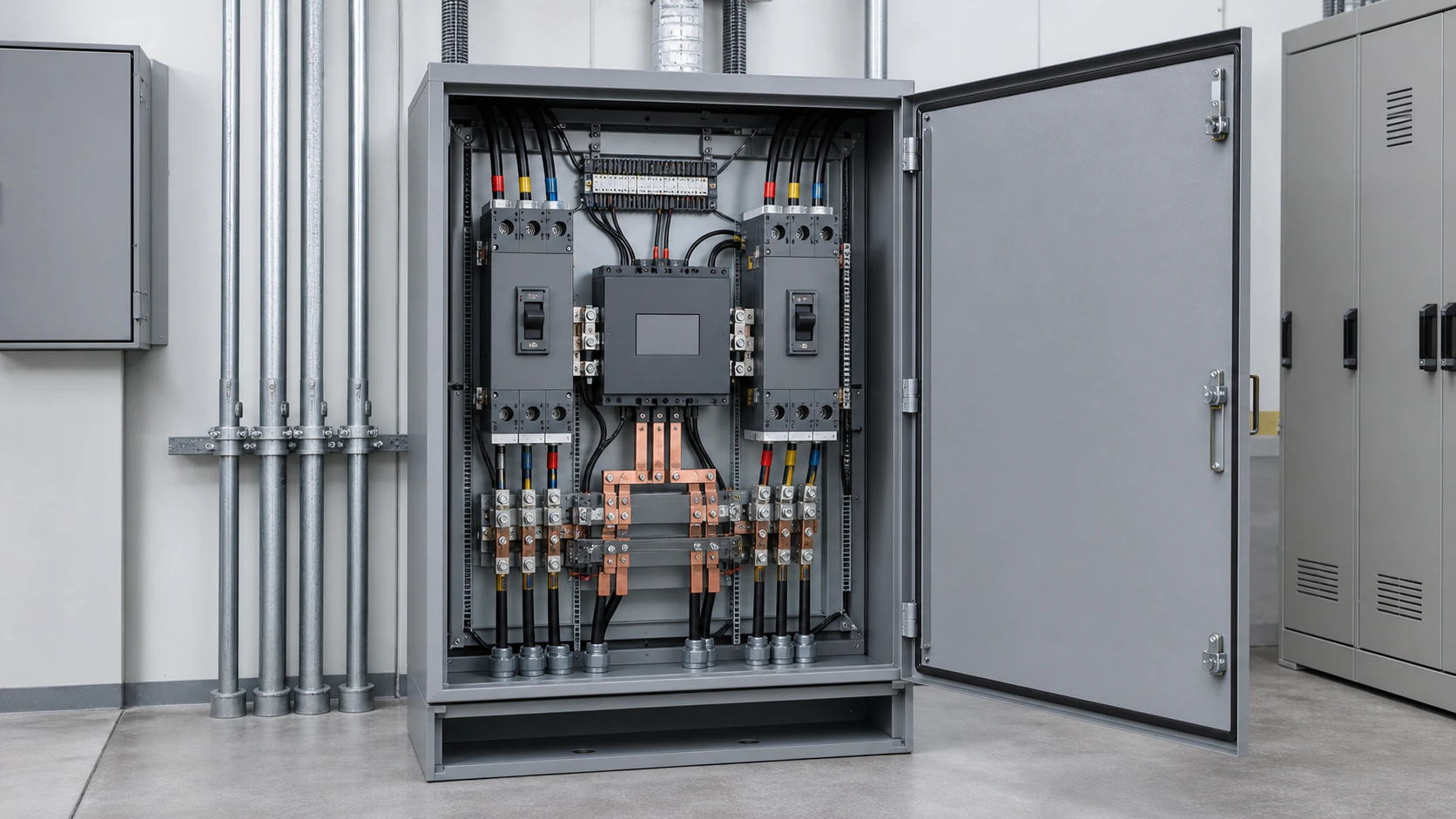
The One-Sentence Difference
PC-level transfer switching equipment performs the changeover function and relies on separate upstream protective devices. CB-level equipment is built from interlocked circuit breakers, so it can also interrupt fault current within its declared breaker ratings.
What a PC-Level ATS Is
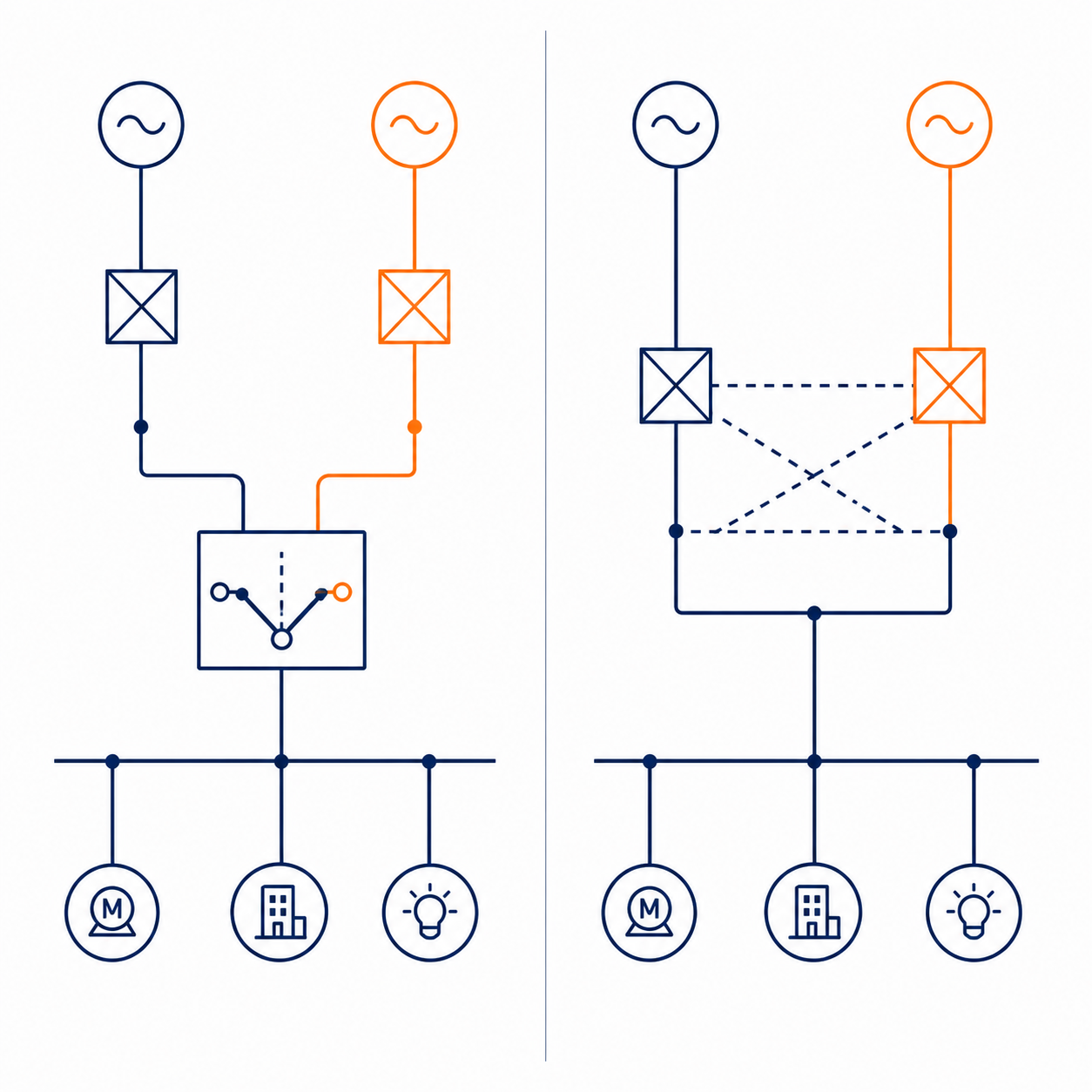
A PC-level ATS uses a dedicated changeover mechanism to connect one source or the other. It is specified around making and carrying duty and short-time withstand current Icw rather than breaker interrupting capacity. Its compact switching path can preserve downstream selectivity when upstream and downstream protection are properly coordinated.
What a CB-Level ATS Is
A CB-level ATS uses two interlocked circuit breakers and a controller. The breakers provide integral overload and short-circuit interruption, which can simplify smaller boards without upstream protection, but instantaneous tripping can compromise selectivity and the mechanism may transfer more slowly.
Icw and Icu: The Parameters That Separate the Classes
PC-level assemblies are reviewed by short-time withstand current Icw: the current the switch can make, carry and withstand for a specified time while separate protection clears the fault. CB-level assemblies quote interrupting values such as Icu because the breakers are expected to break the fault. Do not compare Icw and Icu as if they were interchangeable ratings.
| Criterion | PC-level ATS | CB-level ATS |
|---|---|---|
| Construction | Dedicated changeover mechanism | Two interlocked circuit breakers plus controller |
| Overcurrent protection | Separate upstream devices required | Integral in breaker trip units |
| Typical transfer time | About 1.0–1.2 s full cycle in the source example | Commonly up to 3 s in the source example |
| Endurance | Higher on the smaller frames in the source example | Typically lower than PC-level |
| Selectivity | Can be preserved with graded protection | Can be compromised by instantaneous tripping |
Transfer Time, Endurance and Maintenance
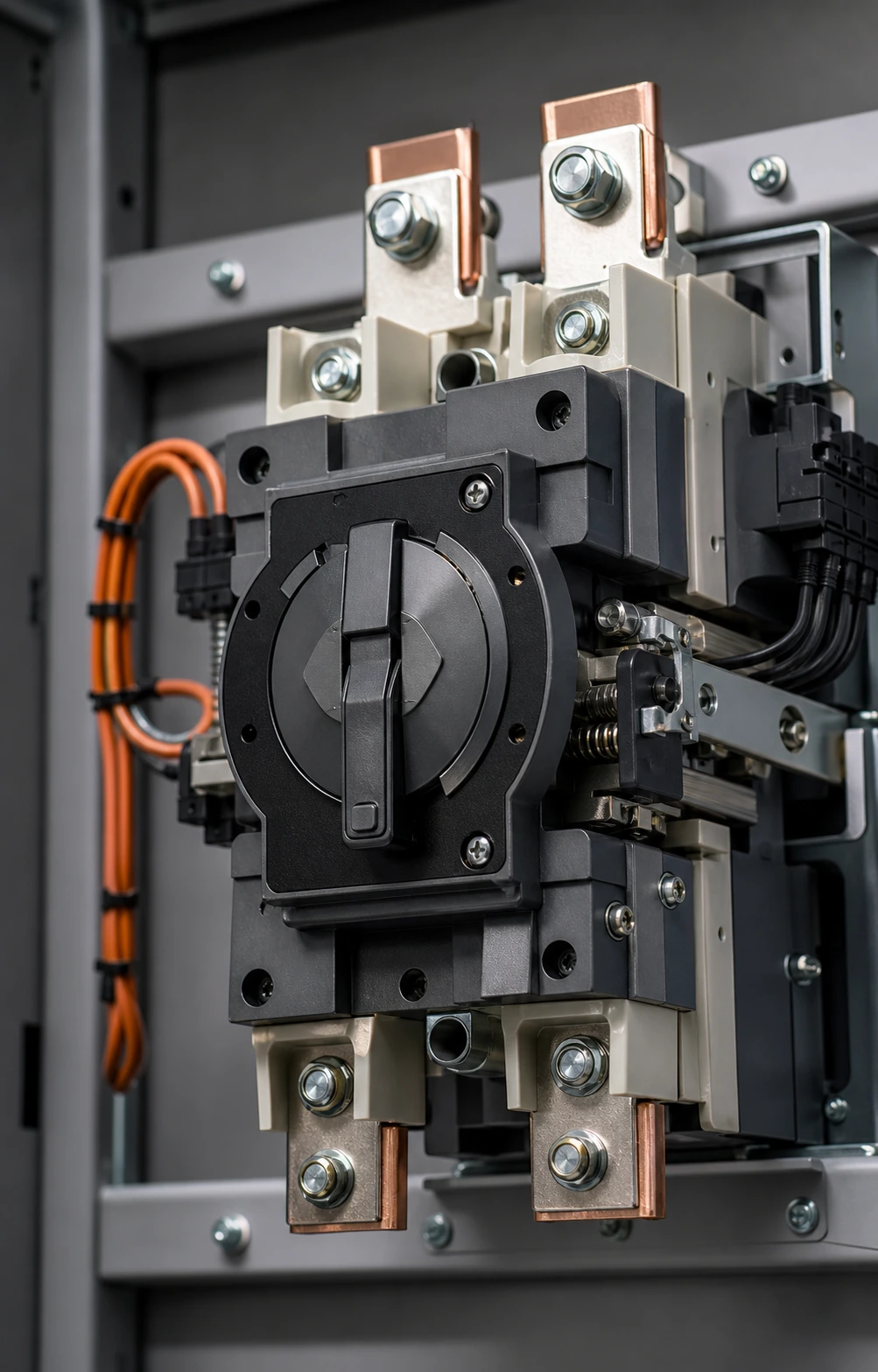
Total interruption includes controller supervision delay as well as mechanism time. The source article describes a spring energy-storage PC-level unit at about 1.0–1.2 seconds for a full utility-to-standby cycle and a CB-level unit commonly at or below 3 seconds. Endurance also diverges: the source notes PC-level mechanical endurance up to 100,000 cycles on small frames, while CB-level assemblies are typically in the low thousands. Confirm the exact rating for the quoted frame and utilisation category.
How to Choose for Your Application
- Choose PC-level when the load is critical, transfers are frequent, selectivity matters, motor or discharge-lighting duty needs a declared utilisation category, or panel depth is constrained.
- Choose CB-level when integral protection simplifies a small board, upstream protection is absent, transfer frequency is low and the load tolerates a longer interruption.
- For motor loads, check the breaker trip curve against starting current and use an appropriate in-phase or timed-delay transfer strategy.
NEUTRON WCQ2 Transfer-Switch Range
The supplied source describes NEUTRON's WCQ2G as a PC-level ATSE and WCQ2A(1) and WCQ2C-63 as CB-level transfer-switch configurations, with the exact voltage, current, transfer, endurance and protection values depending on the model. Confirm the model data, enclosure arrangement and applicable standard against the quotation.
Installation Errors That Cause Nuisance Transfers
- Selecting 3P or 4P without checking the earthing arrangement and standby neutral.
- Leaving supervision thresholds at defaults on a weak grid.
- Transferring a rotating motor onto an out-of-phase source without a delay strategy.
- Feeding the controller from only one source.
- Omitting upstream protection on a PC-level installation.
The exact ATS selection depends on the approved single-line diagram, fault level, load starting profile, earthing arrangement, controller settings and applicable local rules.
Frequently asked questions
What does PC level mean in an ATS?
PC level describes equipment that can make and carry short-circuit current but does not break it. Separate upstream protection is required.
Is a CB-level ATS better than a PC-level ATS?
Neither is universally better. CB-level adds integral fault interruption; PC-level can offer higher withstand, faster operation and higher endurance when the upstream protection scheme is already defined.
Does a PC-level ATS need upstream circuit breakers?
Yes. Both incoming feeds need coordinated overcurrent protection because a PC-level switch cannot clear a fault.
What standard covers automatic transfer switching equipment?
IEC 60947-6-1 covers transfer switching equipment; component breakers in CB-level assemblies are additionally covered by the applicable circuit-breaker standard.
How fast does a PC-level ATS transfer?
The supplied source gives about 1.0–1.2 seconds for a typical spring energy-storage full cycle, but total load interruption also includes controller supervision delay.
Match the ATS to the Protection Scheme
Send the single-line diagram, ratings, load profile and destination-market standards so the transfer class, protection coordination and test scope can be reviewed together.
Request a quoteContinue learning
Explore related technical guidance in Electrical Protection.
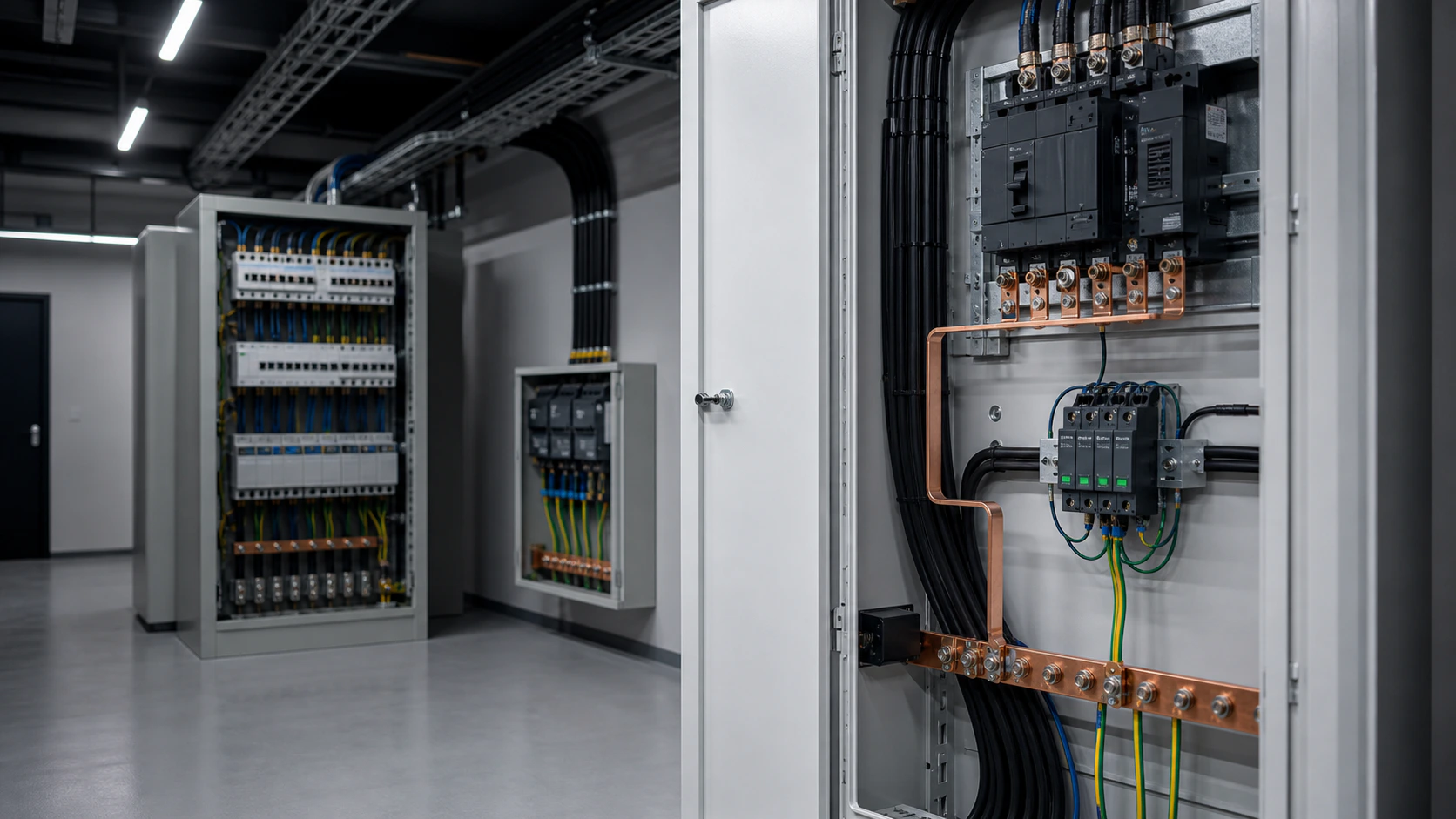
Adapted from the supplied DOCX. The model values are source-provided examples and must be confirmed against the exact configuration and current standard edition.