
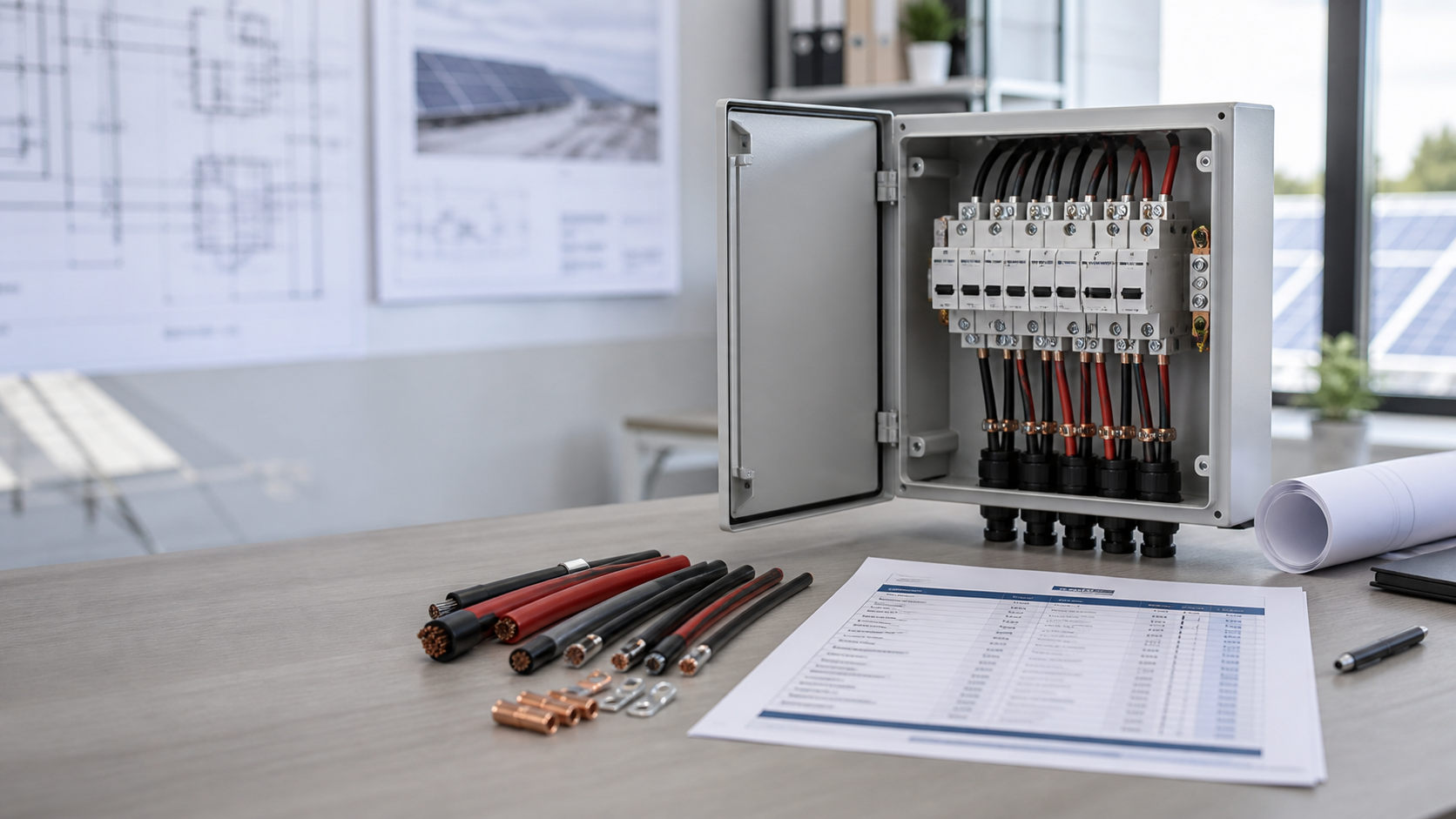
Why a structured RFQ gets better prices
Suppliers quote what they can see. An enquiry with complete BOM details, ratings and commercial terms returns accurate, comparable pricing in one round. A vague enquiry returns a vague quote, or no quote at all. The checklist below closes that gap.
The BOM block
- Equipment type and quantity for every line item.
- Model or family reference where known.
- Quantity break points: trial order, container load, annual volume.
- Destination country and port or door address.
Technical requirements
- Maximum system DC voltage (1000V or 1500V).
- Current ratings, string count and combiner input layout.
- Enclosure type and IP rating for the site environment.
- Protection layout: fuse, breaker, SPD class and disconnects.
Certificates and standards
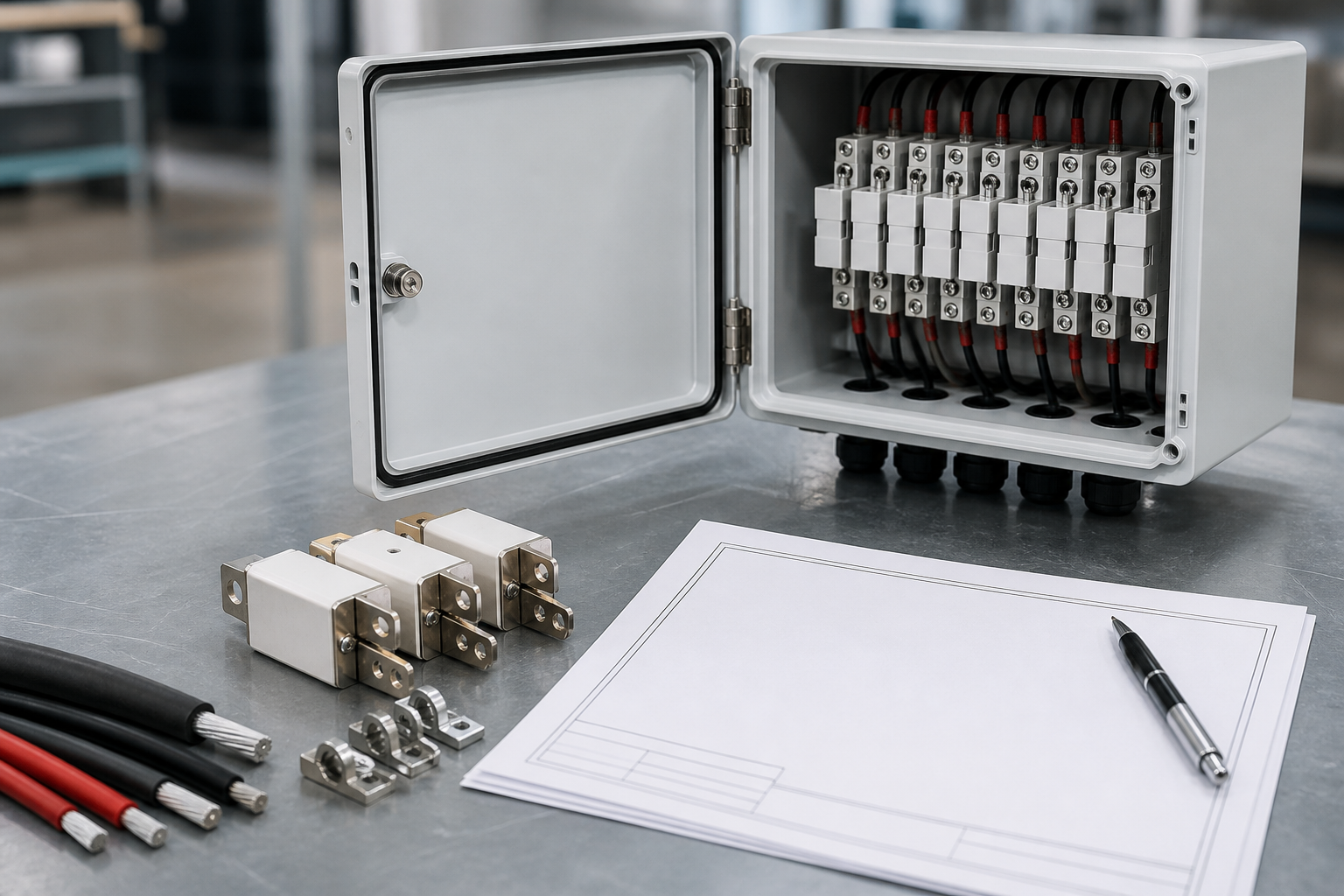
State the standards the equipment must meet and the certificate formats you will accept: IEC 62916 or IEC 61439 for assemblies, IEC 61643-31 for SPDs, IEC 60269-6 for gPV fuses, plus any market-specific UL or CE requirements. Asking for certificates inside the RFQ avoids a separate chasing round.
Commercial terms
- Incoterm and port or door of delivery.
- Required lead time and any milestones.
- Payment terms and currency.
- Validity period of the quotation.
QC and shipping requirements
- Pre-shipment inspection requirement and report format.
- Packing standard, pallet and labelling requirements.
- Container loading plan for mixed BOS orders.
- Documentation pack: invoice, packing list, certificates, test reports.
How suppliers compare RFQs
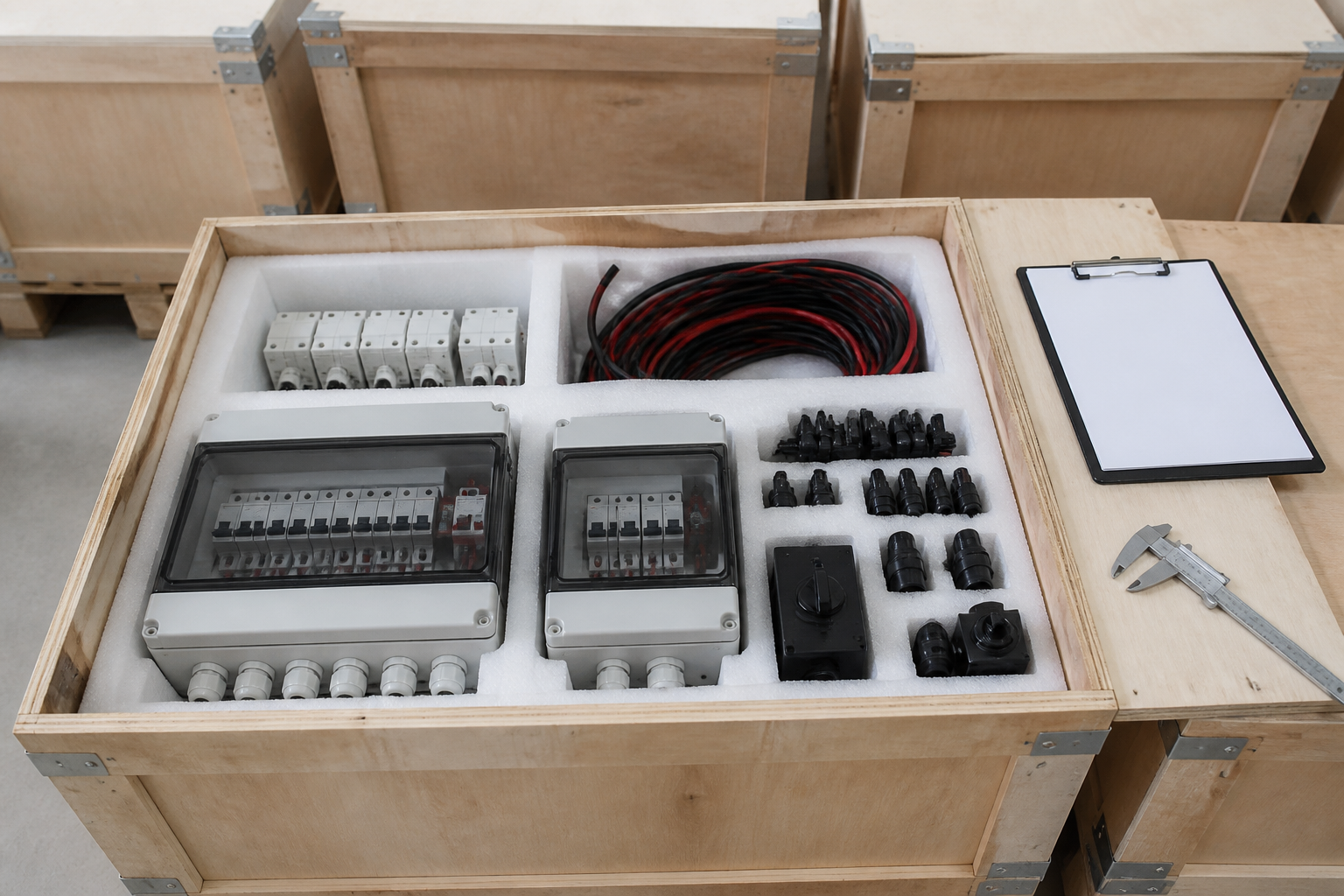
Compare like for like. When every supplier receives the same technical envelope and the same commercial terms, the differences in the quote reflect real differences in product and service. Keep the RFQ identical across suppliers and score responses against the same checklist.
Checklist template
Use the blocks above as a single-page template: BOM table, technical requirements, certificate list, commercial terms and QC shipping notes. Send the same template to each supplier and attach it to the order so the delivered goods can be verified against the original specification.
This guide supports an initial technical or commercial review. Final ratings, standards, shipping terms, documentation and configuration must be confirmed for the actual project requirement.
Frequently asked questions
What information must a solar BOS RFQ include?
The minimum set is: equipment type and quantity, system DC voltage, current and string data, enclosure and IP requirements, standards and certificates, Incoterm and destination, lead time and payment terms. Complete technical details prevent guesswork and return accurate pricing.
Should I send the same RFQ to multiple suppliers?
Yes. Identical technical and commercial envelopes across suppliers make quotes comparable. Different specifications or different terms produce quotes that cannot be evaluated side by side.
Why do suppliers ask for certificate requirements in the RFQ?
Certificate scope affects product selection, cost and lead time. Stating IEC, UL or CE requirements up front lets the supplier quote the right product class the first time instead of clarifying later.
When should I request a pre-shipment inspection?
For any order where quality verification matters, specify PSI in the RFQ and the report format. Doing so at the enquiry stage sets the expectation that inspection is part of the contract, not an afterthought.
Bring the project inputs together
Use the checklist and technical inputs in this guide to prepare a clear project discussion.
Discuss a projectContinue learning
Explore related technical guidance in Power Distribution.


Technical note: final ratings, standards, shipping terms, documentation and configuration remain subject to the agreed project requirement.