
1. Why rooftop PV changed the safety equation
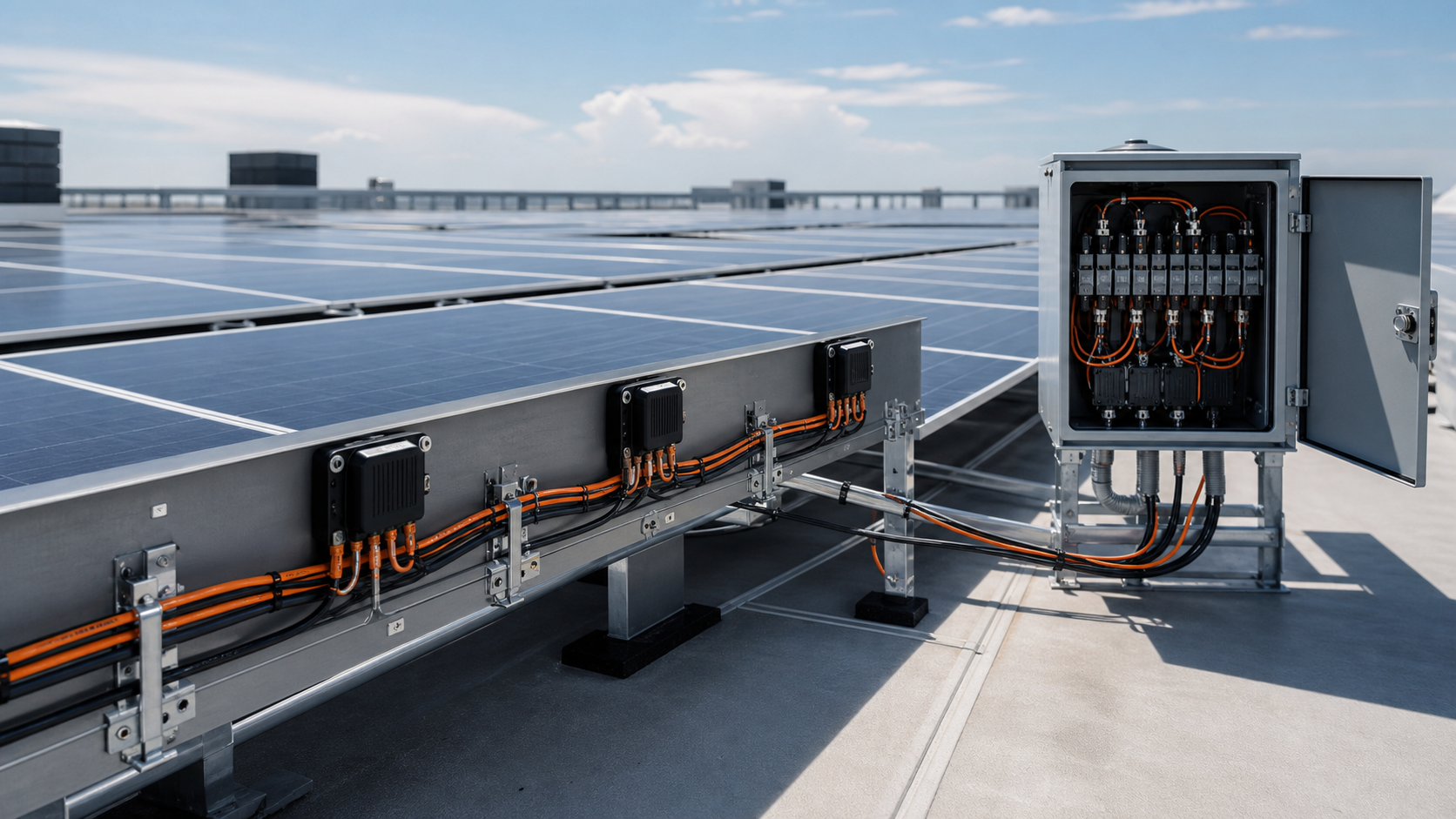
A rooftop array keeps generating whenever light reaches the modules. Even after the AC side is disconnected, the DC conductors between modules and the balance of system remain energized at hundreds of volts. For firefighters and maintenance staff, that live wiring is a direct hazard during a roof incident.
Distributed PV has scaled onto commercial and residential roofs faster than safety rules in many regions. Rapid shutdown answers the question every fire marshal asks: can the DC side be made safe to approach?
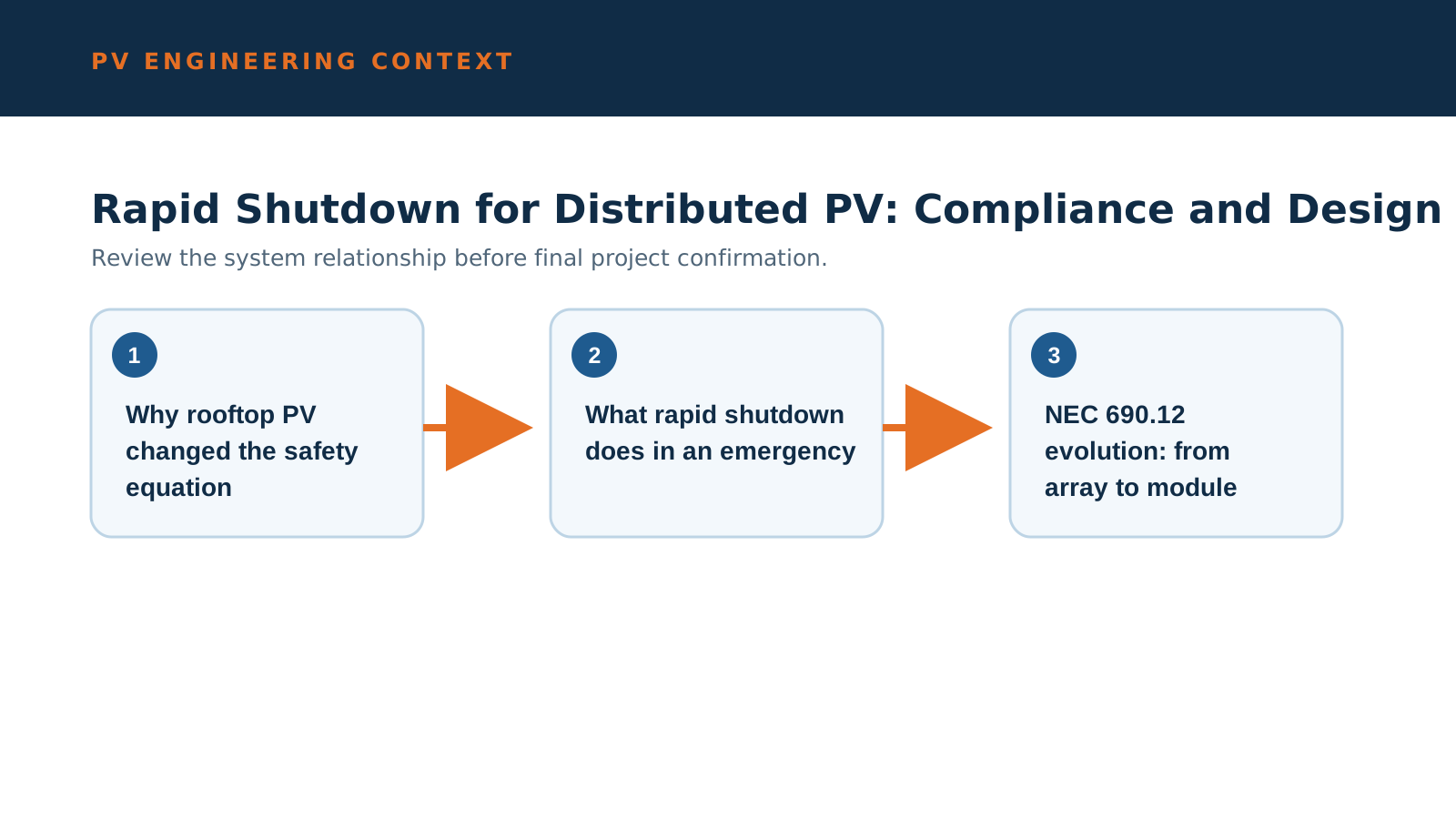
2. What rapid shutdown does in an emergency
Rapid shutdown is a function that brings the array DC voltage down to a safe level near the modules within seconds of activation. Activation can be manual at a marked switch, automatic from a fire alarm, or both.
The objective is simple: remove the lethal voltage from the roof so responders can work without exposure to live DC.
Technical diagram shown at a readable responsive scale.
3. NEC 690.12 evolution: from array to module level
The US National Electrical Code clause 690.12 became the global reference for this function. Its editions show a clear tightening of the requirement.
Early editions asked only that voltage near the array output fall within a limit. Later editions extended the limit to the module level, so that even the wiring between modules is de-energized.
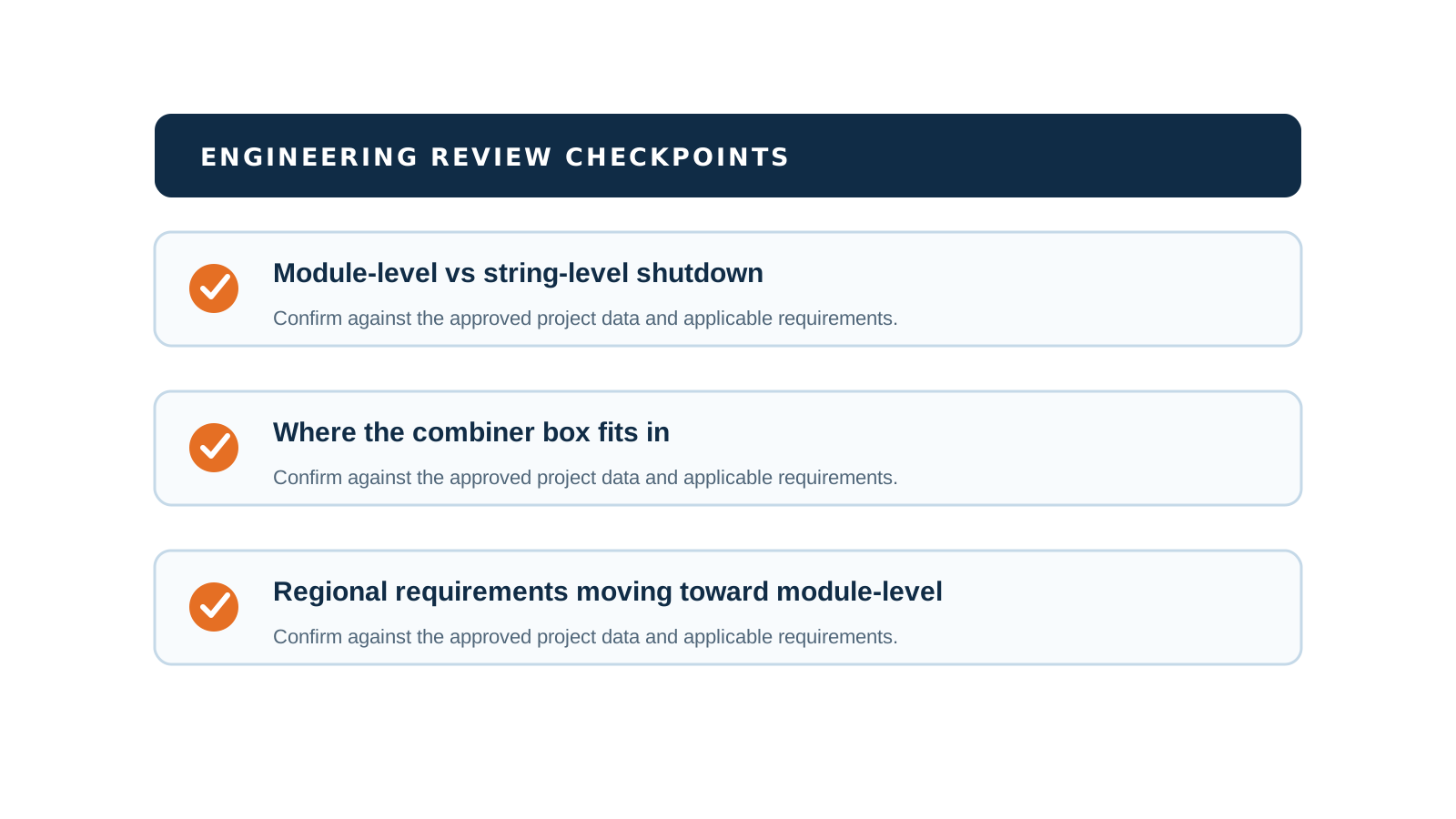
4. Module-level vs string-level shutdown
String-level shutdown opens the circuit at the string ends. It lowers voltage at the combiner and the grid-connected cabinet, but the conductors between modules stay live.
Module-level shutdown acts on every module, leaving the whole roof near zero voltage after activation. That difference is what separates a compliant modern design from an outdated one.
5. Where the combiner box fits in
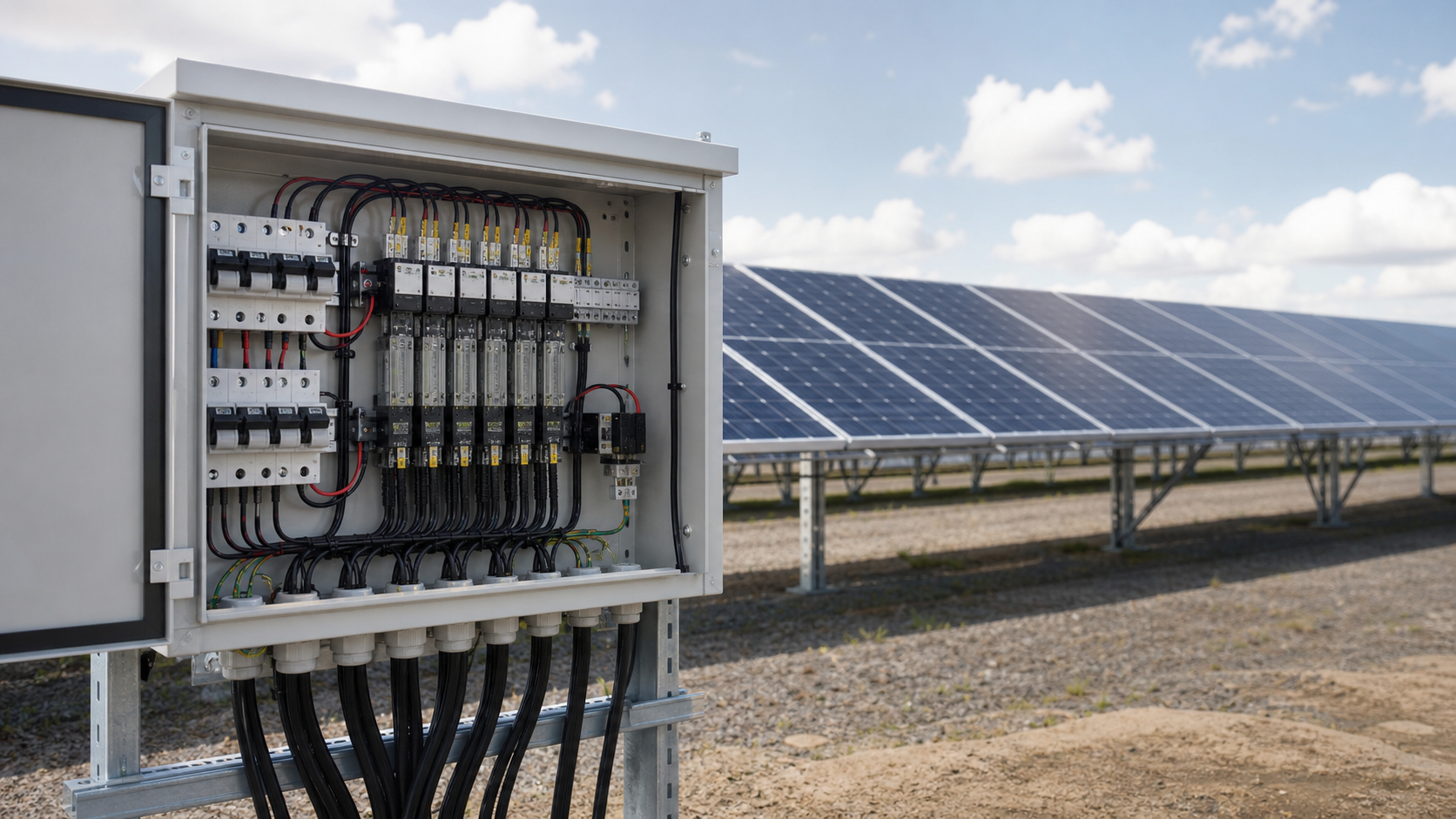
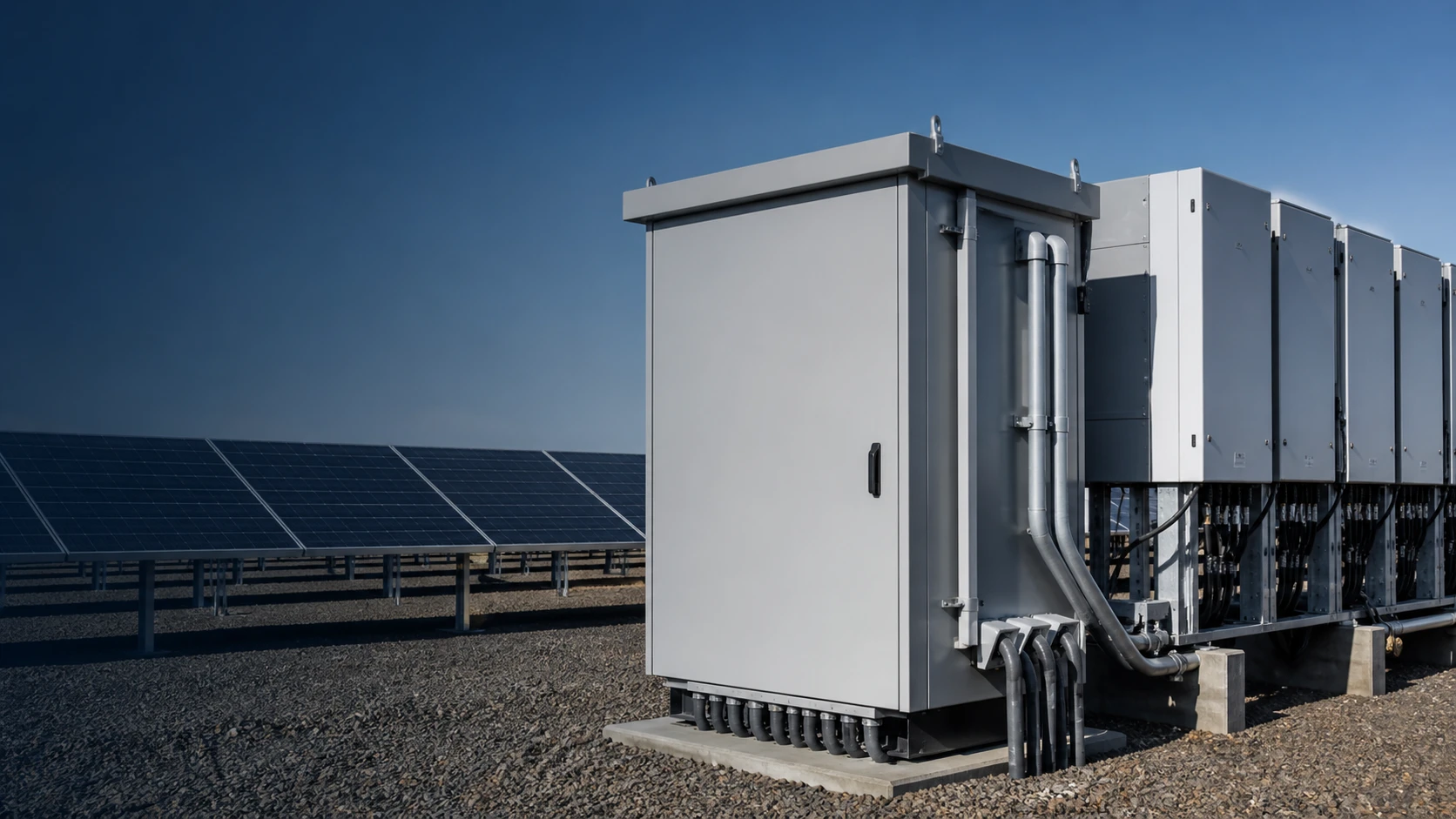
The combiner box collects string inputs and houses the DC disconnect, fuses and surge protection. In a module-level architecture, the shutdown function sits at the module or at a module-level device, while the combiner still provides isolation and overcurrent protection.
NEUTRON combiner equipment is specified to work with module-level shutdown schemes, keeping the box as the clear isolation and protection point downstream of the modules.
Technical diagram shown at a readable responsive scale.
6. Regional requirements moving toward module-level
Several distributed-PV leading regions have written module-level shutdown into local rules. Even where a national mandate is not yet in force, large roofs increasingly specify module-level capability as a condition of approval.
Planning for module-level now avoids retrofit cost when rules catch up.
7. Selecting a compliant architecture
For new commercial roofs, specify module-level shutdown and confirm the disconnect, the combiner isolation and the surge protection are coordinated. For residential, follow the local rule and at minimum provide string-level isolation with a path to upgrade.
Confirm the rated system voltage, the module count per string and the environmental class before release.
8. What this means for your specification
Rapid shutdown is no longer optional in many markets and is becoming the default expectation everywhere distributed PV meets a roof. Treat it as a system requirement, not an add-on.
NEUTRON supports the discussion around combiner and DC protection design for distributed PV. See the Solar PV product range for combiner options.
This guide supports an initial technical review. Final ratings, standards, protection coordination, monitoring interfaces and configuration must be confirmed for the actual project requirement.
Frequently asked questions
What is rapid shutdown in a PV system?
Rapid shutdown brings the array DC voltage to a safe level near the modules within seconds, so firefighters and maintenance staff are not exposed to live conductors during an incident.
Is module-level shutdown required everywhere?
Not yet everywhere, but several leading regions already mandate module-level capability for distributed PV, and the trend is clearly toward it as the global baseline.
How does rapid shutdown relate to the combiner box?
The combiner box provides isolation, fuses and surge protection downstream of the modules. Module-level shutdown de-energizes the modules and inter-module wiring, while the combiner remains the main protection and isolation point.
Which standards apply to PV rapid shutdown?
NEC 690.12 is the most referenced clause, supported by product standards such as UL 1741 and UL 3741 for module-level power electronics and rapid shutdown equipment.
Bring the project inputs together
Use the technical inputs in this guide to prepare a clear project discussion.
Discuss a projectContinue learning
Explore related technical guidance in Solar PV.
Technical note: final ratings, standards, protection coordination, monitoring interfaces and configurations remain subject to the agreed project requirement.