
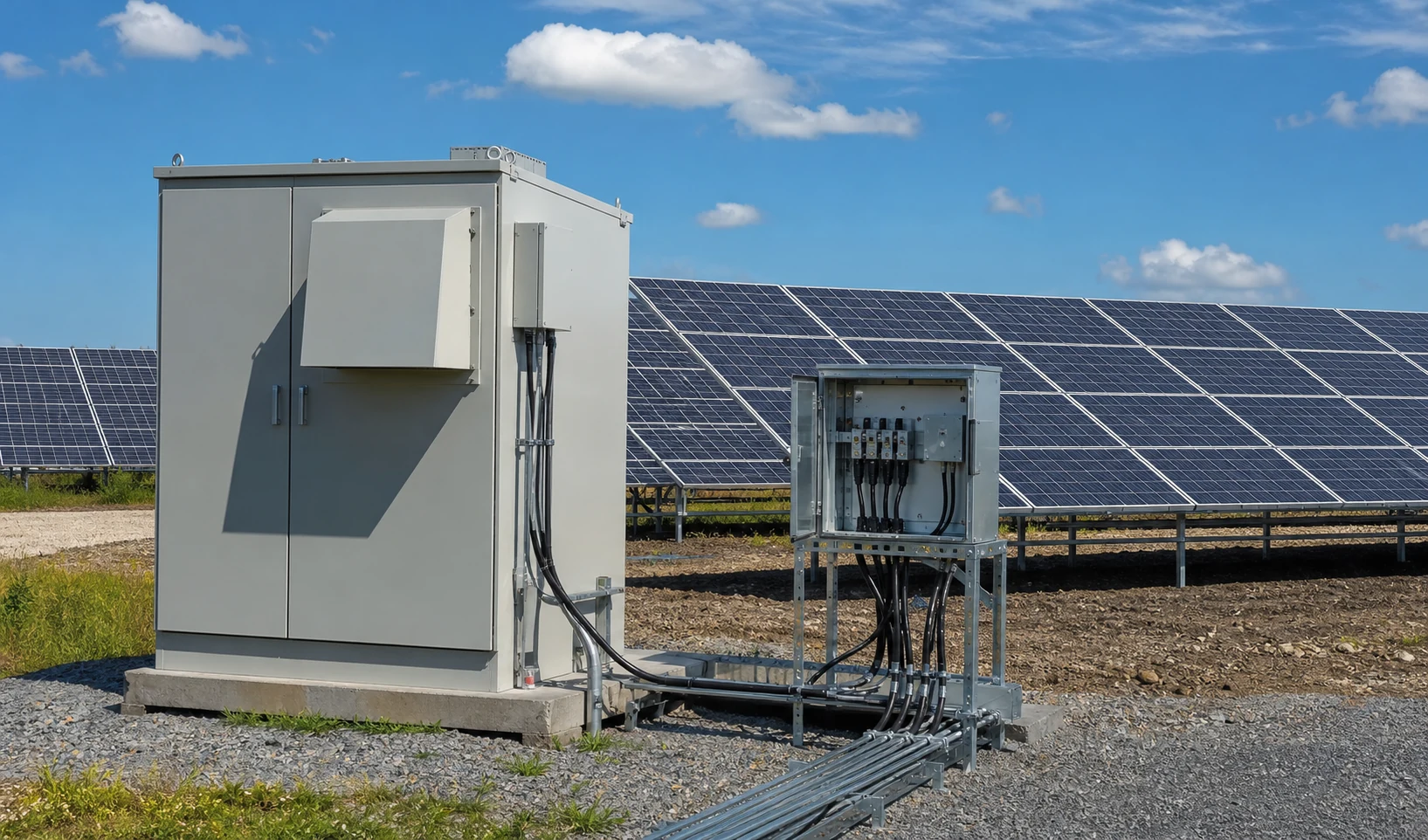
Why Distributed Solar Needs Purpose-Built BOS
Distributed photovoltaic generation places energy production close to the point of consumption. That creates flexibility, but it also places more responsibility on the balance-of-system equipment that aggregates strings, combines inverter outputs and manages the grid interface.
Higher module efficiency and higher string voltages make protection and documentation more important than a simple input-count comparison. The DC combiner box and the grid-connected cabinet are two of the key control points between raw solar generation and a stable grid connection.
DC Combiner Box: Taming the High-Voltage DC Front End
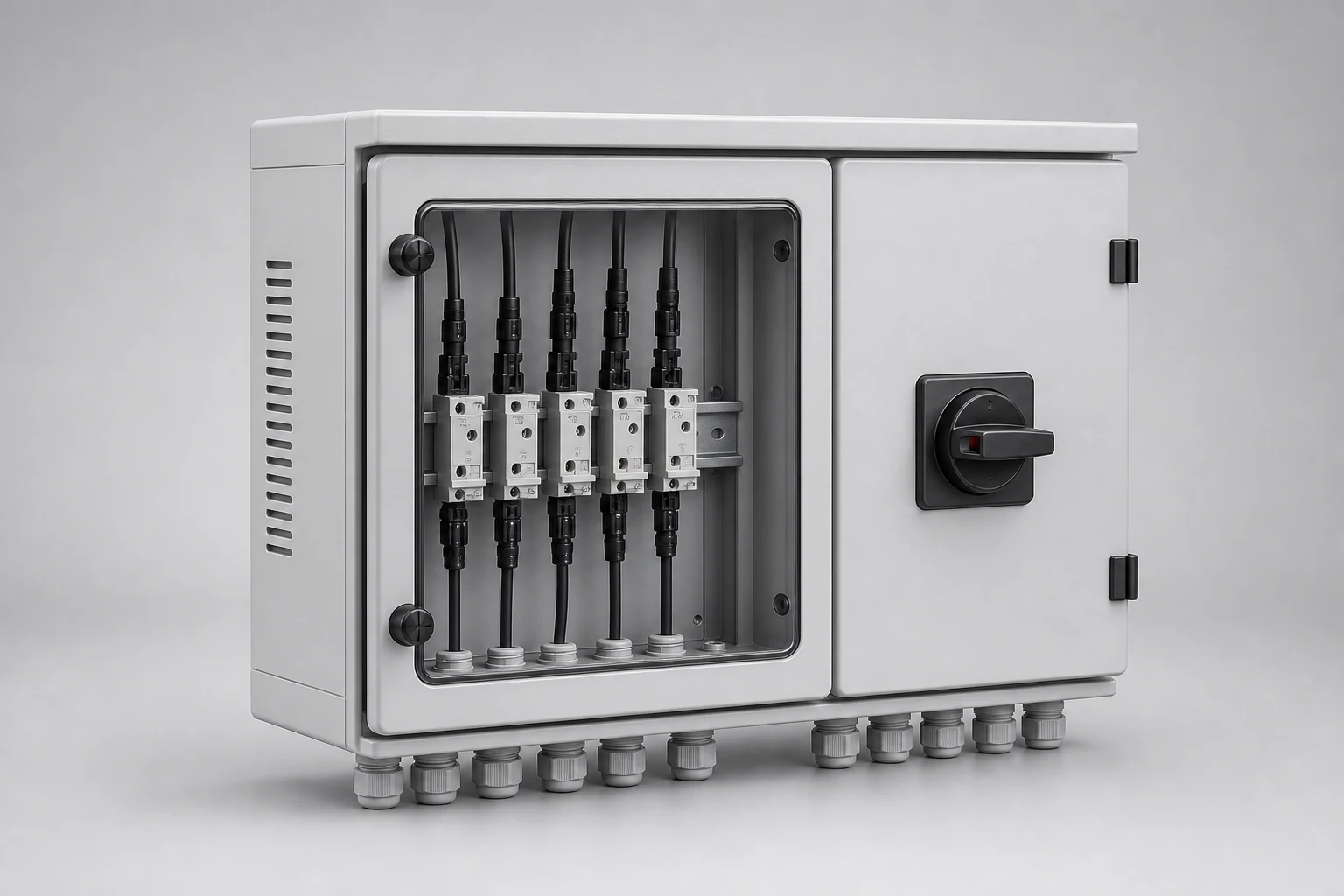
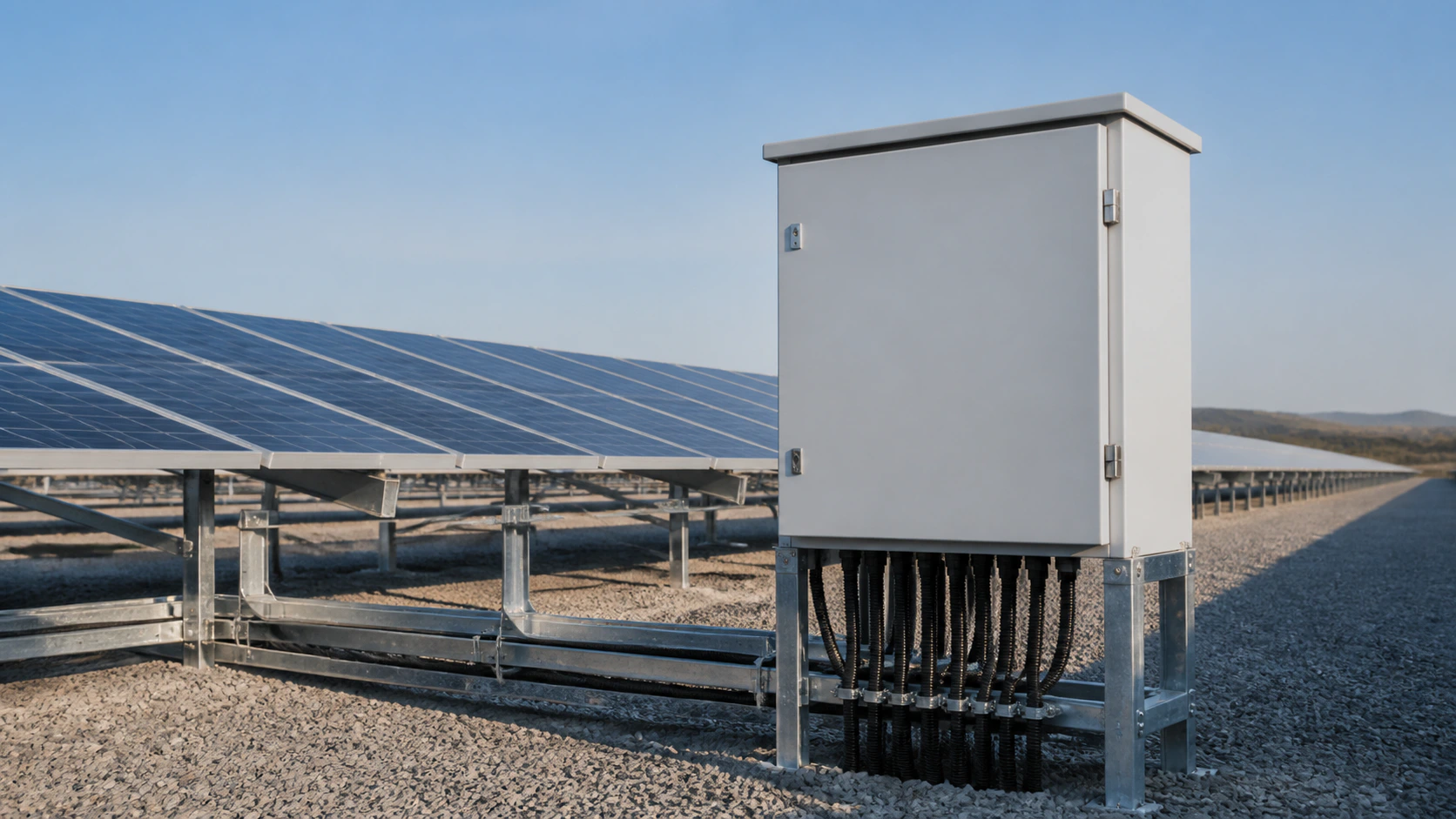
The DC combiner box is the first aggregation point for panel output. It consolidates PV strings through dedicated DC fuses, surge protection and a main DC disconnect where the project design requires them. If one string develops a fault, the protection arrangement can isolate that string while the rest of the array remains available for operation.
A NEUTRON DC combiner box can be reviewed around 1000 V or 1500 V DC system requirements, outdoor enclosure conditions, PV-rated fuses, DC surge protection and copper busbar layout. The final rating and component selection must be confirmed against the array, inverter and applicable project requirements.
AC Combiner Box: Consolidating Multiple Inverter Outputs
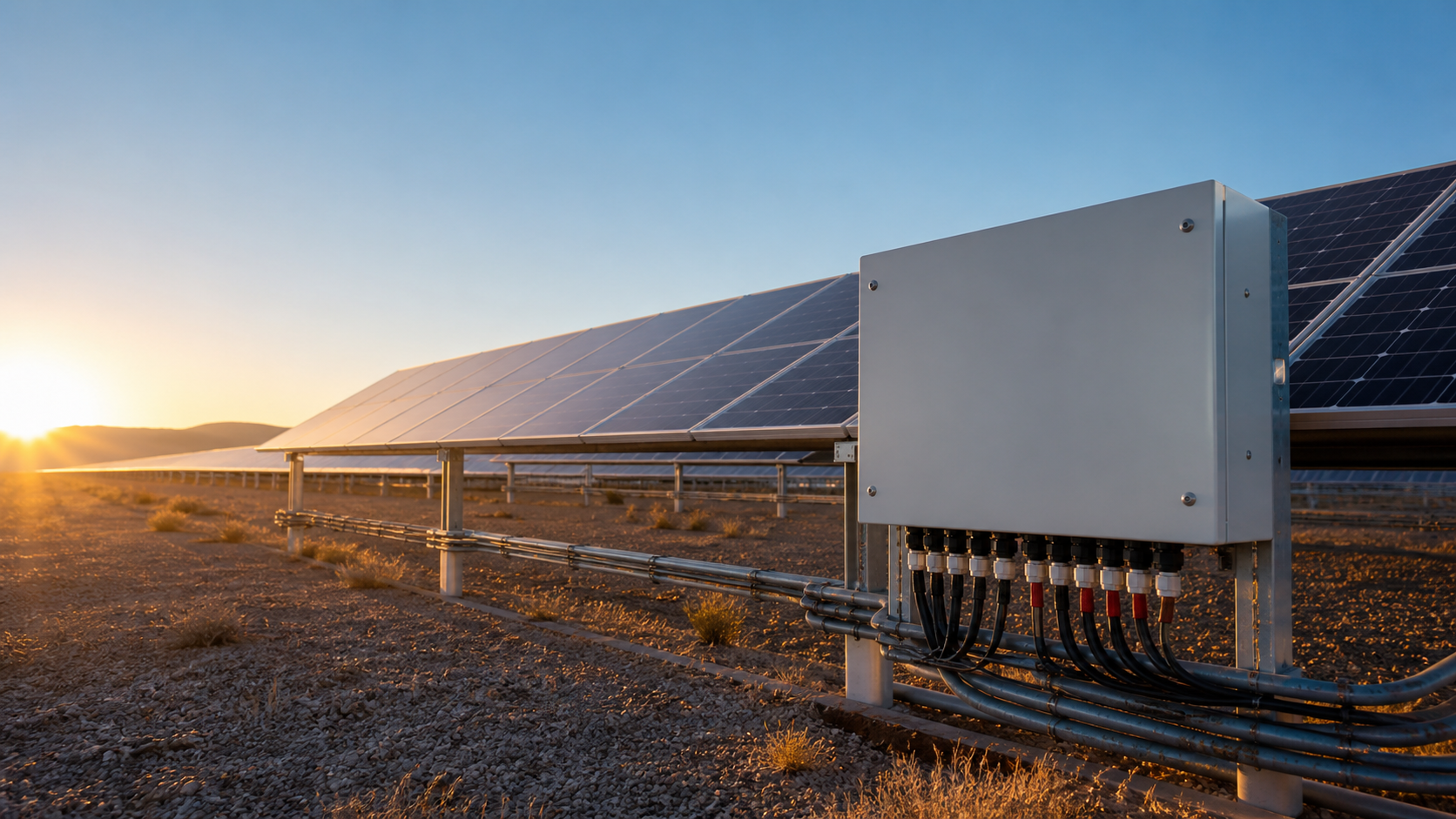
An AC combiner box groups the AC outputs of multiple inverters behind individual breakers and surge protection before the combined feeder reaches the grid-connected cabinet, transformer or load. This gives maintenance teams a more visible isolation point and allows a single inverter feeder to be addressed without necessarily shutting down the complete plant.
For monitoring-ready configurations, RS485 or Modbus RTU interfaces can be reviewed for inverter-level measurements. Breaker rating, busbar capacity, enclosure arrangement and communication scope should follow the approved single-line diagram and inverter data rather than a generic catalogue assumption.
Grid-Connected Cabinet: The Safe Interface to the Utility
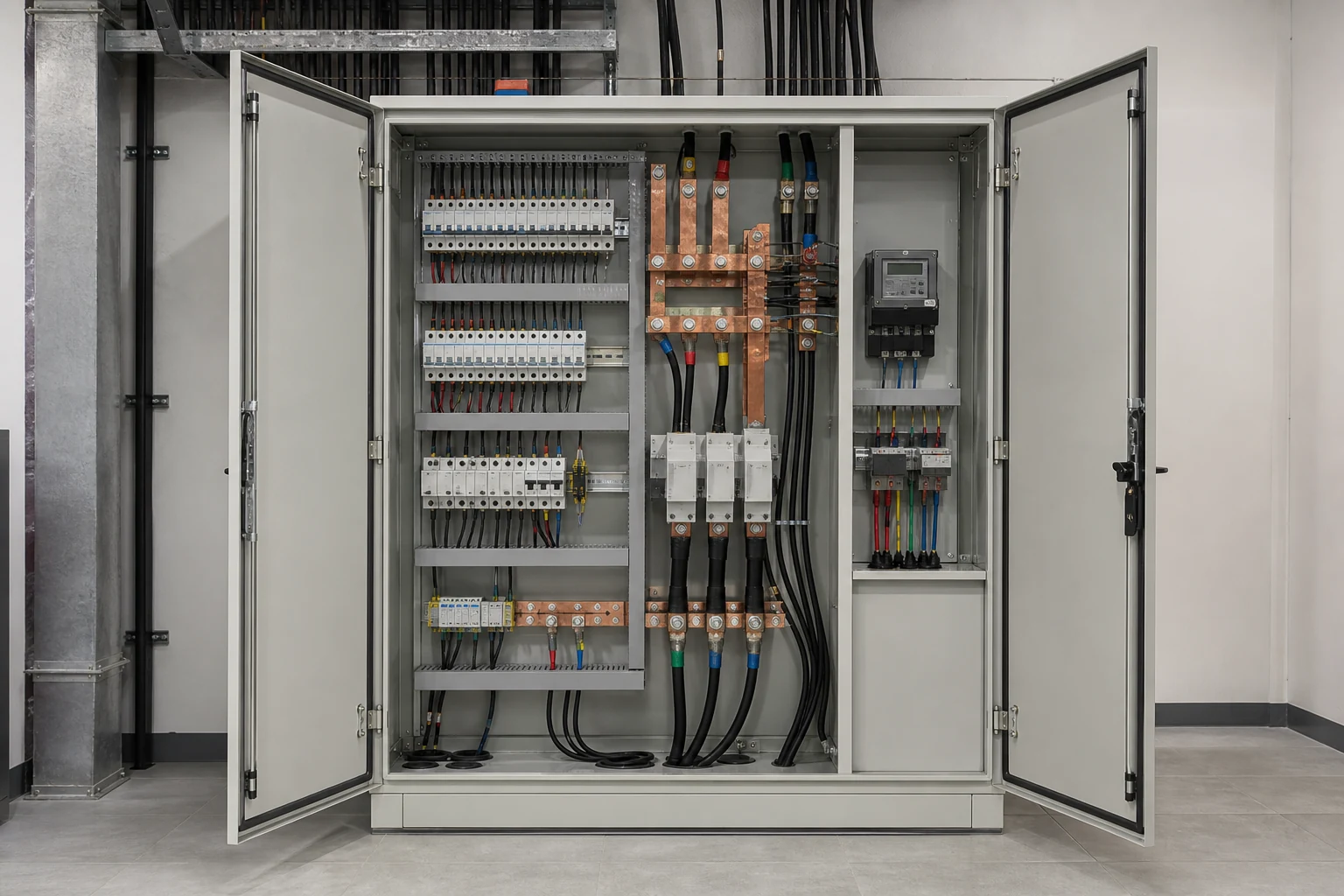
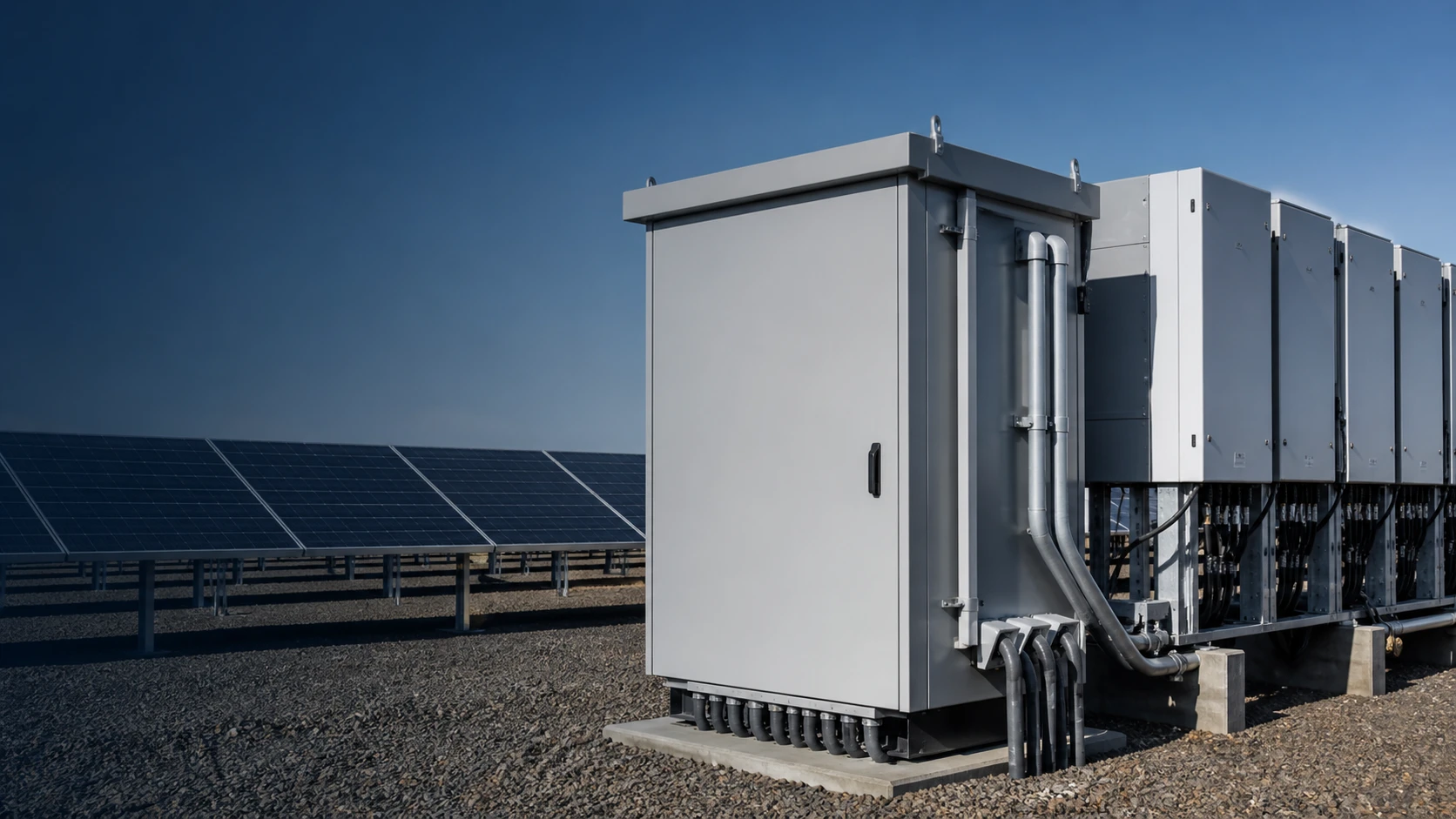
The grid-connected cabinet is the central interface between the solar plant and the utility or site distribution system. Its scope may include AC distribution, protection, metering, isolation and the control logic required for the project grid connection.
Anti-islanding protection is a critical safety function: the system must disconnect from the grid when the grid condition no longer permits safe parallel operation. The cabinet arrangement, metal enclosure, protection devices, metering and applicable standard should be confirmed with the utility interconnection requirements.
Key Components: Fuses, SPD and Disconnects
The component list should be read as a coordinated protection system, not as isolated accessories.
- PV-rated fuses: IEC 60269-6 is the reference family for photovoltaic fuse-links; select the fuse from the string current, voltage and coordination requirements.
- Surge protective devices: IEC 61643-31 covers SPDs connected to the DC side of photovoltaic installations; confirm type, Ucpv, discharge capability and grounding arrangement.
- Copper busbars: size the busbar for the combined current, temperature, short-circuit duty, clearance and enclosure arrangement.
- Disconnects and breakers: confirm the DC or AC interrupting duty, lockable isolation requirement and coordination with upstream and downstream devices.
Installation Best Practices: Wiring, Torque and Grounding
Installation quality affects reliability as much as the nominal component rating. Use the approved wiring diagram and component instructions as the controlling documents.
- Apply proper cable strain relief at every entry point and protect the enclosure from water ingress at the gland interface.
- Use UV-resistant cable for outdoor DC runs and route conductors to avoid unnecessary bending or abrasion.
- Verify grounding continuity from the panel frame through the combiner box to the main earthing system.
- Torque every terminal to the component or drawing requirement and record the inspection where required; consistency matters as much as the value.
Meeting Global Standards: IEC, IEEE 1547 and Local Codes
Standards are part of the selection basis, not a substitute for an approved project design. Review the applicable edition and scope for the actual assembly, market and grid-connection requirement.
Common references in this product conversation include IEC 61439-2 for low-voltage switchgear and controlgear assemblies, IEC 60269-6 for PV fuse-links, IEC 61643-31 for photovoltaic SPDs and IEEE 1547 where North American interconnection requirements apply. CE, CB, ISO 9001 or other market-access evidence should be confirmed against the quoted product and responsible issuing party.
Why Selection Matters: BOS Comparison
The following comparison helps frame the technical discussion before a model or enclosure size is selected.
| Equipment | Electrical position | Primary review questions |
|---|---|---|
| DC combiner box | PV strings before the inverter | Maximum DC voltage, string count, fuse/SPD, isolation and outdoor conditions |
| AC combiner box | Multiple inverter AC outputs | Inverter current, breaker coordination, busbar capacity, SPD and monitoring |
| Grid-connected cabinet | Plant or site grid interface | Protection logic, metering, anti-islanding, utility requirements and document scope |
This is general application guidance, not a substitute for local electrical code, the inverter manual, product datasheets or a qualified engineer's design review. Final ratings, component selection and compliance evidence must be confirmed for the quoted configuration.
Frequently asked questions
How do I choose the right PV combiner box?
Count the strings and confirm maximum string voltage, string current, protection, enclosure conditions and required documentation. The final arrangement should follow the approved electrical design rather than input count alone.
Is a grid-connected cabinet needed for off-grid systems?
A grid tie-in may not apply to a fully off-grid system, but centralized protection, distribution, metering and inverter synchronization interfaces can still be valuable in large battery-backed systems.
What maintenance does a solar combiner box need?
Plan periodic inspection for hotspots, cable entry condition, grounding continuity, terminal torque and SPD status. The actual interval should follow the project maintenance plan and component instructions.
What is the difference between a DC and an AC combiner box?
The DC combiner sits before the inverter and handles PV string outputs with DC-rated protection. The AC combiner sits after the inverter and collects AC outputs from multiple inverters.
Which standards should be reviewed for export projects?
The applicable basis depends on the assembly, market and grid requirement. Common references include IEC 61439-2, IEC 60269-6, IEC 61643-31 and, where relevant, IEEE 1547. Confirm the exact edition and evidence for the quoted configuration.
Talk to NEUTRON About Your Solar BOS
NEUTRON supplies PV combiner boxes, AC combiner boxes, grid-connected cabinets and a wider LV/HV switchgear range. Share your inverter model, voltage, string count, site conditions and document requirements so the configuration can be reviewed before quotation.
Request a quoteContinue learning
Explore related technical guidance in Solar PV.
Technical note: this article is general application guidance. Ratings, standards, certification evidence, protection coordination and final configurations must be confirmed against the actual project and applicable local requirements.