
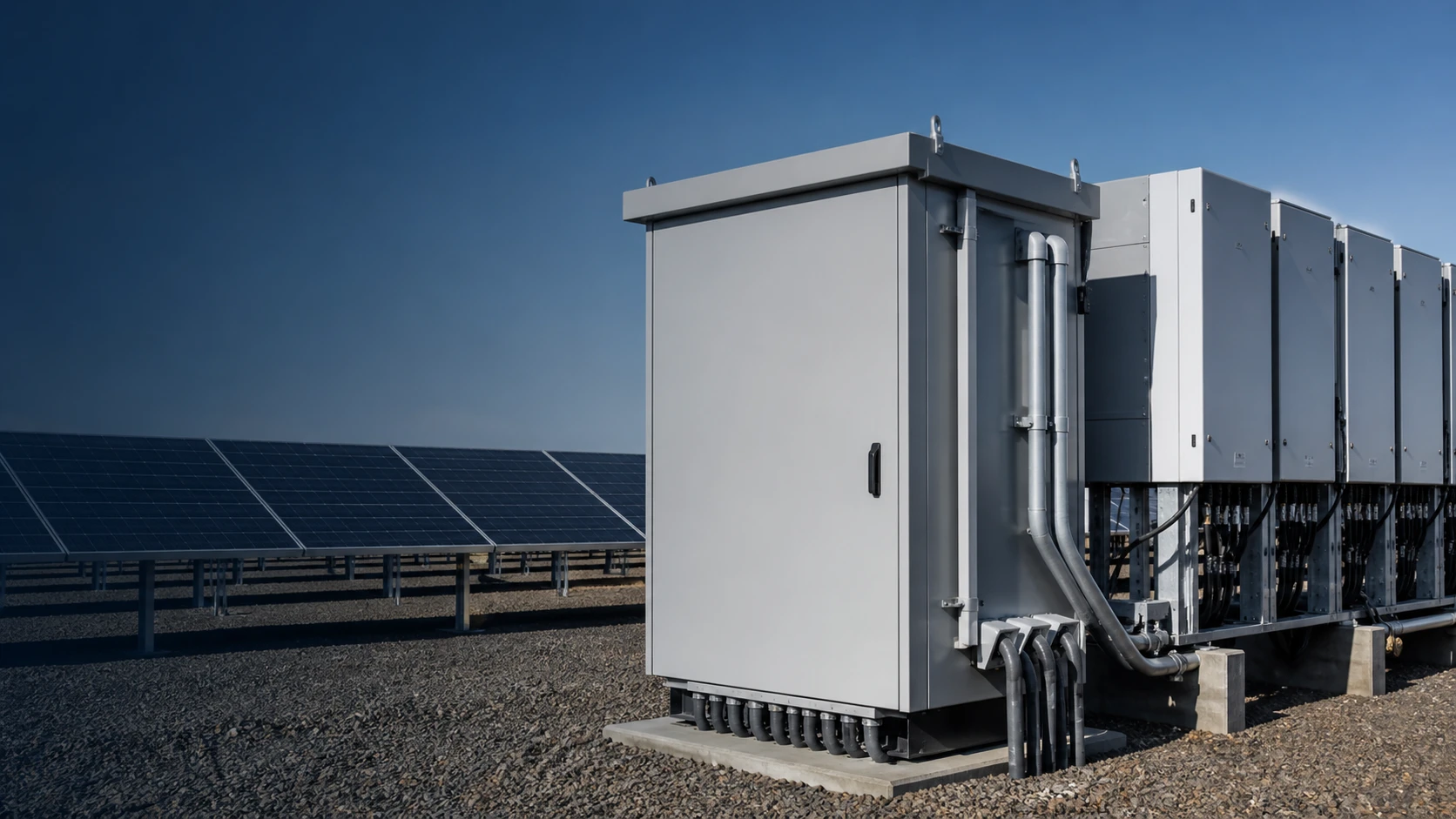
What Is a PV AC Combiner Box?
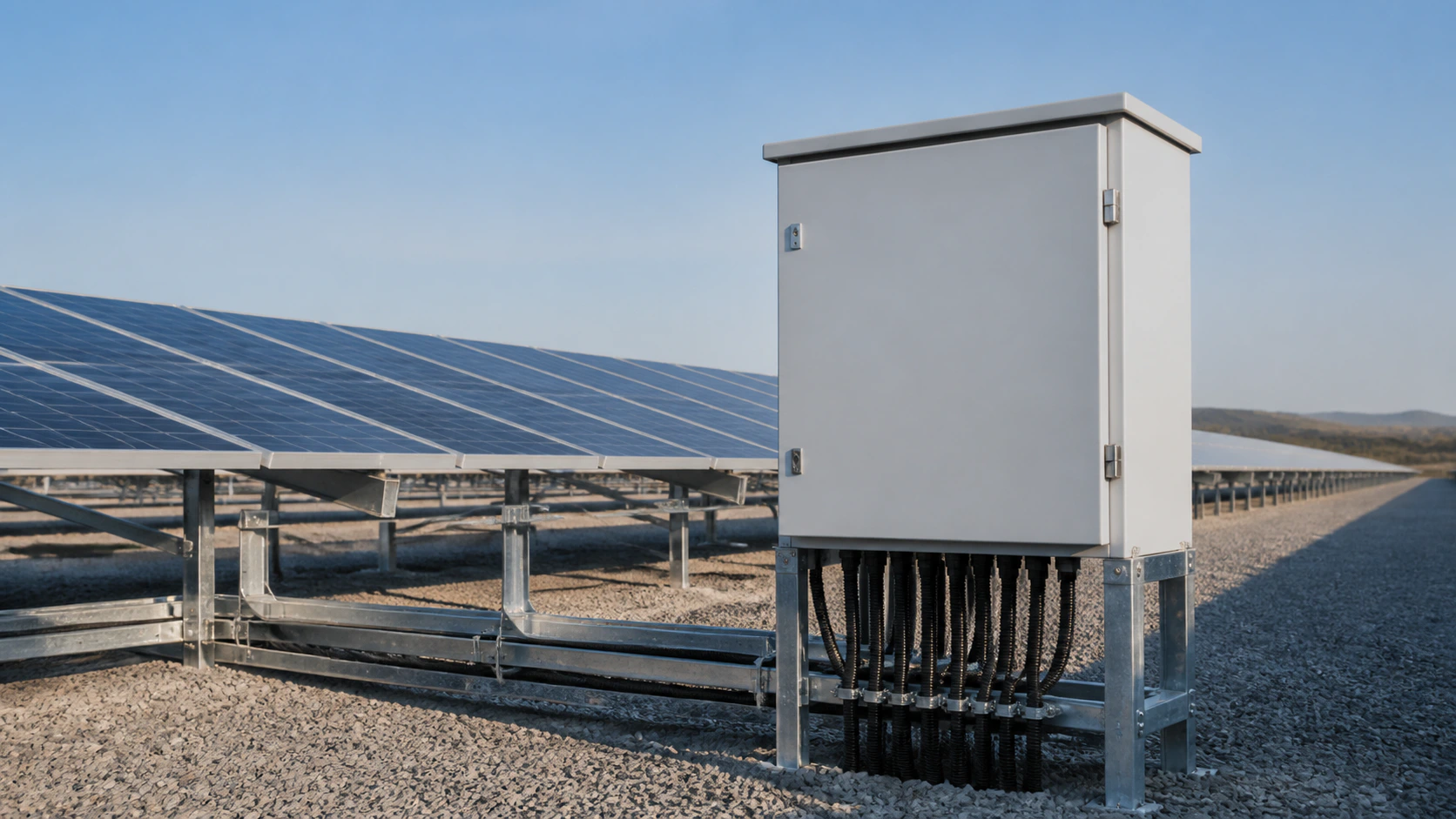
An AC combiner box sits between the AC output of your inverter units and the grid connection point (or the load). In a system built with string inverters, several inverter AC outputs are gathered into one enclosure, then routed to the grid-tie or step-up transformer. It consolidates multiple AC feeders into a single output and provides the disconnect and protection layer on the AC side.
Do not confuse it with a DC combiner box, which combines PV string outputs on the DC side before the inverter. NEUTRON supplies both — see our PV combiner box range for the full lineup.
What Does It Actually Do? (Core Functions)
- Combine the AC outputs of multiple inverters into one feeder.
- Protect inverters from faults coming from the grid or load side.
- Serve as a visible, lockable disconnect point for safe maintenance.
- House surge protection (SPD) to absorb transient overvoltage from lightning.
- Optionally monitor voltage, current, power, and energy via a smart metering unit.
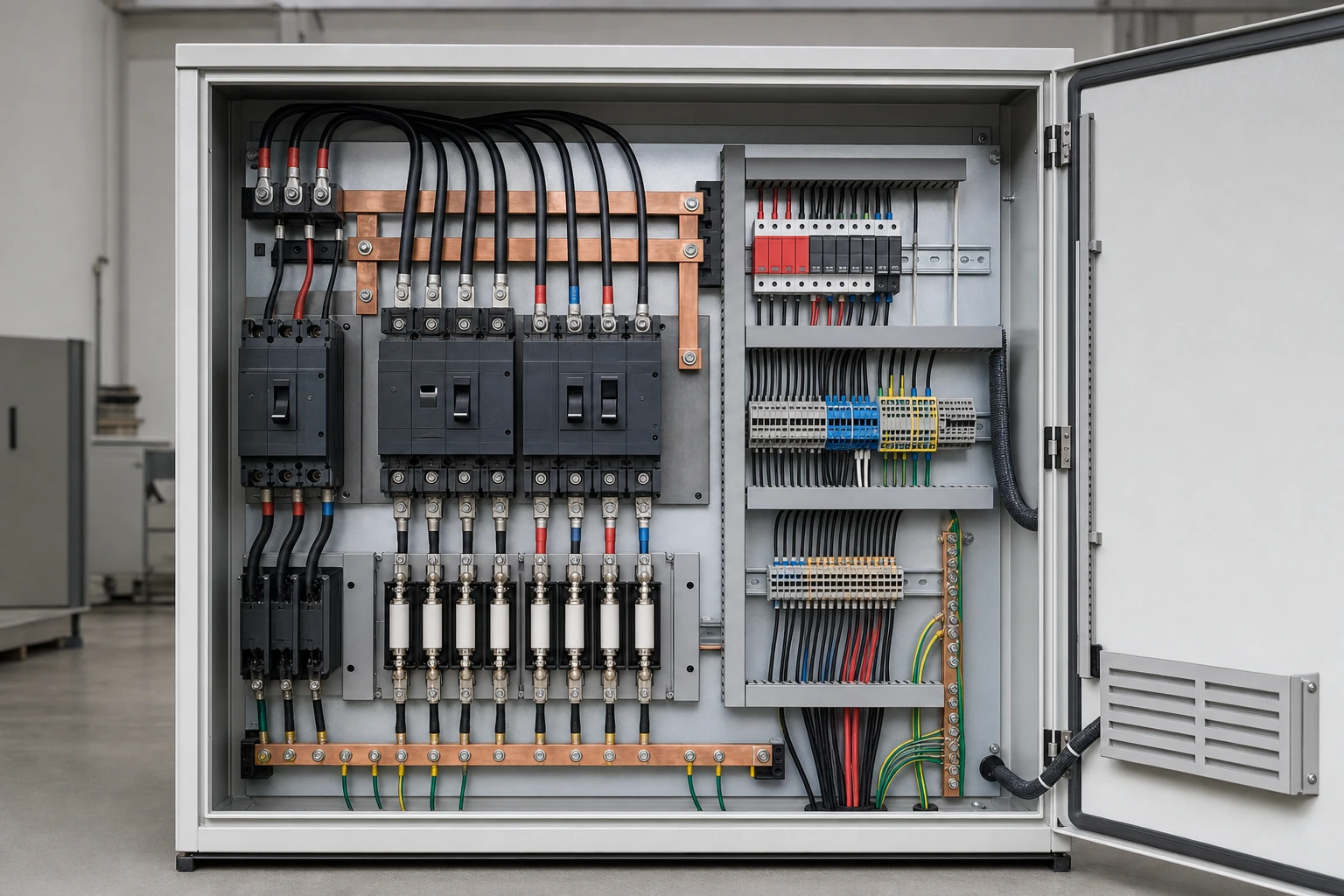
Inside the Box — Component Breakdown
Using a 4-to-1 unit (400 V, 50 kW, four 50 kW inverters) as a reference:
- Input MCCB — each inverter output lands on a 4-pole molded-case circuit breaker. With an 80 A max inverter output, size the breaker at 1.25× → 100 A.
- Output MCCB — after the four inputs merge onto a copper busbar (150 mm² cable), a 350 A MCCB breaks the combined feeder.
- Fuse — a 100 A backup overcurrent protector that only operates if the SPD fails.
- SPD (surge protective device) — rated Uc 750 V, Imax 40 kA, In 20 kA, Up ≤ 2.6 kV; must be grounded.
| Component | Typical spec | Role |
|---|---|---|
| Input MCCB | 100 A (1.25× inverter max) | Break fault current per inverter |
| Output MCCB | 350 A | Break combined feeder |
| Fuse | 100 A | Backup protection if SPD fails |
| SPD | Uc 750 V / Imax 40 kA | Clamp transient overvoltage, grounded |
| Busbar | Cu, 150 mm² | Carry merged feeder current |
How to Size an AC Combiner Box
- Breaker rating = 1.25 × inverter maximum AC current.
- Busbar and cable cross-section based on summed feeder current — use a copper busbar for high-current merges.
- SPD class matched to system voltage and the local lightning exposure level.
- Enclosure rating: IP65 for outdoor duty; verify ambient range (typically −25 °C to +60 °C, RH 0–95%).
Installation Rules That Prevent Failures
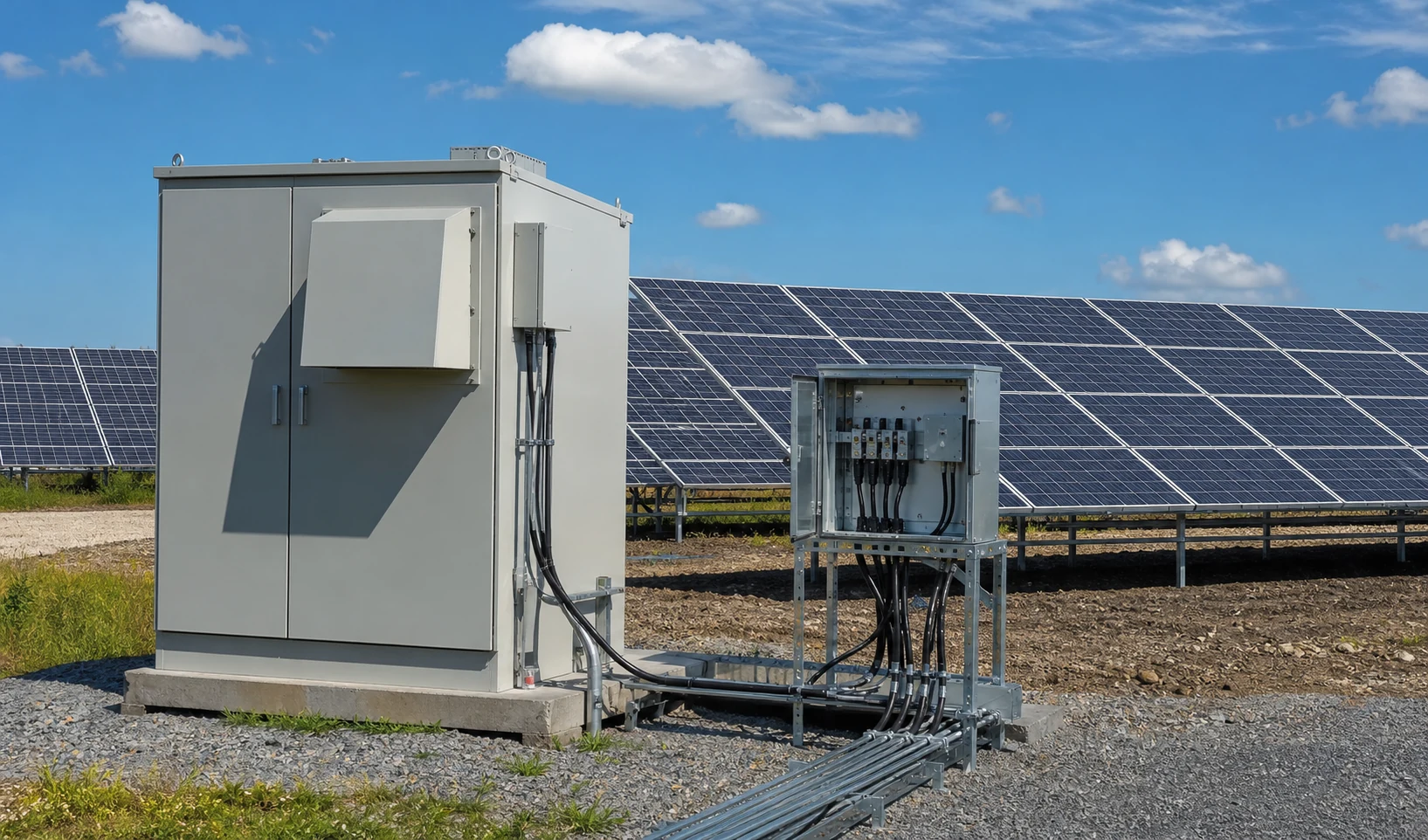
- Mount on the rear post of the PV support structure; armored cable in/out from below.
- Keep clear space on all four sides for heat dissipation and service access.
- Avoid direct sun exposure — excess heat cuts generation and shortens box life.
- Choose a dry, well-ventilated, dust-controlled location.
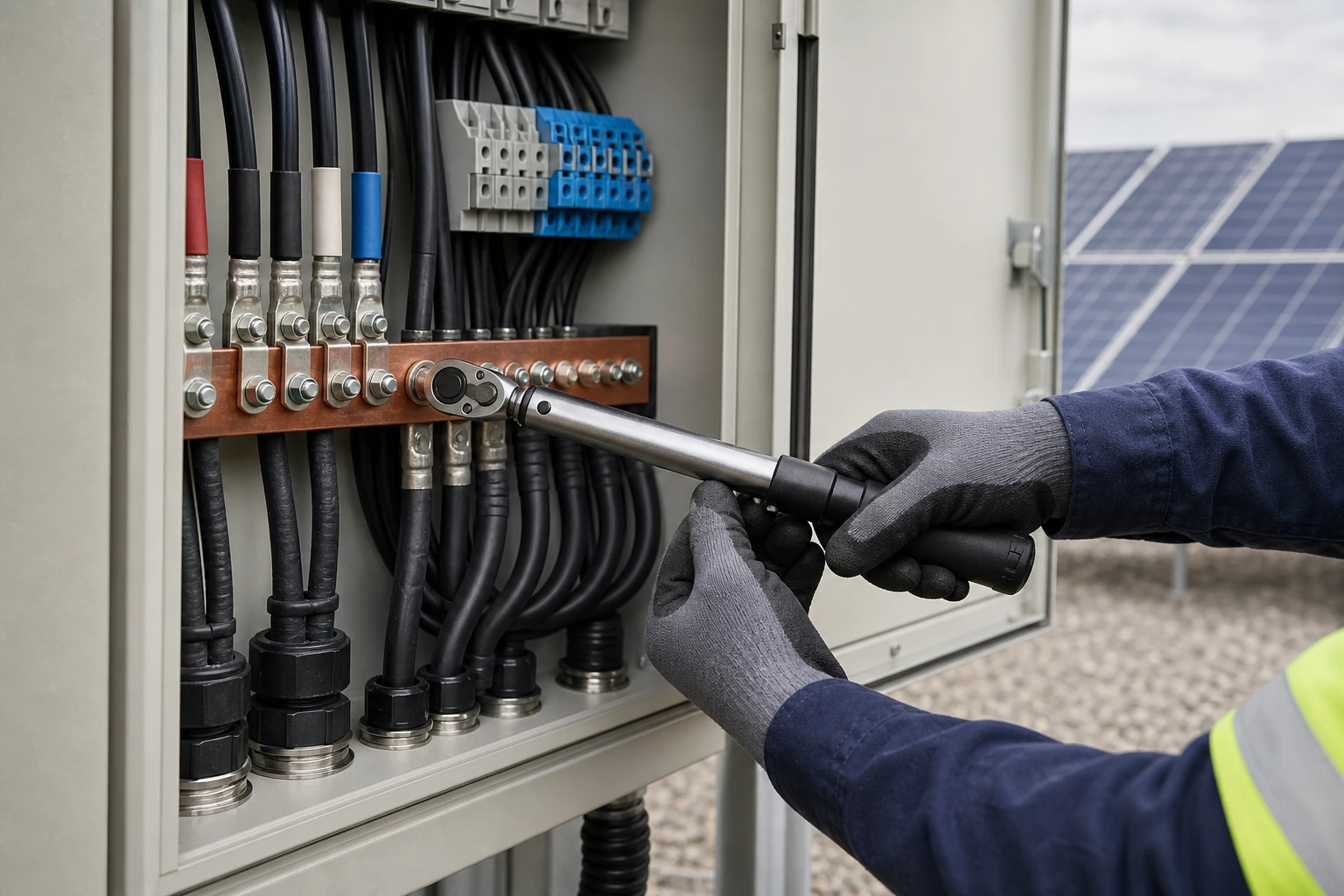
- Torque all current-carrying terminals to spec (e.g., M8 at 11 N·m input, M10 at 25 N·m output).
Wiring Steps (Field Checklist)
Input side
- Open the enclosure; set all MCCBs to the OFF/tripped state.
- Confirm phase sequence and no ground fault per the schematic.
- Feed armored cable through the waterproof gland; leave slack for internal bending.
- Crimp lugs; land inputs L1–L3 + N in order, M8 at 11 N·m.
- Tighten the cable gland.
Output side
- Strip, crimp lug, apply heat-shrink (red = phase, black = neutral).
- Land on the output busbar, M10 at 25 N·m; dress cables neatly.
- Tighten the output gland.
How to Choose a Reliable AC Combiner Box Supplier
A combiner box looks simple; the difference is in execution. Evaluate suppliers on five points:
- Materials — certified copper busbar and a UV-stable enclosure.
- Design — correct breaker coordination and a clear, lockable disconnect.
- Process — consistent torque control with documented QC records.
- Testing — hipot, continuity, and function tests before shipment.
- Certification — IEC/CE compliance (UL for North America). NEUTRON builds to IEC 61439 and IEC 61643 with CE marking; UL-listed versions are available on request.
PV combiner box products for details.
Frequently asked questions
Q: What is the difference between a DC and AC combiner box?
A: A DC combiner box combines PV string outputs on the DC side before the inverter. An AC combiner box combines inverter AC outputs after the inverter, on the way to the grid.
Q: How do I size the breaker for an AC combiner box?
A: Multiply the inverter maximum AC output current by 1.25 and select the next standard MCCB rating.
Q: Do I need surge protection in an AC combiner box?
A: Yes. An SPD is the standard protective layer against lightning-induced transients and must always be grounded.
Q: Can NEUTRON customize combiner boxes for my plant?
A: Yes. We build DC and AC combiner boxes from 2 to 24 strings, with optional monitoring meters, matched to your inverter brand and local standards.
Get a Tailored Quotation
Specifying a PV AC combiner box for your next solar or industrial project? Contact NEUTRON for a tailored quotation — share your inverter model, string count, and site conditions, and our engineering team will size the box for you.
→ Request a quote: /contact (LIVE)Continue learning
Explore related technical guidance in Solar PV.

Link status legend — LIVE: page exists on neutronele.com now. PLANNED: URL to be published per SEO Audit v1.0 (On-Page items #1 product pages, #2 certifications page); will resolve once those pages are built.