
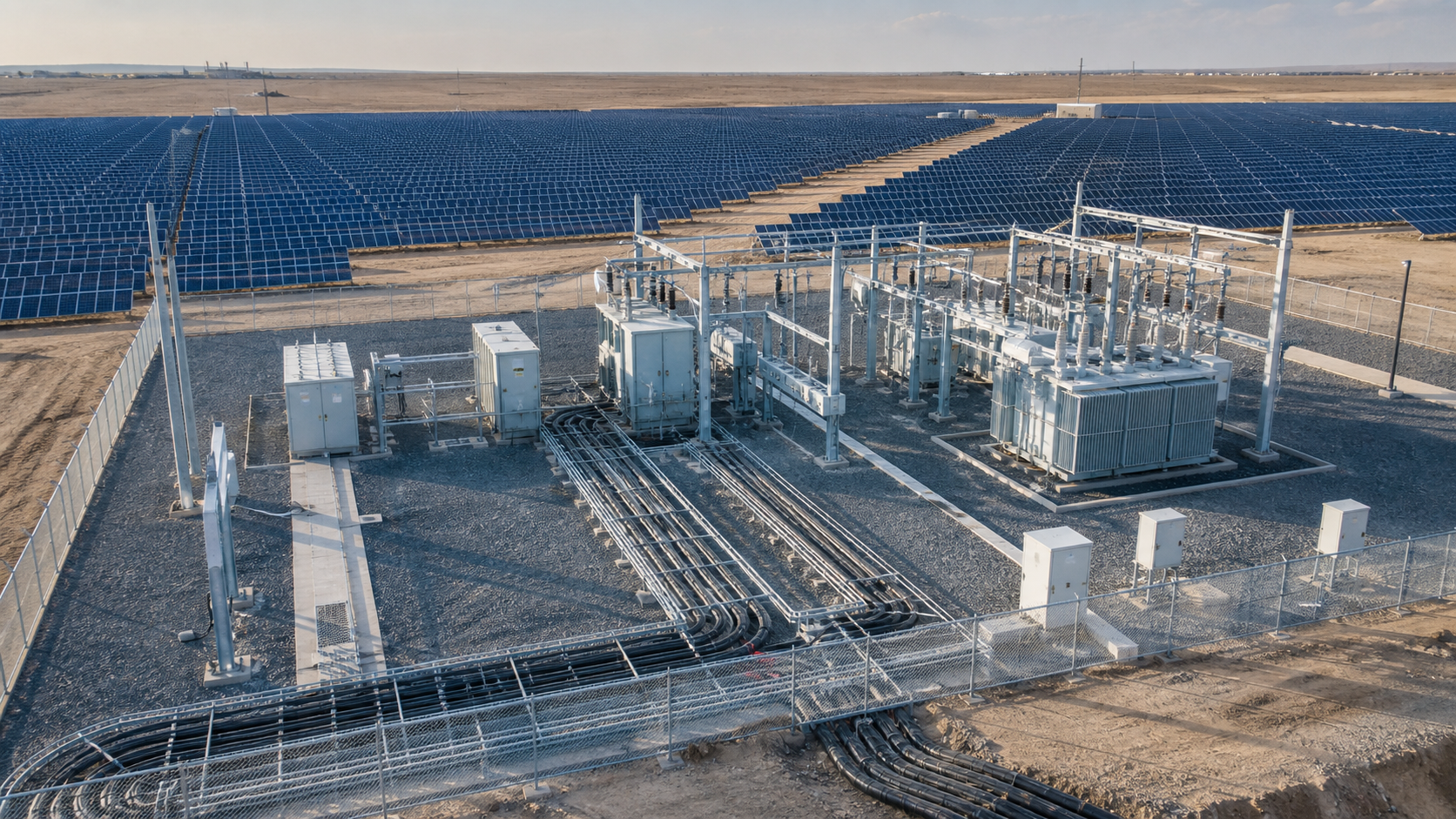
1. How a large plant connects
A utility-scale plant splits into many sub-arrays, each feeding a collector line that gathers power toward a step-up point. The substation raises voltage for the network connection.
The collector and substation together form the grid interface that the array depends on for every watt delivered.
2. Collector line basics
Collector lines run as cable, overhead, or a mix, linking sub-arrays to the substation. Route, conductor size and joint quality decide loss and fault behavior.
Good collector design keeps voltage drop and fault current within the protection plan.
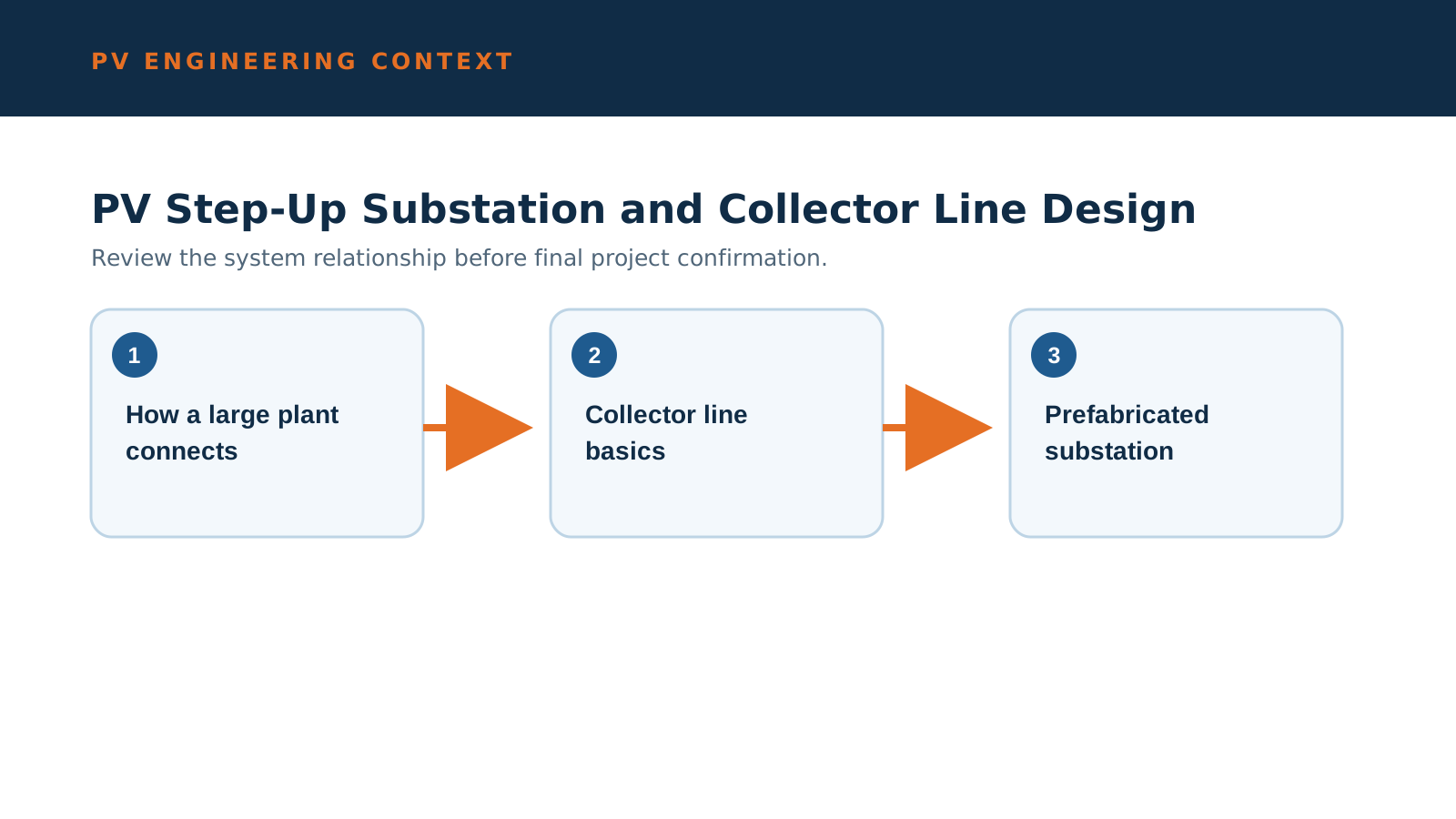
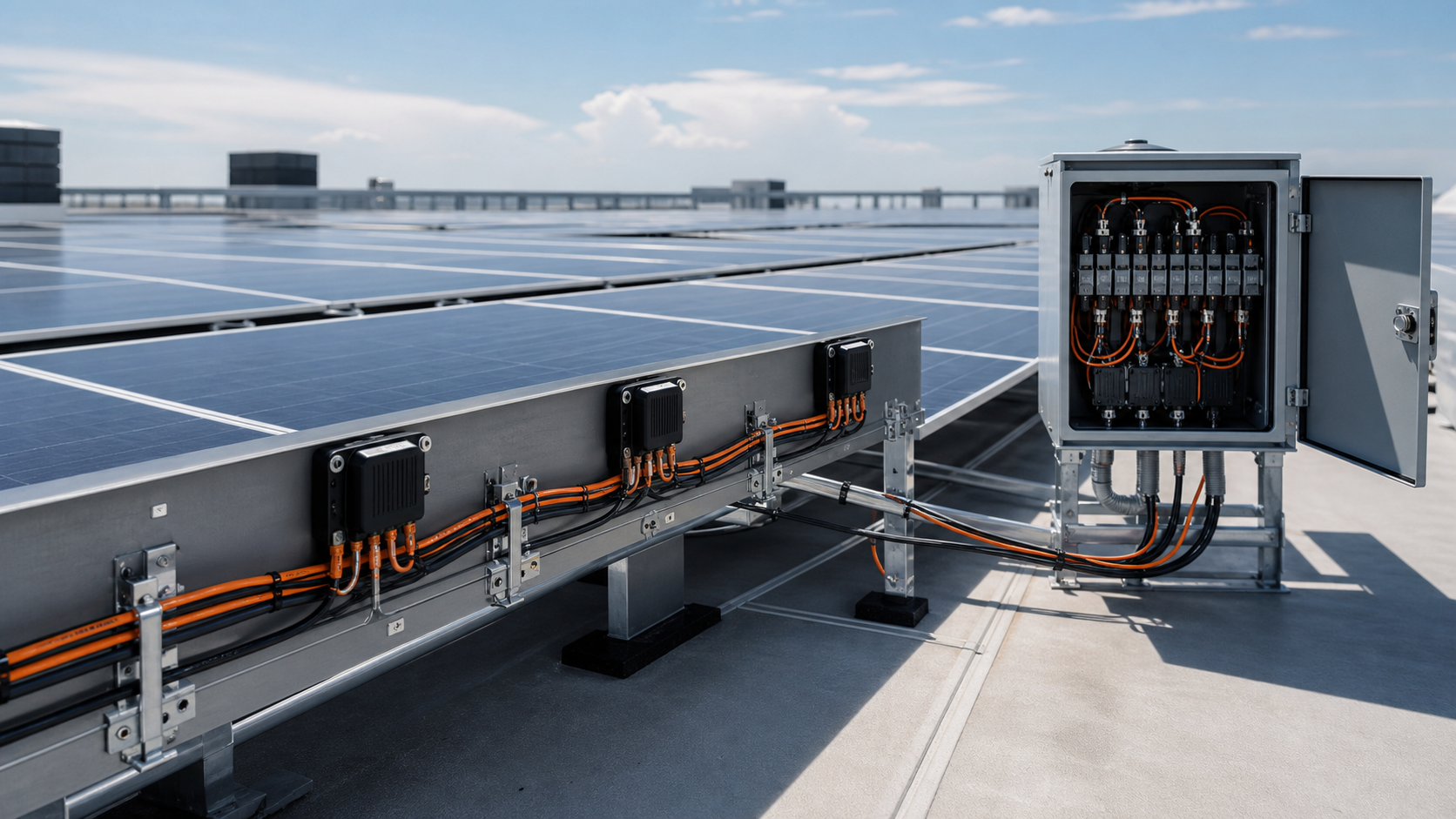
Technical diagram shown at a readable responsive scale.
3. Prefabricated substation
A prefabricated substation packages the step-up transformer and switchgear in a factory-built enclosure, cutting site work and commissioning time. It is the common choice for PV plants.
NEUTRON prefabricated substation equipment is built for fast, consistent grid-interface delivery.
4. Ring main unit role
A ring main unit switches and protects the medium-voltage connection, allowing sections to be isolated without dropping the whole feed. It sits at the heart of a reliable substation.
NEUTRON ring main unit equipment provides the switching and protection the collector network needs.
5. Switchgear and protection
Low and medium-voltage switchgear handle isolation, metering and fault clearing at the interface. Coordination across the substation keeps a local fault from spreading.
NEUTRON low-voltage switchgear is specified so the plant presents a controlled, measurable node to the network.
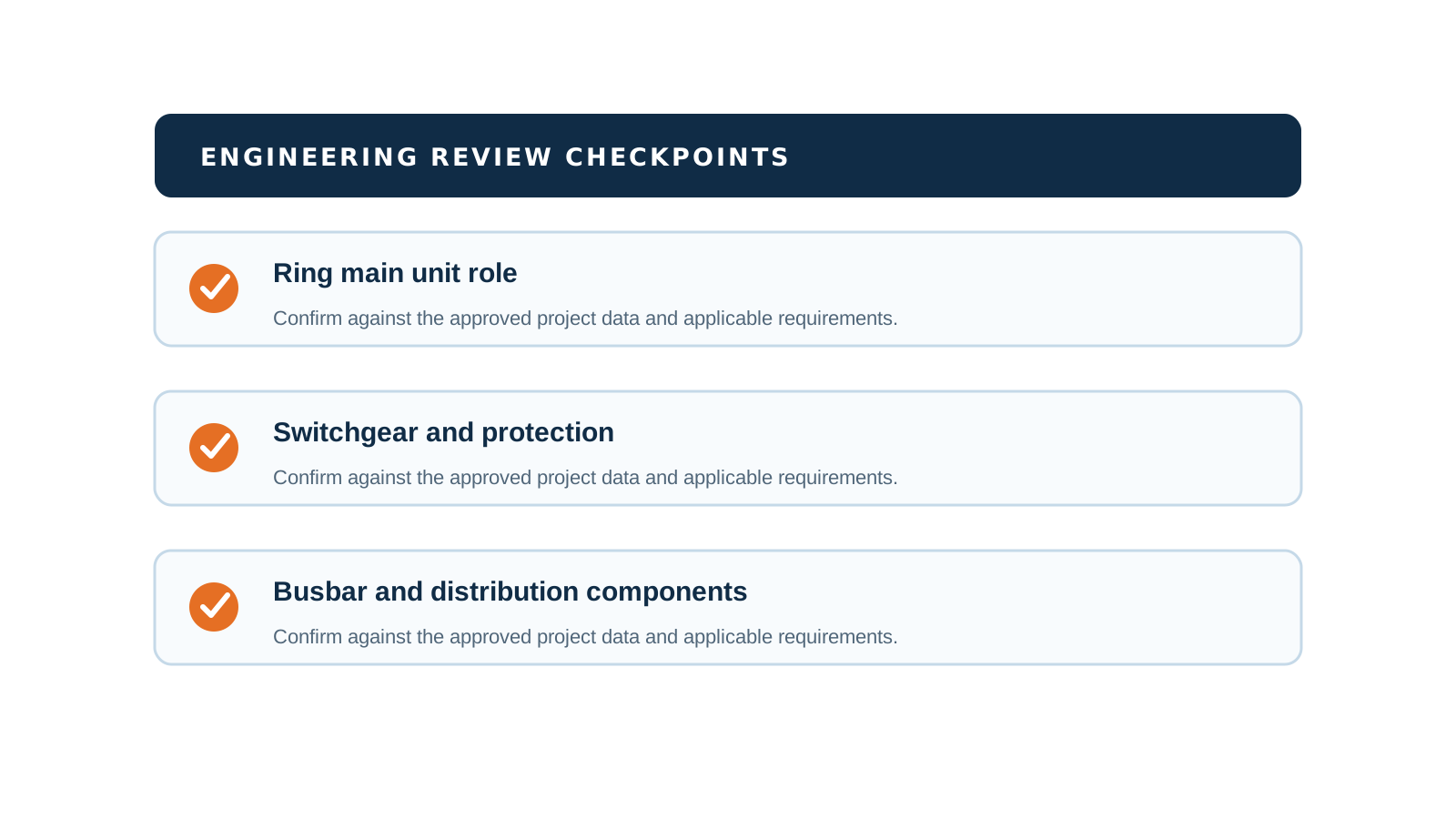
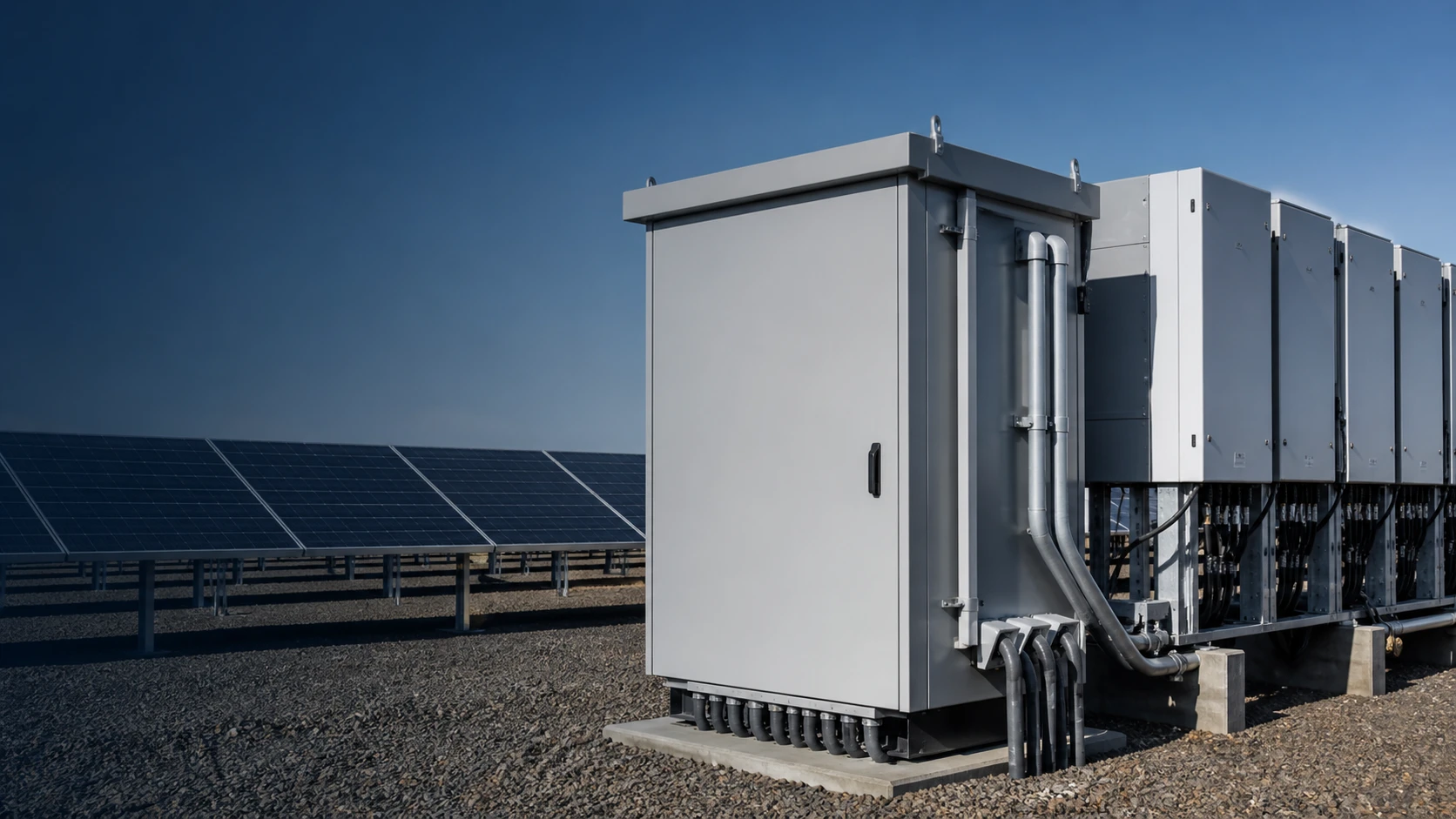
Technical diagram shown at a readable responsive scale.
6. Busbar and distribution components
Inside the substation, busbar and distribution components carry and split the current cleanly. Rating and layout decide how much the enclosure can handle.
NEUTRON busbar distribution components are built for the current and environment of a PV substation.
7. Coordination across the chain
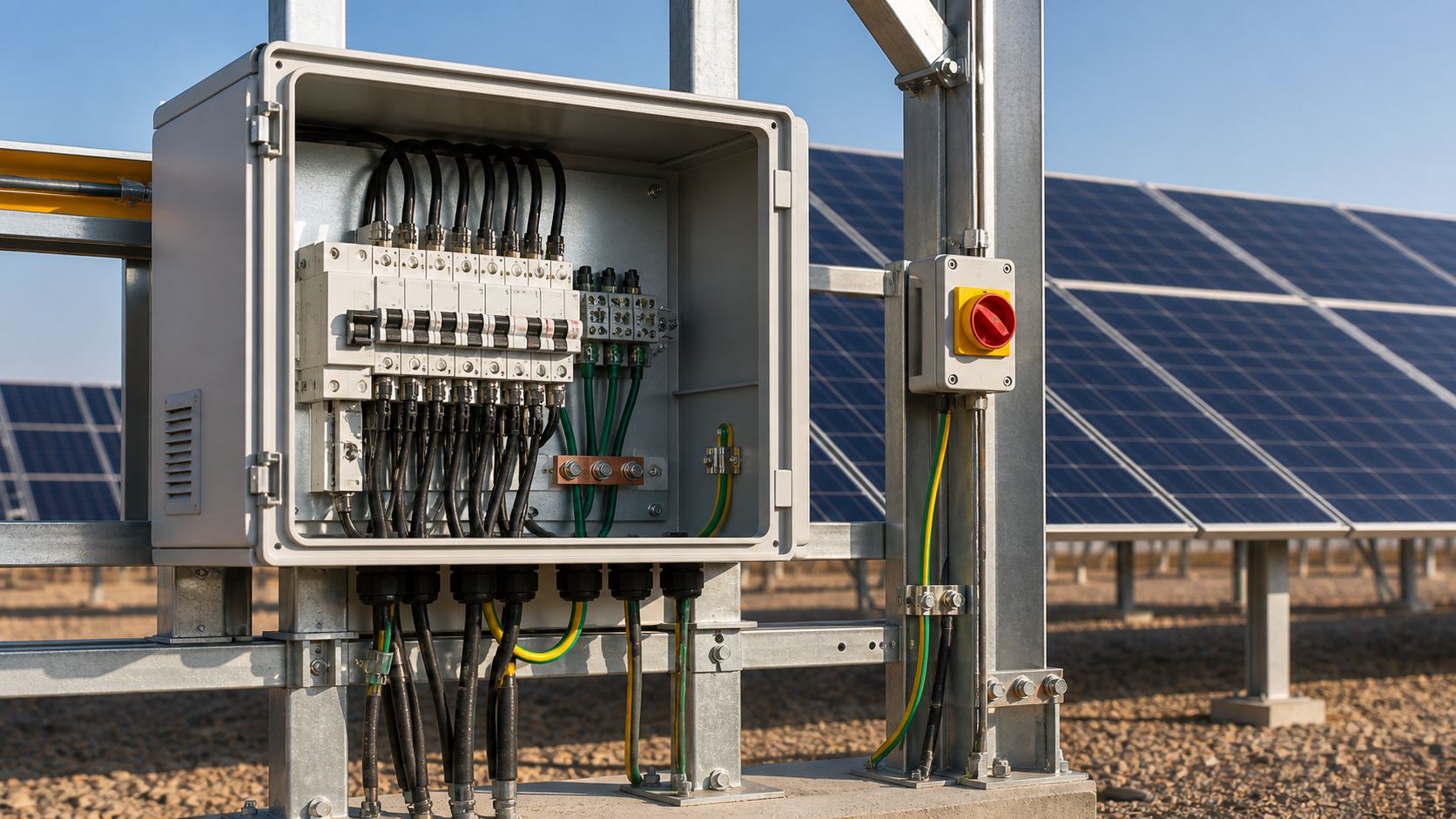
The combiner, collector, substation and network protection must clear faults in a defined order. Select the disconnecting and overcurrent devices as one chain, not piece by piece.
NEUTRON DC control and protection equipment coordinates with the substation interface upstream.
8. Specification takeaways
Confirm the collector layout, the step-up rating, the ring main unit and switchgear duties, and the protection coordination before release. Document the single-line concept.
NEUTRON supports the discussion around PV grid-interface and substation equipment.
This guide supports an initial technical review. Final ratings, standards, protection coordination, monitoring interfaces and configuration must be confirmed for the actual project requirement.
Frequently asked questions
What connects a large PV plant to the grid?
Sub-arrays feed collector lines to a step-up substation that raises voltage for the network; the substation and collector form the grid interface.
Why prefabricated substations?
They package transformer and switchgear in a factory-built enclosure, cutting site work and commissioning time while keeping consistency.
What does the ring main unit do?
It switches and protects the medium-voltage connection so sections can be isolated without dropping the whole feed.
How is protection coordinated?
Combiner, collector, substation and network protection clear faults in a defined order, selected as one chain with coordinated settings.
Bring the project inputs together
Use the technical inputs in this guide to prepare a clear project discussion.
Discuss a projectContinue learning
Explore related technical guidance in Solar PV.
Technical note: final ratings, standards, protection coordination, monitoring interfaces and configurations remain subject to the agreed project requirement.