
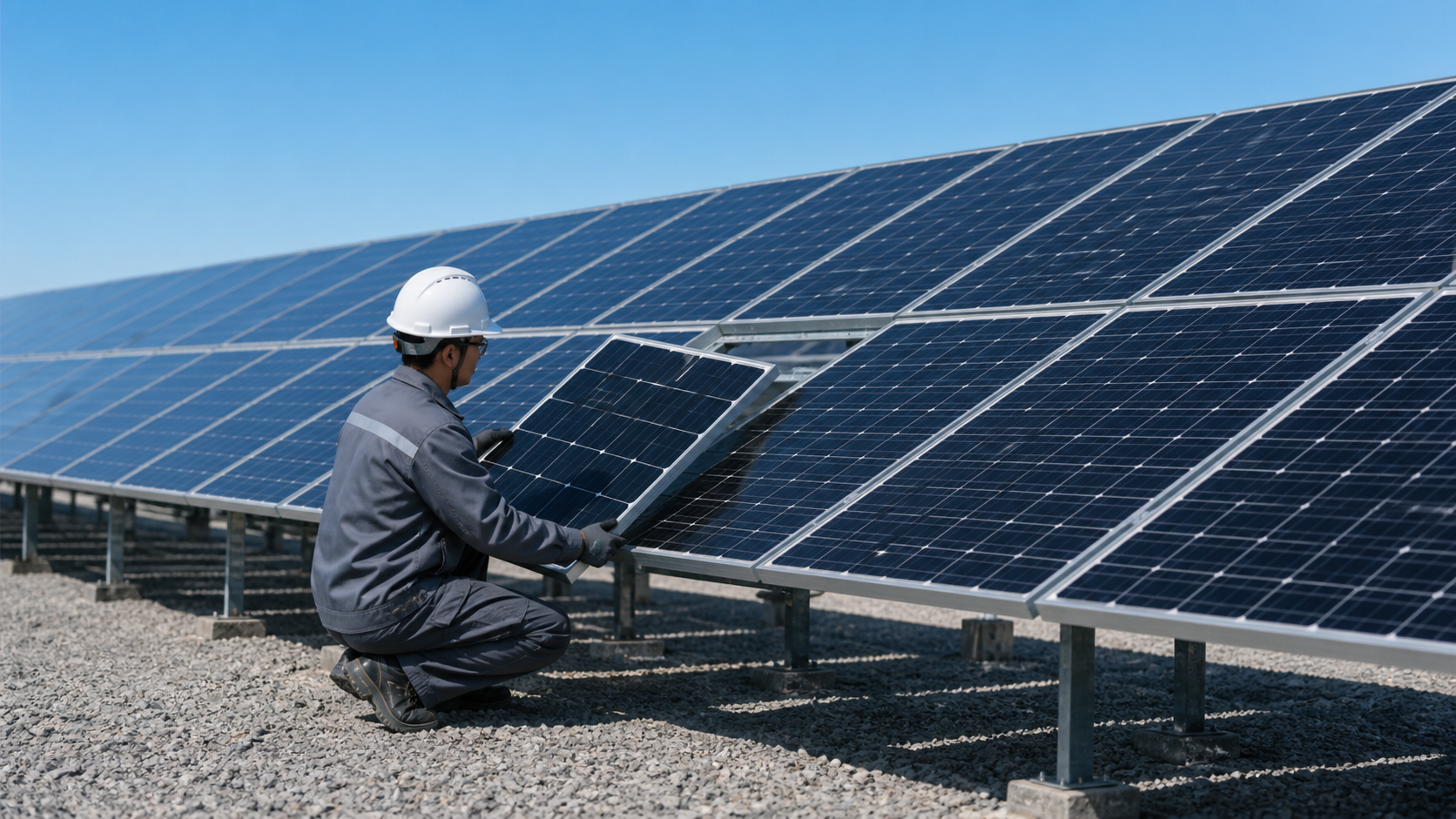
1. Why replacement is not plug-and-play
When a module in a string fails or is discontinued, the replacement must match the original electrical characteristics. Mismatched voltage or current can push the string outside the limits the combiner box and its protection were designed for.
2. The four numbers that must match
The replacement should align on open-circuit voltage, maximum-power voltage, short-circuit current and temperature coefficients. These decide whether the new module behaves like its neighbours under both cold and hot extremes.
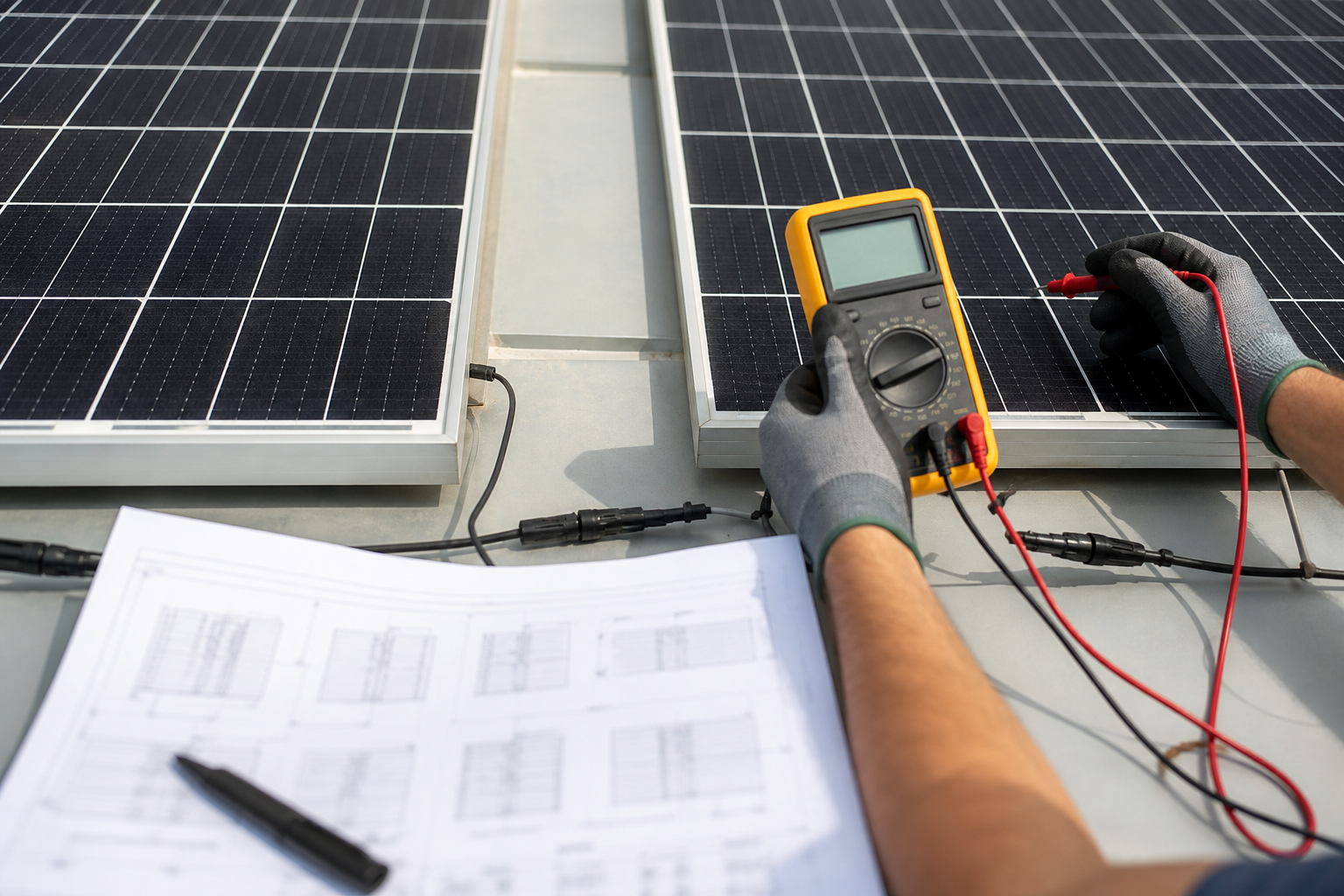
3. Cold-weather Voc is the safety check
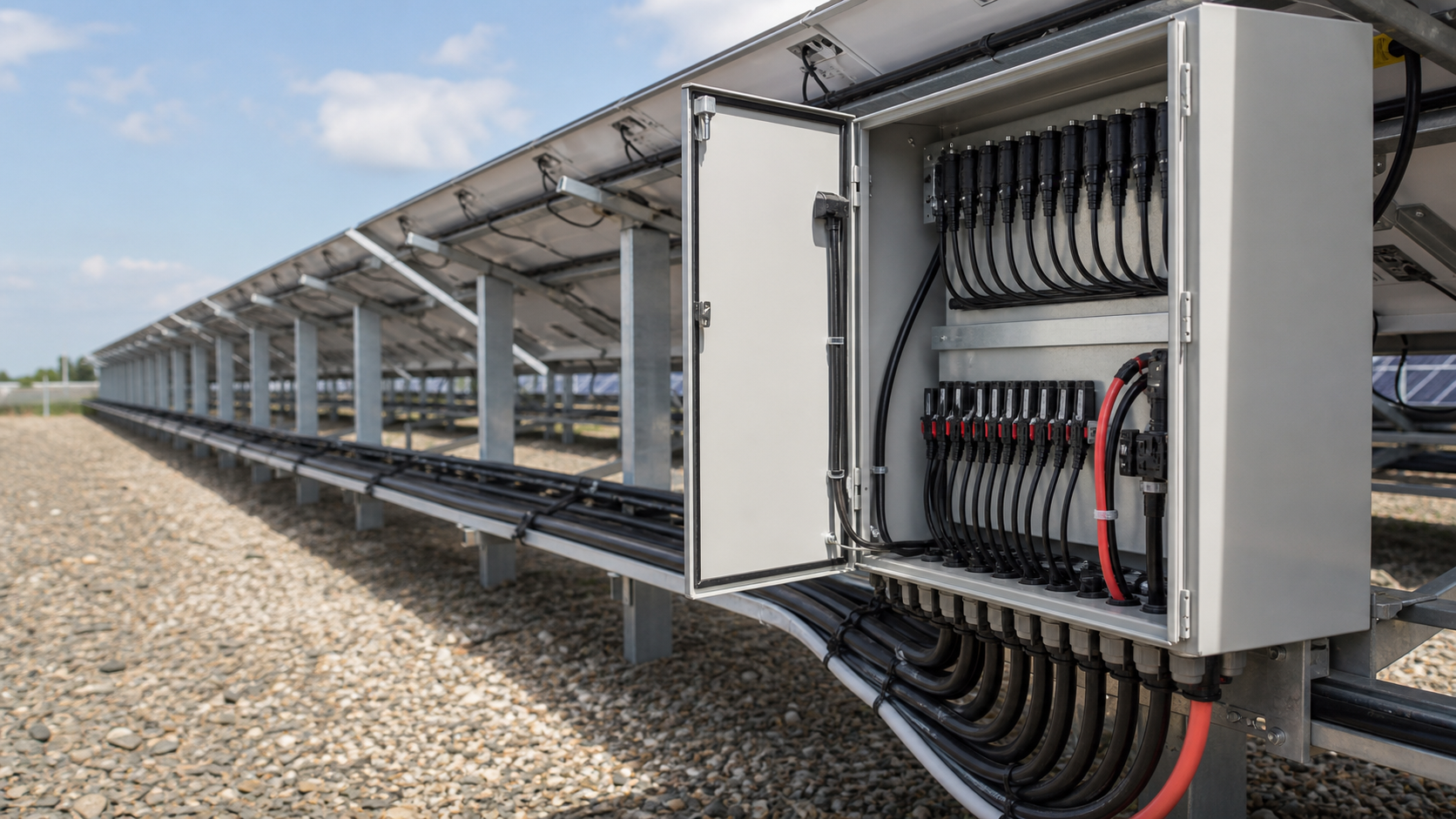
The highest string voltage occurs at the coldest site temperature. A replacement with a higher Voc can lift the whole string above the combiner box insulation and DC-disconnect limit, creating an insulation or arcing risk.
4. Hot-weather Isc is the protection check
The highest string current occurs on the hottest day with bifacial gain. A replacement with higher Isc can exceed the gPV fuse rating and the busbar design, so the fuse and protection must still clear the new peak.
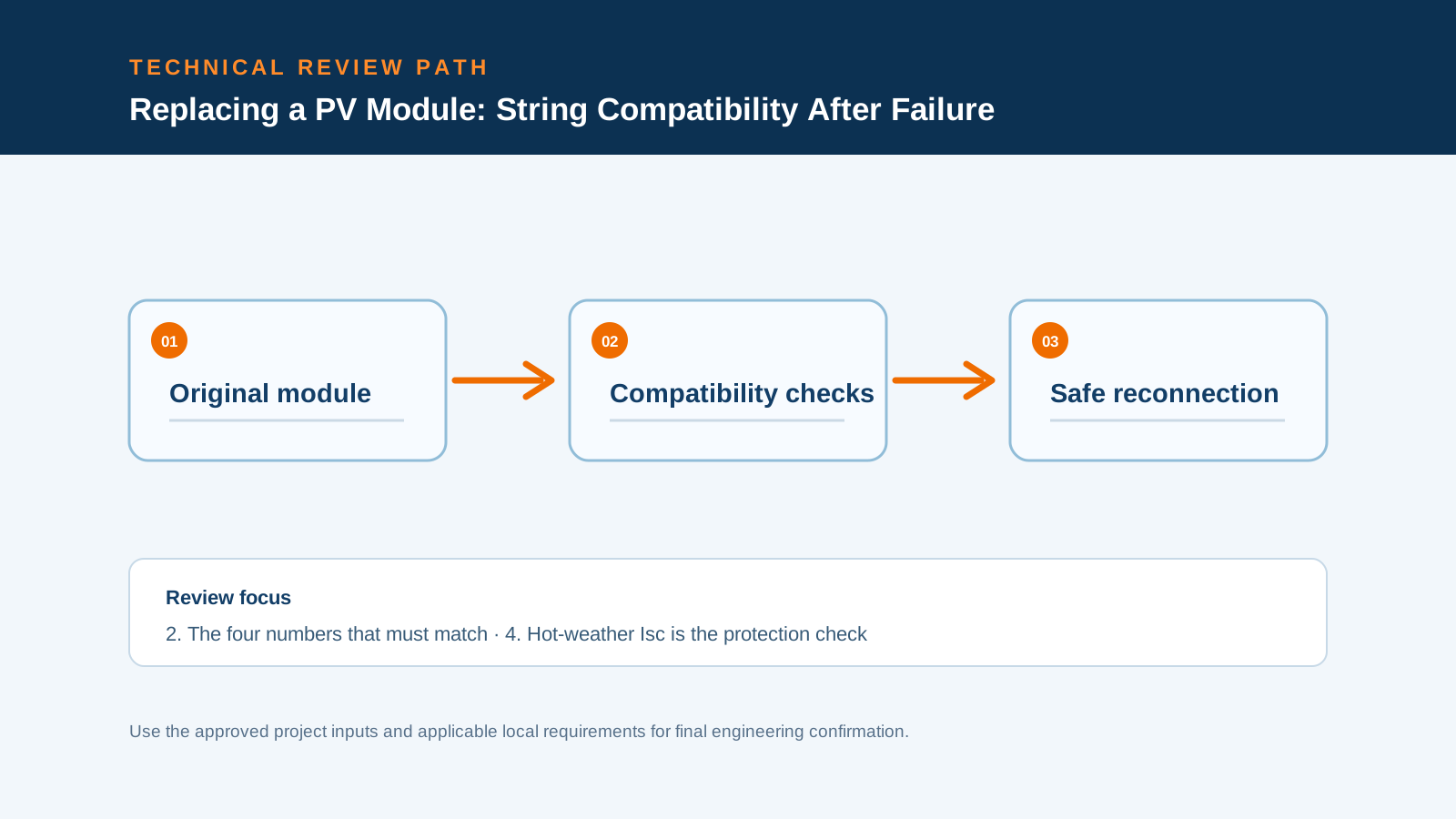
Technical diagram shown at a readable responsive scale.
5. Verify before reconnecting
Run the replacement through the same string compatibility check used at design time, then confirm the combiner box ratings, fuse sizing and SPD envelope still hold. Only then reconnect to the existing string.
6. When to re-specify the box
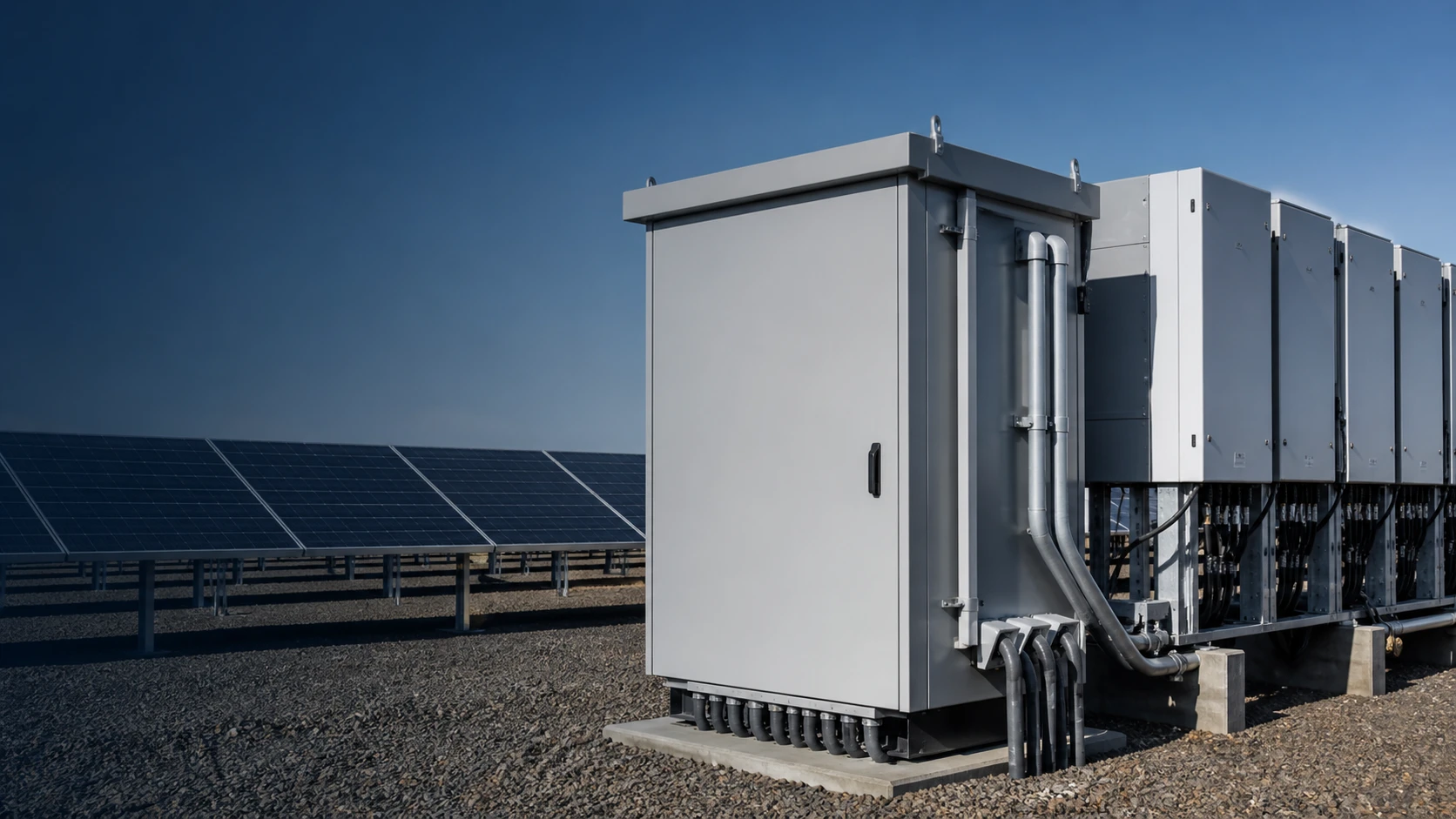
If the replacement shifts the string meaningfully, the combiner box itself may need re-rating. NEUTRON reviews the new electrical set against the installed box before the array goes back into service.
This is general technical guidance. Confirm final ratings, installation conditions and applicable local requirements against approved project documentation and a qualified engineering review.
Frequently asked questions
Can I replace a solar panel with a different model?
Only if the replacement matches Voc, Vmpp, Isc and temperature coefficients closely enough that the string stays within the combiner box and protection limits.
What happens if the replacement has higher Voc?
The coldest-case string voltage rises and may exceed the combiner box insulation and DC-disconnect rating, creating an insulation or arcing risk.
Does the new module affect fuse sizing?
Yes. A higher hot-weather Isc can exceed the gPV fuse and busbar rating, so the protection must still clear the new peak current.
How do I confirm a replacement is safe?
Re-run the string compatibility check with the replacement specs and verify the combiner box ratings, fuse and SPD envelope still hold before reconnecting.
Bring the electrical inputs to the first review.
Share the approved module data, site temperature range, cable route, string configuration and destination-market requirements. NEUTRON can review the equipment envelope against the project inputs.
Discuss a PV requirementContinue learning
Explore related technical guidance in Solar PV.
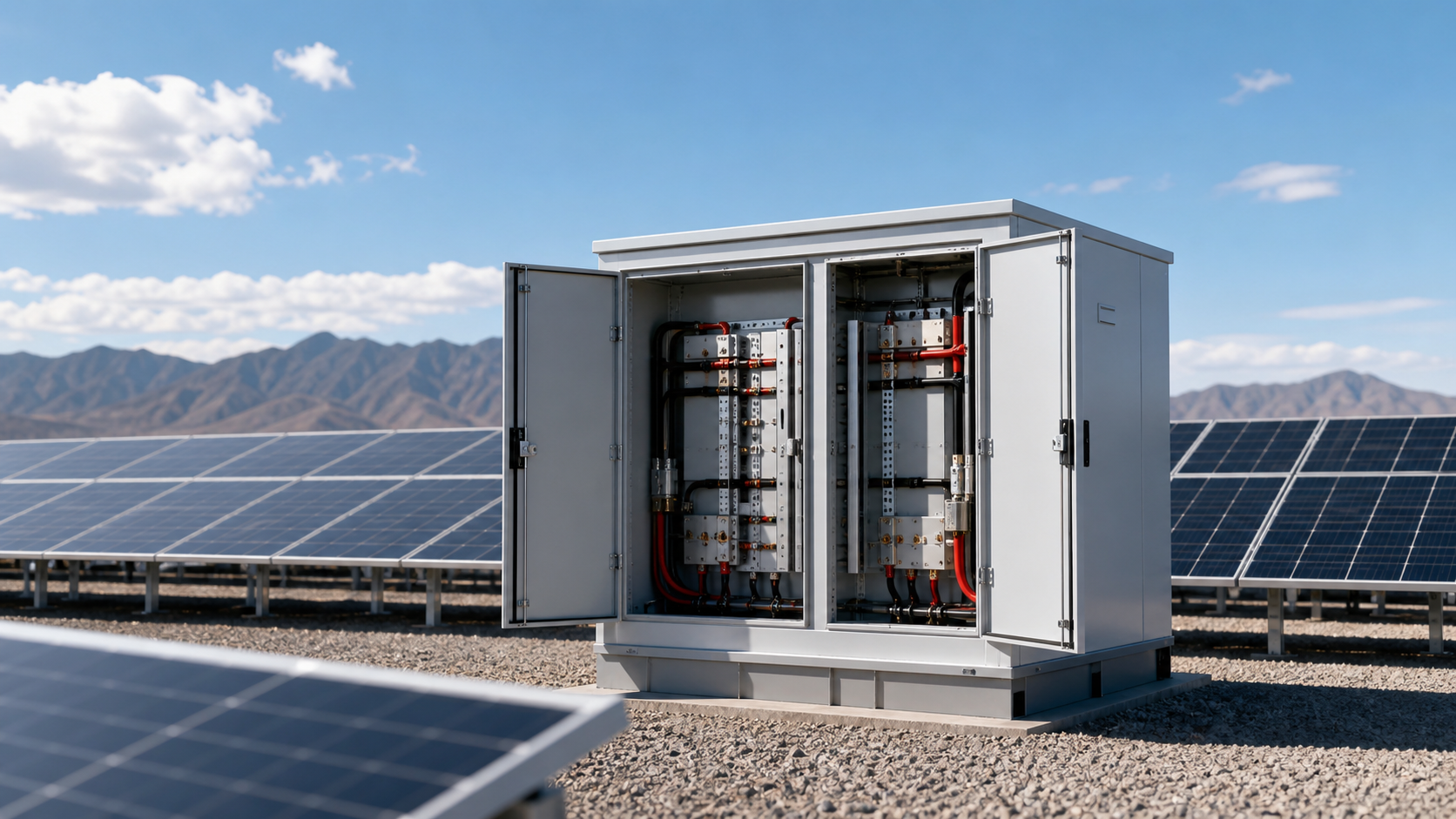
Technical note: verify final ratings, standards, documents and configuration against approved project documentation and the applicable local requirements.