
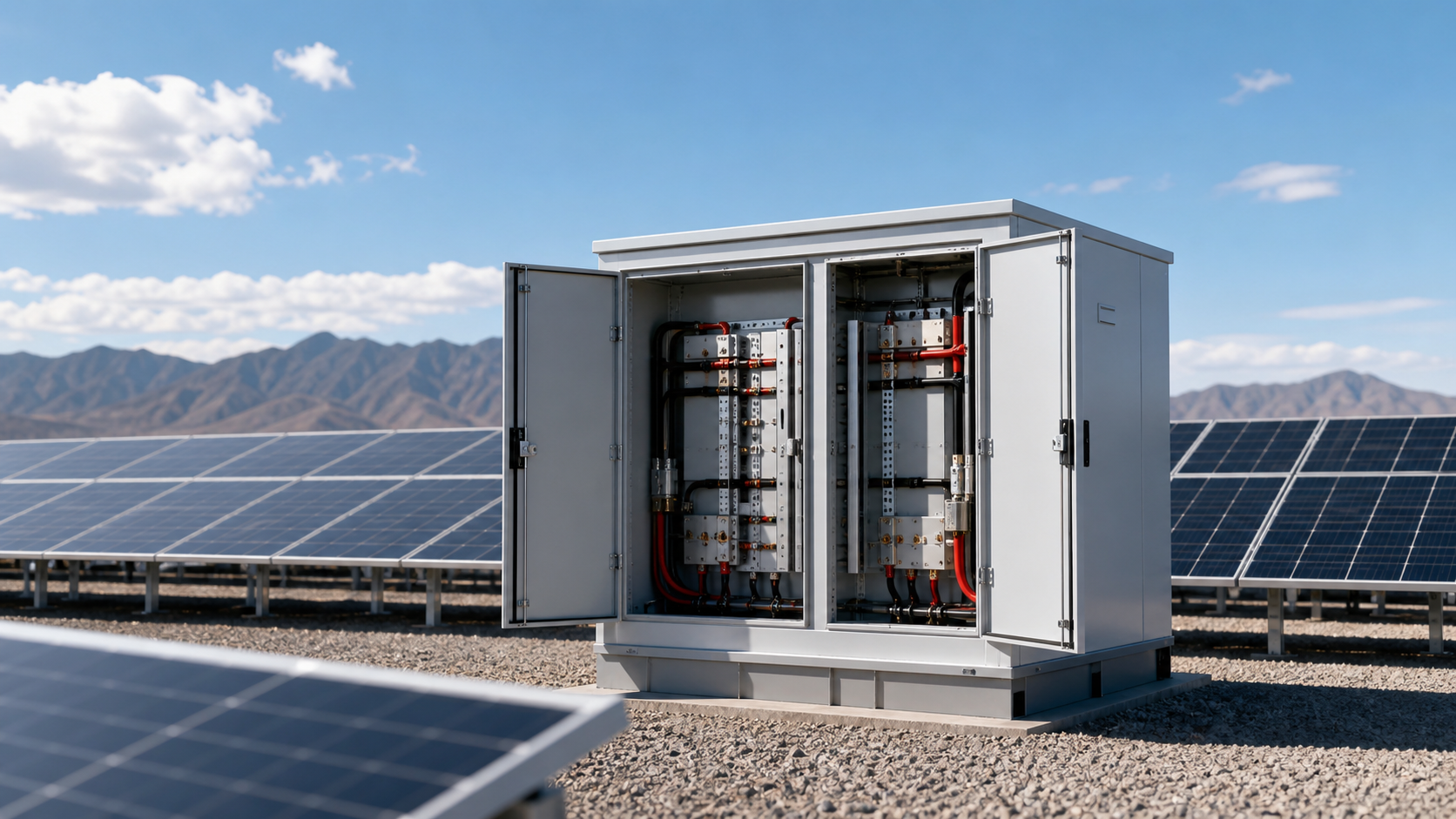
1. Two system voltage classes
Crystalline PV modules are offered in 1000 V and 1500 V system-voltage classes, set by the module insulation rating. Utility-scale arrays increasingly standardise on 1500 V to cut current and copper for the same power.
2. Why 1500 V changes the box
Moving to 1500 V raises the voltage every component must withstand. The combiner box needs higher insulation, wider clearance and creepage, a DC disconnect rated for 1500 V, and an SPD whose protection level and continuous operating voltage clear the new envelope.
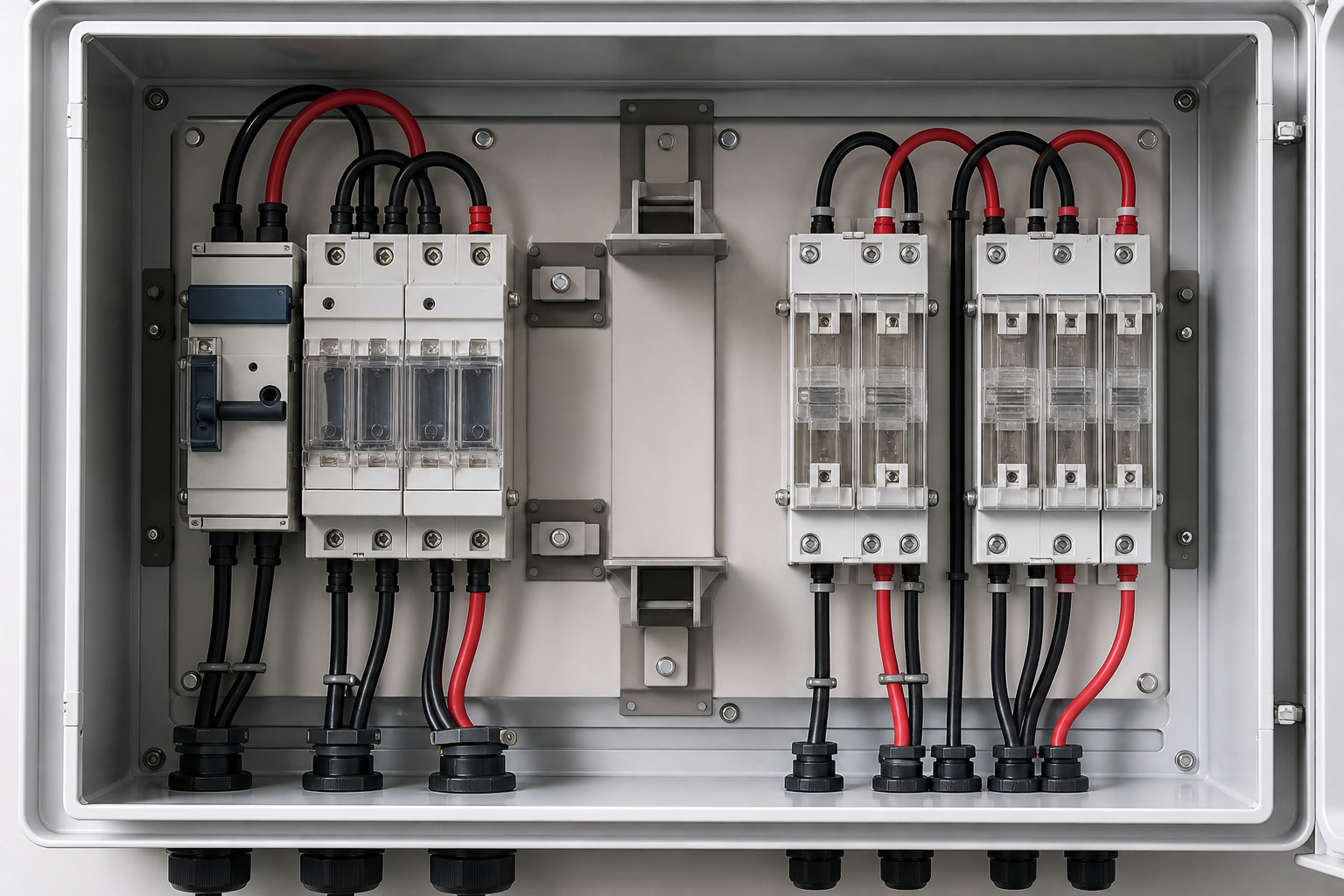
3. Module insulation as the root limit
Each module carries a rated system voltage, typically 1000 V or 1500 V, that its insulation can safely handle. The string voltage at the coldest temperature must never exceed that rating, or arcing and ground faults follow.
4. SPD coordination
A common field failure is pairing a 1500 V array with an SPD selected for 1000 V. The protection level and maximum continuous operating voltage must both clear the 1500 V envelope, or the protector itself becomes the weak point.
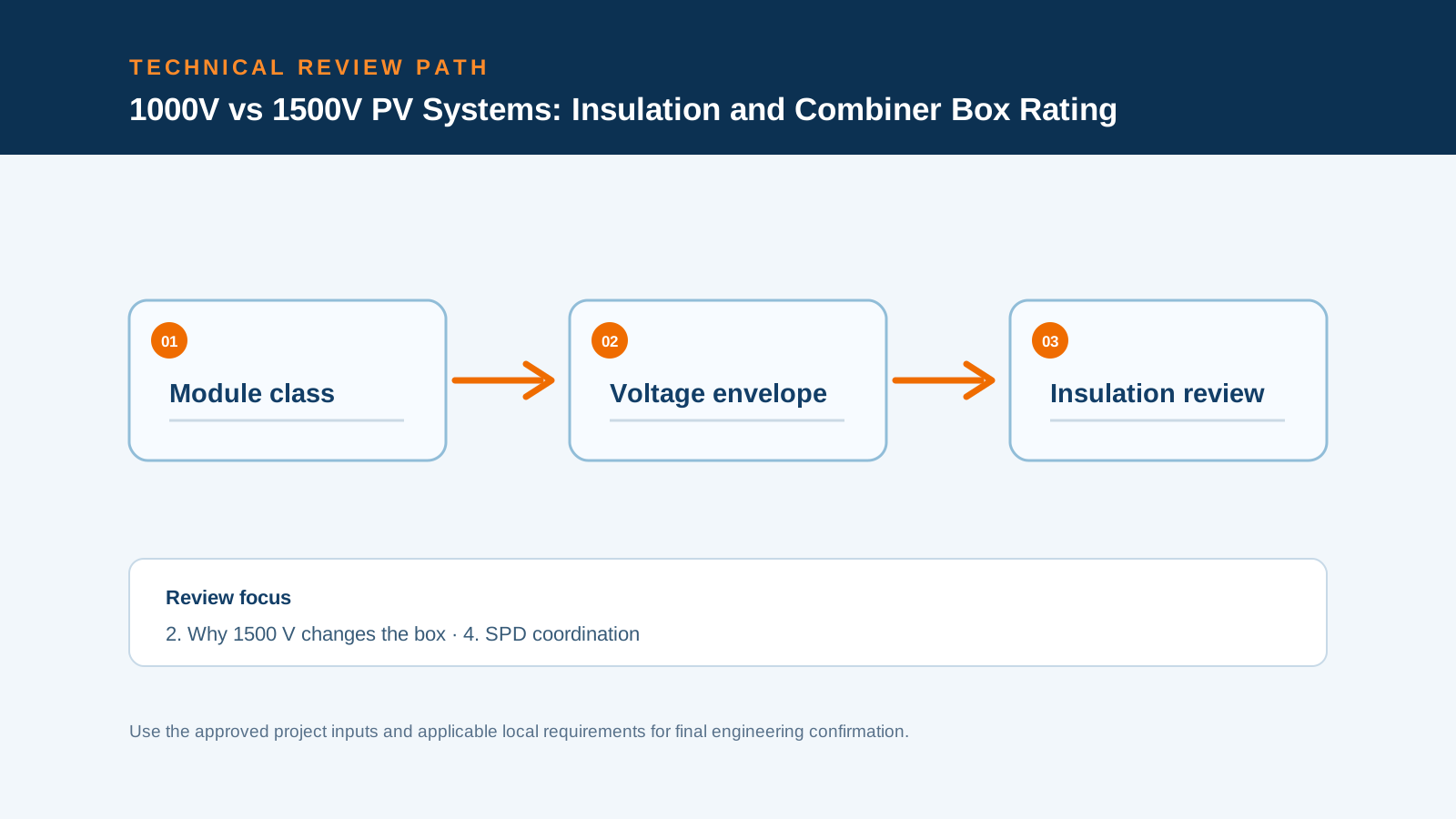
Technical diagram shown at a readable responsive scale.
5. Clearance and creepage
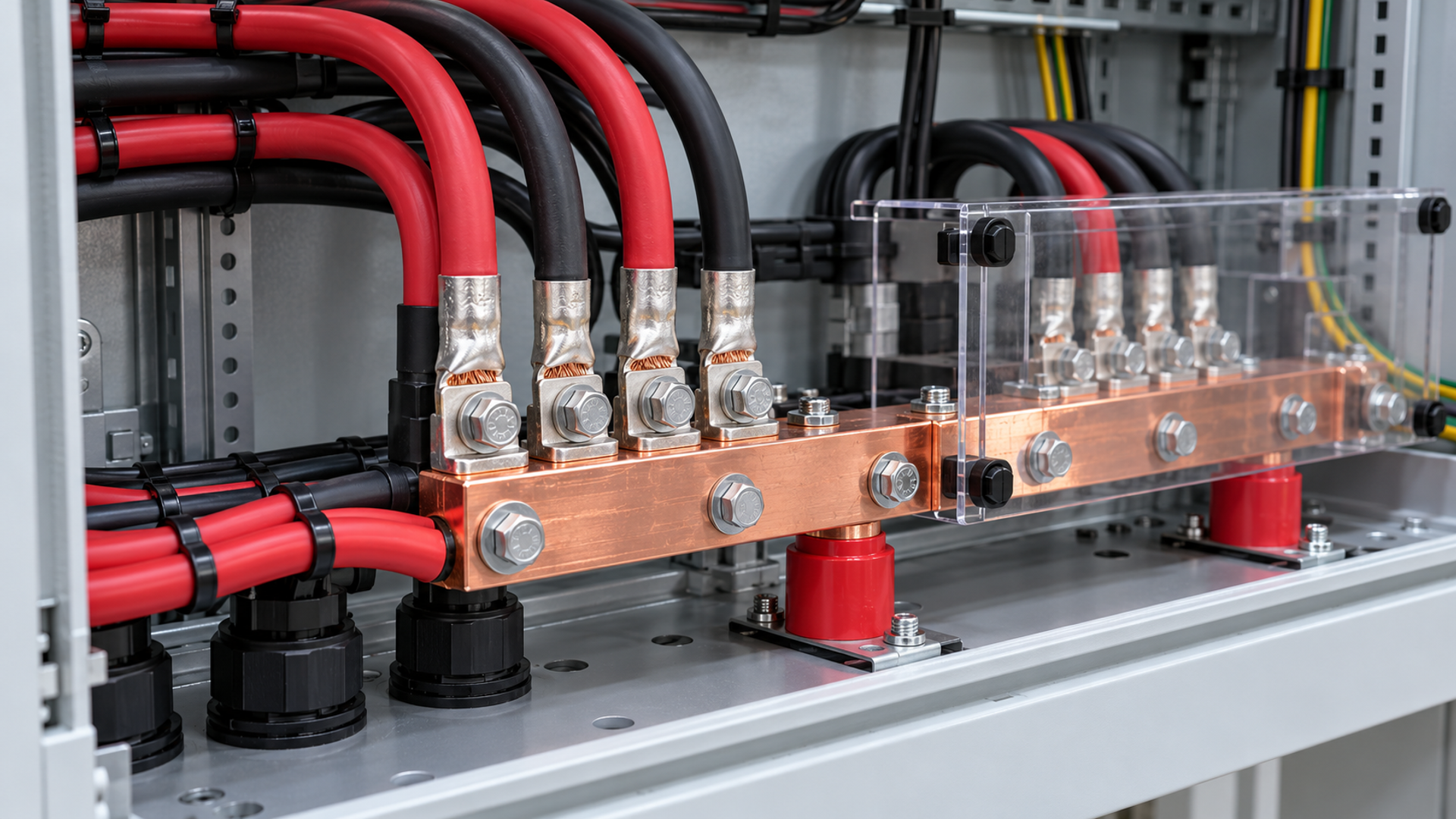
Inside the enclosure, distances between live parts and to earth scale with system voltage plus transient margin. A box designed for 1000 V cannot simply be reused at 1500 V without re-verifying every internal gap.
6. Specification checklist
State the system voltage class on the enquiry, confirm module insulation rating, and verify the DC disconnect, SPD Uc and Up, and internal clearance against the 1500 V (or 1000 V) envelope before release.
This is general technical guidance. Confirm final ratings, installation conditions and applicable local requirements against approved project documentation and a qualified engineering review.
Frequently asked questions
What is the difference between 1000V and 1500V PV systems?
The system voltage class set by module insulation; 1500 V lets the same power flow at lower current but demands higher insulation and component ratings.
Why are 1500V systems used?
They reduce string current and copper for utility-scale arrays, lowering balance-of-system cost at the price of stricter insulation and protection ratings.
Does a 1500V array need a different SPD?
Yes. The SPD protection level and maximum continuous operating voltage must both clear the 1500 V envelope; a 1000 V SPD is unsafe there.
What limits the string voltage?
The module insulation rating; the coldest-case string voltage must stay below it to avoid arcing and ground faults.
Bring the electrical inputs to the first review.
Share the approved module data, site temperature range, cable route, string configuration and destination-market requirements. NEUTRON can review the equipment envelope against the project inputs.
Discuss a PV requirementContinue learning
Explore related technical guidance in Solar PV.
Technical note: verify final ratings, standards, documents and configuration against approved project documentation and the applicable local requirements.