

String, array and recombiner: one vocabulary
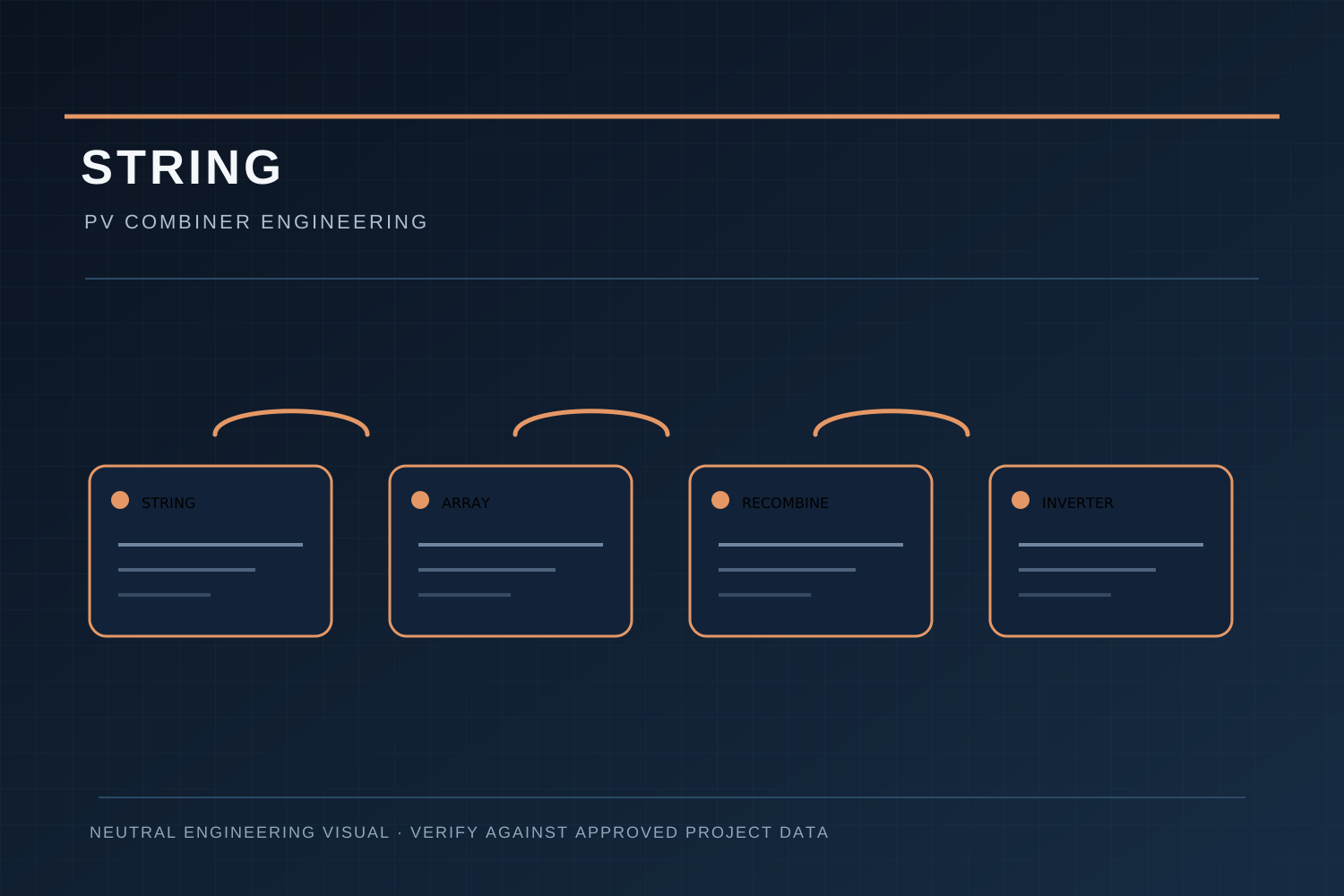
The words string, array, and recombiner are used inconsistently across the PV industry. A string is a series connection of modules. An array is the broader DC collection, often several strings. A recombiner is an enclosure that groups already-combined DC feeds at a higher level, typically in utility-scale plants. None of these is a fixed product standard; they describe a wiring hierarchy. Use one term per level and avoid implying a single official taxonomy.
Where each term fits
The terms describe position in the hierarchy, not a competing set of device classes. Keeping the vocabulary consistent across drawings, the bill of materials, and the commissioning report prevents the common error of ordering a recombiner when a string combiner with more inputs would do, or the reverse.
- String combiner: collects individual series strings into one DC output.
- Array combiner: a looser name for the same function at array level.
- Recombiner: combines outputs of multiple string combiners, not single strings.
Why the confusion causes mistakes
Mixing terms leads to wrong sizing and wrong protection coordination. A box labeled recombiner may simply be a large string combiner with more inputs. Read the input count, the rated current, and the busbar rating instead of trusting the label. Confirm the approved NEUTRON model datasheet before assuming a function.
Selection should follow electrical ratings, not marketing names. Where a specific feature is claimed, verify it against the approved model's listed values and test reports.
Reading the rating plate
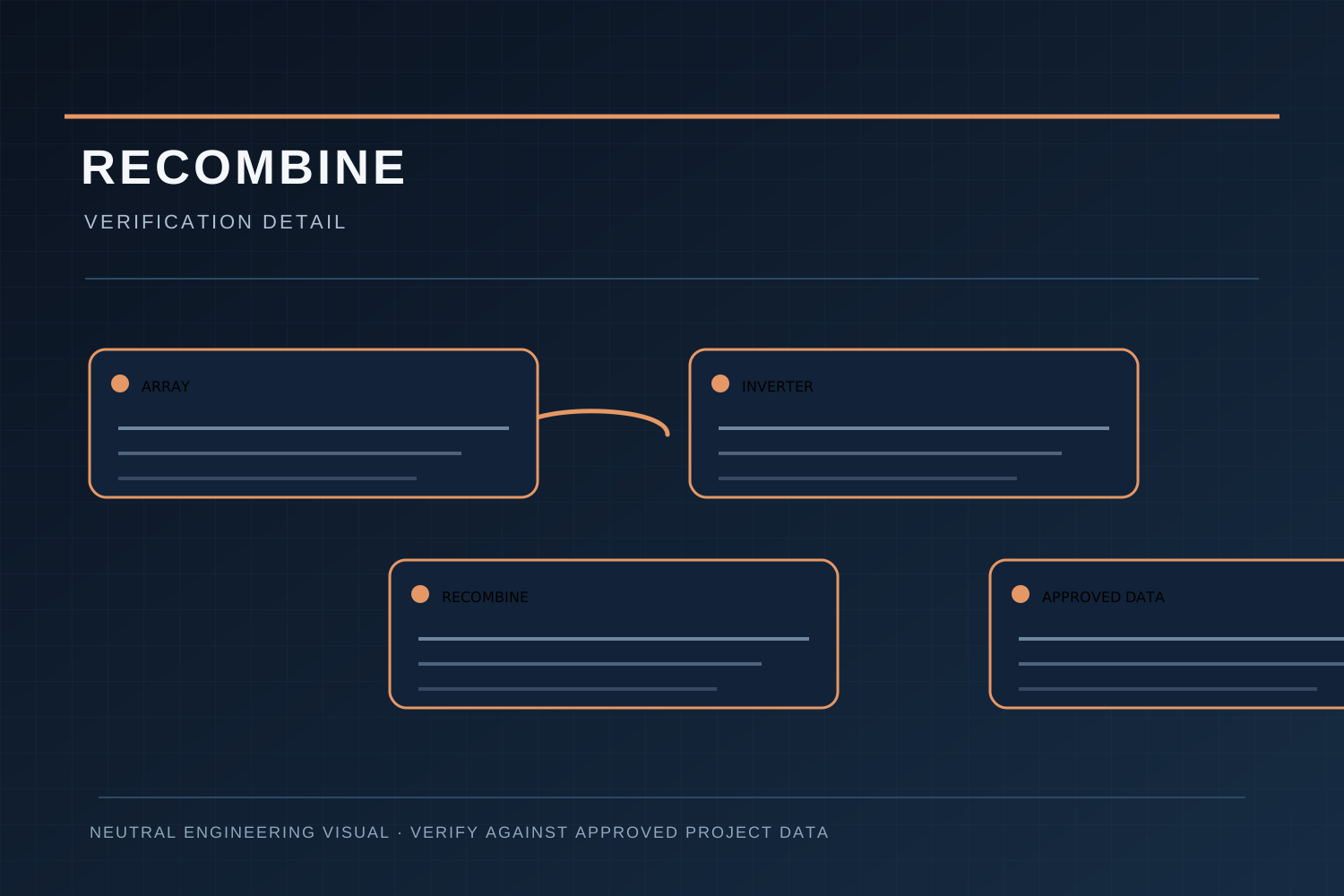
To avoid name confusion, read the rating plate rather than the category word. The numbers that decide the application are the number of string inputs, the maximum string current, the system voltage, and the busbar rating. A correctly specified string combiner and a correctly specified recombiner can belong to the same product family; the real difference is the aggregation level they serve, which the plate shows directly.
Selection without guessing
Choose by input count, string current, and system voltage, not by name. Use the configurator and the protection coordinator as planning aids, then verify against the approved model's listed values. A clear vocabulary reduces errors more than any single product label. Where a feature such as monitoring or a disconnect is required, confirm it is listed for the exact model rather than assumed from the category.
- Match the input count to the real number of strings.
- Match the busbar rating to the aggregated string current.
- Confirm system voltage and standard edition before ordering.
This article preserves the accepted technical guidance but is not a substitute for the applicable local code, approved model datasheet, test report or a qualified engineer's design review.
Frequently asked questions
Is a recombiner a different product from a string combiner?
Not as a separate standard. A recombiner sits one level up: it groups outputs of several string combiners. Some large enclosures are called recombiners but are functionally big string combiners. Judge by inputs and ratings.
Does the industry have one official naming rule?
No single global rule fixes these words. String, array, and recombiner describe a wiring hierarchy. Apply one term consistently per level and rely on electrical ratings for selection.
How do I pick between them?
Base the choice on the number of strings, the per-string current, and the system voltage. The label alone should not decide the design.
Can a combiner box also act as a recombiner?
Only if its busbar and input count match the higher aggregated current. Check the approved model's ratings; do not assume the function from the name.
Bring the project inputs to the first review.
Share the array layout, ratings, site conditions and documentation requirements for a coordinated review.
Discuss a projectContinue learning
Explore related technical guidance in Solar PV.



Published from the accepted Period 13 manuscript (1.1); technical meaning and safety boundaries are retained from the approved source package.