
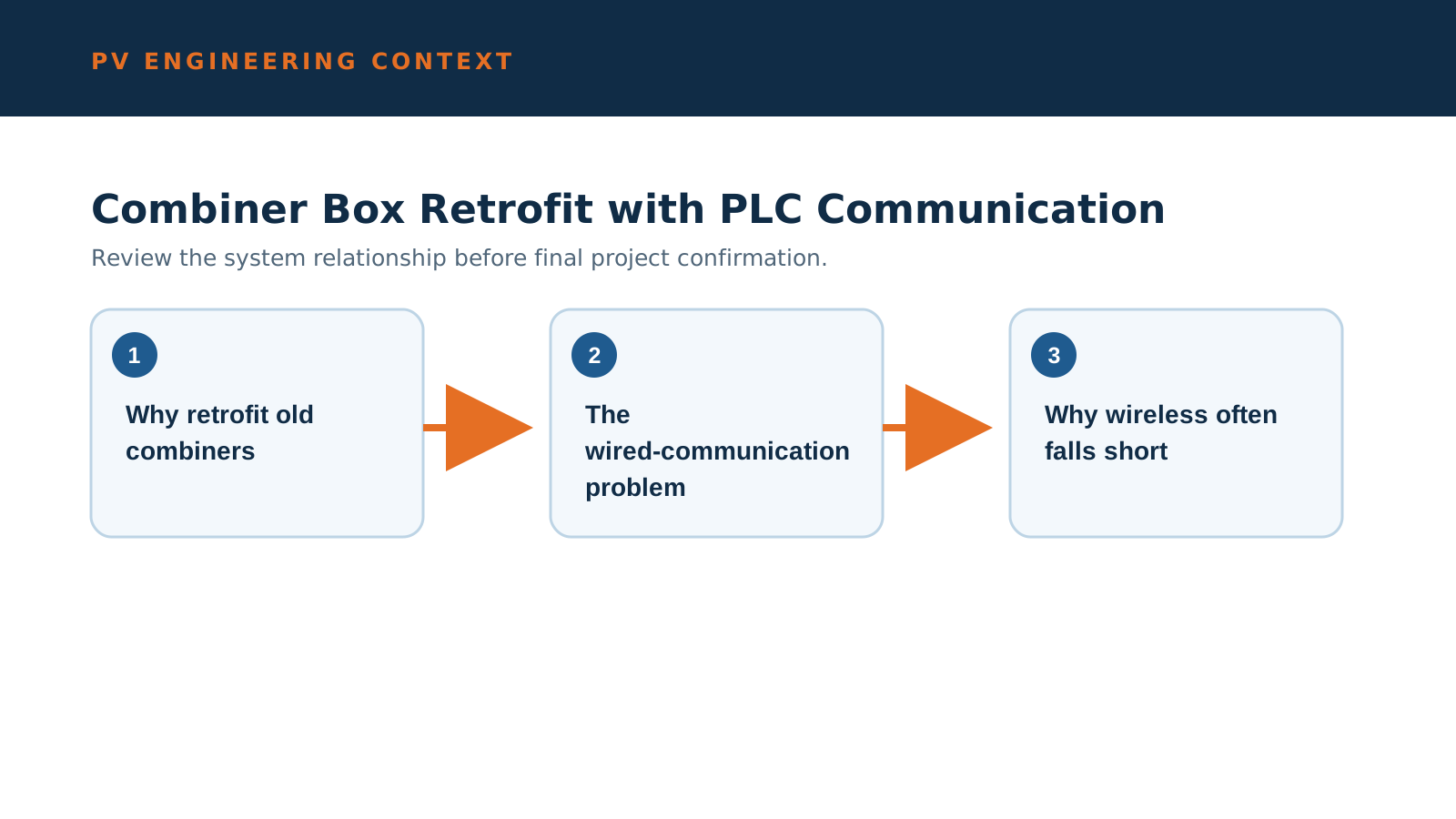
1. Why retrofit old combiners
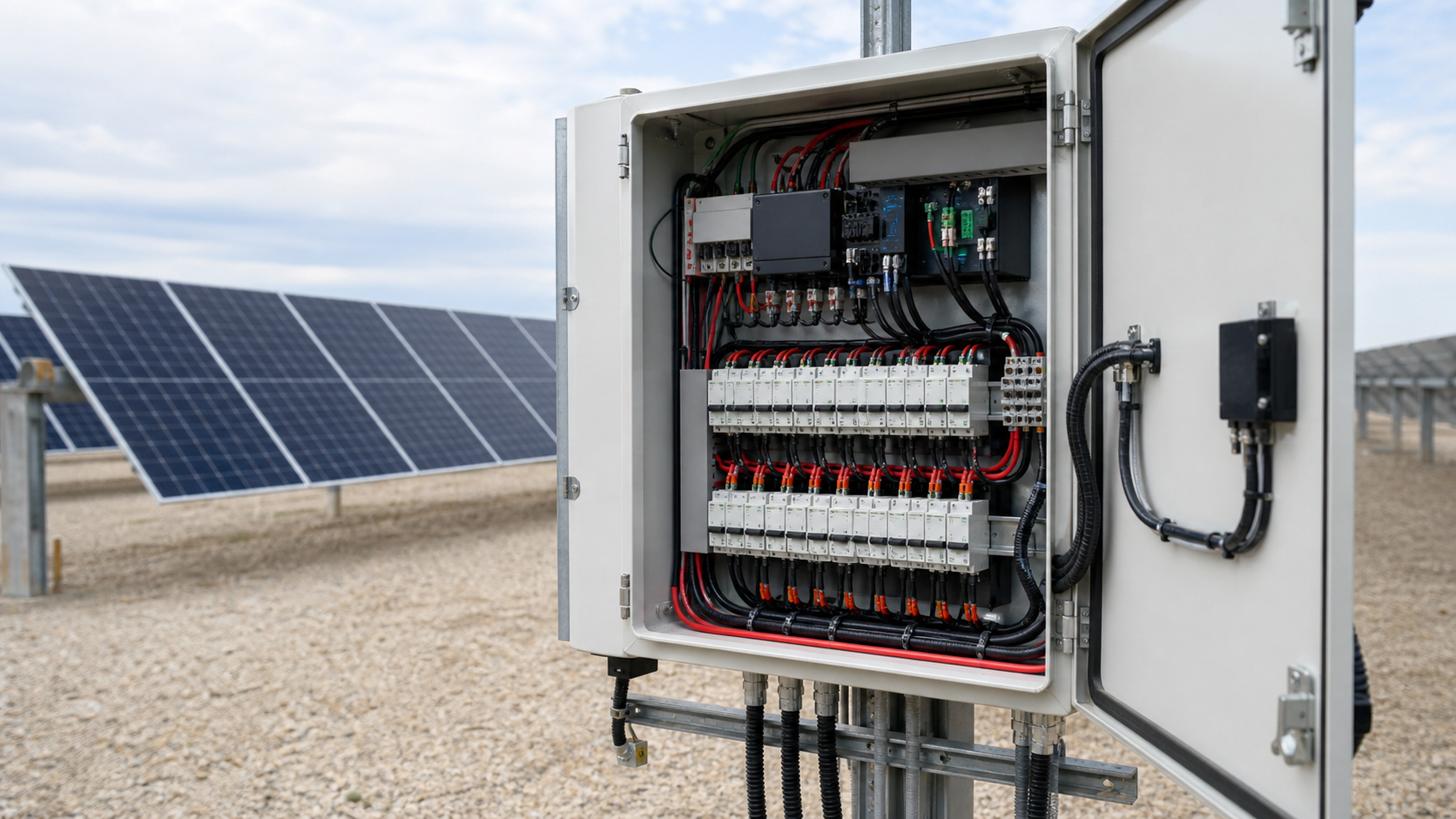
Many plants were built before monitoring was standard, so their combiners stay silent until something fails. Retrofit turns that hidden fleet into measurable assets without rebuilding the array.
The driver is simple: smarter operation and faster fault response raise the value of capacity already paid for.
2. The wired-communication problem
Most legacy plants laid power cable but not communication fiber. Adding it later means trenching near live conductors, with real safety and cost risk.
For a mid-size plant the buried fiber and trenching alone can reach thousands of meters, before labor and commissioning.
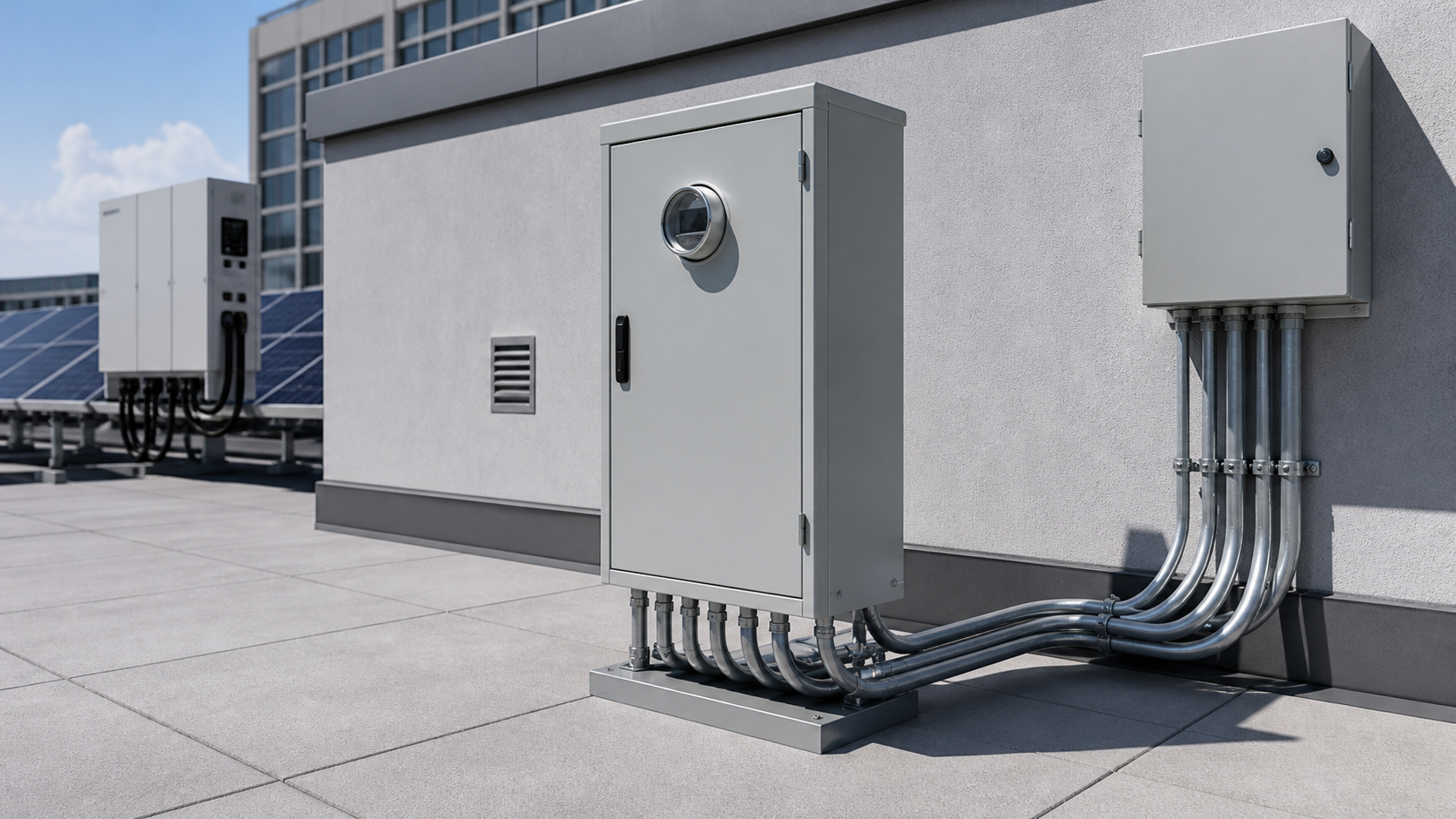
Technical diagram shown at a readable responsive scale.
3. Why wireless often falls short
Wireless reaches its limit when devices sit beyond range, when remote sites lack signal, or when the enclosure and modules shield the antenna. Added modules also raise cost and lightning risk.
On a busy array, interference from power electronics further degrades the link, so wireless is not always dependable.
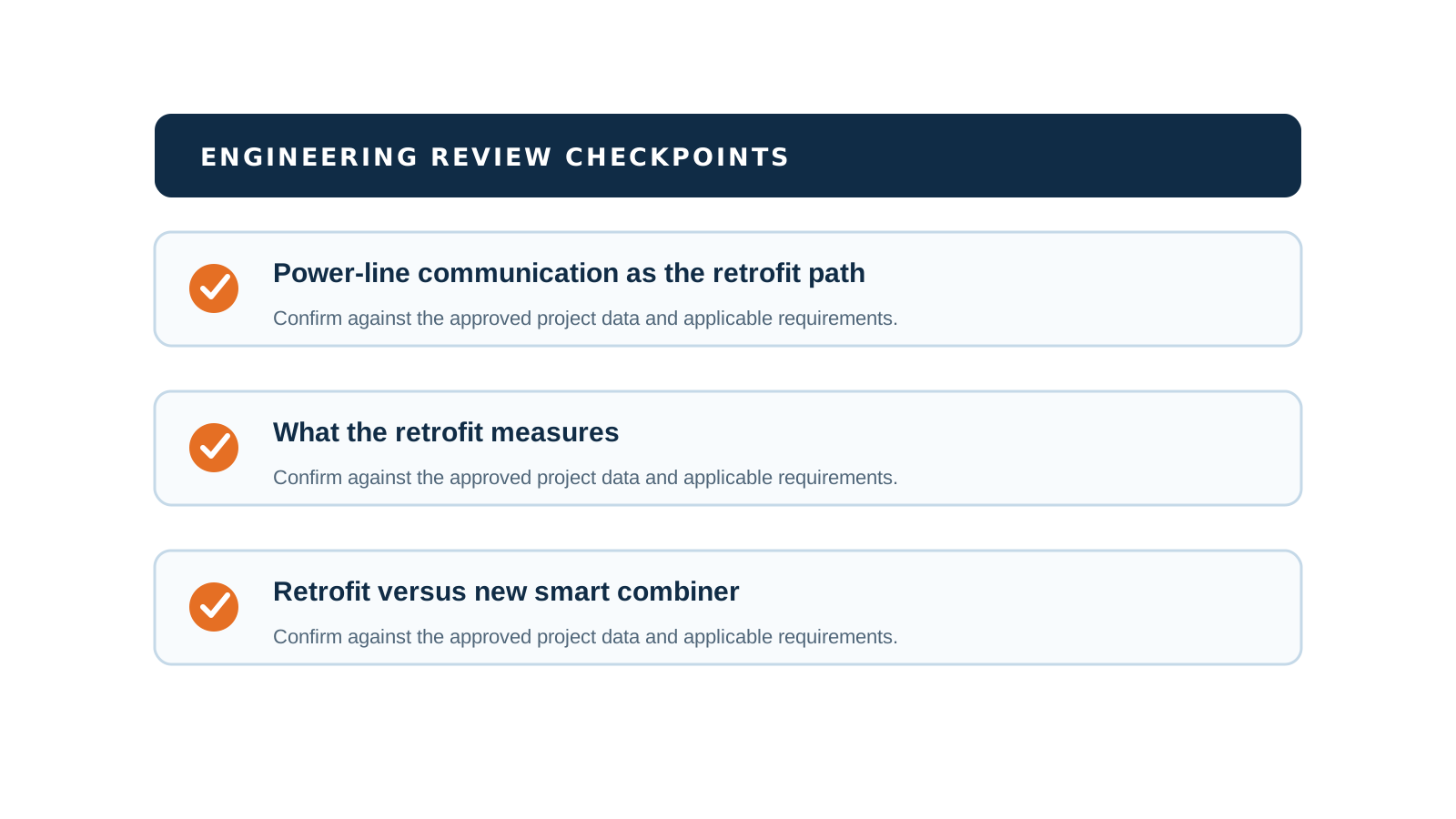
4. Power-line communication as the retrofit path
Power-line communication rides the existing DC conductors, collecting node data and bridging to a gateway over a short control link. No new trench, no digging near live parts.
The method suits combiner boxes, DC cabinets and similar nodes where conductors already run.
5. What the retrofit measures
It reads per-string current, busbar voltage, enclosure temperature, surge protector status and disconnect state, then raises an alarm on abnormality.
Per-string current is the key signal: a weak string shows up long before output drops visibly.
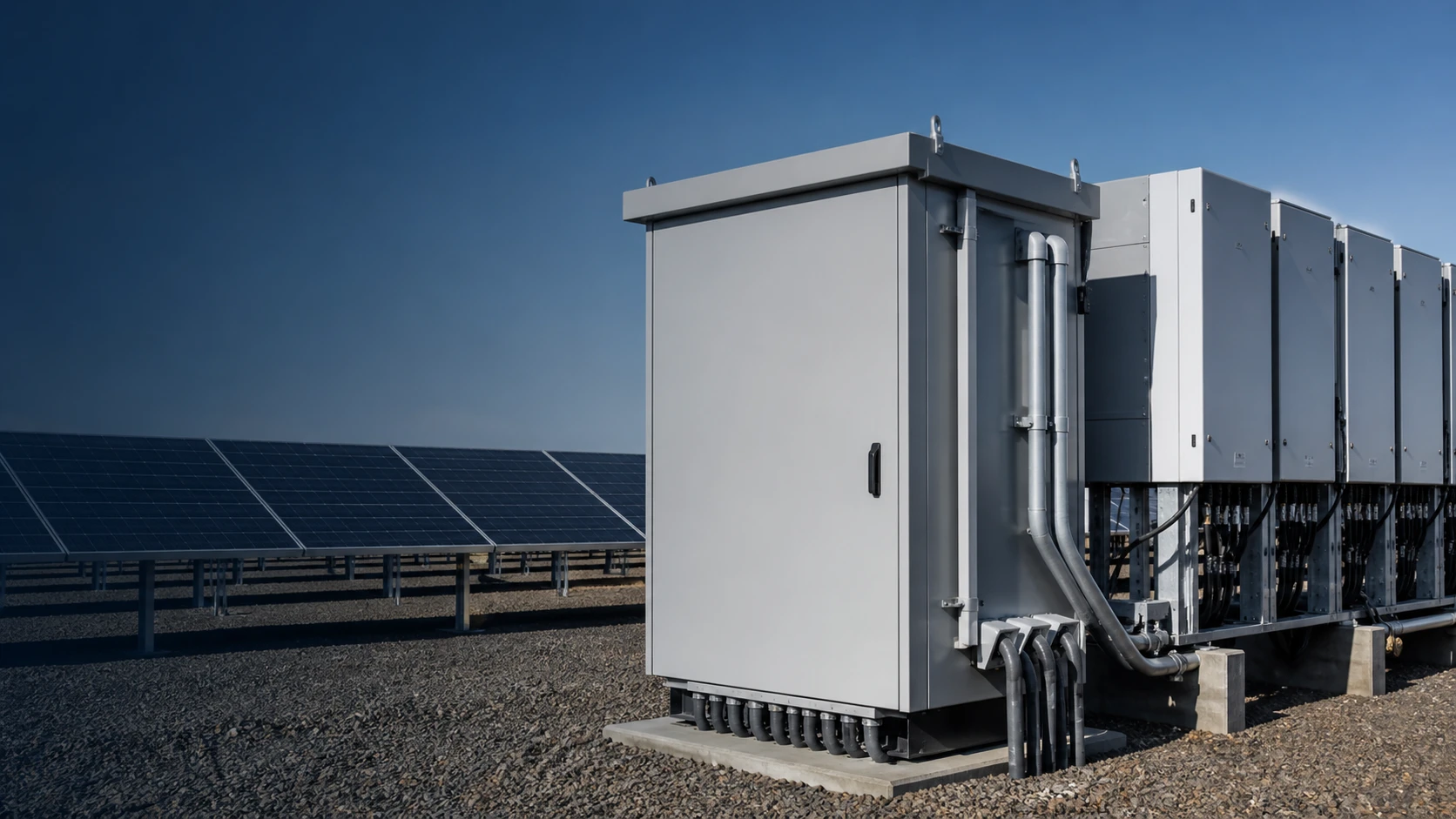
Technical diagram shown at a readable responsive scale.
6. Retrofit versus new smart combiner
Retrofit keeps the existing enclosure and wiring, adding measurement and a gateway. A new smart combiner replaces the box entirely with integrated sensing.
Choose retrofit when the enclosure is sound; choose replacement when the box itself has aged out.
7. Linking retrofit to protection
Monitoring does not replace protection, but it makes protection observable. Reporting both the protective state and live measurements lets operators correlate cause and effect.
NEUTRON DC control and protection equipment is built so measurement, isolation and surge protection share one coordinated assembly.
8. Specification takeaways
Decide the measured points, the bridge interface and the reporting target before work starts. Confirm isolation between the DC path and the communication path.
NEUTRON combiner equipment can be specified with the measurement and interface set that fits a retrofit or a new build.
This guide supports an initial technical review. Final ratings, standards, protection coordination, monitoring interfaces and configuration must be confirmed for the actual project requirement.
Frequently asked questions
What is combiner box retrofit?
It adds monitoring and communication to an existing combiner so the box reports string current, voltage, temperature and protection state instead of staying silent.
Why use power-line communication?
It rides the existing DC conductors, avoiding trenching near live parts and the cost and risk of laying new fiber.
What does the retrofit measure?
Typically per-string current, busbar voltage, enclosure temperature, surge protector status and disconnect position, with alarm on abnormality.
Retrofit or replace the combiner?
Retrofit when the enclosure is sound and you only need measurement; replace when the box itself has aged and integrated sensing is preferred.
Bring the project inputs together
Use the technical inputs in this guide to prepare a clear project discussion.
Discuss a projectContinue learning
Explore related technical guidance in Solar PV.
Technical note: final ratings, standards, protection coordination, monitoring interfaces and configurations remain subject to the agreed project requirement.