
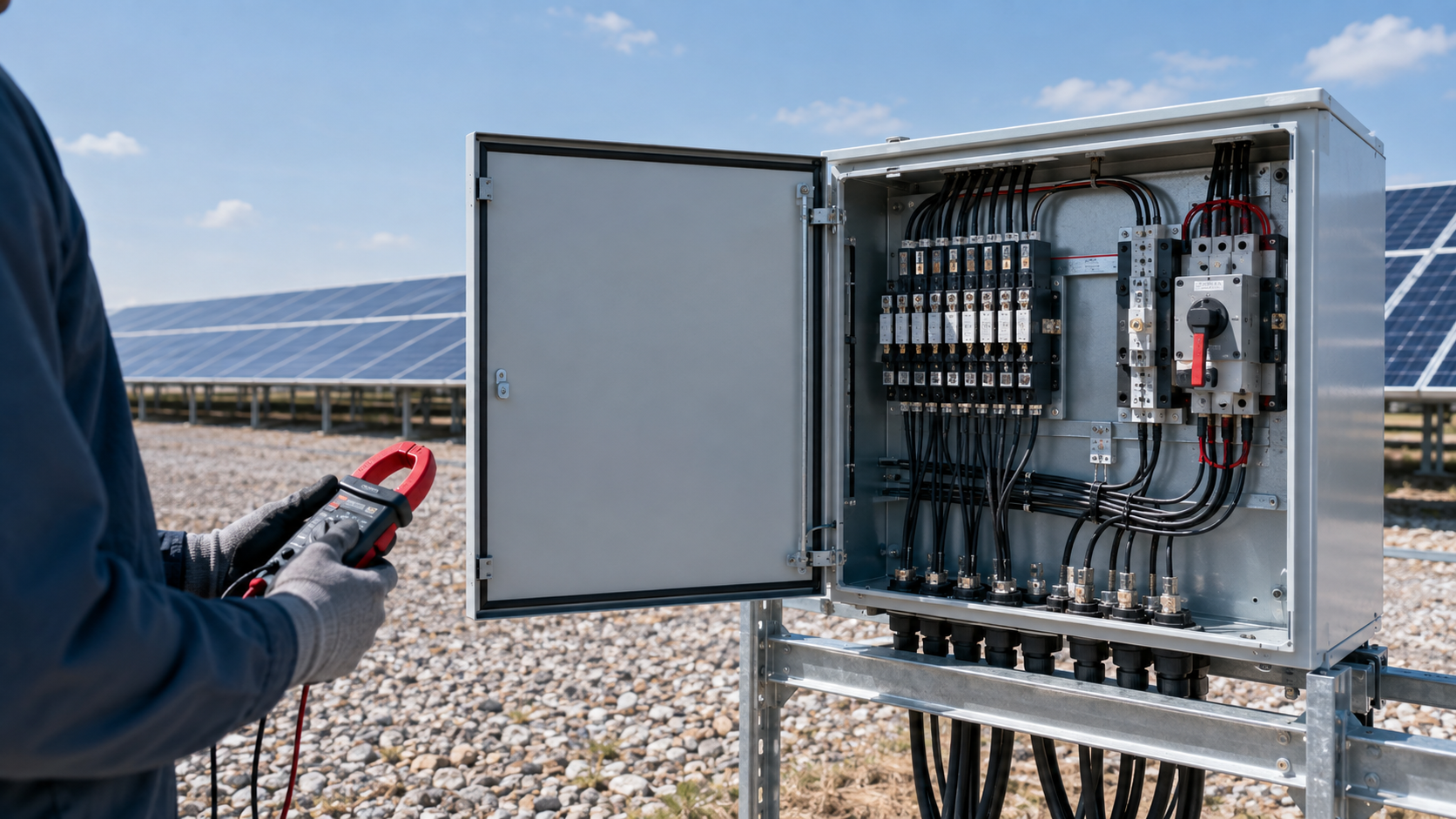
Symptom
The symptom is consistent: the breaker opens, the affected output channel drops, and the monitoring platform logs a protection event. Sometimes the trip is immediate on close; sometimes it appears under peak irradiance. The pattern already narrows the cause — an instant trip suggests a hard short, while a load-dependent trip suggests overload or thermal drift.
- Instant trip on close — suspect a short circuit or crossed polarity.
- Trip at midday peak — suspect overload or rating margin loss.
- Trip after rain or humidity — suspect insulation breakdown to earth.
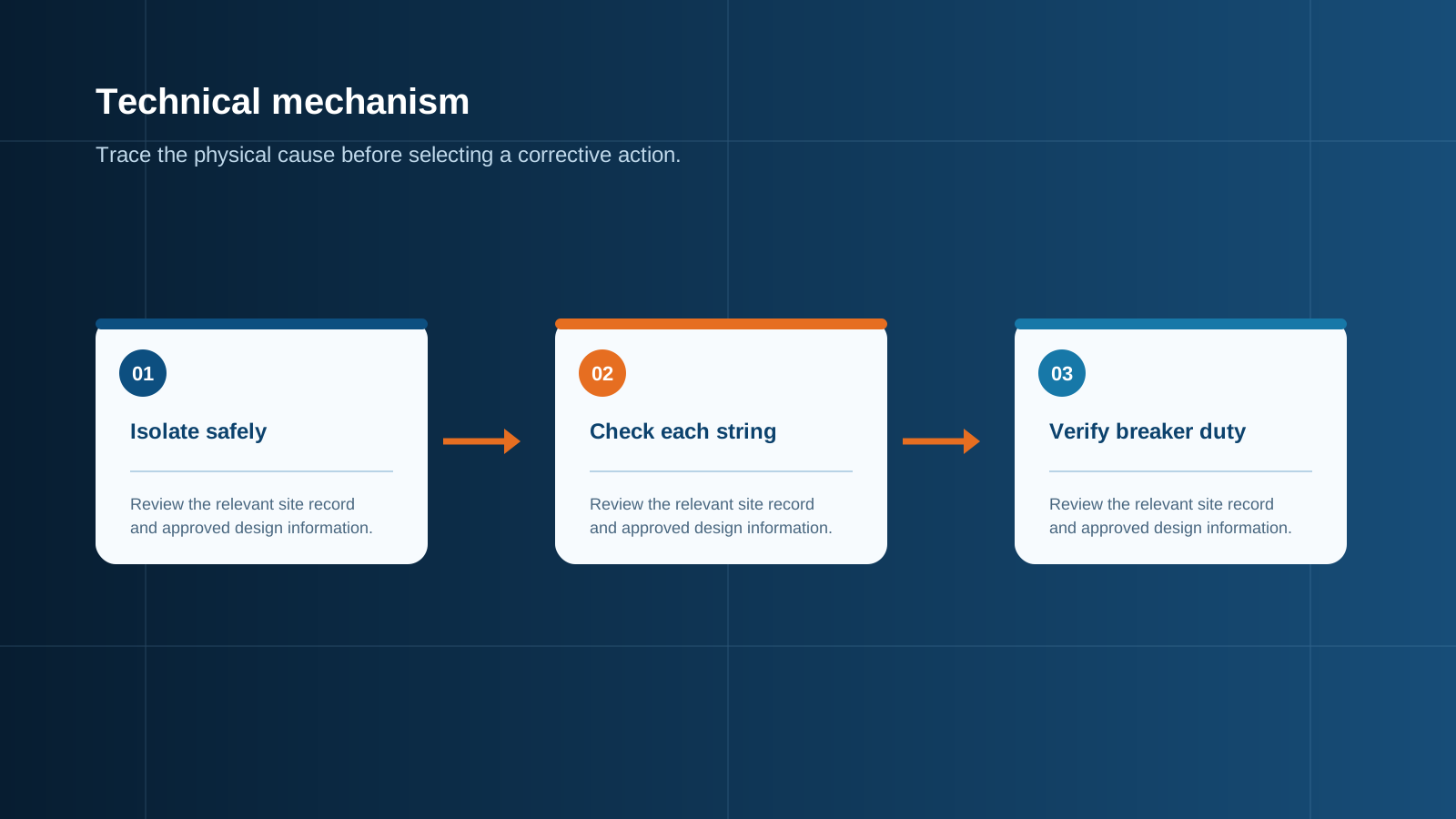
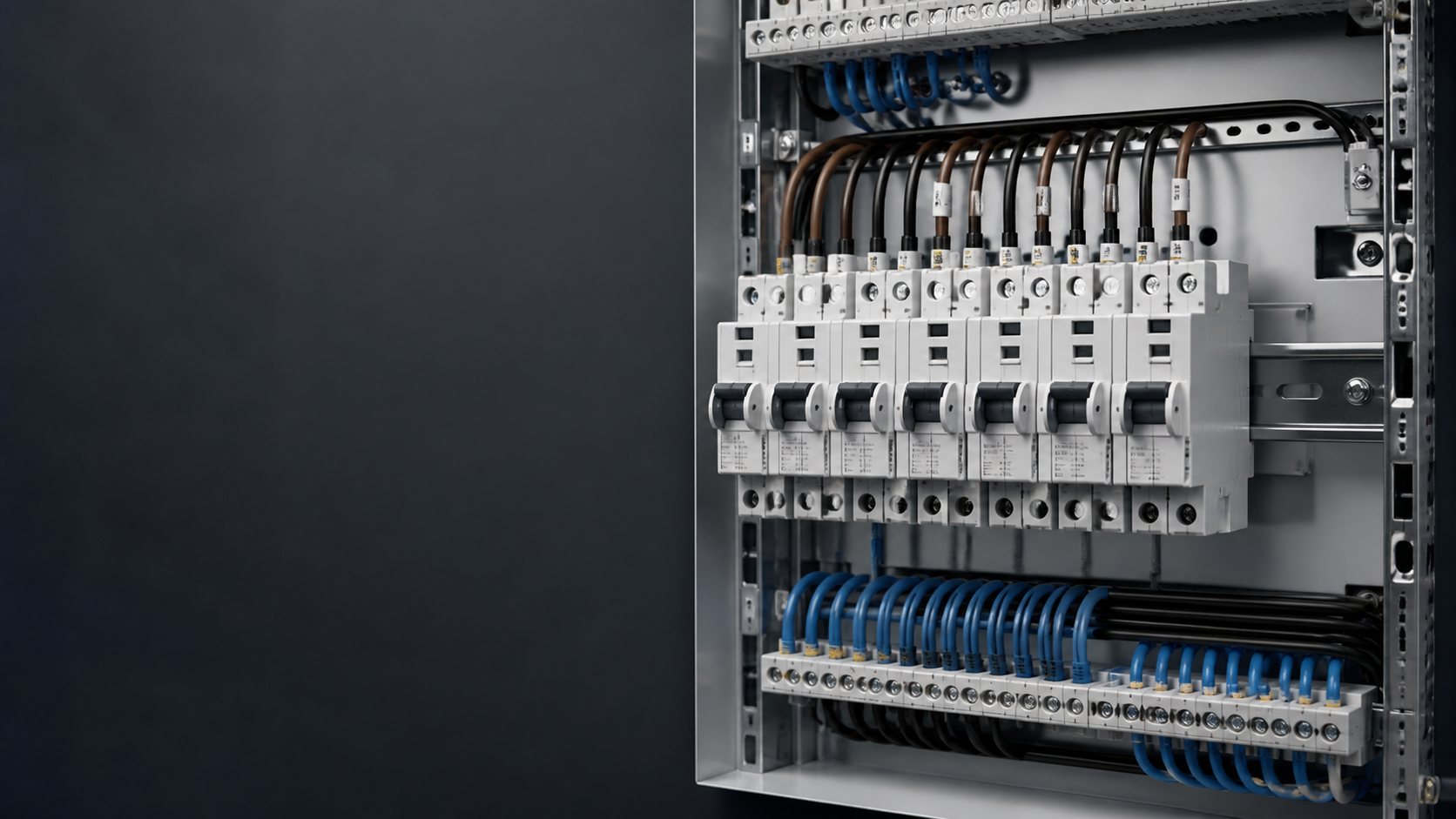
Technical diagram shown at a readable responsive scale.
String short or fault
A shorted string is the first thing to rule out. A module with a cracked cell, a rodent-damaged cable or a wet connector can present a low-resistance path that the breaker sees as a fault. Measure each input string's open-circuit voltage and short-circuit current at the fuse terminal with the breaker open, and compare against the array design values.
- Disconnect the suspect string at the combiner input.
- Measure Voc and Isc; a collapsed Voc or a runaway Isc confirms the fault.
- Trace the string to the module level only after it is isolated from DC.
Component damage
Heat, moisture and transients age components inside the box. A degraded DC SPD, a carbon-tracked terminal block or a swollen breaker can all draw leakage current that pushes the breaker past its threshold. Damage is often invisible until the enclosure is opened, so a thermal scan and a close visual check belong in the diagnosis.
- Inspect the SPD window and remote contact status.
- Look for discoloration, melting or odour near terminals.
- Replace any component that shows tracking or annealing.
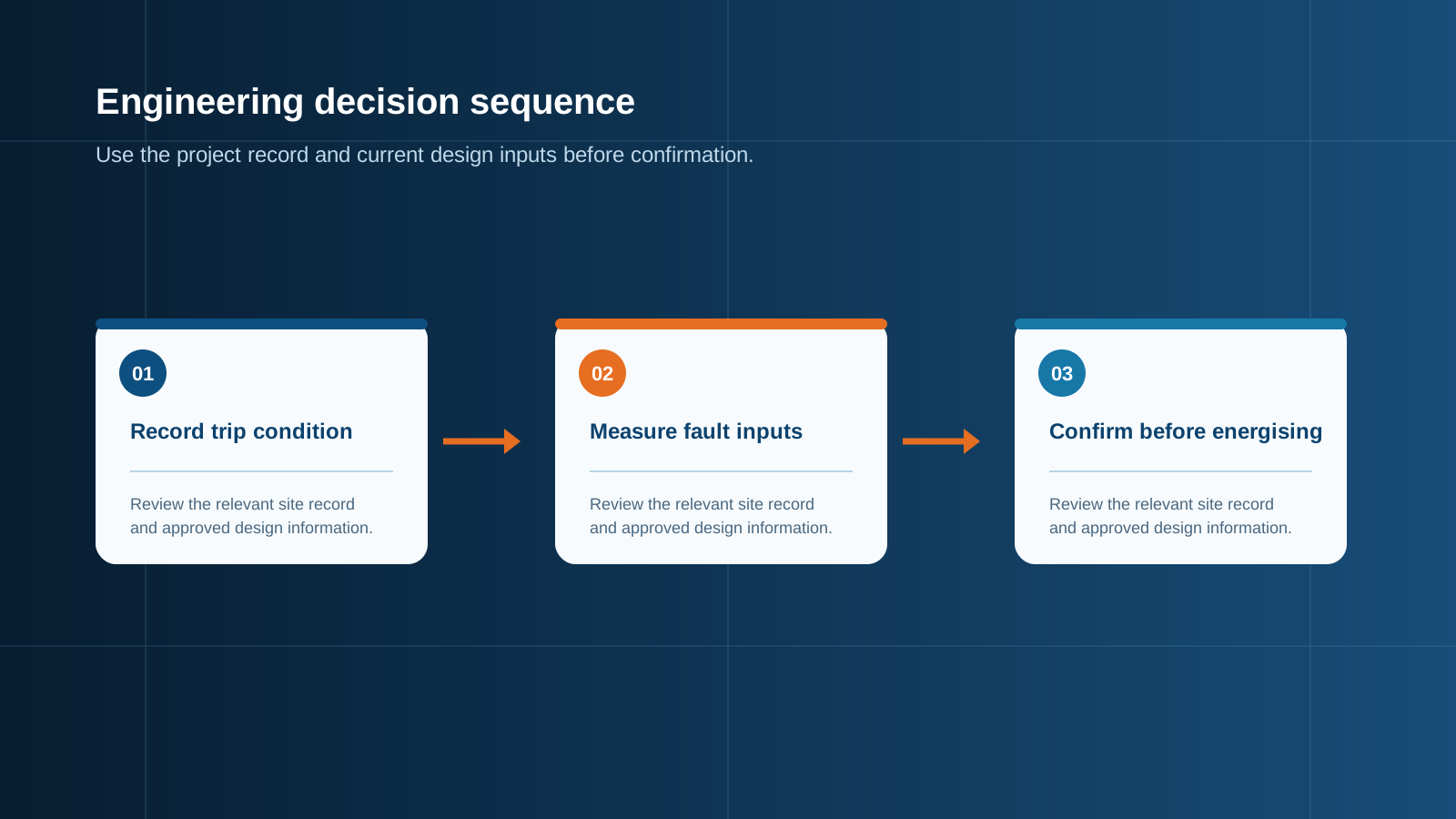
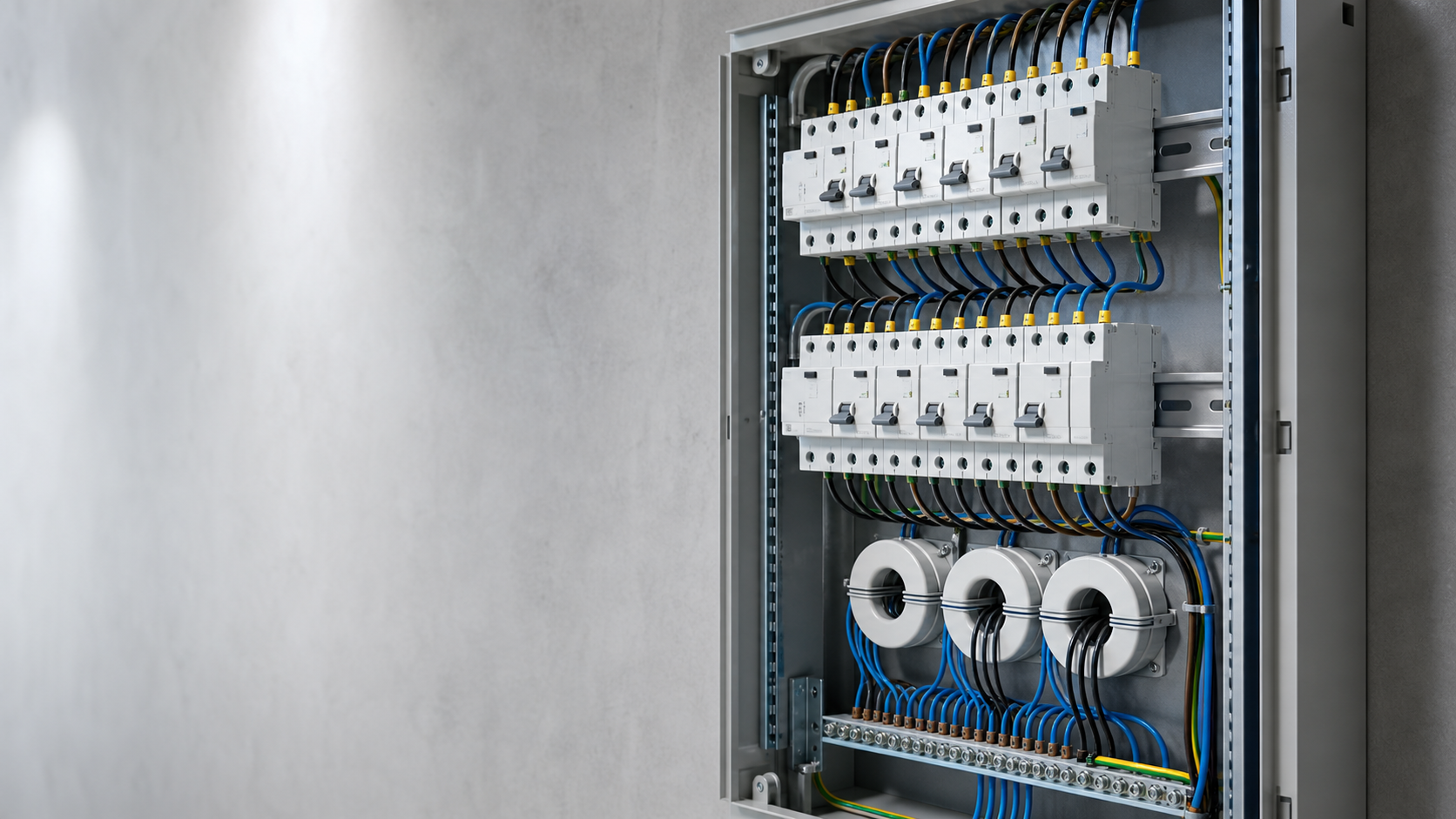
Technical diagram shown at a readable responsive scale.
Wrong rating
A breaker sized below the real string current will trip under normal operation. This is common when a box is reused on a different module, or when bifacial gain lifts Isc above the front-only nameplate. The DC breaker must clear a fault yet carry 1.25x the maximum string Isc continuously without nuisance operation.
- Confirm the string Isc including any bifacial rear gain.
- Check the breaker's rated current and its DC breaking capacity.
- Re-specify rather than oversize blindly — the new rating must still clear a fault.
Overload
Overload means the summed load on the breaker exceeds its continuous rating even without a hard fault. It appears when too many strings feed one output, or when ambient heat forces derating. The fix is to rebalance strings across outputs or to lower the continuous current to within the envelope.
- Tally the input strings against the output breaker rating.
- Apply the site temperature derating factor from the breaker curve.
- Split or re-route strings if the sum exceeds the safe current.
DC arc
A series or parallel DC arc generates high energy at low voltage and can draw enough current to trip the breaker, or quietly erode contacts until another fault appears. Arcs start at loose terminals, damaged insulation or broken conductors. Because DC does not cross zero like AC, an arc is harder to self-extinguish, which is why DC-rated protection and tight Terminals matter.
- Look for pitting or welding at terminal interfaces.
- Smell and infrared check for hidden arc damage.
- Use DC-rated devices and correct torque to remove the arc path.
Step-by-step diagnosis
A safe diagnosis works from the disconnect outward, never live into a fault. Open the DC switch, isolate strings one by one, then test each before closing. This keeps the engineer away from a live arc path and turns a confusing trip into a single identified cause.
- Open the DC disconnect and lock it out.
- Remove all string inputs; reset the breaker with no load.
- Reconnect strings one at a time, measuring current each time.
- The string that trips the breaker is the fault channel.
- Confirm with insulation and clamp tests before repair.
Fix and verify
Fix the root cause — replace the string, re-rate the breaker, re-torque the terminals or add an arc fault safeguard — then verify under load before sign-off. A trip that returns after the repair means a second cause is present, so repeat the isolation rather than resetting again.
- Repair or replace the identified component only.
- Re-torque to the specified value with a calibrated tool.
- Energise and watch the channel through a full irradiance cycle.
- Close out with a logged test result and a dated label.
This is general technical guidance. Confirm final ratings, protection coordination, installation and applicable local requirements against current standards, manufacturer documentation and the approved project design.
Frequently asked questions
Why does a combiner box breaker keep tripping?
Because a fault or a sizing error is present: a shorted string, damaged components, a breaker rated below the string Isc, an overload, or a DC arc. The breaker is reporting the condition, so the cause must be found before resetting.
Can a short circuit cause the trip?
Yes. A shorted string from a cracked module, damaged cable or wet connector presents a low-resistance path that the DC breaker sees as a fault and clears. Isolate the string and measure Voc and Isc to confirm.
Is a wrong breaker rating a common cause?
Yes, especially when a box is reused on a different module or bifacial gain lifts Isc. The DC breaker must carry 1.25x the maximum string Isc; below that it nuisance-trips under normal output.
How do I diagnose a tripping breaker safely?
Open the DC disconnect and lock it out, remove all string inputs, reset the breaker with no load, then reconnect strings one at a time while measuring current. The string that trips is the fault.
How do I fix and verify the fix?
Replace or repair the identified cause, re-torque terminals to spec, then energise and watch the channel through a full irradiance cycle. A trip that returns means a second cause is present.
Discuss your PV combiner requirement
Share the system voltage, string count, inverter interface and installation environment. NEUTRON can review the equipment configuration around your project documentation.
Discuss a projectContinue learning
Explore related technical guidance in Electrical Protection.
Published from the approved Period 09 source package. Technical values and final design decisions must be verified against the current applicable standard, manufacturer documentation and approved project design.