
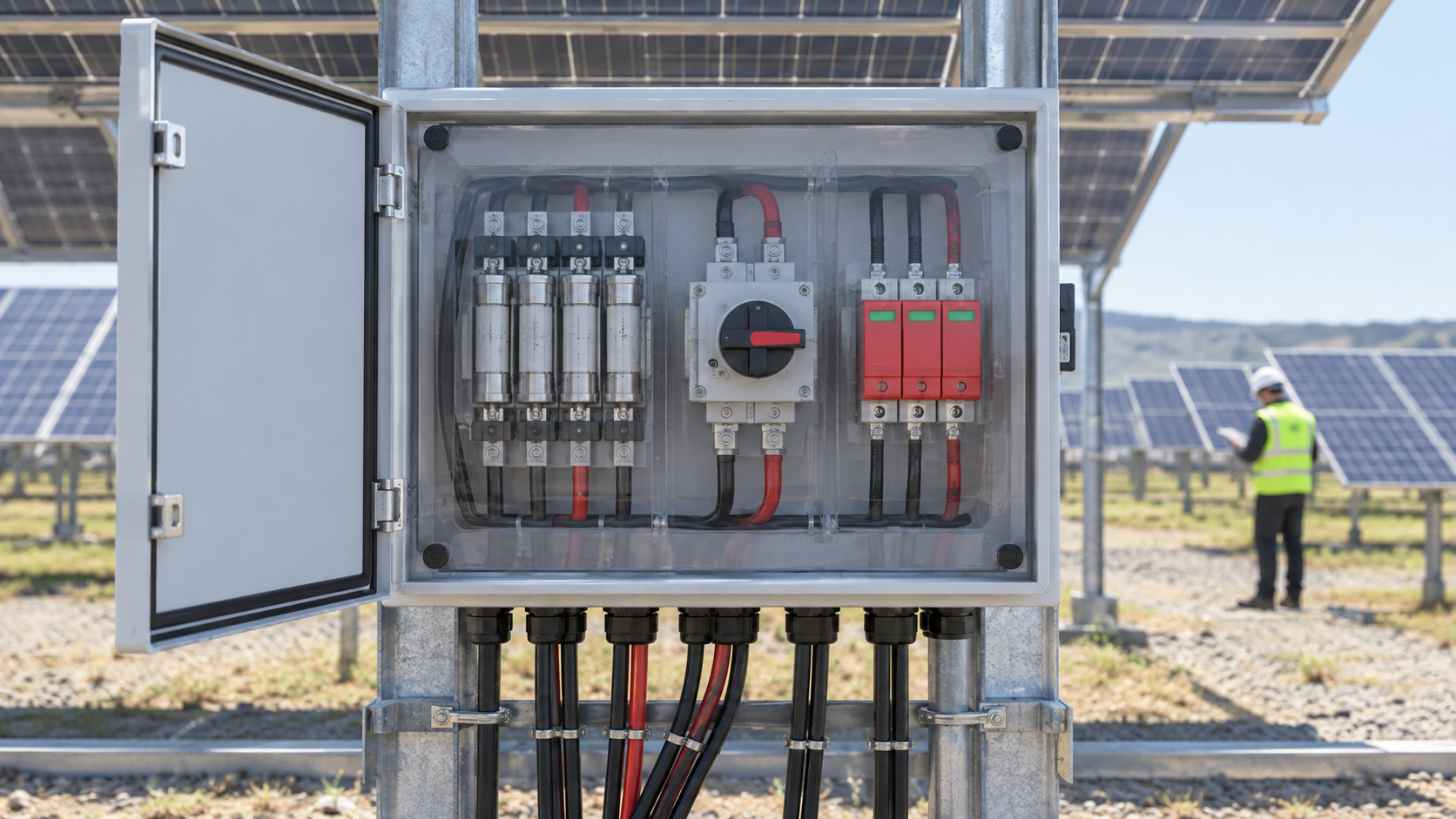
What IEC 60269-6 Actually Specifies
IEC 60269-6 is the product standard that defines gPV fuse-links for photovoltaic applications. It sets out rated voltage, breaking capacity, dimensions, and time-current behavior for fuse-links intended to protect DC circuits supplied by current-limited PV arrays. The document is a component standard, not a system design rule. It describes how a single fuse-link performs under test, not how many strings a combiner box must combine or what total current a busbar must carry.
A gPV fuse-link is defined by its characteristic: it must interrupt the limited short-circuit current available from a PV array while still protecting conductors and connected equipment under overload and fault conditions. The acceptance criteria, temperature rise limits, and breaking-performance requirements apply to the component in isolation.
Product Standard vs System Sizing Rule
System sizing follows separate engineering rules that sit outside IEC 60269-6. The frequently cited 1.25x multiplier applied to string short-circuit current is a system-level aggregation or derating rule drawn from array design practice, not a clause inside the fuse product standard. A fuse-link is selected against its own rated current, breaking capacity, and coordination needs.
Different regulatory frameworks express aggregation differently. One documented system applies 1.56x rated Isc as its rule, which demonstrates that the 1.25x figure is not a universal IEC conclusion and cannot be presented as one. Each project must apply the multiplier mandated by its applicable code and verify it with the responsible authority.
Exceeding 1.25x Does Not Mean Oversizing
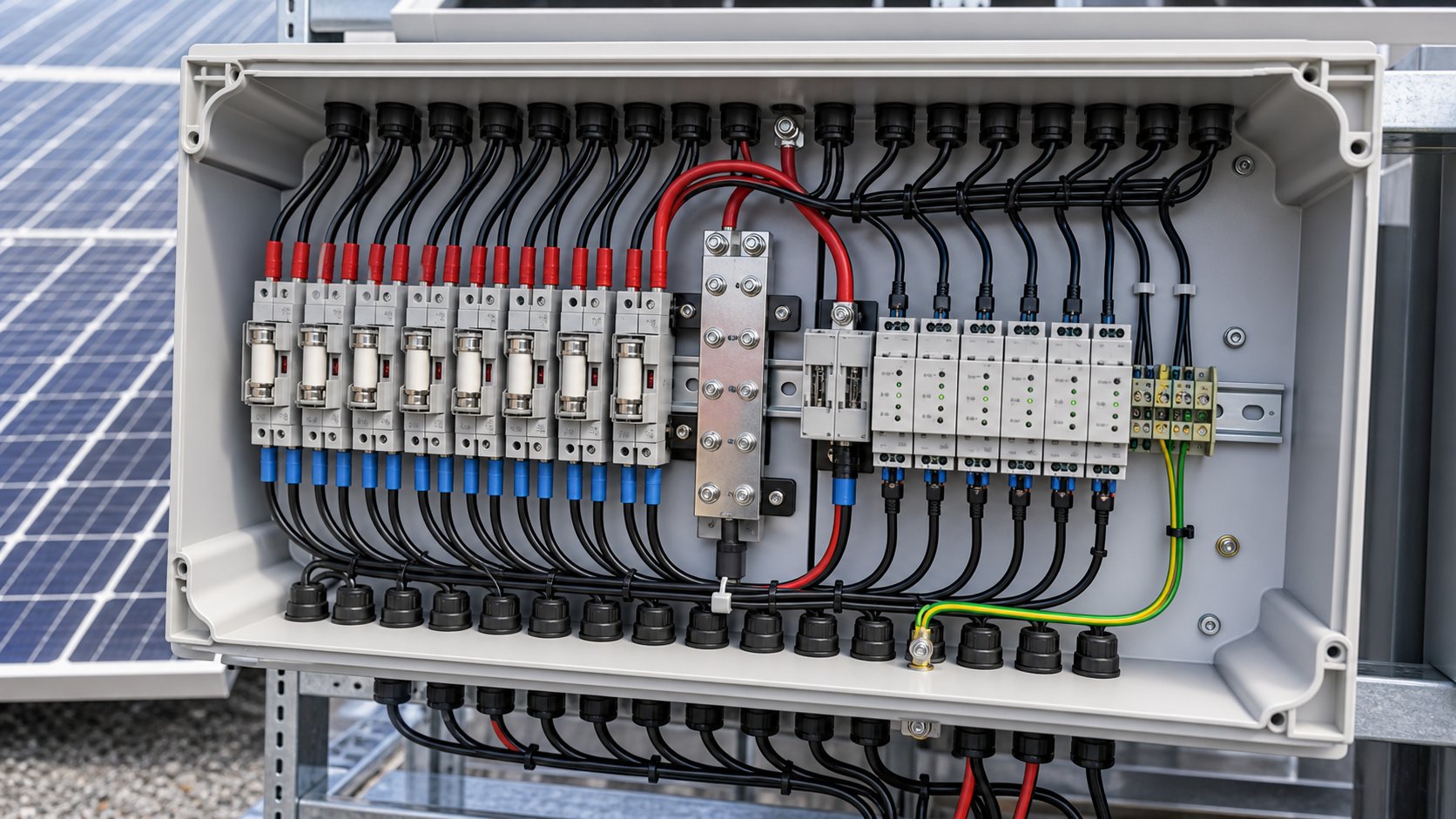
A fuse rating above 1.25x the nominal string Isc is not automatically oversized. The protective device must coordinate with the conductor it protects and with any upstream or downstream protective elements. A higher rating may be required by ambient temperature, connection method, or the need to avoid nuisance opening under normal operating current.
Oversizing is determined by loss-of-protection analysis, not by comparison with a single ratio. Where reverse-current withstand from parallel strings is a concern, the allowable backfeed and the component certified reverse-current rating set the limit. This is a coordination question resolved by the manufacturer data, not by the 1.25x rule.
Time-Current Coordination and Version Control
Fuse selection must respect the time-current characteristic: the fuse must clear faults faster than the protected circuit can be damaged, yet carry normal current without premature aging. Coordination with other protectors is read from the published time-current curves.
Standards are versioned. Always cite the edition in force for the project and verify the fuse-link certificate against that edition. A design valid under one edition may need recheck under a later one. Specific selection values must be verified against approved NEUTRON model datasheets and test reports before procurement.
This article preserves the accepted technical guidance but is not a substitute for the applicable local code, approved model datasheet, test report or a qualified engineer's design review.
Frequently asked questions
Is IEC 60269-6 a system design standard?
No. It specifies gPV fuse-link product requirements only. System sizing follows separate array-design rules and the applicable code for the project.
Does a 1.25x margin make a fuse oversized?
Not necessarily. Oversizing depends on coordination and loss-of-protection analysis, not solely on comparison with the 1.25x figure.
How do I coordinate gPV fuses with other protectors?
Read the published time-current curves and apply the manufacturer coordination table; confirm specific values against approved NEUTRON model datasheets and test reports.
Which standard edition applies?
Use the edition in force for the project, cite it explicitly, and confirm the fuse certificate matches that edition.
Bring the project inputs to the first review.
Share the array layout, ratings, site conditions and documentation requirements for a coordinated review.
Discuss a projectContinue learning
Explore related technical guidance in Electrical Protection.


Published from the accepted Period 13 manuscript (1.1); technical meaning and safety boundaries are retained from the approved source package.