
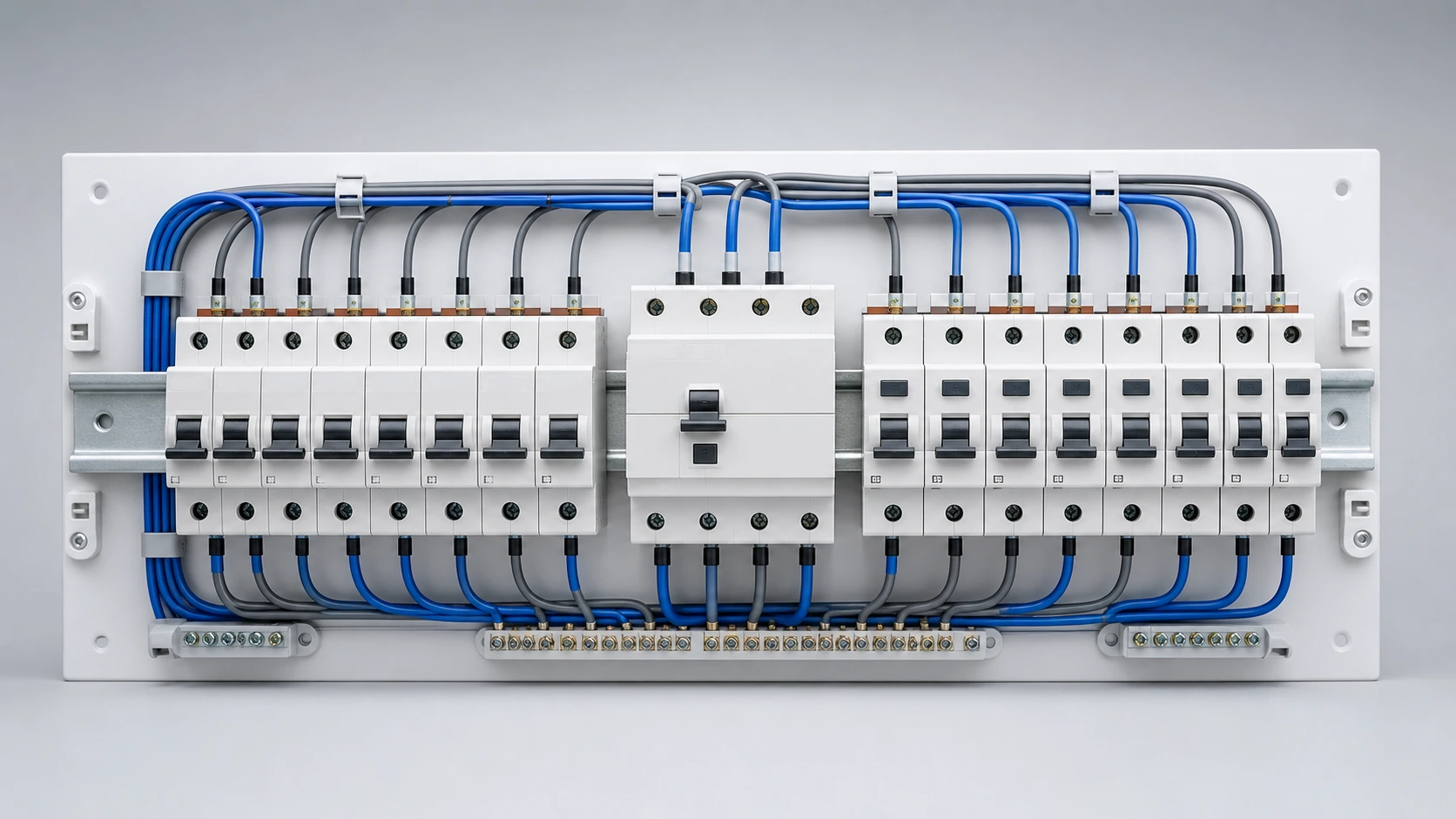
1. Two different jobs, four device names
Confusion between these four abbreviations comes from treating them as four competing products. They are not. They are two protective functions packaged in three ways.
RCD is the generic term for any residual current device. RCCB is a residual current circuit breaker without integral overcurrent protection — it must always be backed by an upstream MCB or fuse. RCBO is a residual current circuit breaker with overcurrent protection built in.
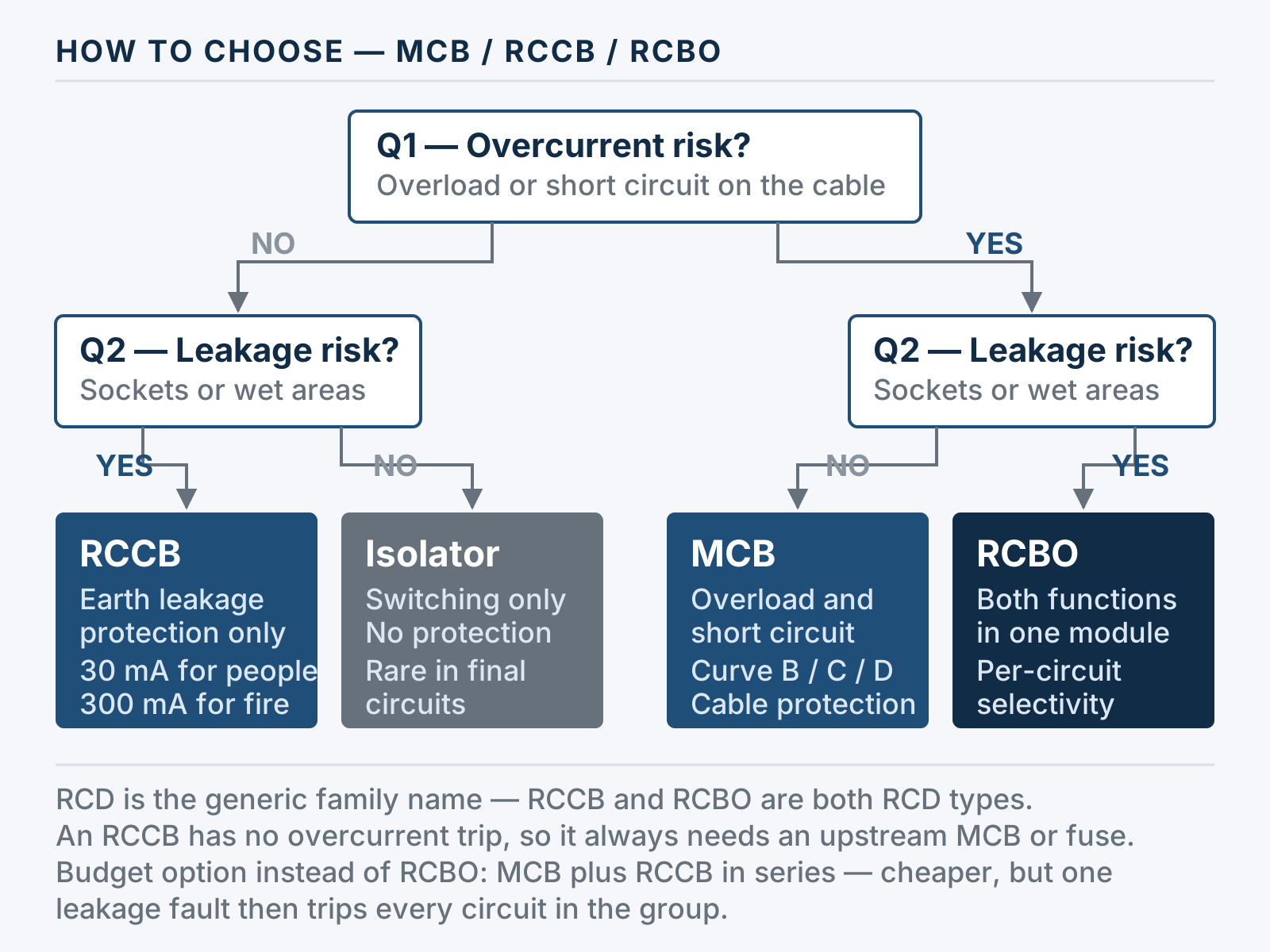
A critical point that costs installers time on site: an RCCB does not protect itself. It has a rated current, not a breaking capacity for overload, so the circuit still needs an MCB in series.
- Overcurrent protection: detects current that is too high for the conductor, including overload and short circuit. Delivered by the MCB.
- Residual current protection: detects current that has left the circuit and is returning through earth, typically through a person or damaged insulation. Delivered by the RCD, whose common physical form is the RCCB.
- Both functions in one module: delivered by the RCBO.
2. MCB: overload and short-circuit protection
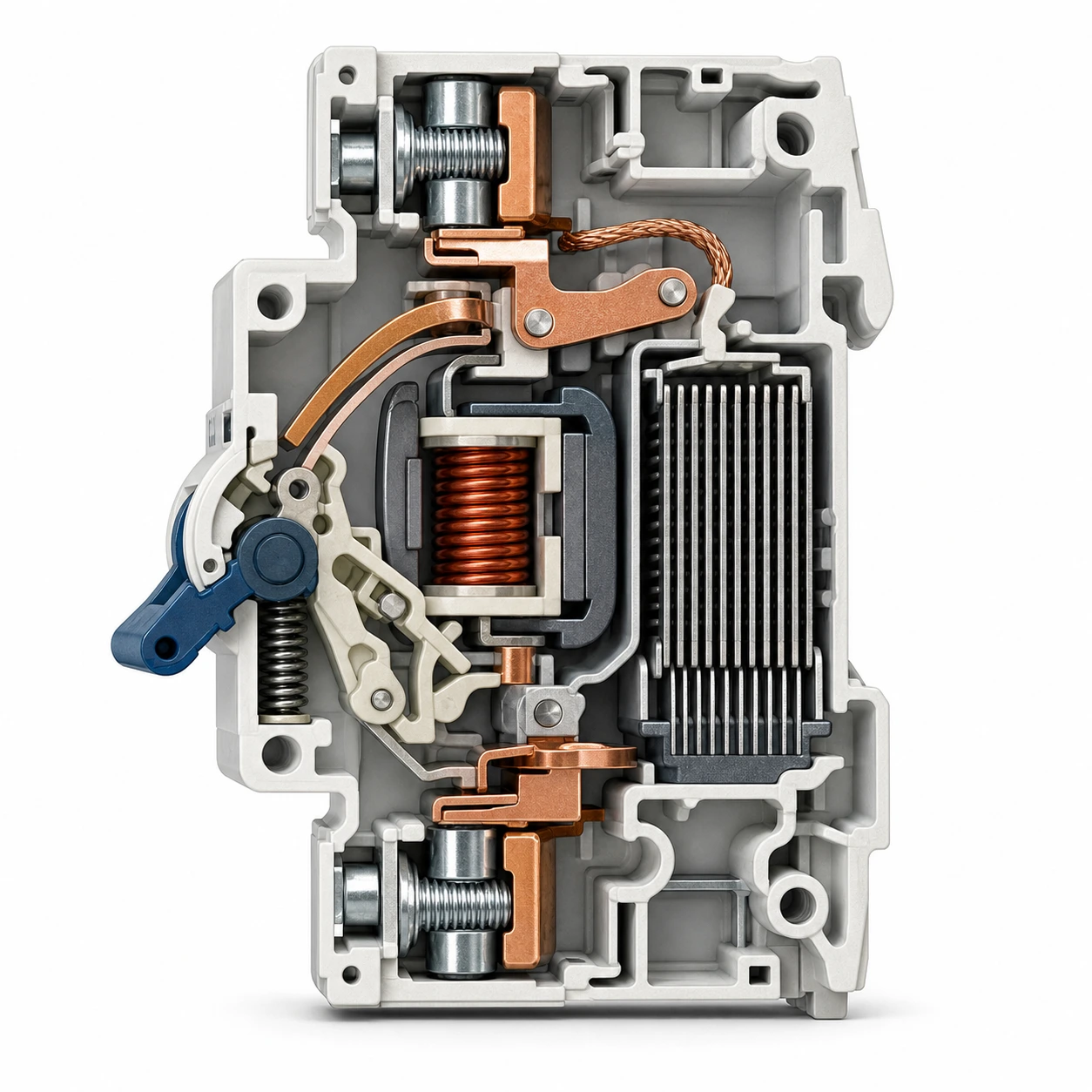
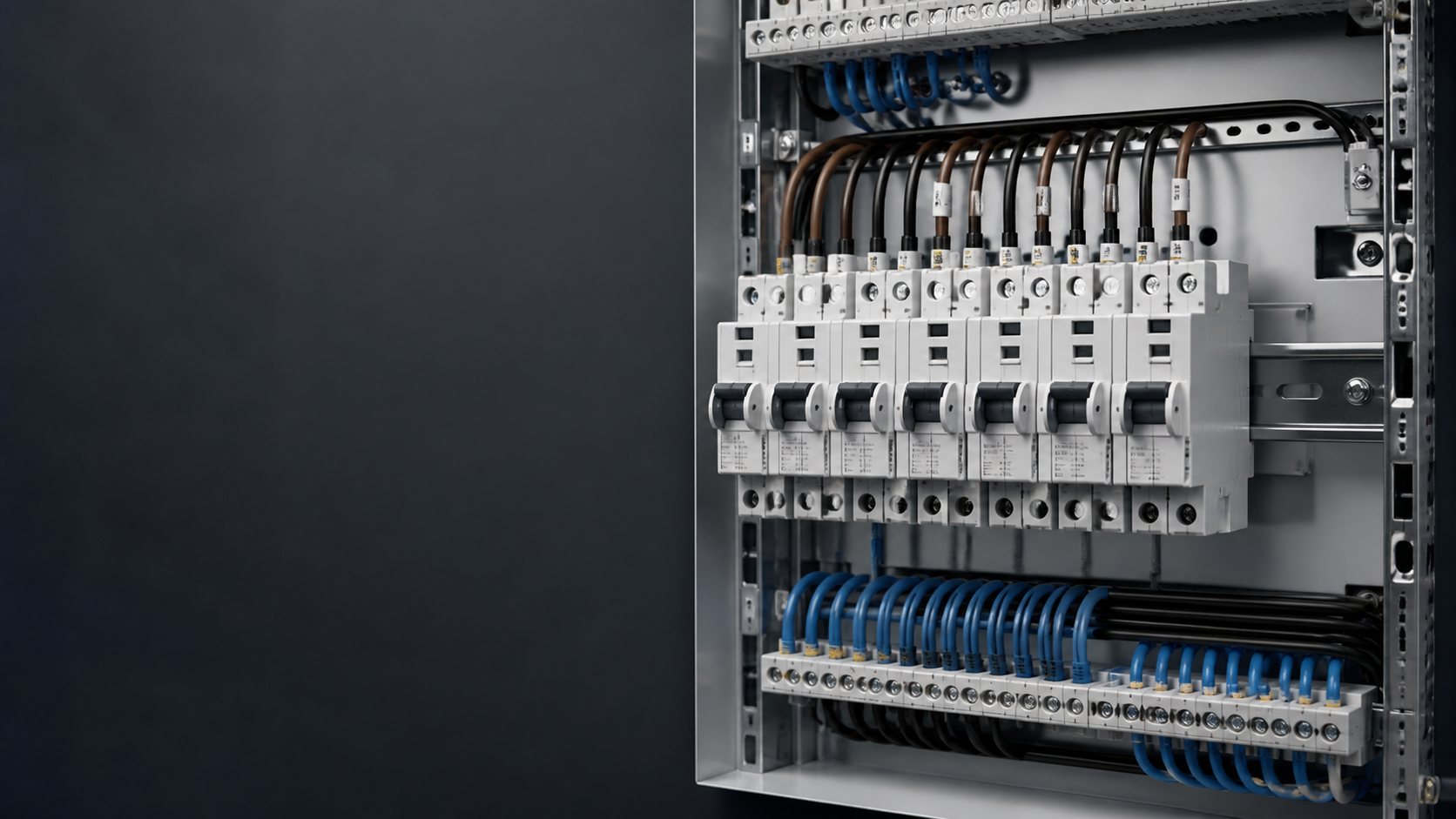
A miniature circuit breaker contains two independent trip mechanisms in one moulded housing: a bimetallic strip that bends with heat and gives inverse time-delay overload protection, and an electromagnetic coil that trips instantaneously on short circuit. An arc chute with steel splitter plates extinguishes the arc and gives the device its current-limiting behaviour.
The NEUTRON DZ47-63 series is representative of the category: AC 50/60 Hz, rated operational voltage 230 V / 400 V, rated current from 1 A to 63 A, available in 1P, 2P, 3P and 4P, with a rated short-circuit capacity of 6000 A, manufactured to IEC 60898-1.
Choosing the wrong curve produces one of two failures: a B curve on a motor circuit trips at every start, while a D curve on a long lighting circuit may not trip fast enough on a remote earth fault. The overload side of the characteristic is standardised: the device must not trip within one hour at 1.13 In, and must trip within one hour at 1.45 In.
| Curve | Instantaneous trip range | Typical application |
|---|---|---|
| B | 3 In < I ≤ 5 In | Resistive loads, lighting, socket circuits, long cable runs |
| C | 5 In < I ≤ 10 In | General mixed loads, small motors, transformers, most commercial boards |
| D | 10 In < I ≤ 50 In | High-inrush loads: motors, welding sets, large transformers, X-ray equipment |
3. RCD and RCCB: protecting people
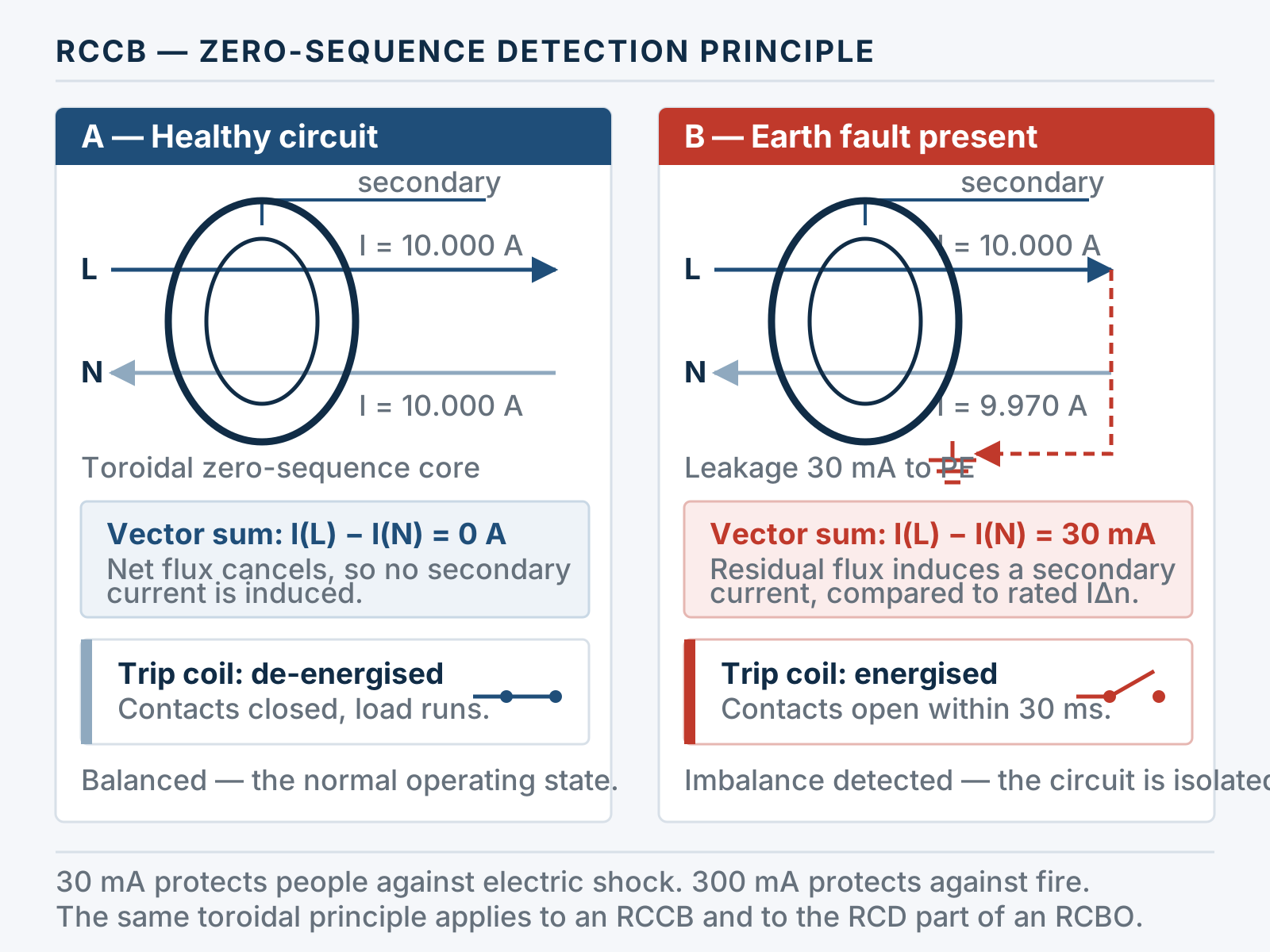
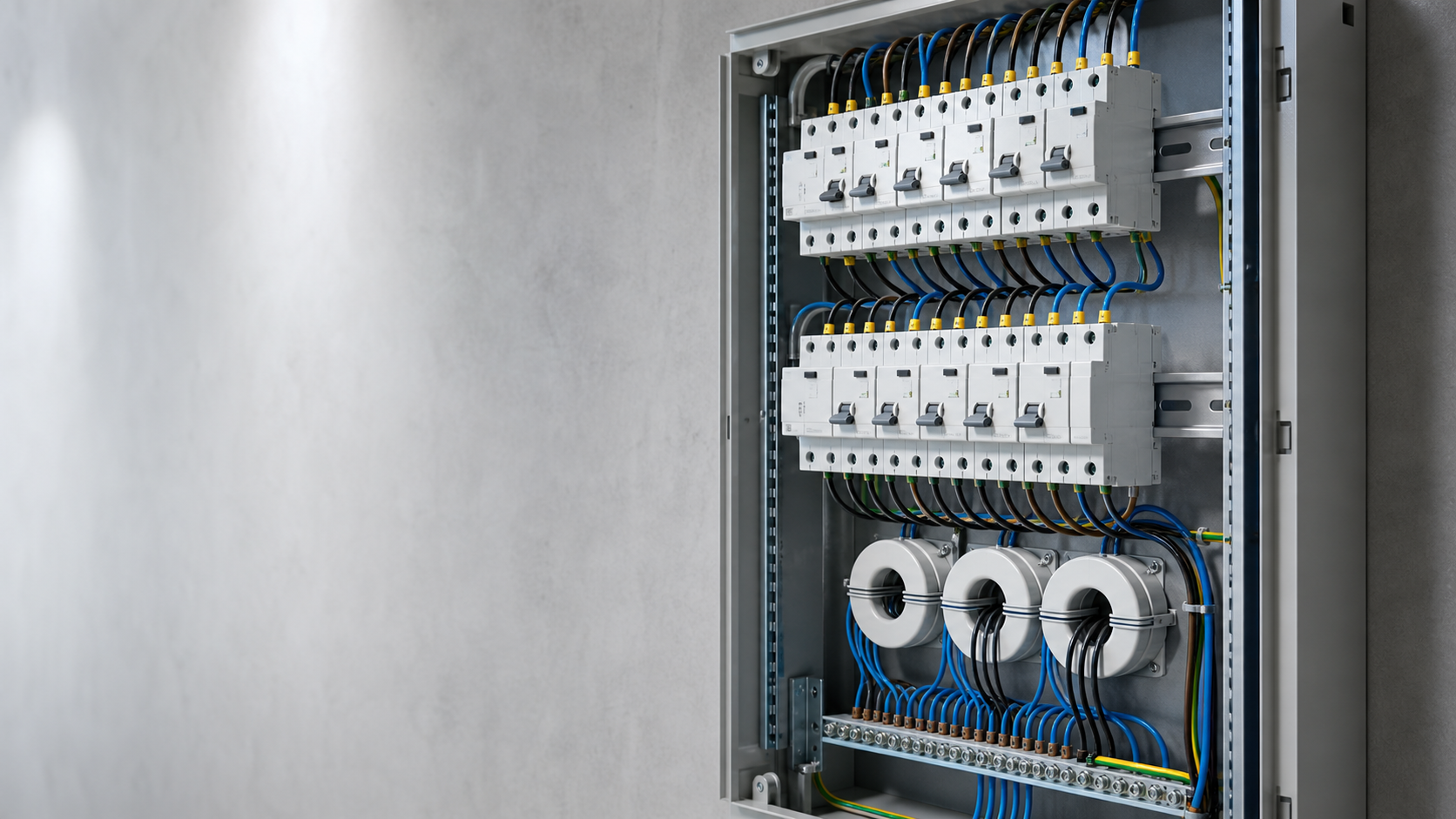
A residual current device sums the currents in all live conductors through a zero-sequence current transformer. In a healthy circuit, what flows out returns, and the sum is zero. If some current escapes to earth, the sum is no longer zero and the device trips.
Sensitivity is stated as the rated residual operating current, IΔn, and the device must not trip below the rated residual non-operating current, IΔno, which is normally half of IΔn.
RCCBs are built to IEC 61008-1. They are available in 2-pole and 4-pole versions and, being purely residual current devices, they carry no overload protection of their own.
Residual current type is as important as sensitivity. A type AC device only detects sinusoidal AC residual current. Modern loads with electronic power supplies produce pulsating DC components, which require a type A device; frequency inverters and single-phase drives may need type F; three-phase inverters, EV charging and photovoltaic systems can produce smooth DC residual current that only a type B device to IEC 62423 will detect.
- IΔn 10 mA and 30 mA: additional protection against electric shock. 30 mA is the standard requirement for socket outlets and portable equipment.
- IΔn 100 mA and 300 mA: fire protection and equipment protection, used on main incomers and on circuits where a lower setting would trip nuisance-wise.
- Time-delayed S type: used upstream to achieve discrimination so that a downstream 30 mA device clears the fault first.
Technical diagram shown at a readable responsive scale.
4. RCBO: both functions in one module
An RCBO is an MCB and an RCD sharing one housing, one operating mechanism and one circuit. It is built to IEC 61009-1.
The NEUTRON DZ47LE-63 series is a current-operated electronic residual current device assembled from a high-breaking-capacity DZ47 miniature circuit breaker and a residual current trip unit comprising a zero-sequence current transformer, an electronic board and the trip actuator.
The advantage of an RCBO is circuit-level discrimination. With one RCCB protecting six ways, a single earth fault in one appliance kills all six. With RCBOs, only the faulty circuit drops out — the difference between a nuisance and a callout for a cold store, a server room or a rented apartment.
| Parameter | Value |
|---|---|
| Standard | IEC 61009-1 (GB 16917.1), CCC certified |
| Rated voltage | 230 V / 400 V, AC 50/60 Hz |
| Frame rated current | 40 A and 63 A |
| Rated current In | 6, 10, 16, 20, 25, 32, 40, 50, 63 A |
| Poles | 1P, 2P, 3P, 3P+N, 4P |
| Rated short-circuit capacity | 6000 A at 230 V and 400 V, cos phi 0.7 |
| Rated residual operating current | 30, 50, 100 mA (300 mA on N versions) |
| Rated residual non-operating current | 15, 25, 50, 150 mA |
| Trip curve | C or D |
| Operating principle | Current operated, electronic type |
5. Side-by-side comparison
Selection in four steps: (1) size the MCB or RCBO to the cable, not to the load; (2) choose the curve from the inrush behaviour of the load; (3) confirm the rated short-circuit capacity exceeds the prospective fault current at that point; (4) choose residual current sensitivity and type from the load technology and the local regulation.
| Feature | MCB | RCD / RCCB | RCBO |
|---|---|---|---|
| Overload protection | Yes | No | Yes |
| Short-circuit protection | Yes | No | Yes |
| Earth leakage protection | No | Yes | Yes |
| Protects | Cable and equipment | People and property | Cable, equipment and people |
| Product standard | IEC 60898-1 | IEC 61008-1 | IEC 61009-1 |
| Key ratings | In, curve B/C/D, Icn | In, IΔn, type AC/A/F/B | In, curve, Icn, IΔn, type |
| Needs upstream protection | No | Yes | No |
| Fault isolates | One circuit | All circuits behind it | One circuit |
| Typical width | 1 module per pole | 2 or 4 modules | 1 to 2 modules per pole |
| Relative cost per circuit | Lowest | Low when shared | Highest per way, lowest downtime |
How to choose the protection function
Use the circuit function as the first filter. The final choice still depends on the rated current, breaking capacity, residual-current type and the applicable wiring rules.
Scroll horizontally to read the full diagram.
6. Installation mistakes and larger installations
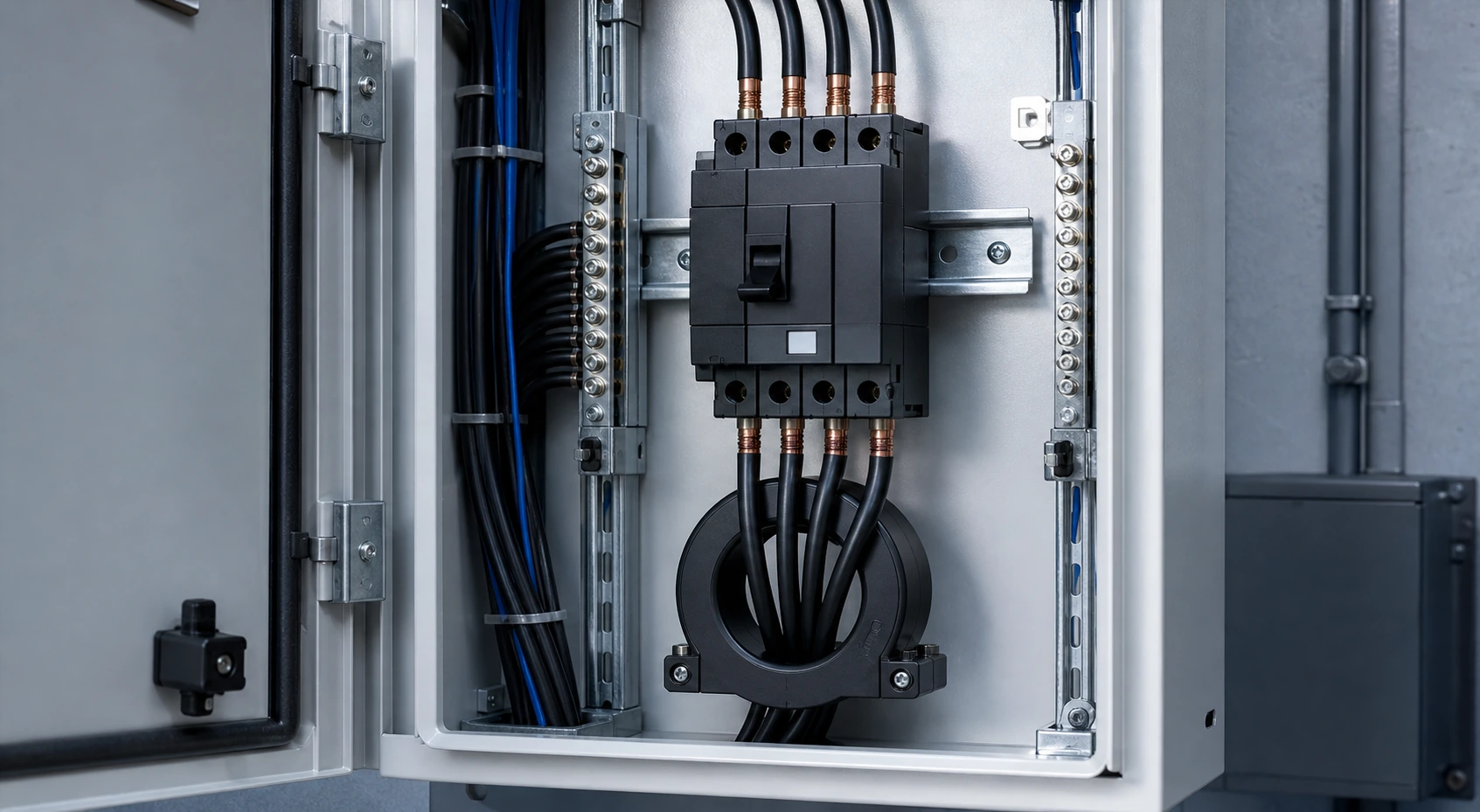
Above the miniature range, the same functions appear in larger formats. Moulded case residual current circuit breakers to IEC 60947-2 Annex B cover ratings to 800 A for main feeders, and electronic residual current protection with adjustable settings, leakage delay and auto-reclosing is used on TT distribution networks where remote sites must recover without a site visit. NEUTRON supplies these devices individually and installed in low voltage assemblies verified to IEC 61439-1/-2.
- Sharing a neutral between circuits. The most common cause of unexplained RCD tripping. Each residual current device needs its own dedicated neutral, taken from its own terminal.
- Fitting an RCCB with no upstream overcurrent device. The RCCB will not survive the fault it is asked to pass.
- Using type AC devices on electronic loads. Pulsating DC residual current can blind a type AC device, so it fails to trip when it is needed. Specify at least type A for circuits with electronic power supplies.
- Stacking too many circuits behind one RCCB. Standing leakage from filters and drives adds up; several appliances at 3 mA each will trip a 30 mA device with no fault present.
- Never pressing the test button. The T button confirms the tripping mechanism only. Quarterly testing is a maintenance requirement, not a suggestion.
This is general technical guidance, not a substitute for local wiring regulations, the applicable standard, product datasheets or a qualified engineer's design review. Confirm ratings, certification evidence, protection coordination and final configurations for the actual project and destination market.
For a device schedule or a complete low-voltage assembly review, start with the NEUTRON product families and the project solution path. Confirm the approved datasheet, applicable standard edition and destination-market requirements before release.
Frequently asked questions
Can I use an RCCB instead of an MCB?
No. An RCCB detects earth leakage only; it has no overload or short-circuit protection and must be installed downstream of an MCB or fuse. If you want both functions in one device on one circuit, use an RCBO.
Is an RCD the same thing as an RCCB?
RCD is the generic term for any residual current device. RCCB is the specific product built to IEC 61008-1 that provides residual current protection without integral overcurrent protection. An RCBO is also an RCD, built to IEC 61009-1, with overcurrent protection included.
Should I fit one RCCB for the whole board or an RCBO per circuit?
One RCCB is cheaper but a single earth fault disconnects every circuit behind it. RCBOs cost more per way and give circuit-level discrimination, so only the faulty circuit trips. For commercial, industrial, cold storage and rental installations, RCBOs are usually the better economic choice once downtime is counted.
What residual current rating should I choose?
30 mA for additional protection of socket outlets and portable equipment, 100 mA or 300 mA for fire protection and main incomers, and time-delayed S types upstream to achieve discrimination. Local wiring regulations set the mandatory values for each circuit category.
What is the difference between type AC, A, F and B residual current devices?
Type AC detects sinusoidal AC residual current only. Type A also detects pulsating DC. Type F adds composite and mixed-frequency residual currents from single-phase drives. Type B, to IEC 62423, additionally detects smooth DC residual current and is required for many EV charging, photovoltaic and three-phase inverter installations.
Why does my RCD trip with no obvious fault?
The usual causes are a shared or transposed neutral between circuits, accumulated standing leakage from several electronic loads behind one device, moisture in an outdoor circuit, or a type AC device blinded by pulsating DC. Split the circuits, verify each neutral individually and confirm the correct residual current type.
Request a Protective Device Schedule
Send your circuit schedule, prospective fault current and destination-market regulations, and NEUTRON can review the required ratings, curves, residual current types and quotation scope.
Request a quoteContinue learning
Explore related technical guidance in Electrical Protection.
Technical note: this article follows the supplied NEUTRON source draft. Product parameters, standards, certification evidence, protection coordination and final configurations must be confirmed against the approved product documentation and applicable local requirements.