

1. Critical off-grid load
A typical clinic solar system must sustain a vaccine cold-chain fridge, consultation lighting and sometimes a water pump. Because the fridge is the life-safety load, the protection design prioritises clean isolation and fast, selective fault clearing.
2. NEUTRON DC protection chain
- Roof or ground combiner box collecting the strings with individual gPV fuse protection.
- DC isolation switch for safe maintenance of the array.
- DC surge protective device matched to the system voltage (IEC 61643-31).
- Conductor and busbar rating verified for the fused continuous current.
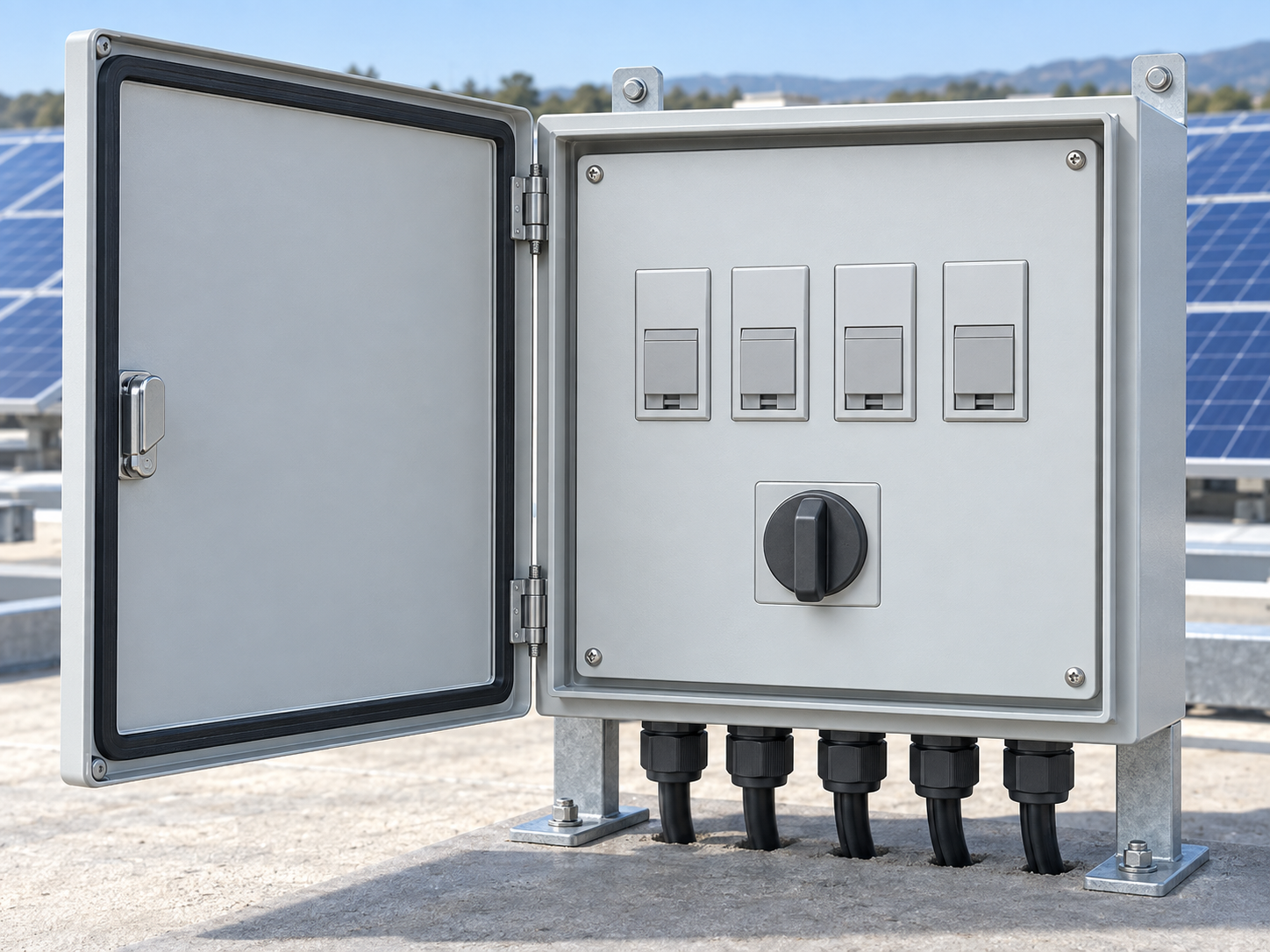
3. AC side: RCCB or RCBO
The inverter output feeds an AC distribution board where NEUTRON installed RCCB or RCBO protection for person shock safety. Where the board also carries the inverter smooth-DC leakage path, a Type B RCBO was selected so the residual-current protection stays effective.

4. Coordination with operator-supplied inverter and battery
NEUTRON did not supply the inverter or battery. The protection scope was coordinated to the operator equipment ratings: the combiner and DC fuse limits matched to the array the inverter expects, and the AC board sized to the inverter output and priority loads.
5. Reliability and maintenance
- Labelled, simple boards so local technicians can isolate and test.
- RCBO test buttons confirmed during commissioning.
- Spare gPV fuses stocked locally.
- Insulation-resistance check before each rainy-season recommissioning.
6. Outcome
With the DC and AC protection coordinated, the clinic systems rode through local faults without losing the cold-chain load to a protection error. The repeatable protection design is the reference template for similar health and education facilities.
Final ratings, coordination, installation and applicable local requirements must be verified against current standards, manufacturer documentation and the approved project design.
Frequently asked questions
Why does DC protection matter for clinic solar?
The array can present fault current and smooth DC that AC breakers will not clear correctly; gPV fuses and a DC-rated isolator contain the DC side before the inverter.
What RCD type for medical solar systems?
Where the inverter can inject smooth DC, a Type B RCBO is used so residual-current protection stays effective; otherwise a Type A RCCB is applied per the local wiring rule.
How does NEUTRON coordinate with the operator?
NEUTRON matches the combiner and DC fuse limits to the array the inverter expects and sizes the AC board to the inverter output and priority loads.
Which standards apply?
IEC 60269-6, IEC 61643-31, IEC 60947-2, IEC 61008/61009 and IEC 61439.
Review the essential-load protection boundary.
Share the array, inverter, battery and priority-load inputs for a coordinated off-grid facility review.
Discuss a projectContinue learning
Explore related technical guidance in Power Distribution.



Published from the approved Period 12 source package; project, technical and standards statements are retained from the supplied publication content.