
How to Read an IP Code
IP means Ingress Protection under IEC 60529. The code uses the letters IP followed by two characteristic numerals and, optionally, additional letters. In IP65, the 6 means dust tight and the 5 means protection against water jets from any direction.
- Each digit is independent and should be read separately.
- X can replace a digit where that characteristic has not been specified or tested.
- The solids scale is cumulative, but immersion levels 7 and 8 are different tests from jetting levels such as 5 and 6.
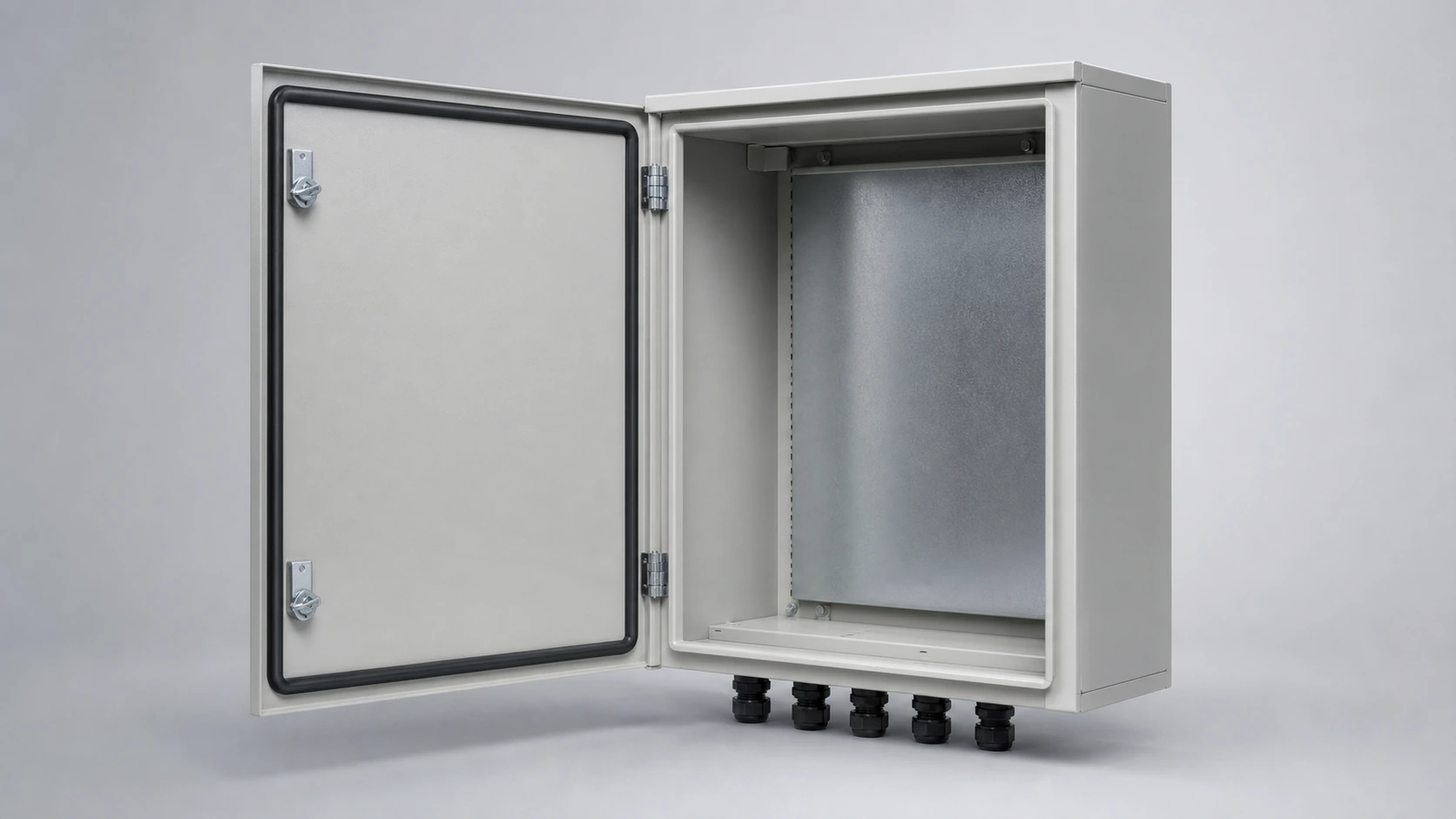
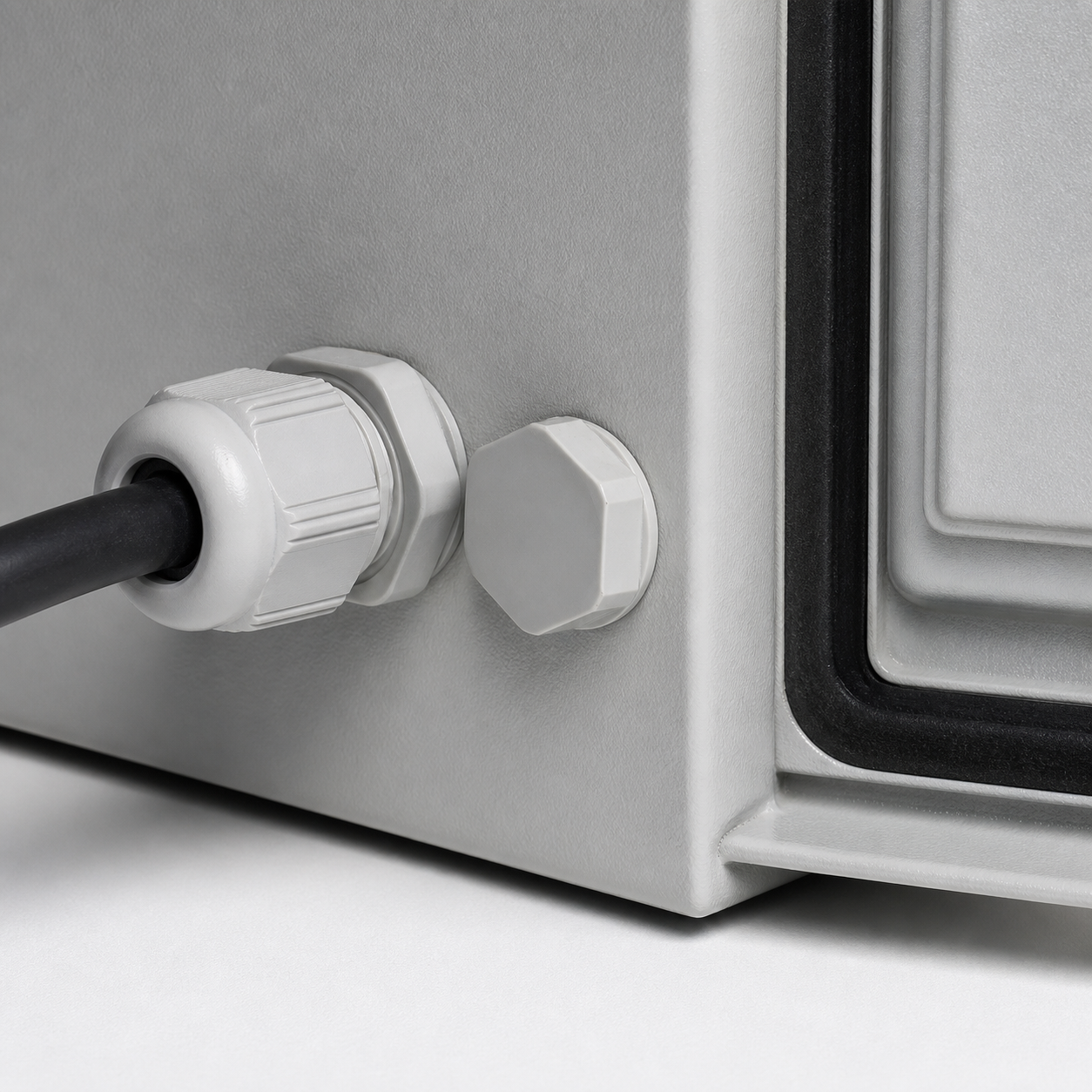
- Ask whether the rating applies to the complete assembly with glands, gaskets, windows and ventilation fitted, or only to the empty shell.
First Digit: Solids and Access Protection
The first characteristic numeral covers both foreign-object ingress and access to hazardous internal parts. The source guide distinguishes IP5x, where limited dust ingress is allowed if operation is not impaired, from IP6x, where the enclosure is dust tight.
| Digit | Object protection | Access protection |
|---|---|---|
| 0 | No protection | No protection |
| 1 | Objects 50 mm and larger | Back of hand |
| 2 | Objects 12.5 mm and larger | Finger |
| 3 | Objects 2.5 mm and larger | Tool |
| 4 | Objects 1.0 mm and larger | Wire |
| 5 | Dust protected | Wire |
| 6 | Dust tight | Wire |
Second Digit: Water Protection
The second numeral describes water exposure using defined flow rates, pressures, durations and nozzle geometries. IP54 is associated with splashing water, IP65 with water jets, and IP66 with powerful water jets. IP67 and IP68 address immersion, which is a different mechanism.
| Digit | Protection against | Typical test condition |
|---|---|---|
| 0 | No protection | None |
| 1–4 | Drips, tilted drips, spray and splashing | Defined flow and enclosure positions |
| 5 | Water jets | 6.3 mm nozzle, 12.5 L/min |
| 6 | Powerful water jets | 12.5 mm nozzle, 100 L/min |
| 7 | Temporary immersion | 1 m depth for 30 minutes |
| 8 | Continuous immersion | Depth and duration agreed by user and manufacturer |
| 9 | High-pressure, high-temperature jets | Defined high-pressure wash-down test |
Choosing an IP Class for the Installation
Start with the environment instead of defaulting to the highest number. Outdoor mounting, wind-driven dust, cleaning regime, water pooling, condensation and internal heat all affect the practical enclosure decision.
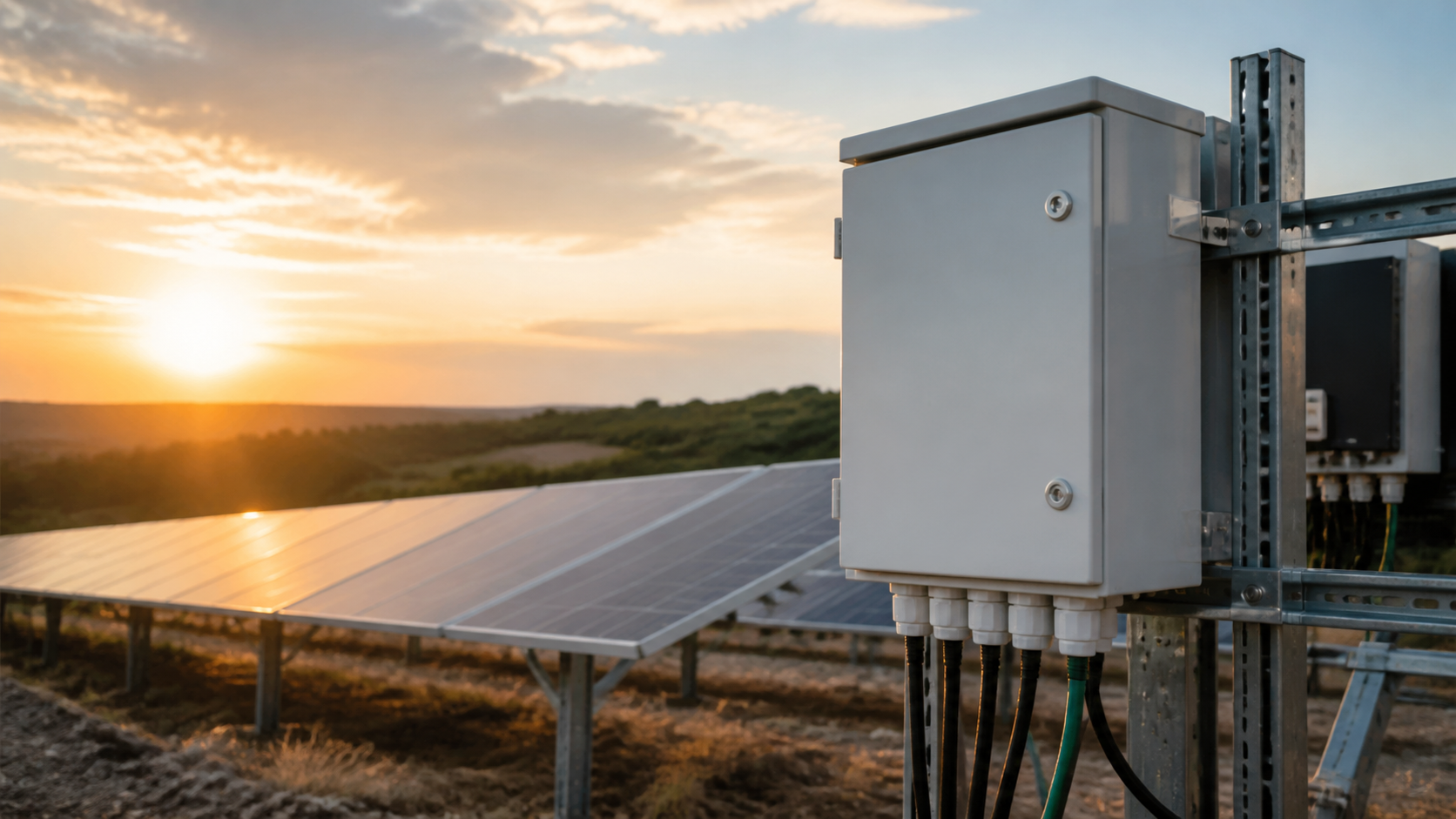
- Use IP54 as a baseline for sheltered outdoor positions and move to IP65 where direct rain, hose cleaning or wind-driven dust is realistic.
- Use IP6x where cement dust, grain dust, textile fibre, sand or coastal aerosol can affect contacts and electronics.
- Consider IPx7 where equipment can be flooded or temporarily submerged; do not assume IPx7 proves IPx6 jetting resistance.
- Check thermal calculations: sealed high-IP enclosures shed heat less readily and may need more volume, cooling or a heat exchanger.
- Address condensation with a pressure-equalising membrane vent or anti-condensation heater where appropriate.
What an IP Rating Does Not Tell You
IP covers solid ingress with access protection and water ingress. It does not by itself specify impact strength, corrosion, chemical resistance, UV stability, temperature range, arc containment or ageing performance.
- Impact resistance is covered separately by IK ratings under IEC 62262.
- Corrosion resistance depends on material and coating; coastal service may require a suitable coating system or stainless steel.
- Gaskets, hinges and cable glands age, so maintenance must preserve the original sealing arrangement.
- Switchgear assembly protection and internal arc requirements need their own IEC 61439 review.
An IP code is a test result, not a complete environmental specification. Confirm material, coating, UV, chemicals, thermal rise, impact, internal arc and maintenance requirements for the actual site.
Frequently asked questions
What does IP65 mean?
The first 6 means dust tight and protected against access to hazardous parts. The second 5 means protected against water jets from any direction under the defined IEC 60529 test.
Is IP67 better than IP65?
Not in every respect. IP67 adds temporary immersion, but it does not automatically prove IPx6 jetting resistance. Select a dual rating when both exposures must be demonstrated.
What is the difference between IP54 and IP65?
IP54 allows limited dust ingress and protects against splashing water. IP65 is dust tight and protects against directed water jets, making it more suitable for exposed outdoor or wash-down positions.
Does IP cover impact resistance?
No. Mechanical impact is specified separately with the IK code under IEC 62262. Corrosion, chemical exposure, UV and temperature also need separate specification.
Can a higher IP rating cause problems?
Yes. Sealing can increase internal temperature rise and can contribute to condensation during temperature cycling. Check the thermal design and use an appropriate vent or heater where required.
Match the Enclosure to the Site
Send the mounting location, airborne contaminants, cleaning regime, ambient temperatures, water exposure and destination-market requirements for an IP and material recommendation.
Request a quoteContinue learning
Explore related technical guidance in Power Distribution.
Source DOCX: NEUTRON_PUBLISH_ip-rating-guide-iec-60529_v1.0.docx. IP class and complete-assembly evidence require confirmation for the final enclosure configuration.