
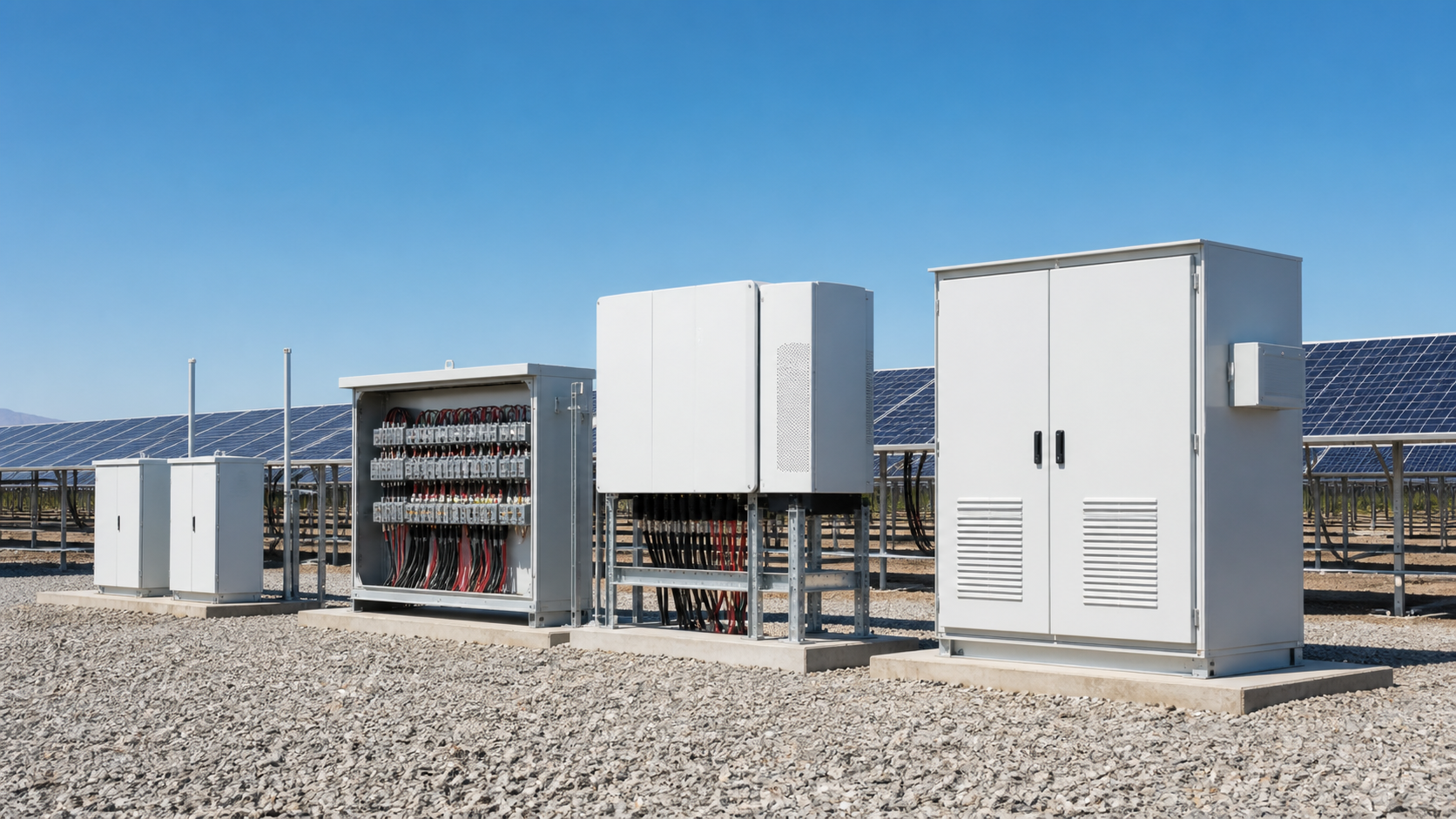
1. Why selection evidence matters
Large实证 platforms compare equipment under real outdoor stress so owners can choose on data rather than brochures. The consistent lesson is that the DC-side and grid-interface hardware decides both availability and lifetime cost.
For the parts NEUTRON supplies, the selection question is about coordination, environment class and serviceability, not just price.
2. Reliability versus first cost
The cheapest enclosure can become the most expensive when a single fault idles a whole string. Reliability is better measured as avoided downtime and avoided truck rolls over the plant life.
A sound selection balances rated duty, environmental protection and the ease of finding a fault quickly.
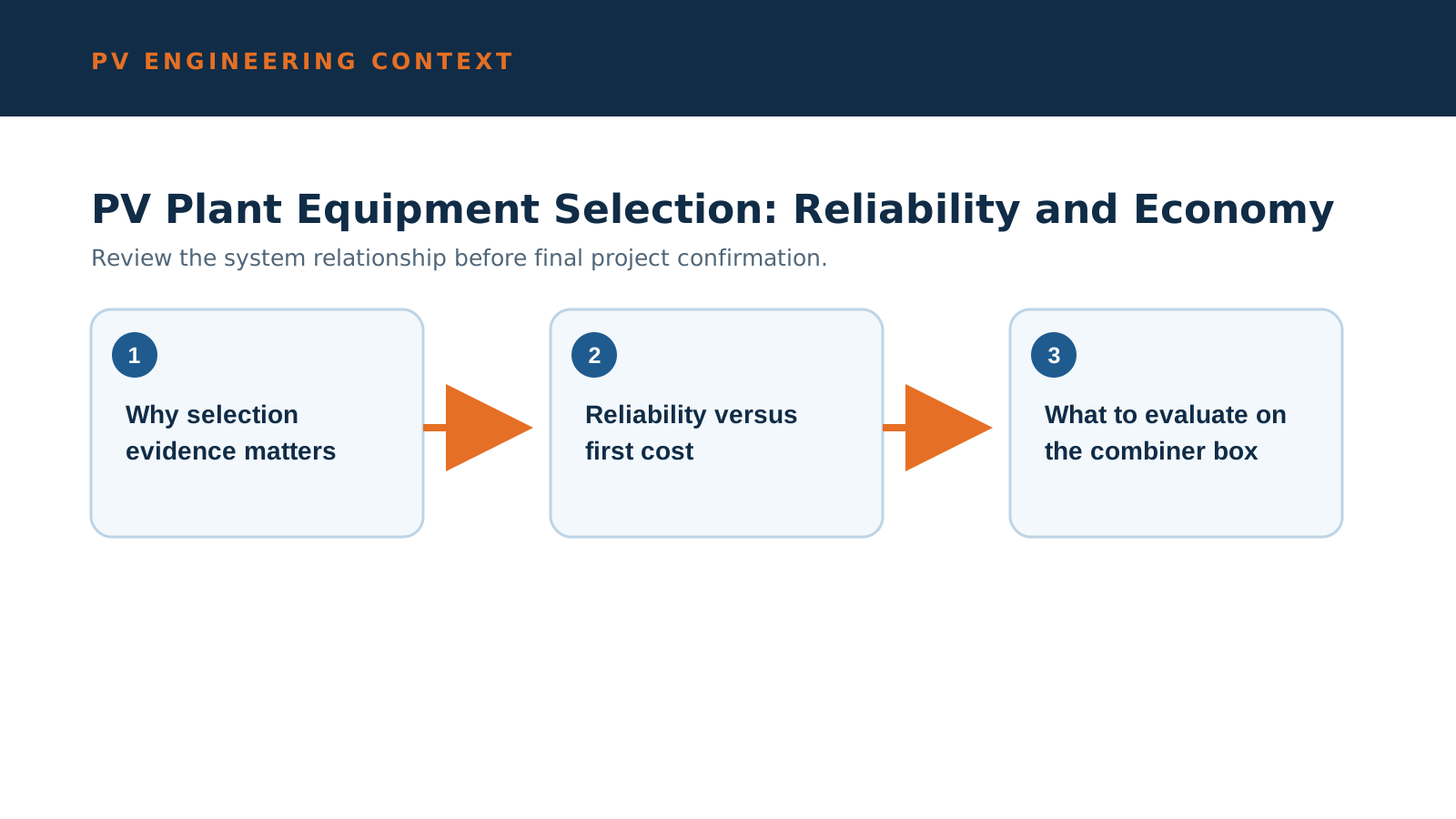
Technical diagram shown at a readable responsive scale.
3. What to evaluate on the combiner box
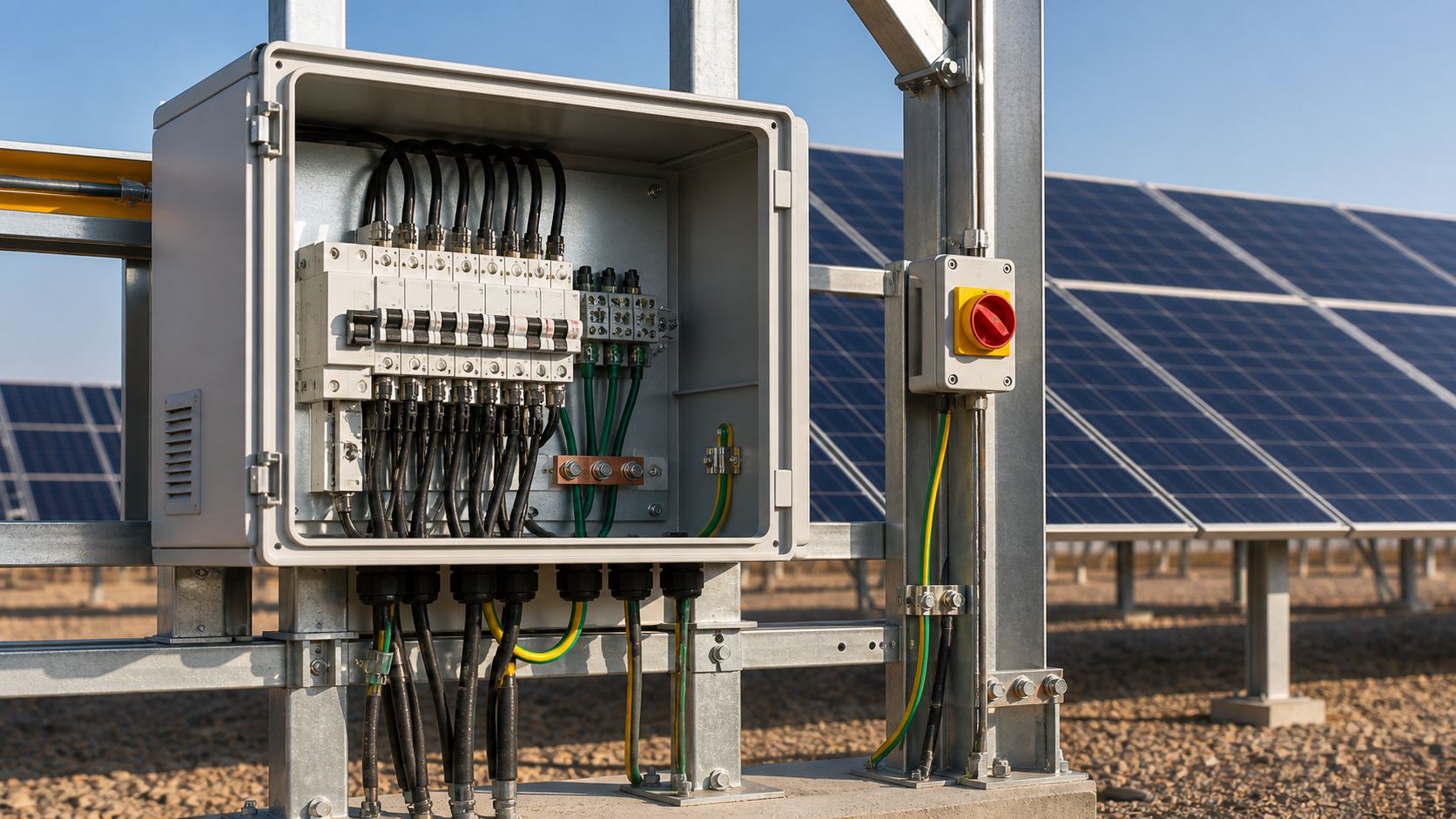
Look at string fuse rating, disconnect type, surge protection and the isolation scheme. A combiner that is hard to monitor hides faults; one with measurement shortens repair time.
Confirm the enclosure class, the conductor rating and the coordination between the fuse and the downstream protection.
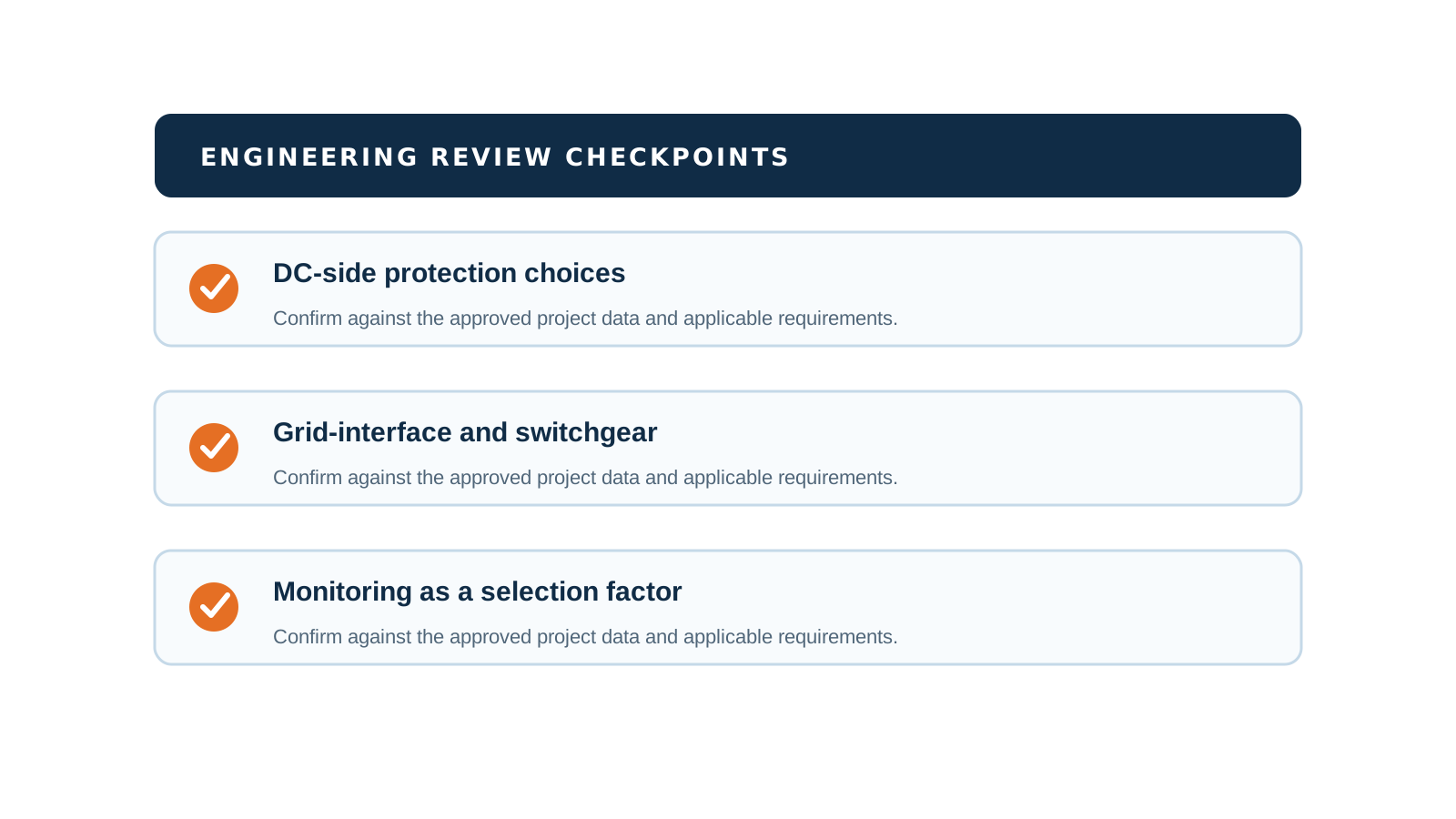
4. DC-side protection choices
DC protection covers isolation, overcurrent and surge. The right combination keeps a fault local instead of letting it spread to the array.
NEUTRON DC control and protection equipment is specified so isolation, fusing and surge protection act as one coordinated assembly.
5. Grid-interface and switchgear
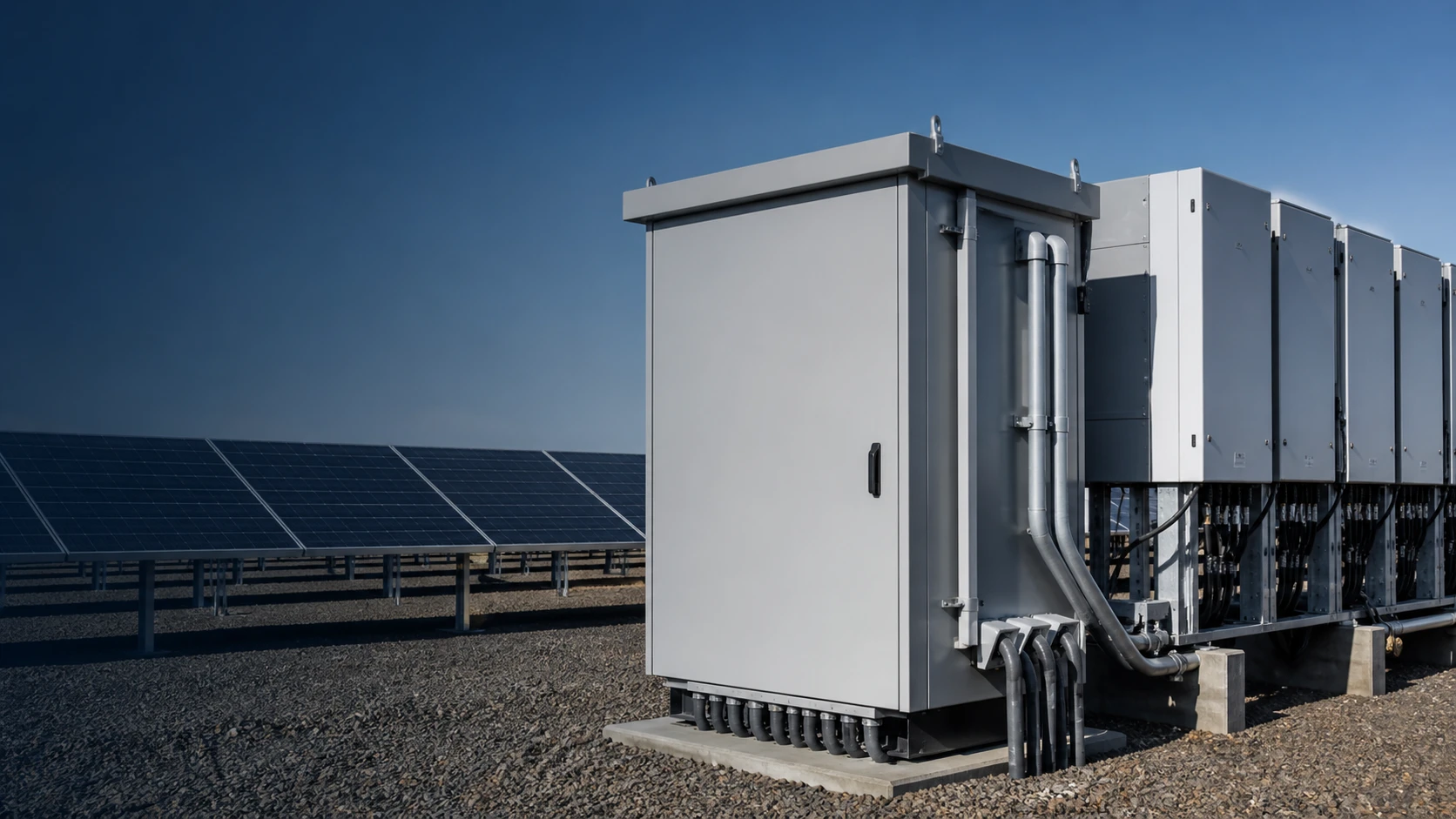
The grid-tie cabinet and low-voltage switchgear handle the network interface, metering and isolation. On constrained feeders these must suit bidirectional power and coordinated protection.
Select the disconnecting means and overcurrent devices together with the combiner, not in isolation.
Technical diagram shown at a readable responsive scale.
6. Monitoring as a selection factor
Equipment that reports its own state turns a silent enclosure into a diagnostic node. Monitoring is no longer optional where availability is contracted.
A combiner with per-string measurement supports warranty claims and performance analysis from day one.
7. Economy measured as LCOE
Levelized cost of energy captures both capital and lost generation. A small saving on hardware that raises fault time can raise LCOE more than it lowers capex.
Select for the full lifetime, weighting availability and serviceability alongside purchase price.
8. Specification checklist
Confirm environment class, rated duty, protection coordination, monitoring points and service access before release. Document the rationale so commissioning can verify it.
NEUTRON supports the discussion around DC-side and grid-interface equipment selection for PV plants.
This guide supports an initial technical review. Final ratings, standards, protection coordination, monitoring interfaces and configuration must be confirmed for the actual project requirement.
Frequently asked questions
What does equipment selection affect most?
It drives both availability and levelized cost of energy, because DC-side and grid-interface hardware decides how fast faults are found and cleared.
How should reliability be measured?
By avoided downtime and avoided truck rolls over the plant life, not by first cost alone.
Which combiner features matter for selection?
String fuse rating, disconnect type, surge protection, isolation scheme, enclosure class and built-in measurement for fast fault location.
Why coordinate combiner and switchgear?
The combiner and the grid-tie switchgear must clear faults in either direction with coordinated settings, so they should be selected as one protection chain.
Bring the project inputs together
Use the technical inputs in this guide to prepare a clear project discussion.
Discuss a projectContinue learning
Explore related technical guidance in Solar PV.
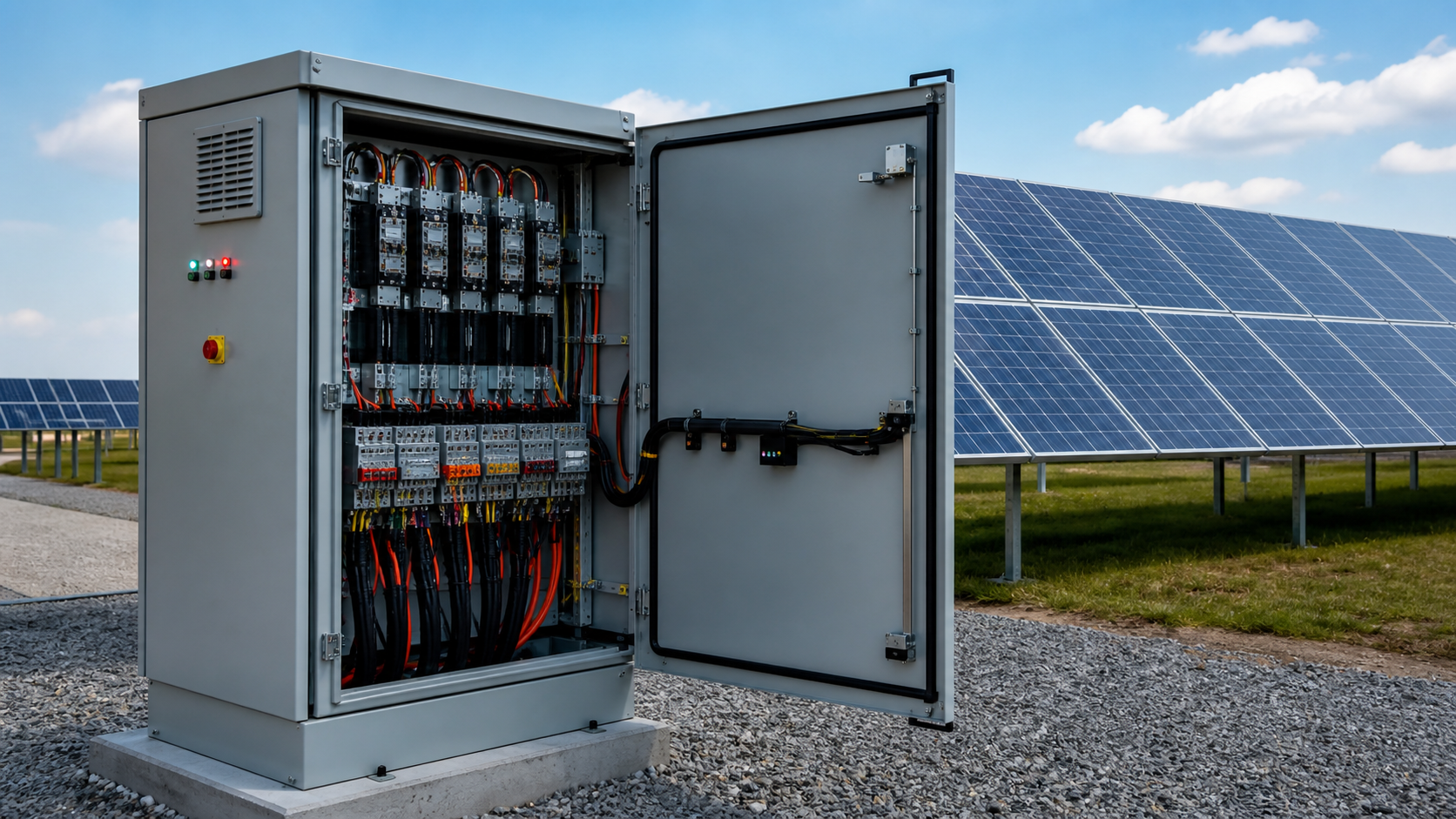
Technical note: final ratings, standards, protection coordination, monitoring interfaces and configurations remain subject to the agreed project requirement.