
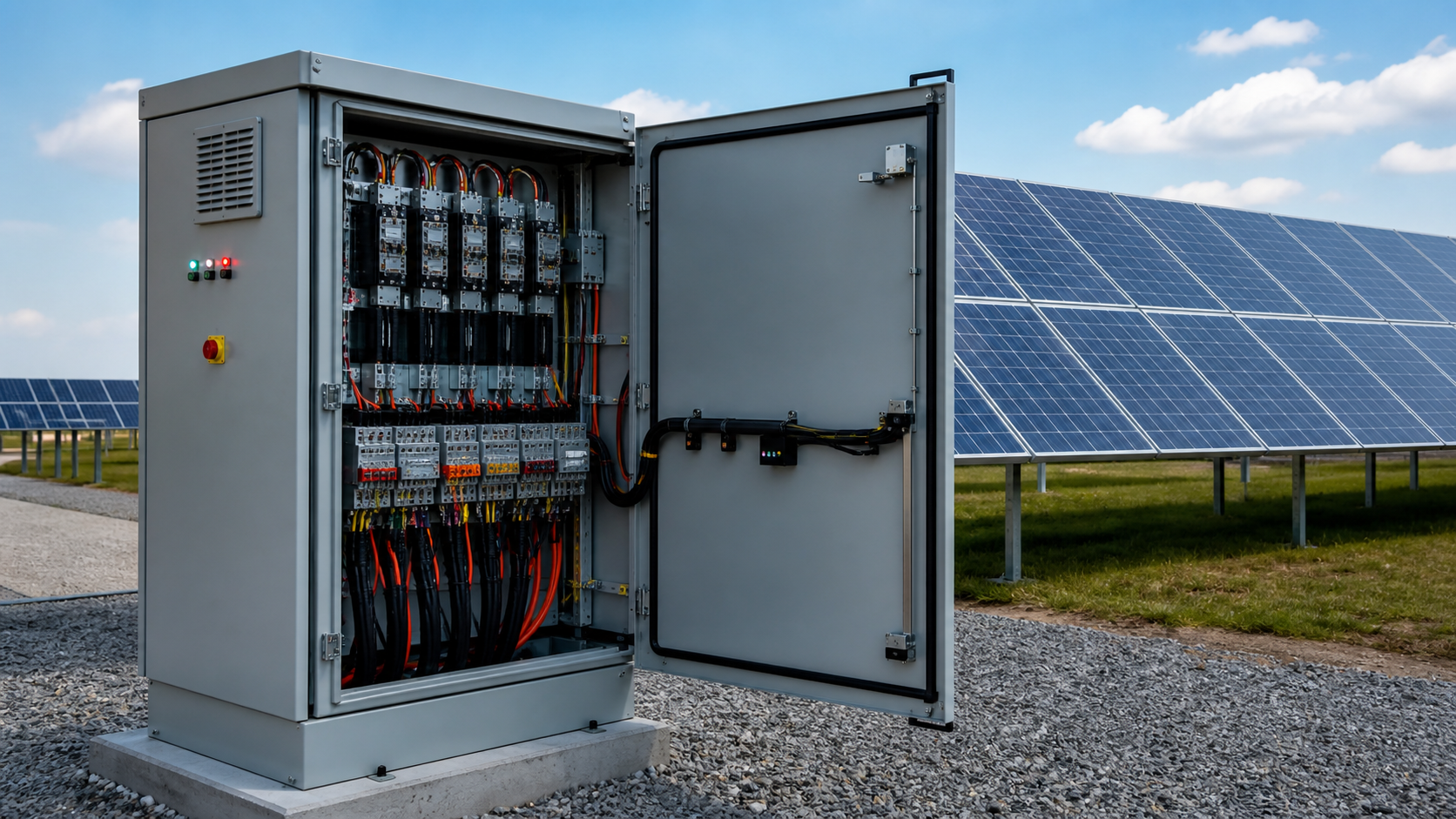
1. The new compliance bar
Updated safety rules treat missing monitoring, closed alarms and weak hazard control at renewable plants as major hazards, with shutdown and penalty exposure. Compliance is no longer optional.
The practical demand is a digital monitoring capability that sees, reports and records every abnormal condition.
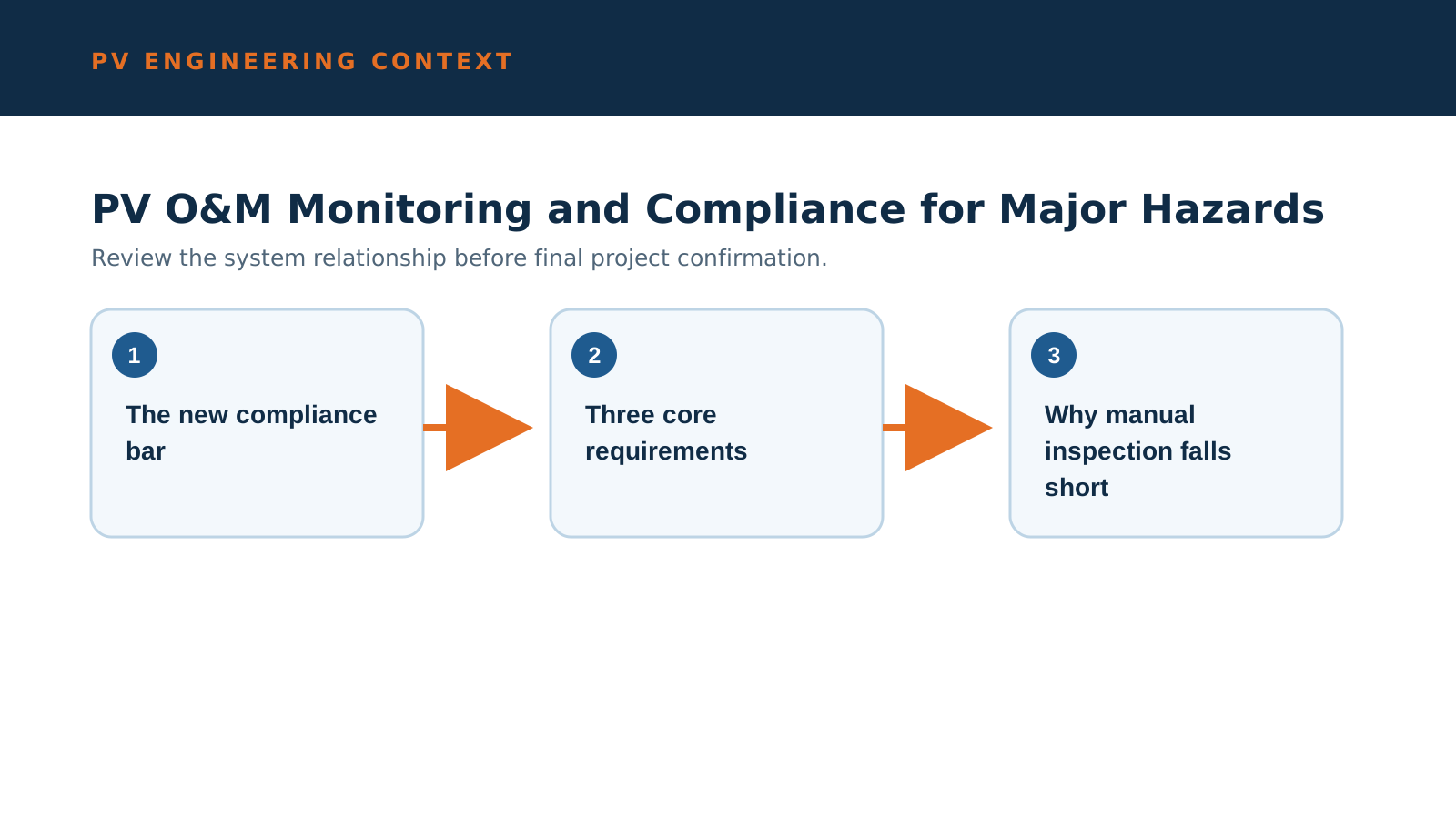
2. Three core requirements
Data must be traceable: run data of grid-related performance recorded and ready for audit. Response must be timely: abnormalities found and acted on within a short window. Rectification must be closed-loop: evidence from find to fix.
All three push plants from passive inspection to active, recorded monitoring.
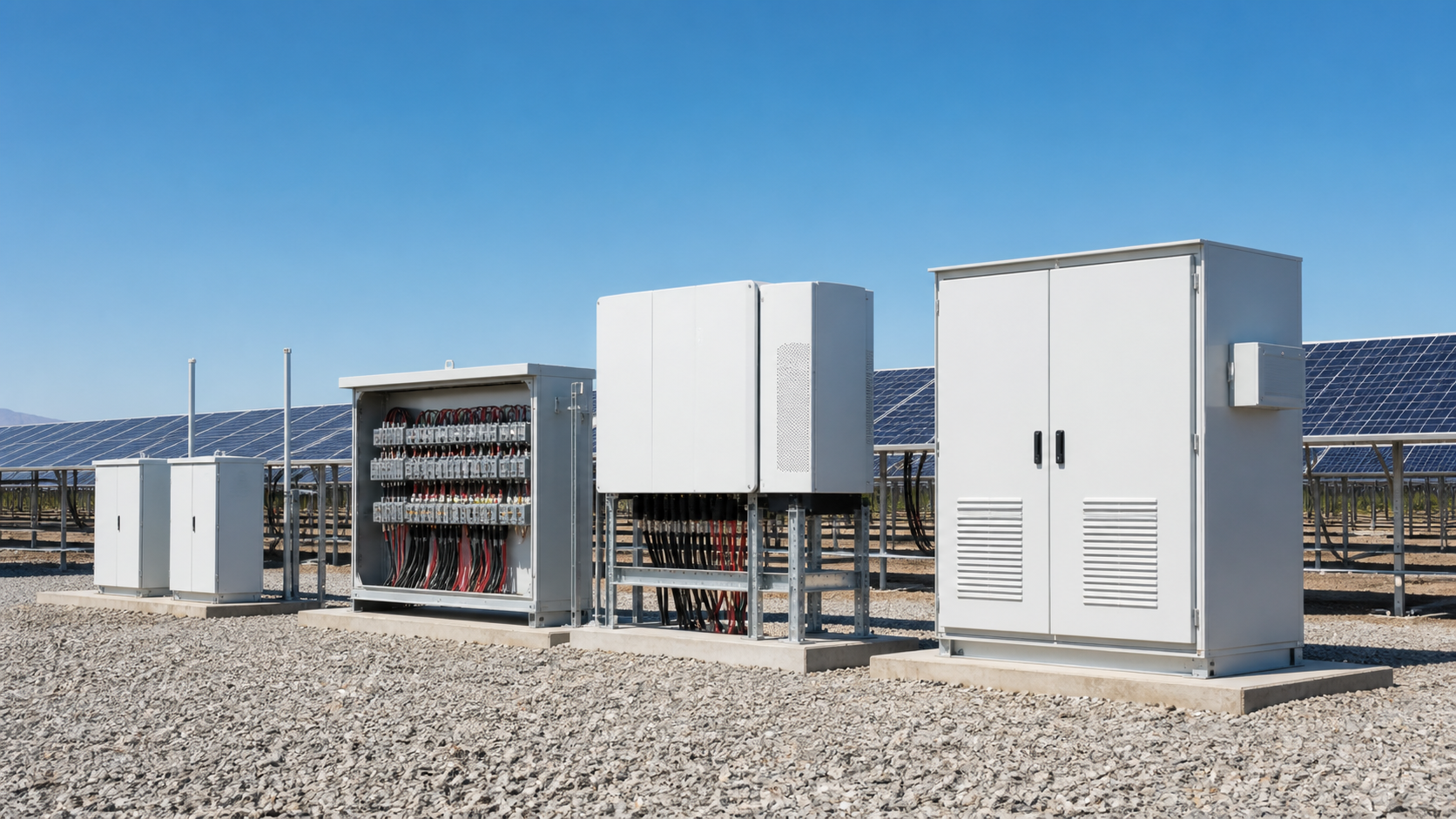
Technical diagram shown at a readable responsive scale.
3. Why manual inspection falls short
Human rounds find faults late, often after the report already looks clean. Fragmented brand systems make one consolidated view slow and error-prone.
The gap between finding and reporting can exceed the allowed window, creating the very hazard the rule targets.
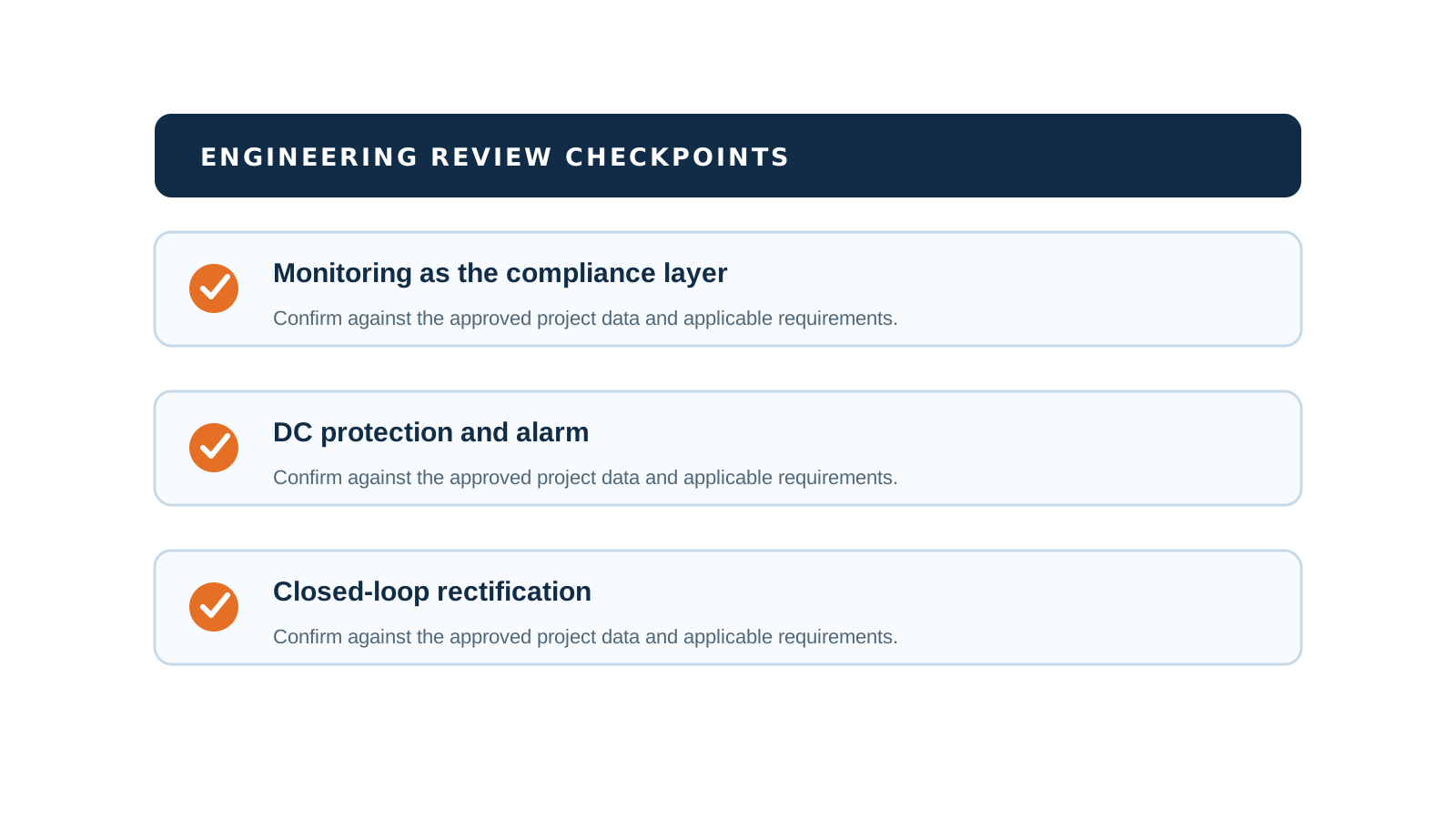
4. Monitoring as the compliance layer
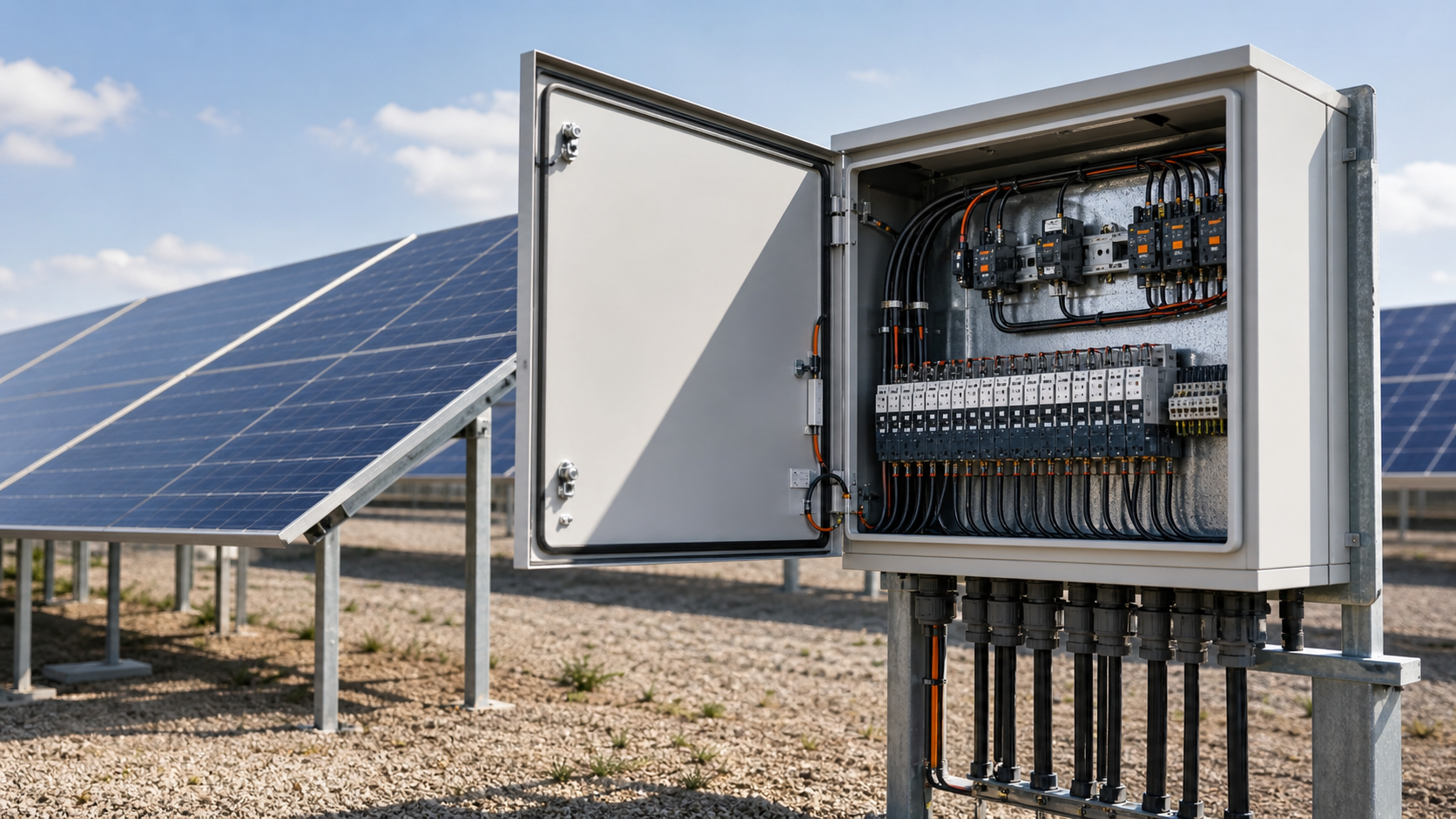
Combiner monitoring reports string current, temperature and protection state in near real time, so an abnormal condition is seen the moment it appears. It is the front line of traceable data.
NEUTRON DC control and protection equipment is built so measurement, isolation and surge protection share one coordinated assembly.
5. DC protection and alarm
DC protection devices must stay online and report state; a silenced or failed alarm is exactly what the rule flags as a hazard. Visibility of the protective device is part of compliance.
Linking monitoring to protection lets operators correlate an event with its cause and prove the response.
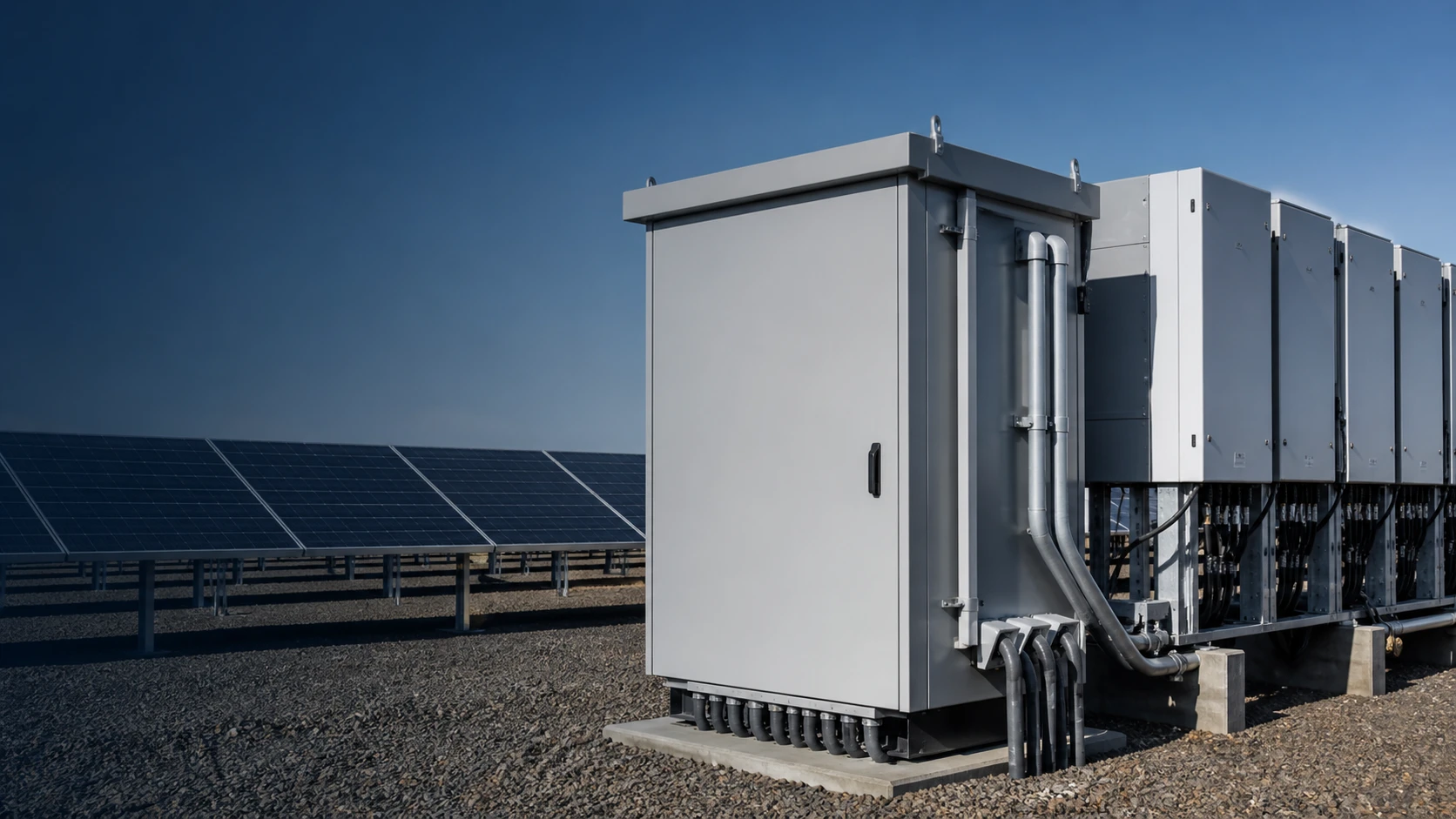
Technical diagram shown at a readable responsive scale.
6. Closed-loop rectification
An alarm should auto-create a work order, assign an owner and record completion, so the whole lifecycle is evidenced. Closed-loop records are what inspectors ask for.
A combiner with monitoring plus a work-order flow turns a fault into a documented, resolved event.
7. Across voltage levels
The rule reaches every voltage level through a catch-all on serious breaches of mandatory standards, so even small distributed plants need digital monitoring to manage risk.
Treat monitoring as the baseline defense, not a feature for large sites only.
8. Specification takeaways
Confirm the monitored points, the alarm path, the reporting window and the rectification record before release. Document the monitoring concept for audit.
NEUTRON supports the discussion around compliant PV monitoring and DC protection design.
This guide supports an initial technical review. Final ratings, standards, protection coordination, monitoring interfaces and configuration must be confirmed for the actual project requirement.
Frequently asked questions
What do the new rules require?
Traceable data, timely response to abnormalities, and closed-loop rectification evidence; missing monitoring or silenced alarms count as major hazards.
Why does manual inspection fall short?
Rounds find faults late and fragmented systems slow reporting, often missing the allowed window and creating the hazard the rule targets.
How does combiner monitoring help compliance?
It reports string current, temperature and protection state in near real time, giving the traceable, timely data the rule demands.
What is closed-loop rectification?
An alarm auto-creates a work order, assigns an owner and records completion, so the full lifecycle from find to fix is evidenced for inspection.
Bring the project inputs together
Use the technical inputs in this guide to prepare a clear project discussion.
Discuss a projectContinue learning
Explore related technical guidance in Solar PV.
Technical note: final ratings, standards, protection coordination, monitoring interfaces and configurations remain subject to the agreed project requirement.