
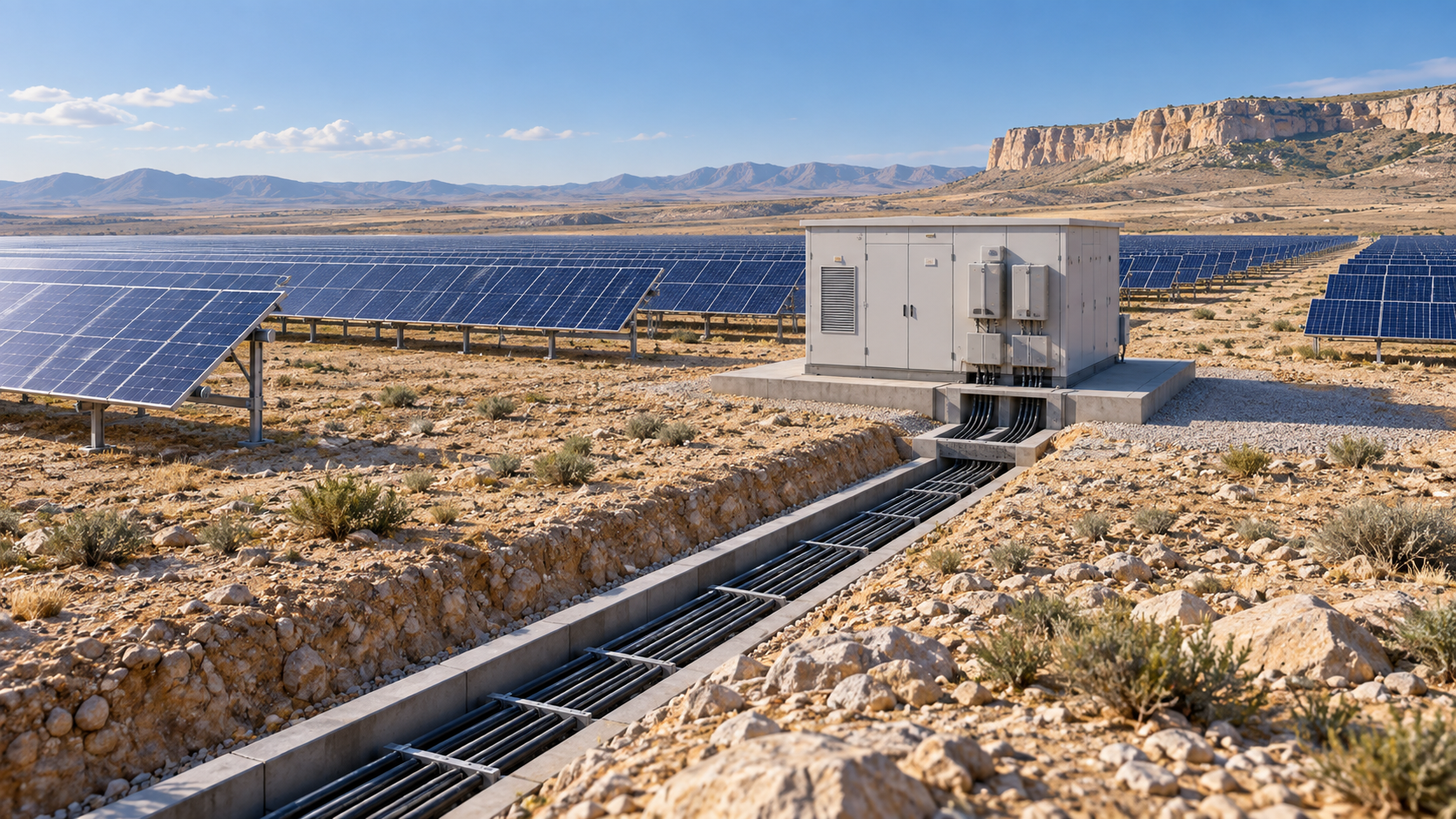
1. Arid Jordan site
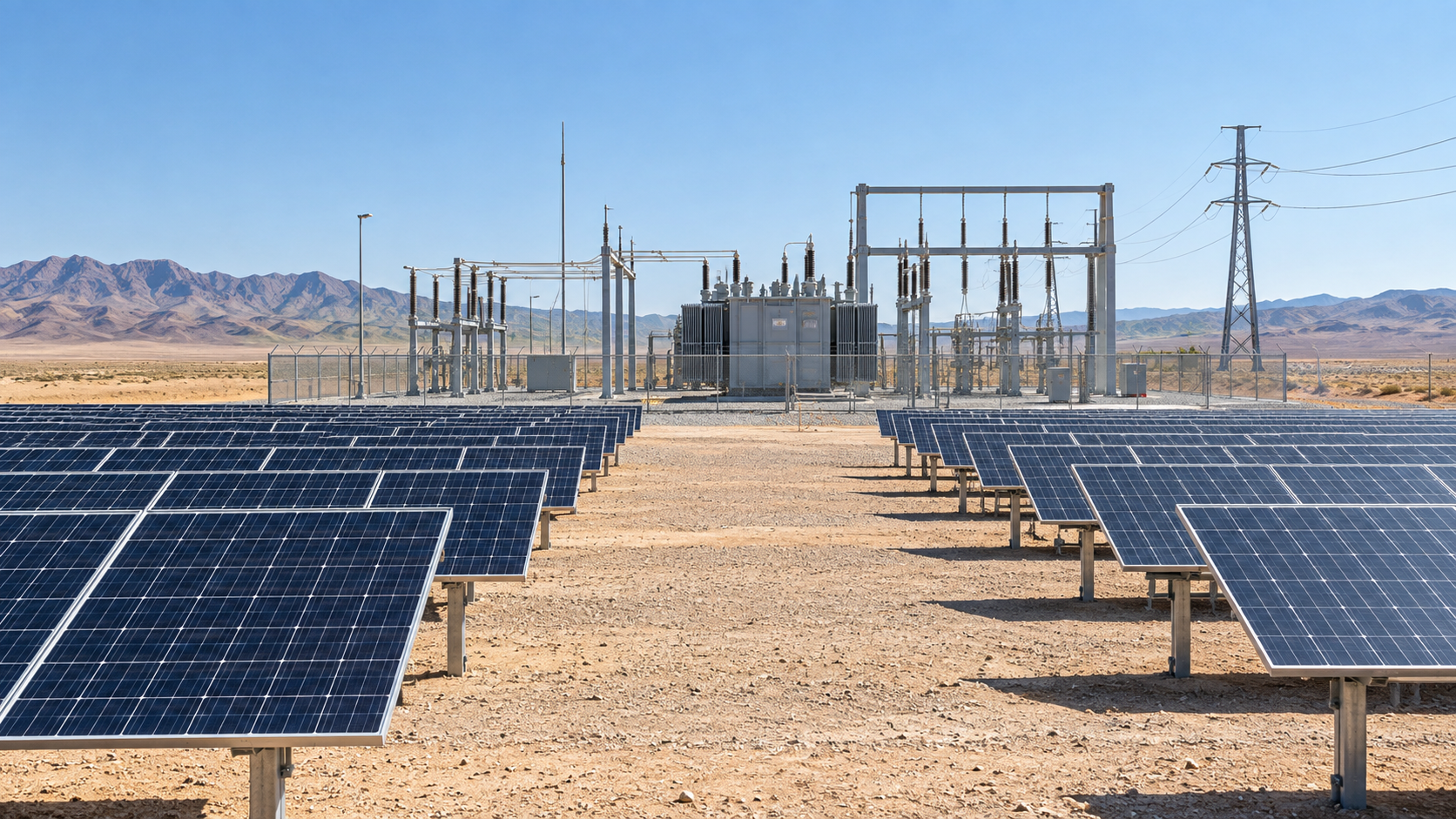
The site brings dry heat and dust. The protection design concentrates on a clean combiner layer and coordinated low-voltage switchgear.
2. Combiner and DC protection
- PV combiner boxes rated to 1500 V DC with individual gPV fuse protection.
- DC disconnect switches and Type 2 DC SPDs staged to the 1500 V envelope.
- DC MCBs for auxiliary circuits.
3. Low-voltage switchgear
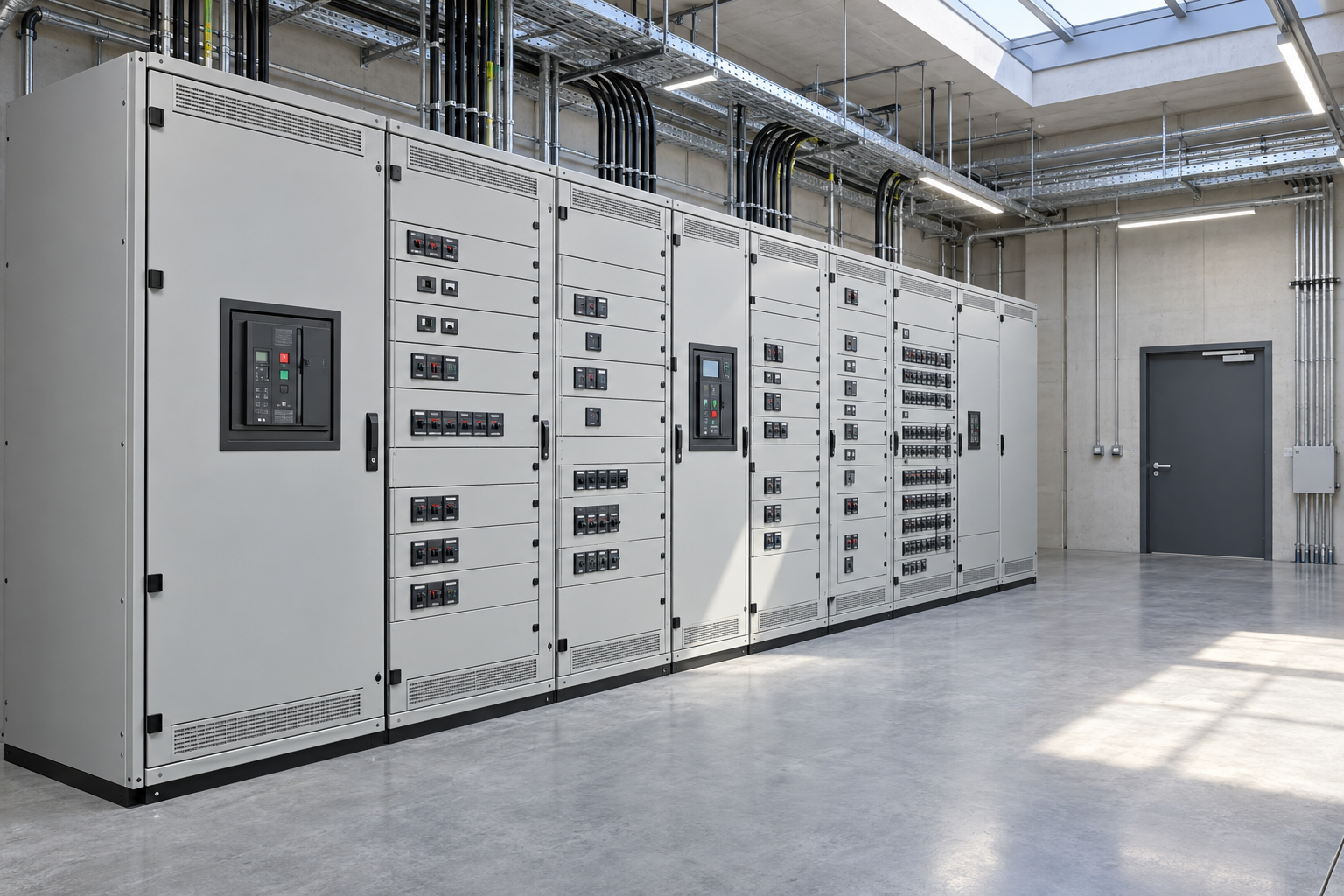
NEUTRON supplied low-voltage switchgear for the AC collection side, built to IEC 61439, with a ring main unit for the controlled grid interface where required.
4. Selective coordination
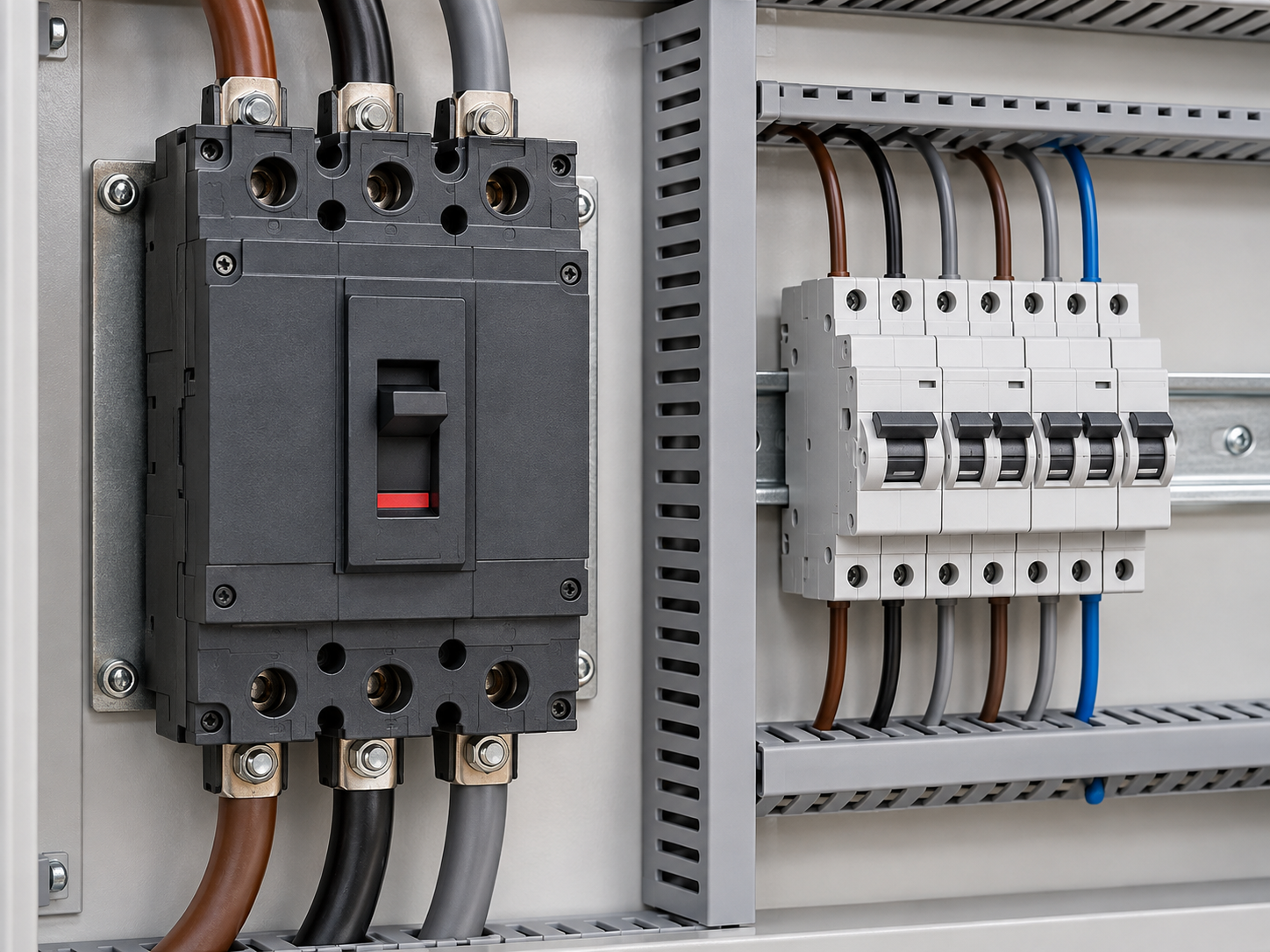
- gPV fuses and downstream devices coordinated so a fault clears at the nearest point.
- Spare fuses and labelled boards for quick restoration.
5. Outcome
The protection scope gave the plant a reliable, serviceable foundation in an arid climate.
Final ratings, coordination, installation and applicable local requirements must be verified against current standards, manufacturer documentation and the approved project design.
Frequently asked questions
What protects Baynouna?
gPV fuses per string, DC disconnect and DC SPD in every combiner, DC MCBs for auxiliaries, and coordinated low-voltage switchgear with RMU.
Which standards apply?
IEC 60269-6, IEC 60947-2, IEC 61643-31, IEC 61439 and IEC 62271.
Why selective coordination?
It lets a downstream fault isolate locally without dropping the whole array.
What rating applies to the combiner?
Maximum system voltage 1500 V DC, string short-circuit current including bifacial gain, input string count and site protection class.
Review the project protection scope.
Share the array layout, equipment interfaces and site conditions for a coordinated protection review.
Discuss a projectContinue learning
Explore related technical guidance in Solar PV.
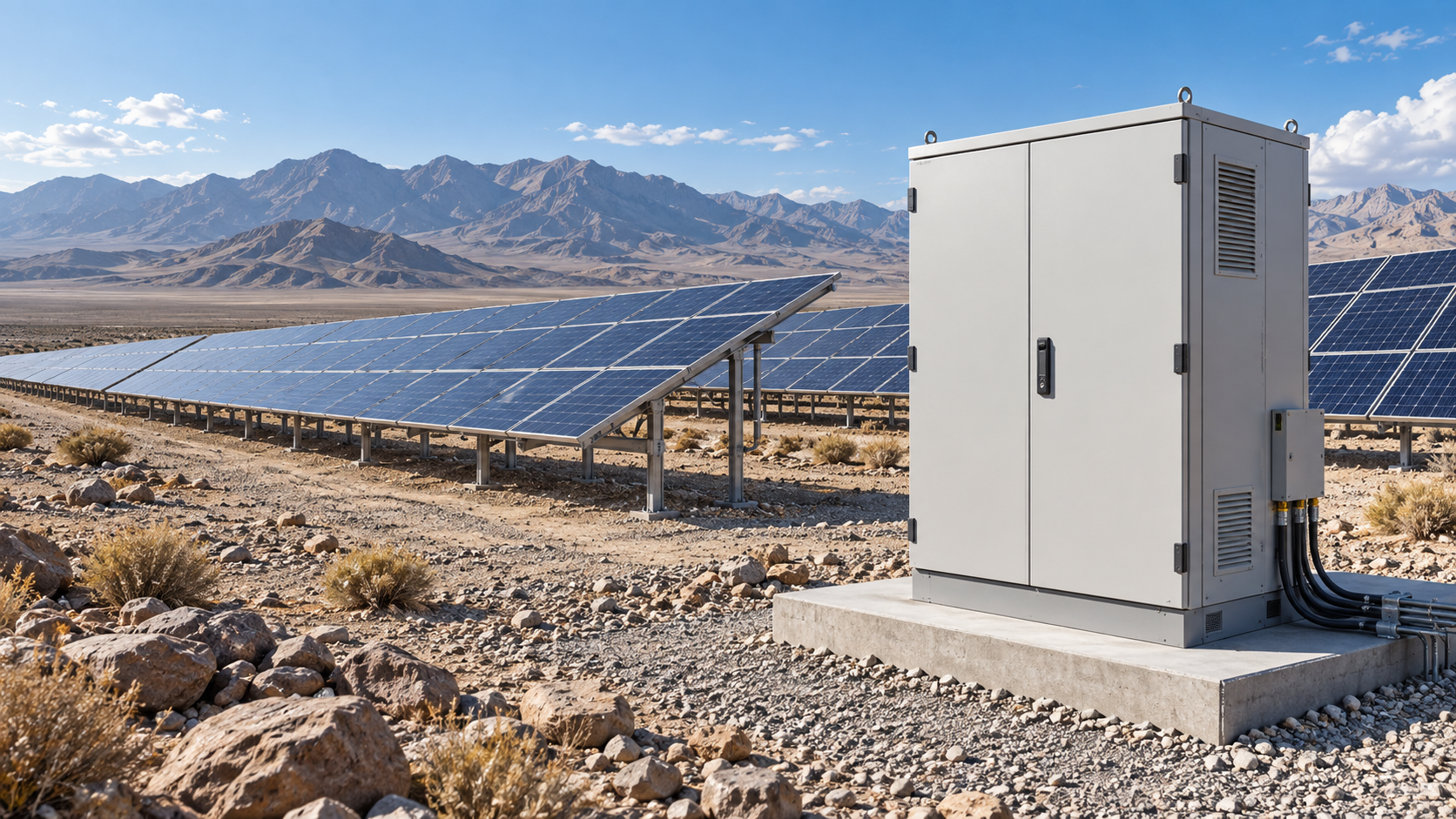
PV protection equipment, installation conditions and maintenance considerations.