
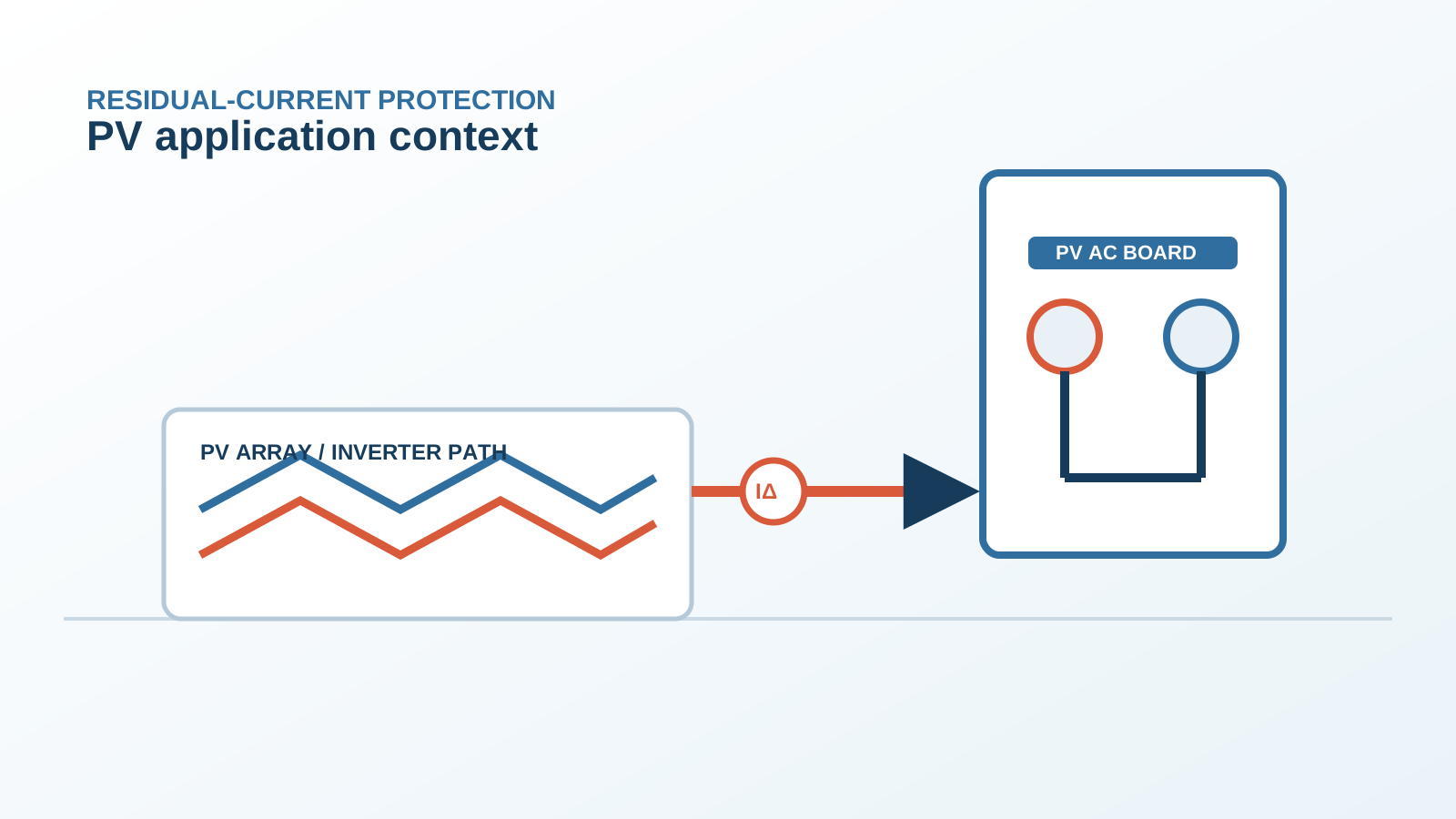
2. Arc-Chute and Magnetic Blowout
The arc-chute is a stack of steel splitter plates that slice the arc into short series segments, each with its own voltage drop. A magnetic blowout coil drives the arc upward into the chute the instant contacts part, keeping it away from the contacts and shortening the clearing time.
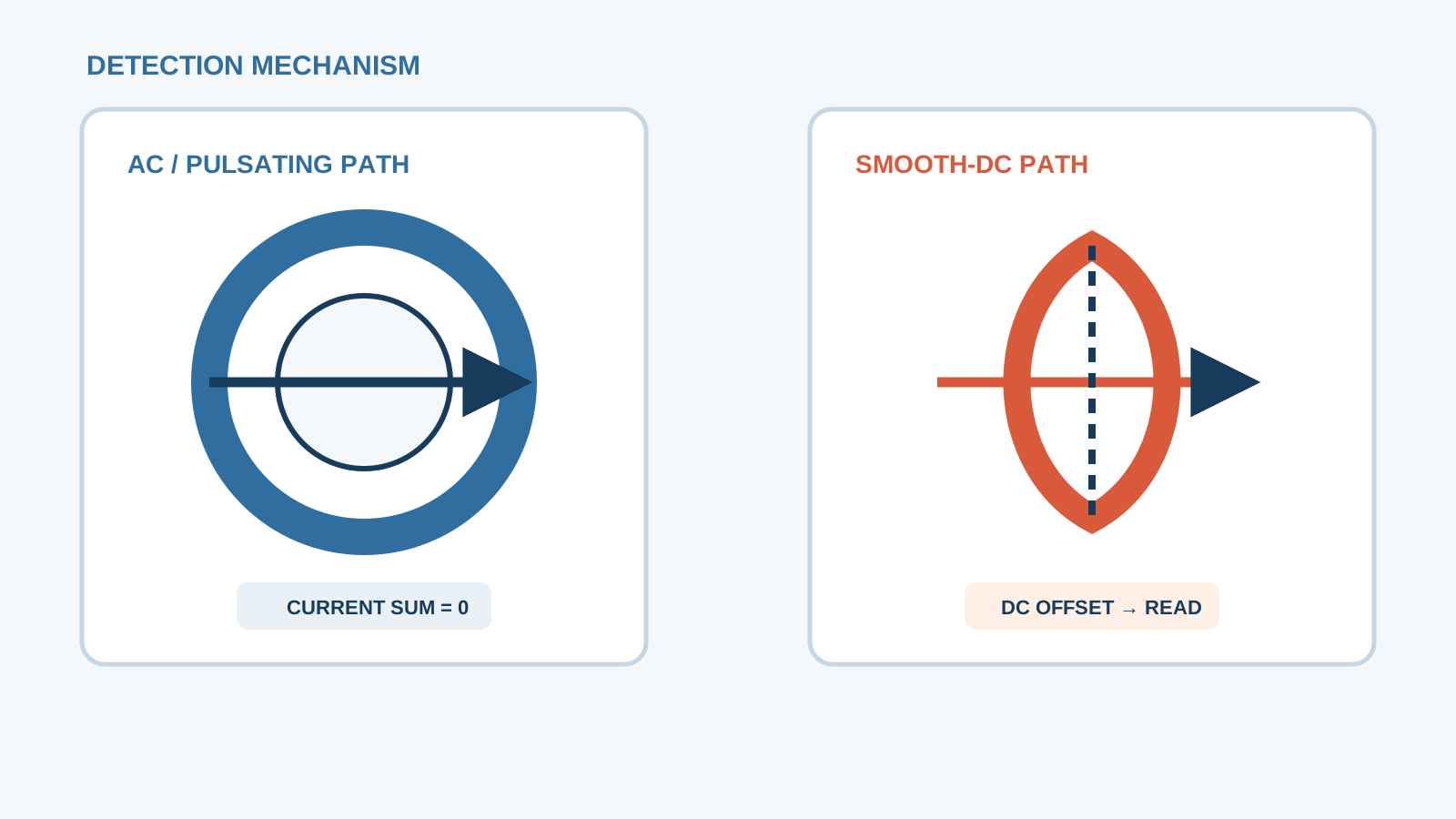
Technical diagram shown at a readable responsive scale.
3. Energy at 1000 V Versus 1500 V DC
Arc energy scales with system voltage and fault current. At 1500 V the required arc length and the number of splitter plates must be larger than at 1000 V, which is why a breaker listed for one voltage band is not automatically valid for the other.
4. Pole Count and Series Arcing
Multiple poles connected in series share the arc-voltage burden, so a multi-pole DC breaker can reach a higher system voltage than a single-pole unit. This series-arcing principle is central to rating a device for utility-scale PV.
5. Verification by Breaking Test
Manufacturers prove quenching through certified breaking tests at the rated voltage and prospective current, recorded with arc-voltage and time traces. The test duty, not the catalogue photo, is the evidence of safe extinction.
6. Effect of Humidity and Altitude
Lower air density at altitude reduces the dielectric strength of the gap, and high humidity can change surface behaviour. Both factors are handled by derating the breaking capacity and by sealed or larger clearances in the design.
7. Signs of Weak Arc Quenching
Contact pitting, discoloured terminals, a burning smell after a fault, or a breaker that will not reset point to incomplete extinction. These are field symptoms that the device was under-rated for the DC bus.
8. Selecting a PV-Rated Breaker
Choose a breaker with a DC utilization category, a verified breaking capacity at your system voltage, and construction matched to the string count. NEUTRON offers DC-rated protection verified for PV duty across residential and utility arrays.
This is general application guidance. Confirm final ratings, trip settings, standards, inverter instructions and local installation requirements against approved project documentation and a qualified engineer's review.
Frequently asked questions
Why is a DC arc harder to break than AC?
A DC arc has no current zero, so the breaker must force extinction through splitter plates and magnetic blowout rather than waiting for a natural zero.
How do PV breakers quench the arc?
An arc-chute splits the arc into series segments while a blowout coil drives it away from the contacts, raising the arc voltage above the supply until it fails.
Does 1500 V need special breakers?
Yes. The higher voltage needs more splitter plates and a higher rated arc length, so a 1000 V-rated device is not valid at 1500 V without evidence.
What test proves arc quenching?
A certified breaking test at rated DC voltage and prospective current, with recorded arc-voltage and time traces, confirms safe extinction.
Bring the protection inputs to the first review.
{ "@context": "https://schema.org", "@type": "Article", "headline": "DC Arc Quenching in PV Circuit Breakers", "author": {"@type": "Organization", "name": "NEUTRON LLC"}, "publisher": {"@type": "Organization", "name": "NEUTRON LLC", "logo": {"@type": "ImageObject", "url": "https://www.neutronele.com/logo.png"}}, "datePublished": "2026-09-03", "dateModified": "2026-09-03", "mainEntityOfPage": "https://www.neutronele.com/insights/dc-circuit-breaker-arc-quenching-pv", "image": "https://www.neutronele.com/insights/img/dc-circuit-breaker-arc-quenching-pv-hero.jpg" }
Discuss a project requirementContinue learning
Explore related technical guidance in Electrical Protection.
Published from the approved period 10 source package; technical claims and source wording are retained for review.