
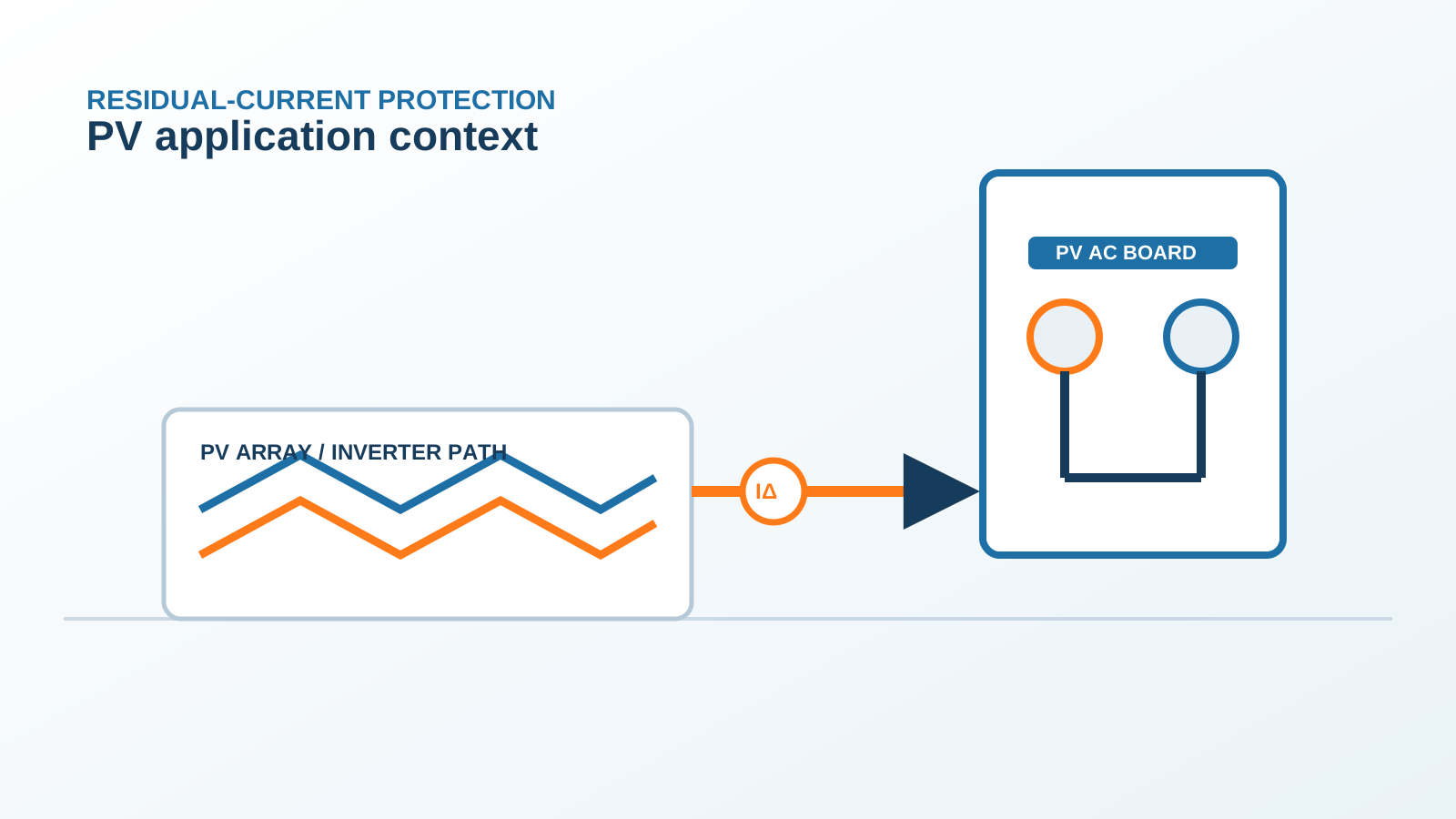
2. What IMD detects (ungrounded)
On an ungrounded array the IMD continuously measures insulation resistance to earth and flags a first fault as a resistance drop. Because no current flows on that first fault, the array keeps running, and the IMD's value is early detection plus polarity indication rather than immediate interruption.
This makes the ungrounded approach attractive where keeping the plant online through a single fault is a priority.
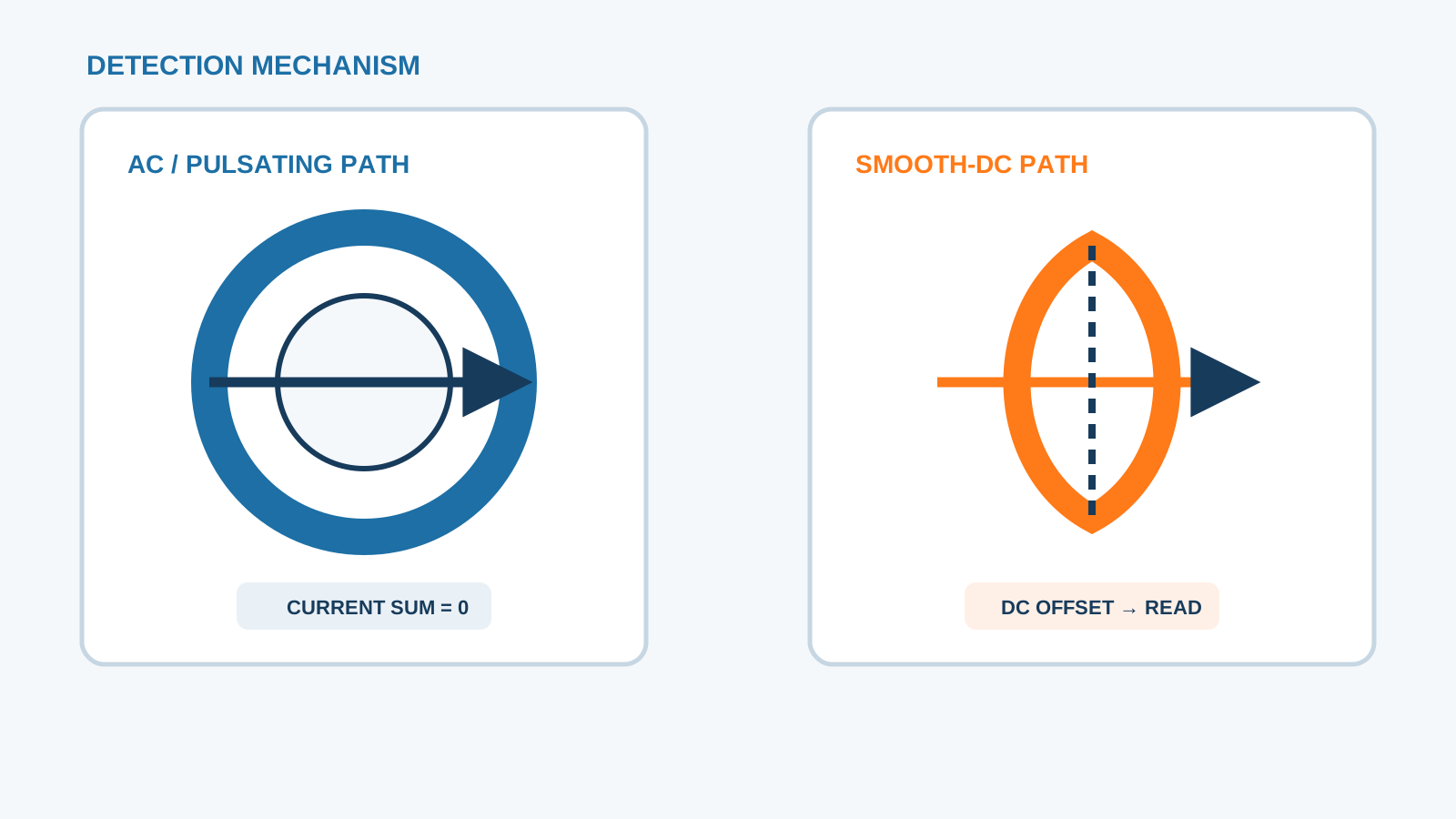
Technical diagram shown at a readable responsive scale.
3. What RCM detects (grounded)
On a grounded array the first fault already produces a residual current, so an RCM measuring the current imbalance detects it directly and can trigger an alarm or a trip. The grounded arrangement trades continuity for faster, current-based fault detection.
The RCM reads the live leakage that the earthing reference makes possible, giving a magnitude that trends with insulation health.
4. Fault detection speed comparison
An RCM on a grounded system sees a real residual current the moment a fault occurs and can act within the detection time of its electronics. An IMD on an ungrounded system detects the insulation change quickly but, because the fault is non-current-carrying, the protective response is usually an alarm followed by planned isolation rather than an instant opening.
Both are fast enough for safety when set and coordinated correctly; the difference is in the nature of the response.
5. Cost and complexity
An ungrounded array with an IMD avoids a deliberate earth bond and keeps generating through a first fault, which some operators value for availability. A grounded array with an RCM is conceptually simpler and uses current-based detection familiar from AC protection, though it sacrifices continuity on the first fault.
The cost difference is modest and dominated by the monitoring unit and the earthing design rather than by the detector alone.
6. Hybrid schemes
Some plants combine both: an ungrounded array supervised by an IMD, plus residual-current monitoring on the earthed AC side to catch inverter smooth-DC leakage. This gives first-fault warning on the DC side and current-based protection on the AC side.
NEUTRON supports such schemes with DC protection and low-voltage switchgear that coordinate with the chosen monitors across the whole plant.
7. Standard references
Insulation monitoring is addressed by IEC 61557-8, residual-current protection by IEC 62423 for Type-B-sensitive devices, and array commissioning insulation by IEC 62446. Earthing and protection coordination draw on IEC 62548 for the PV system as a whole.
Selecting the monitor type follows directly from the earthing decision these standards describe, so the standard set should be read together.
8. Decision table
In short: ungrounded array plus priority on continuity points to an IMD; grounded array plus priority on current-based detection points to an RCM; inverter AC-side smooth-DC leakage always calls for Type-B-sensitive protection regardless of DC earthing.
Matching the monitor to the earthing method prevents the common mistake of installing a device that cannot see the fault it is meant to catch.
This is general application guidance. Confirm final ratings, trip settings, standards, inverter instructions and local installation requirements against approved project documentation and a qualified engineer's review.
Frequently asked questions
IMD or RCM for my PV plant?
It follows the earthing method. An ungrounded array is supervised by an IMD that watches insulation resistance; a grounded array is supervised by an RCM that watches residual current. The two are not interchangeable.
Can I use both?
Yes. A common arrangement keeps an IMD on an ungrounded DC array and adds Type-B-sensitive residual-current monitoring on the earthed AC side, giving first-fault warning on DC and current-based protection on AC.
Which is cheaper?
The hardware cost difference is small. The larger cost driver is the earthing design and whether the plant values continuity through a first fault, which favours the ungrounded-plus-IMD approach.
Does earthing choice affect RCD type?
Yes. The AC side still faces smooth-DC leakage from transformerless inverters, so a Type-B-sensitive RCD is required there regardless of how the DC array is earthed.
Bring the protection inputs to the first review.
{ "@context":"https://schema.org", "@type":"Article", "headline":"IMD vs RCM — Choosing PV Array Monitoring by Earthing", "author":{ "@type":"Organization", "name":"NEUTRON LLC" }, "publisher":{ "@type":"Organization", "name":"NEUTRON LLC", "logo":{ "@type":"ImageObject", "url":"https://www.neutronele.com/logo.png" } }, "datePublished":"2026-09-03", "dateModified":"2026-09-03", "mainEntityOfPage":"https://www.neutronele.com/insights/imd-vs-rcm-ungrounded-grounded-pv", "image":"https://www.neutronele.com/insights/img/imd-vs-rcm-ungrounded-grounded-pv-hero.jpg" }
Discuss a project requirementContinue learning
Explore related technical guidance in Electrical Protection.
Published from the approved period 10 source package; technical claims and source wording are retained for review.