
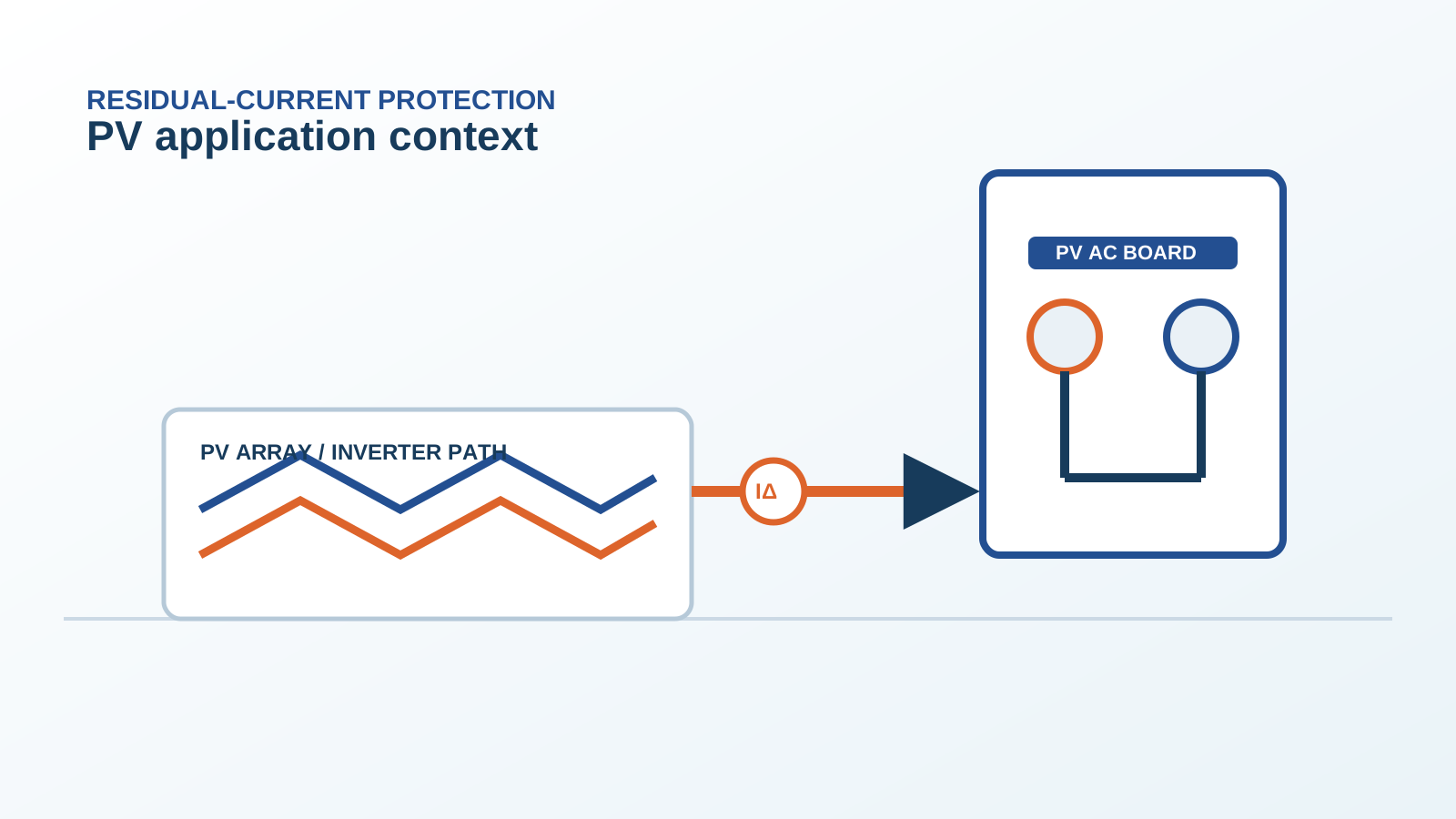
2. Available Fault Current in PV DC
The prospective fault current comes from the array short-circuit contribution and the upstream network. It grows with string count and system voltage, so the figure must be calculated, not guessed.
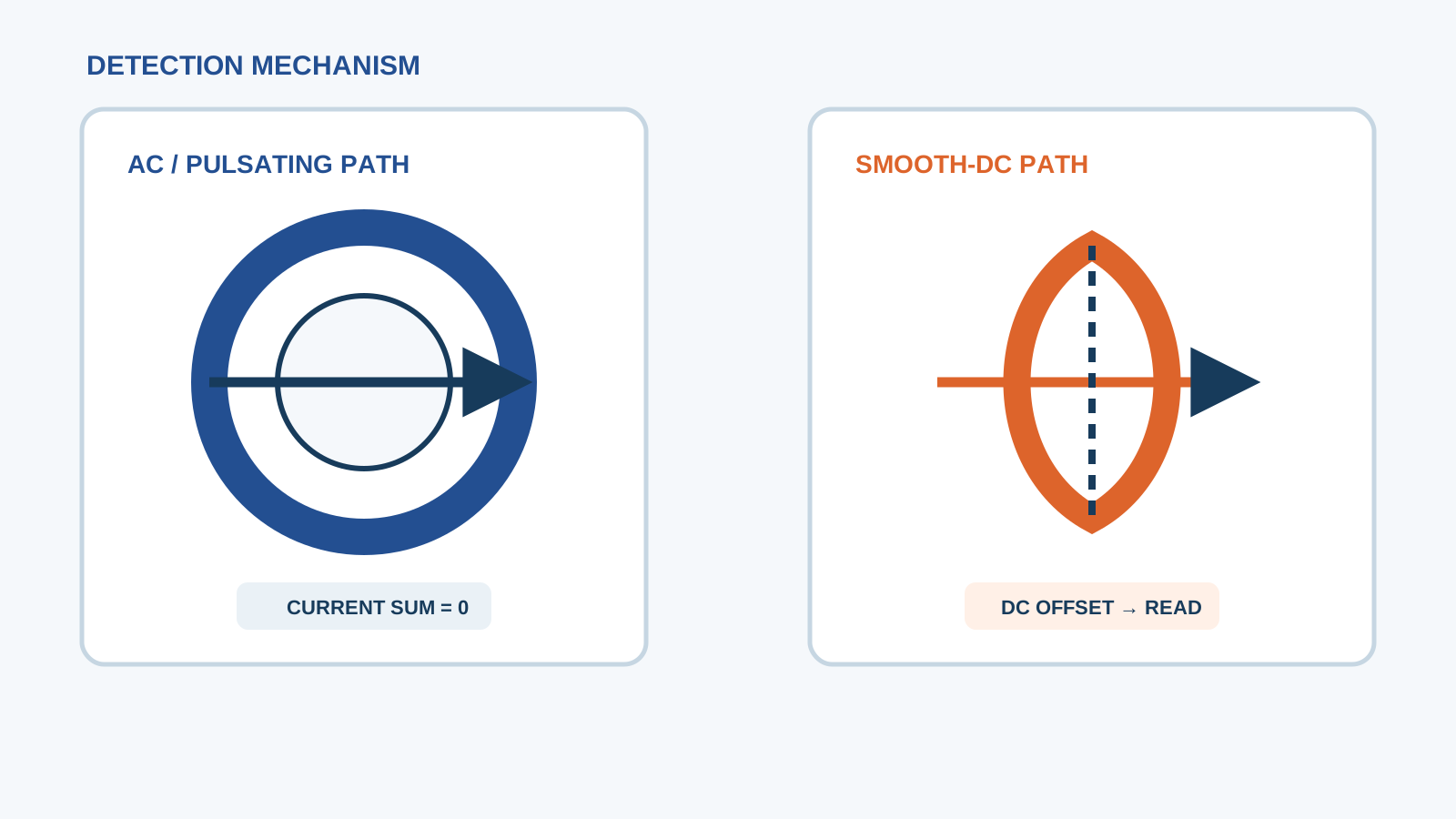
Technical diagram shown at a readable responsive scale.
3. 1000 V Versus 1500 V Systems
A 1500 V array feeds a higher fault energy than a 1000 V array of the same size, so the required Icu at the higher voltage is generally larger and the breaker construction differs.
4. Why 25 kA for Utility Scale
Utility plants collect many strings into a single bus where the summed fault current can reach tens of kiloamperes. A 25 kA rating gives the margin needed for safe interruption at that scale.
5. Matching to Upstream Fuse
The breaker Icu should align with the current-limiting fuse that sits upstream, so the combination limits let-through energy. Mismatched ratings can leave a fault uncleared.
6. Verification and Certification
Capacity is proven by certified breaking tests at the rated DC voltage. The test report, not the catalogue claim, is the proof of performance.
7. Undersizing Consequences
A breaker below the available fault current can sustain an arc, weld contacts or release energy into the enclosure. Undersizing is a direct fire and shock risk.
8. Specifying in an RFQ
State system voltage, prospective fault current, and required Icu in the enquiry. NEUTRON supplies DC-rated breakers with verified breaking capacity across the PV voltage range.
This is general application guidance. Confirm final ratings, trip settings, standards, inverter instructions and local installation requirements against approved project documentation and a qualified engineer's review.
Frequently asked questions
What breaking capacity do I need for PV?
Match Icu to the calculated prospective fault current at your system voltage; do not use an AC figure.
Is 10 kA enough for rooftop?
Often yes for small rooftops, but only after the fault current is calculated; larger or 1500 V roofs may need more.
Why 25 kA for utility scale?
Many parallel strings create a high summed fault current that needs the larger margin for safe interruption.
Does the fuse set the capacity?
The upstream fuse limits let-through energy, so the breaker Icu must be coordinated with it, not chosen alone.
Bring the protection inputs to the first review.
{ "@context": "https://schema.org", "@type": "Article", "headline": "DC Breaking Capacity for PV Breakers: 10 kA to 25 kA", "author": {"@type": "Organization", "name": "NEUTRON LLC"}, "publisher": {"@type": "Organization", "name": "NEUTRON LLC", "logo": {"@type": "ImageObject", "url": "https://www.neutronele.com/logo.png"}}, "datePublished": "2026-09-03", "dateModified": "2026-09-03", "mainEntityOfPage": "https://www.neutronele.com/insights/dc-breaking-capacity-pv-breaker-10ka-25ka", "image": "https://www.neutronele.com/insights/img/dc-breaking-capacity-pv-breaker-10ka-25ka-hero.jpg" }
Discuss a project requirementContinue learning
Explore related technical guidance in Electrical Protection.
Published from the approved period 10 source package; technical claims and source wording are retained for review.