
2. Curve C Versus D Magnetic Threshold
Curve C trips at 5 to 10 times rated current; curve D trips at 10 to 20 times. The higher band of curve D gives more headroom for brief current spikes that are not real faults.
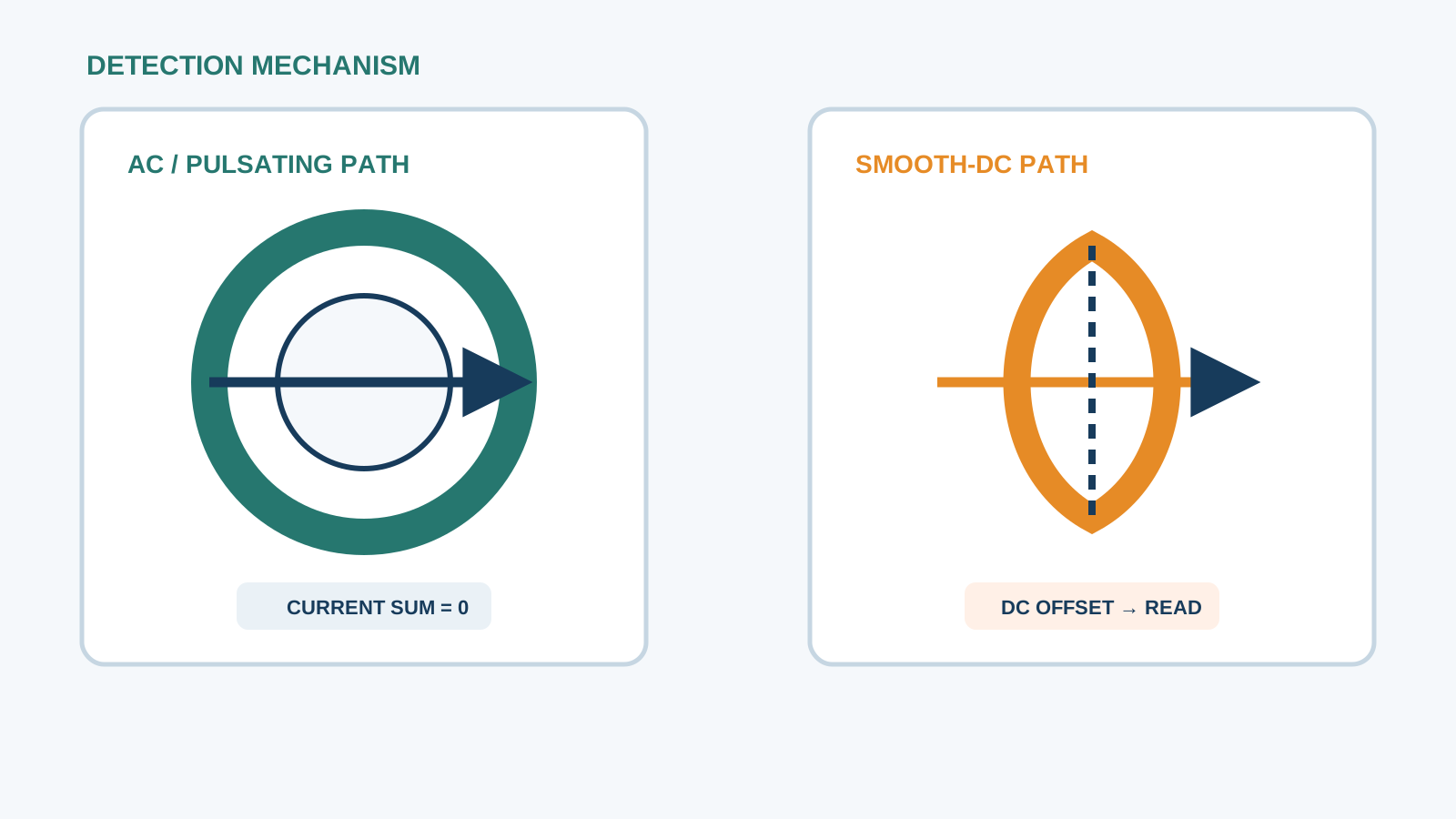
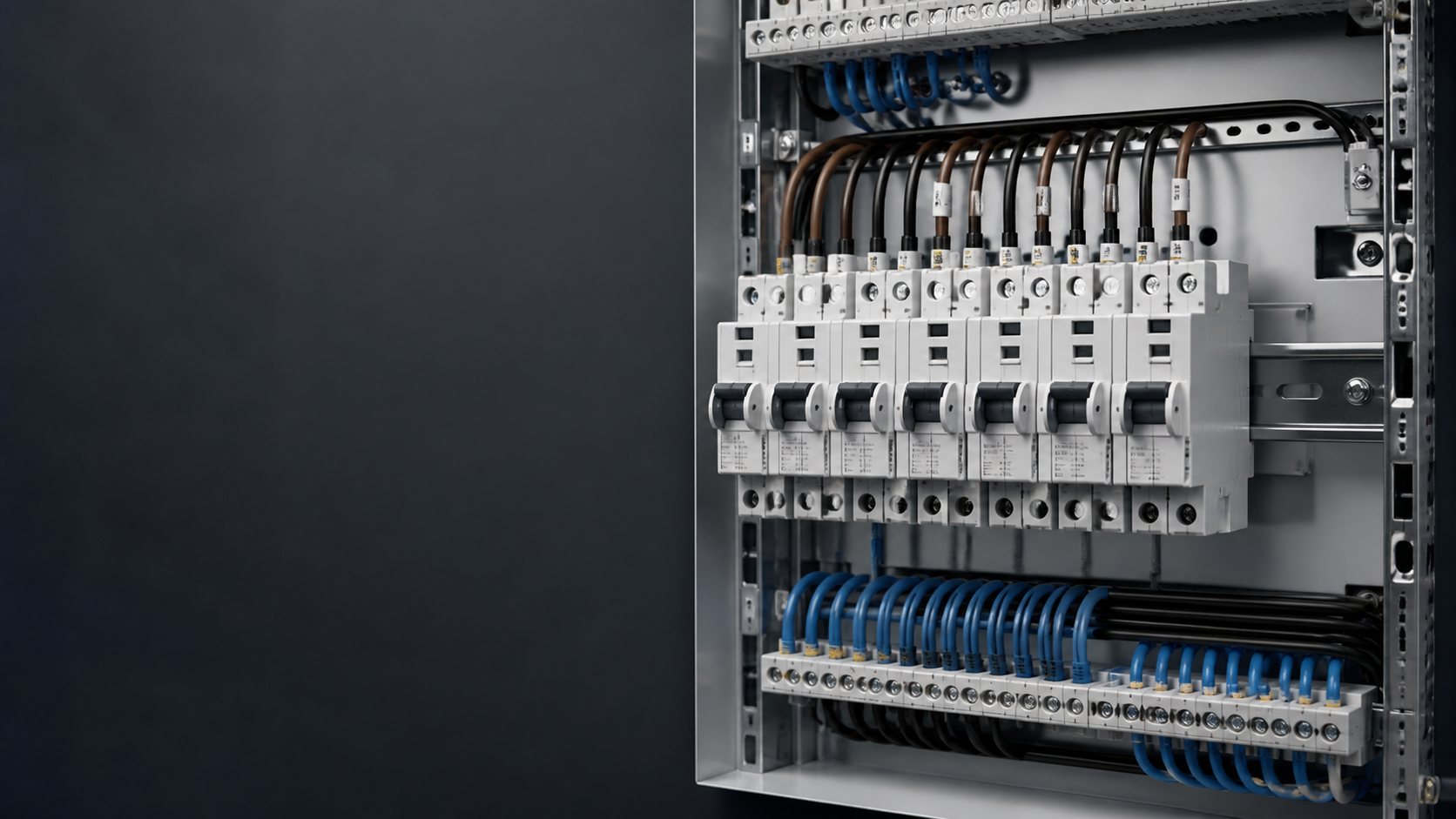
Technical diagram shown at a readable responsive scale.
3. PV Inrush and Capacitor Banks
String cables, DC capacitors and inverter input stages can draw a short inrush current at energisation. On a tightly set curve C this spike can be mistaken for a fault and trip the breaker unnecessarily.
4. String Versus Output Protection Choice
Per-string protection often uses a curve matched to the string fault level, while the combiner output may use a higher band to ride through shared inrush. The choice follows the fault current at each point.
5. Avoiding Nuisance Trip With Curve D
Where inrush is expected, a curve D device holds through the transient and still trips on a genuine short circuit. The trade is a slightly higher let-through before magnetic action.
6. Thermal Versus Magnetic Element
The thermal element handles overload over seconds to minutes; the magnetic element handles short circuit in milliseconds. Both must be rated for DC duty, not only the magnetic band.
7. Coordination Upstream and Downstream
The chosen curve should sit below the upstream fuse or breaker trip level so the nearest device clears the fault. A selectivity study keeps a string fault from dropping the whole array.
8. Selection Table
Match the curve to the measured inrush and fault current: light residential strings often suit curve C, while utility strings with high inrush and long cables favour curve D. Confirm with the protection coordinator.
This is general application guidance. Confirm final ratings, trip settings, standards, inverter instructions and local installation requirements against approved project documentation and a qualified engineer's review.
Frequently asked questions
Curve C or D for PV?
It depends on inrush; strings with high capacitive inrush favour curve D, while low-inrush residential strings can use curve C.
Why would D avoid nuisance trips?
Curve D tolerates 10 to 20 times rated current briefly, riding through inrush that would trip a curve C device.
Does the curve affect the DC rating?
No, the curve sets the magnetic threshold; the DC voltage and breaking capacity are separate ratings that must also be met.
How do I coordinate curves?
Set each device below the upstream trip level so the nearest breaker clears a fault, confirmed by a selectivity study.
Bring the protection inputs to the first review.
{ "@context": "https://schema.org", "@type": "Article", "headline": "MCB Tripping Curve C vs D for PV Short-Circuit Protection", "author": {"@type": "Organization", "name": "NEUTRON LLC"}, "publisher": {"@type": "Organization", "name": "NEUTRON LLC", "logo": {"@type": "ImageObject", "url": "https://www.neutronele.com/logo.png"}}, "datePublished": "2026-09-03", "dateModified": "2026-09-03", "mainEntityOfPage": "https://www.neutronele.com/insights/mcb-curve-c-d-pv-short-circuit", "image": "https://www.neutronele.com/insights/img/mcb-curve-c-d-pv-short-circuit-hero.jpg" }
Discuss a project requirementContinue learning
Explore related technical guidance in Electrical Protection.
Published from the approved period 10 source package; technical claims and source wording are retained for review.