
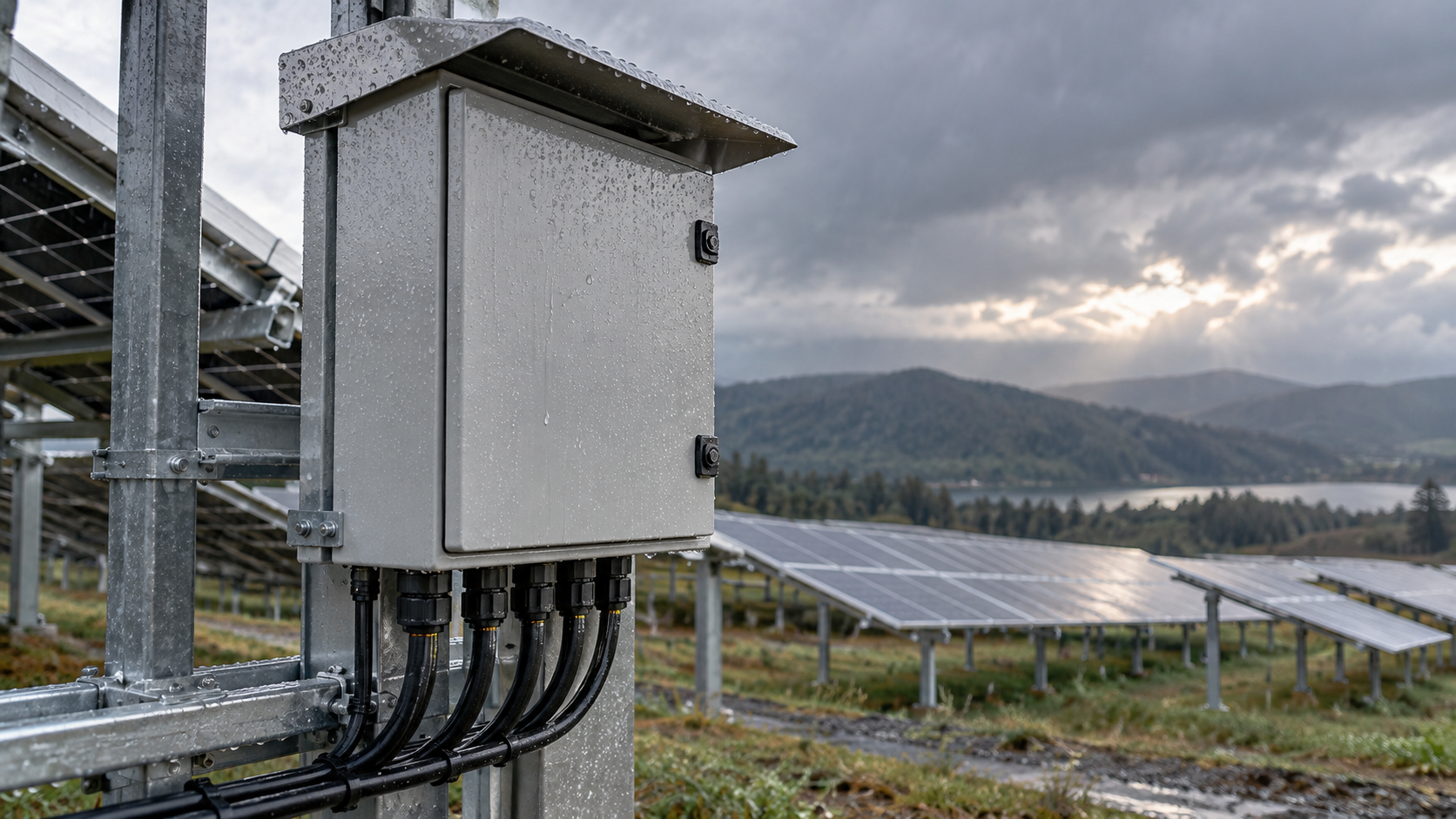
What an IP Code Actually Means
An IP (Ingress Protection) code per IEC 60529 has two digits. The first digit defines protection against solid objects and dust; the second defines protection against water. The code is assigned from defined test conditions, not from marketing wording such as weatherproof or outdoor ready.
First Digit: Dust and Solid-Object Grades
The first digit ranges from 0 to 6. 0 means no protection; 1 to 4 cover solid objects from 50 mm down to 1.0 mm; 5 means dust-protected, limited ingress with no harmful deposit under specified airflow; 6 means dust-tight, no ingress of dust under the specified vacuum test. The difference between 5 and 6 is defined by the test, not by appearance.

Second Digit: Water Test Conditions
The second digit defines water exposure with explicit conditions. 1 is vertical dripping; 2 is dripping at 15 degrees; 3 is spraying at 60 degrees; 4 is splashing from any direction; 5 is water jets from any direction with a 6.3 mm nozzle; 6 is powerful jets with a 12.5 mm nozzle; 7 is immersion to 1 m for 30 minutes; 8 is continuous immersion under conditions agreed with the manufacturer. Each grade has a defined nozzle, pressure, duration, and position.
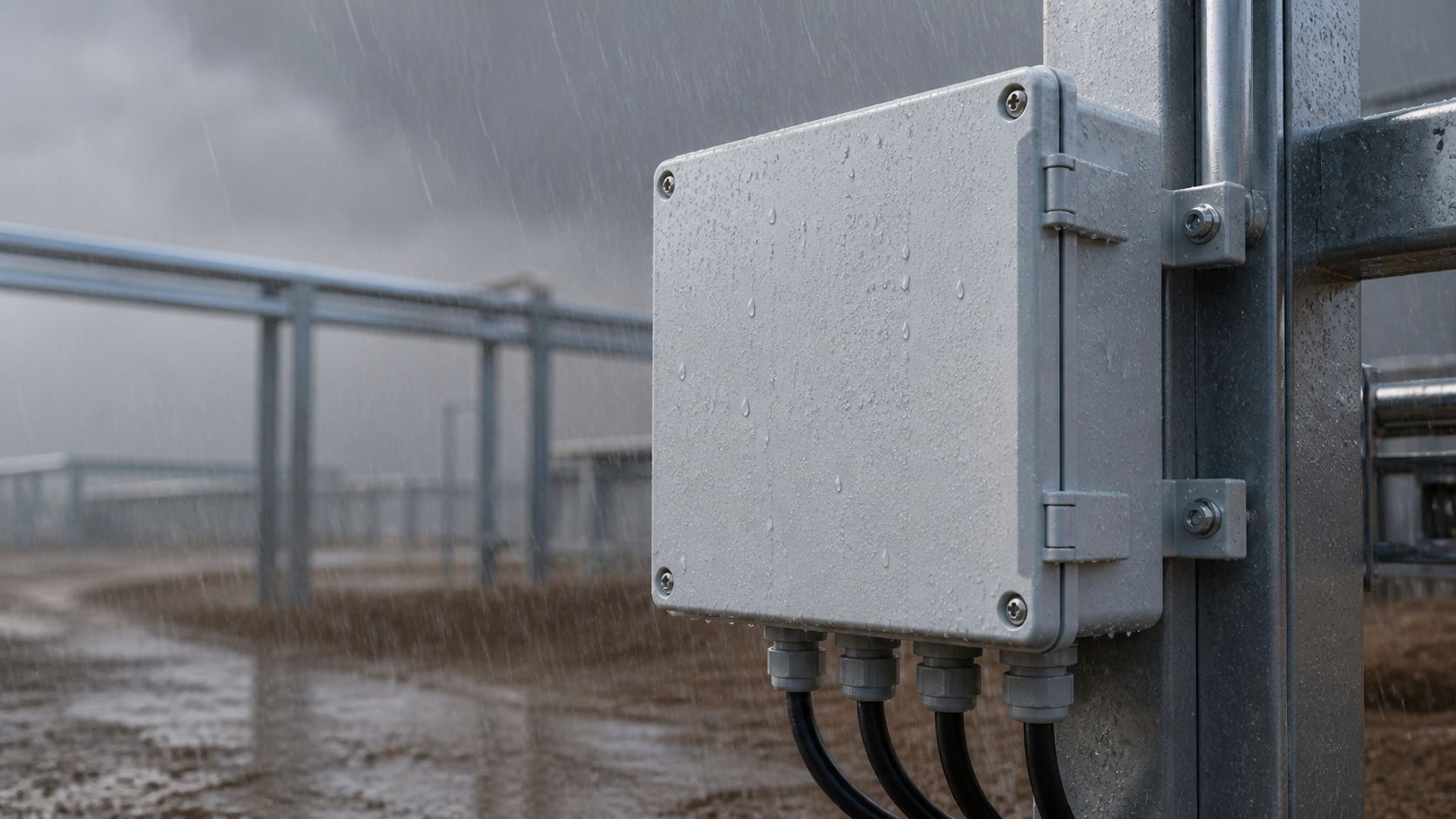
Selecting the Grade for a Combiner Box
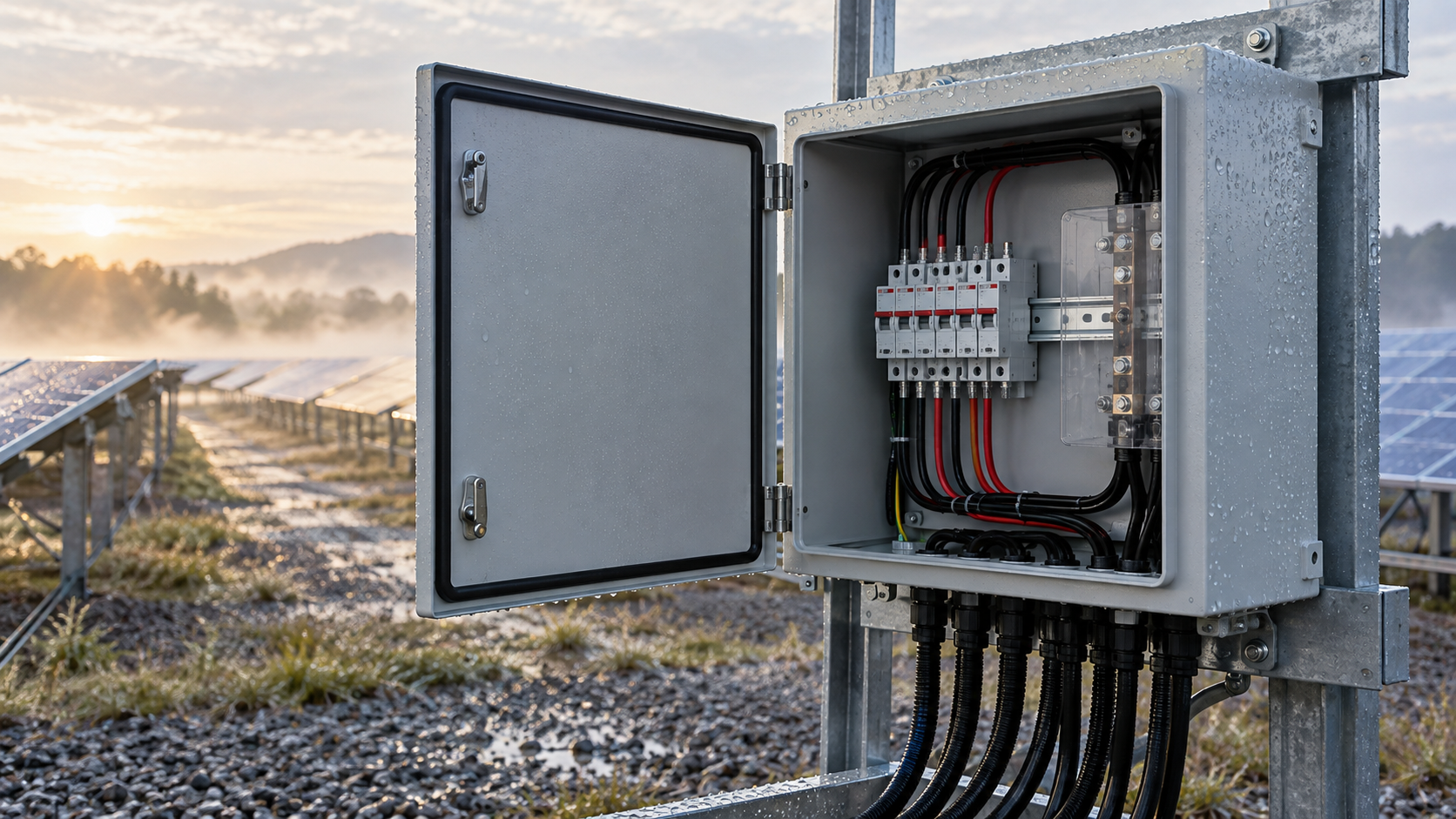
Choose the IP grade from the site exposure and the declared test conditions, then confirm the enclosure meets that grade across all cable entries and the door seal. A higher water grade, such as 7 or 8, does not automatically imply a specific dust grade, and IPX7 immersion does not equal all-direction jet performance. Verify the exact combination against the approved model test report rather than a vague label.
Common Site Misinterpretation
A frequent error is to read only the water digit and ignore the dust digit, or to assume that a higher number in one position covers the other. Another error is to treat an outdoor label as proof of a tested grade. Only the full two-digit code with its defined test conditions describes the protection actually verified.
Where the site needs both dust-tight performance and jet protection, confirm that the model is tested and declared for that exact pair. Partial claims such as dust-tight but untested for jets should be rejected in favor of the documented combination from the approved test report.
This article preserves the accepted technical guidance but is not a substitute for the applicable local code, approved model datasheet, test report or a qualified engineer's design review.
Frequently asked questions
What does the first IP digit cover?
Solid objects and dust, from no protection (0) through dust-protected (5) to dust-tight (6), each defined by a specific test.
What does the second IP digit cover?
Water exposure: dripping, spraying, jets, and immersion, each with defined nozzle, pressure, duration, and position.
Does IP67 mean it passed every water test?
No. The second digit 7 means immersion to 1 m for 30 min; it does not imply the jet grades (5 or 6) or a separate dust result beyond digit 1.
Is weatherproof a valid IP claim?
No. Use the defined IP code from IEC 60529 test conditions. Verify the exact grade against the approved model test report.
Bring the project inputs to the first review.
Share the array layout, ratings, site conditions and documentation requirements for a coordinated review.
Discuss a projectContinue learning
Explore related technical guidance in Solar PV.

Published from the accepted Period 13 manuscript (1.1); technical meaning and safety boundaries are retained from the approved source package.