
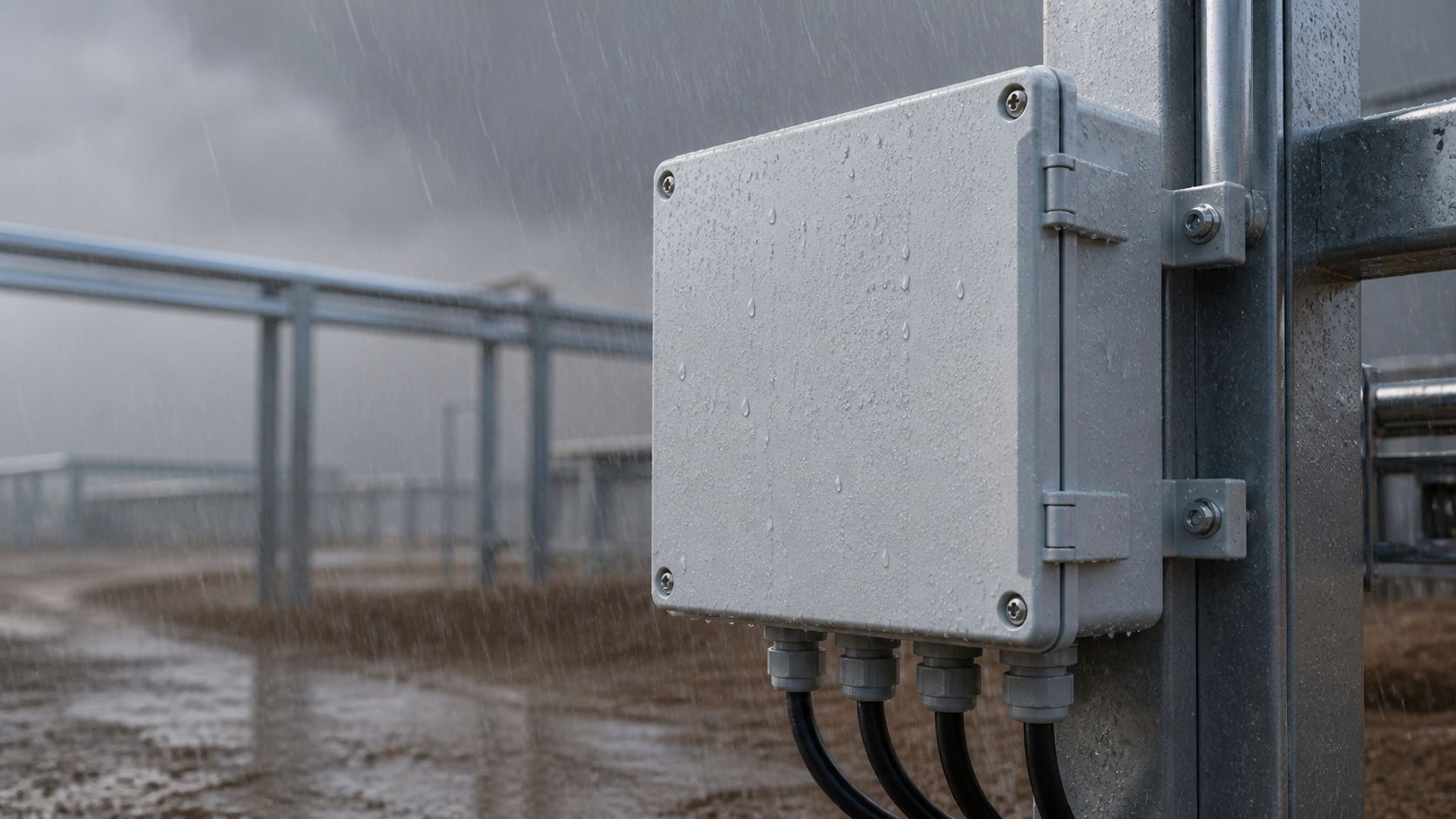
2. First digit: solid objects and access
The first numeral covers two related things at once: whether foreign objects can enter, and whether a person can touch hazardous internal parts. Both are verified with defined access probes and object gauges.
Table 1 — First characteristic numeral — protection against solid objects and access
The IP5x to IP6x distinction is the one that matters commercially. IP5x is *dust protected*: fine dust may enter, but not in a quantity that interferes with operation or safety. IP6x is *dust tight*: no dust enters at all, verified in a talc chamber with the enclosure held at reduced internal pressure so any leakage path is exercised.
For a switchgear assembly with contactors, relays and electronic controls, the difference is real. Conductive or hygroscopic dust settling on a printed circuit board or between contact surfaces causes tracking, intermittent operation and premature contact erosion. In cement plants, quarries, grain handling, textile mills and desert solar installations, specify IP6x.
1. How to read an IP code
IP stands for Ingress Protection. The code is defined by IEC 60529 and takes the form of the letters IP followed by two characteristic numerals, optionally followed by additional letters.
IP65 breaks down as: 6 — dust tight, no ingress of dust at all, and complete protection against contact with hazardous parts; 5 — protected against water jets projected from a nozzle in any direction.
Three rules govern how the code is used:
IP ratings are declared by test, not by inspection. When a rating is quoted, ask whether it applies to the complete assembly as installed — with glands, gaskets, door seals, viewing windows and ventilation fitted — or only to the empty enclosure shell. The difference in practice is substantial.
- Each digit is independent. A rating is written IP54, not IP-54 or IP 5.4, and each numeral is spoken separately.
- A digit may be replaced by X where that characteristic is not specified or not tested. IPX5 means water jet protection was verified but solid ingress was not rated.
- The solids scale is cumulative; the water scale is not fully so. A device passing the level 6 dust test inherently satisfies all lower solid levels. On the water side, levels 1 to 6 are broadly progressive, but levels 7 and 8 test immersion, which is a different mechanism from jetting. An enclosure rated IPx7 has not necessarily been proved against high-pressure jets, which is why dual designations such as IP66/IP68 appear on equipment tested for both.
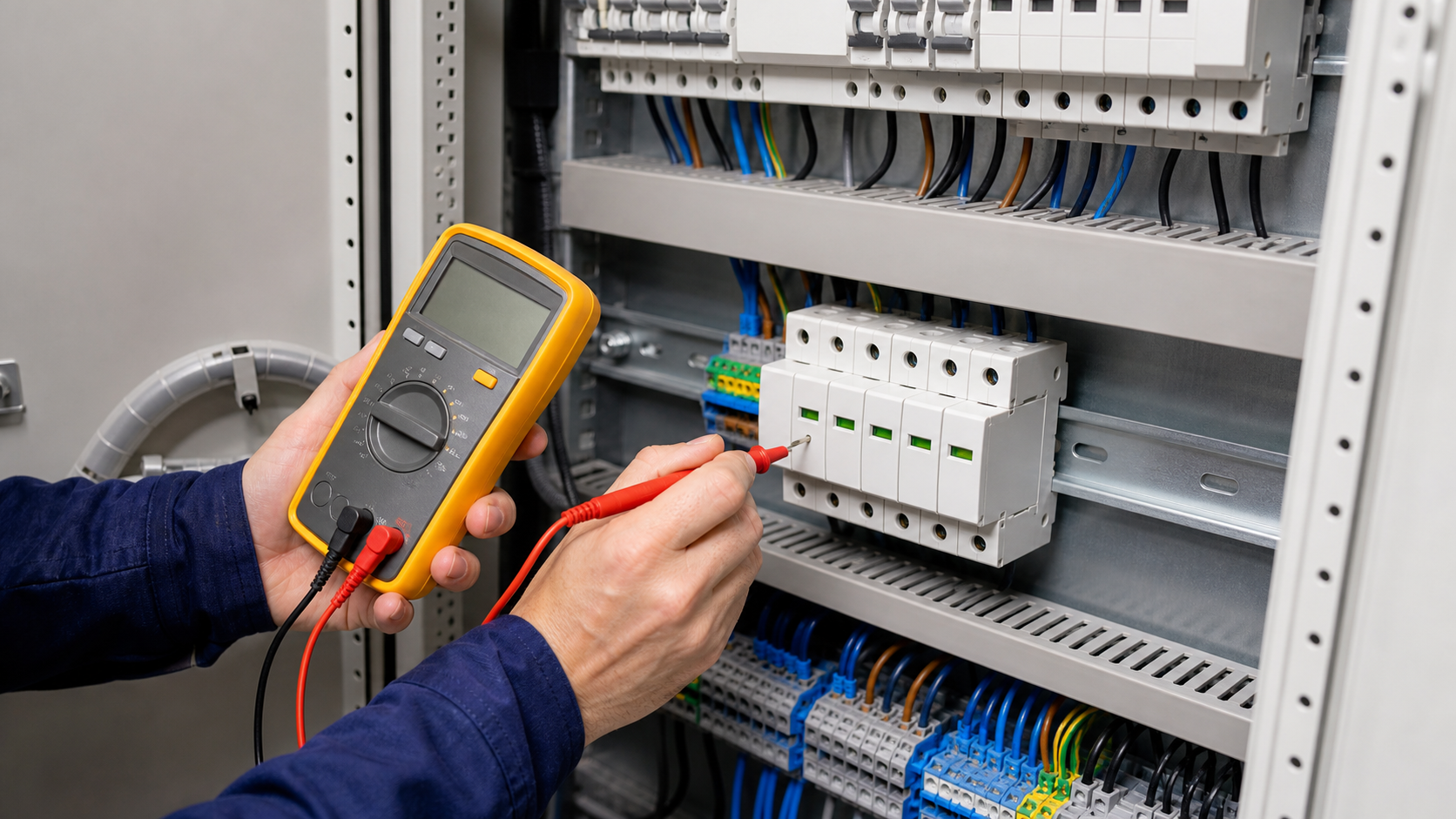
3. Second digit: water
The second numeral describes water protection, tested with defined flow rates, pressures, durations and nozzle geometries.
Table 2 — Second characteristic numeral — protection against water
IP54 versus IP65 versus IP66 is the comparison most often needed in practice. IP54 tolerates splashing and is adequate for a sheltered outdoor position or a normal indoor industrial environment. IP65 withstands a directed hose jet and is the practical minimum for exposed outdoor equipment or anywhere wash-down occurs. IP66 handles powerful jets at eight times the flow rate of IP65 and belongs in food processing, vehicle wash and heavy wash-down areas.
IPx9 (sometimes written IP69K) is a specialist rating for steam-cleaning and high-pressure sanitation. It is not a general upgrade and, importantly, an IPx9-rated enclosure is not automatically proved against immersion.
4. Additional letters and supplementary codes
IEC 60529 allows optional characters after the two numerals. They appear less often but carry useful information when they do.
Where an enclosure is declared IP20 but its internal barriers make live parts inaccessible to a finger, the marking IP20B communicates that clearly. This matters for assemblies to IEC 61439, where the degree of protection against contact with hazardous live parts during normal operation is a separate design consideration from the ingress rating.
- Additional letter A, B, C or D. Declares access protection independently of the first numeral, using the back of hand, finger, tool and wire probes respectively. Used where an enclosure offers better protection against people than against objects — for example, a ventilated cabinet with internal shrouding.
- Supplementary letter H. High-voltage apparatus.
- Supplementary letter M. Tested for water protection while the moving parts of the equipment were operating.
- Supplementary letter S. Tested for water protection while the moving parts were stationary.
- Supplementary letter W. Suitable for use under specified weather conditions, with additional protective features.
5. The complete IP chart
Table 3 — Common IP classes and typical electrical applications
6. Choosing an IP class for real installations
Work through the environment systematically rather than defaulting to the highest available class.
Do not over-specify. IP66 is not automatically better than IP54 for an indoor switchroom. It costs more, is harder to gland correctly, restricts ventilation and increases internal temperature rise. Specify the class the environment actually requires.
- Indoor or outdoor? Outdoor mounting immediately implies IP54 as a floor, and IP65 wherever direct rain, hose cleaning or wind-driven dust is realistic.
- What is airborne? Cement dust, grain dust, textile fibre, sand and coastal salt aerosol all justify IP6x. Ordinary office or warehouse dust does not.
- Is there cleaning? Wash-down changes everything. Directed hose cleaning requires IP65 as a minimum and IP66 where high-flow equipment is used.
- Can water pool? Equipment mounted low in an area subject to flooding or floor washing needs IPx7 consideration regardless of the airborne environment.
- Is condensation a factor? Enclosures that cycle through large temperature swings breathe. A sealed IP66 enclosure with no ventilation can accumulate internal condensation. The remedy is a membrane vent that equalises pressure while maintaining the IP class, or an anti-condensation heater.
- What about heat? Higher IP classes cannot shed heat by convection through the enclosure surface as readily. Check the thermal calculation. A high IP class may force a larger enclosure, external cooling, or a heat exchanger.
7. What an IP rating does not tell you
The IP code covers exactly two things: solid ingress with access protection, and water ingress. Everything else needs a separate specification.
- Mechanical impact. Covered by the IK code in IEC 62262, from IK00 to IK10. An IP66 polycarbonate enclosure may still crack under a modest impact.
- Corrosion resistance. Governed by the material and coating system, not by IP. ISO 12944 defines corrosivity categories and coating specifications. A coastal installation needs a marine-grade coating or stainless steel regardless of its IP class.
- Chemical resistance. Solvents, fuels, cleaning agents and process chemicals attack gaskets and coatings. Check compatibility separately.
- UV stability. Polymer enclosures degrade under sustained sunlight. Specify UV-stabilised material for outdoor use.
- Temperature range. Gasket materials harden at low temperature and take a permanent set at high temperature. Confirm the declared operating range.
- Arc containment and internal arc classification. For switchgear assemblies this is defined in IEC 61439 and is entirely independent of IP.
- Ageing. An IP rating is verified on a new enclosure. Gaskets compress and harden, hinges wear, and glands loosen. Include seal inspection in the maintenance schedule.
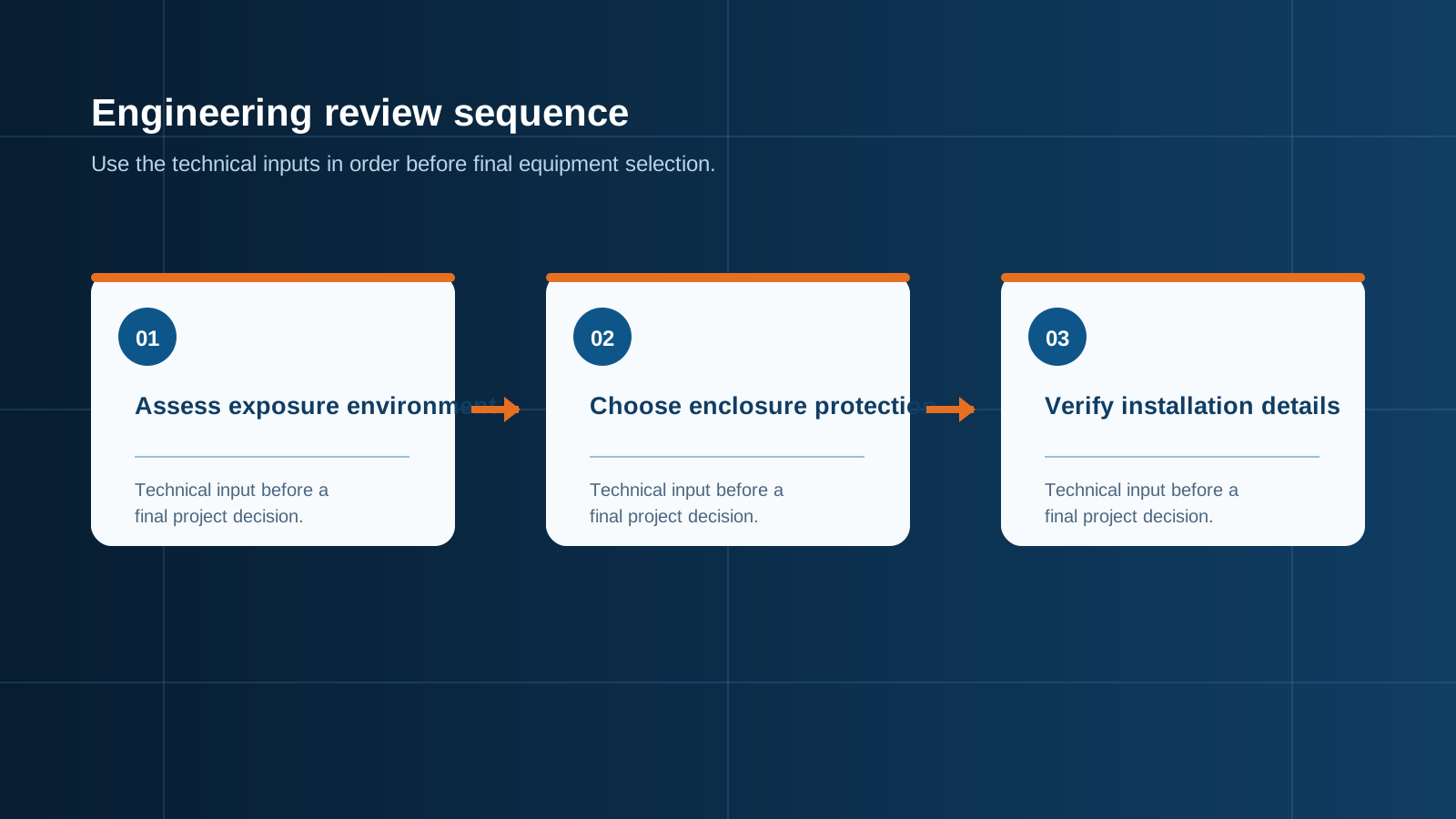
Technical diagram shown at a readable responsive scale.
8. NEUTRON enclosure specification
NEUTRON builds low-voltage assemblies and distribution enclosures across the range from IP30 to IP65, selected to the application rather than offered as a single fixed option.
Construction. Cold-rolled steel, galvanised steel or stainless steel depending on the corrosivity of the environment, with phosphating pretreatment and powder coating, typically to RAL 7035 light grey. Copper or aluminium busbar systems. Assemblies are built to IEC 61439 with component selection to IEC 60947, under an ISO 9001 quality system, with CE and CB documentation available for export projects.
Verification. IP class is confirmed on the completed assembly, not on the bare shell. Factory inspection covers enclosure sealing and gland integrity alongside insulation resistance, earth continuity, and clearance and creepage measurement.
- IP30, IP40, IP41 and IP42 for indoor switchrooms and control rooms, where the requirement is tool and wire protection with limited drip protection.
- IP54 and IP55 for general industrial and sheltered outdoor positions.
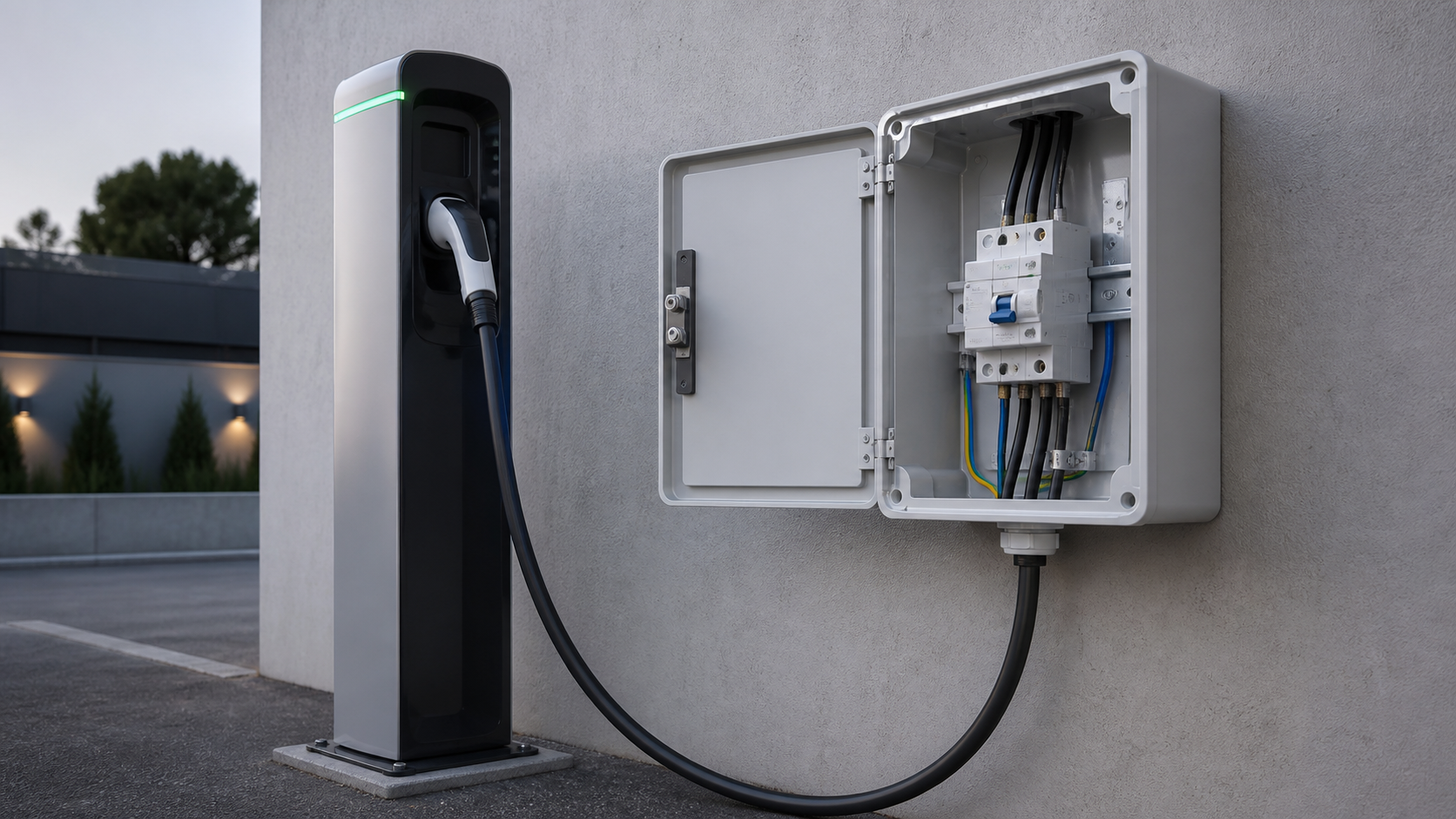
- IP65 for exposed outdoor installations, dusty industrial plants, and coastal or desert environments. NEUTRON's DC combiner box specification applies this directly: IP20 or better indoors, IP54 or better outdoors, and IP65 for sandy or corrosive sites, verified with all cable glands fitted and sealed.
This is general technical guidance, not a substitute for local electrical code, the applicable standard, product datasheets or a qualified engineer's design review. Confirm ratings and final configurations against the actual project.
Bring the project inputs to the first review.
NEUTRON can review the application context, electrical envelope, enclosure conditions and document requirements related to ip rating guide (iec 60529): what the codes mean for your equipment before quotation.
Discuss a technical requirementContinue learning
Explore related technical guidance in Power Distribution.
Converted from the approved Period 01 source article for IP Rating Guide (IEC 60529): What the Codes Mean for Your Equipment. Editorial instructions, duplicate anchor placeholders and embedded publishing directions were removed; the technical body is retained for educational use.