
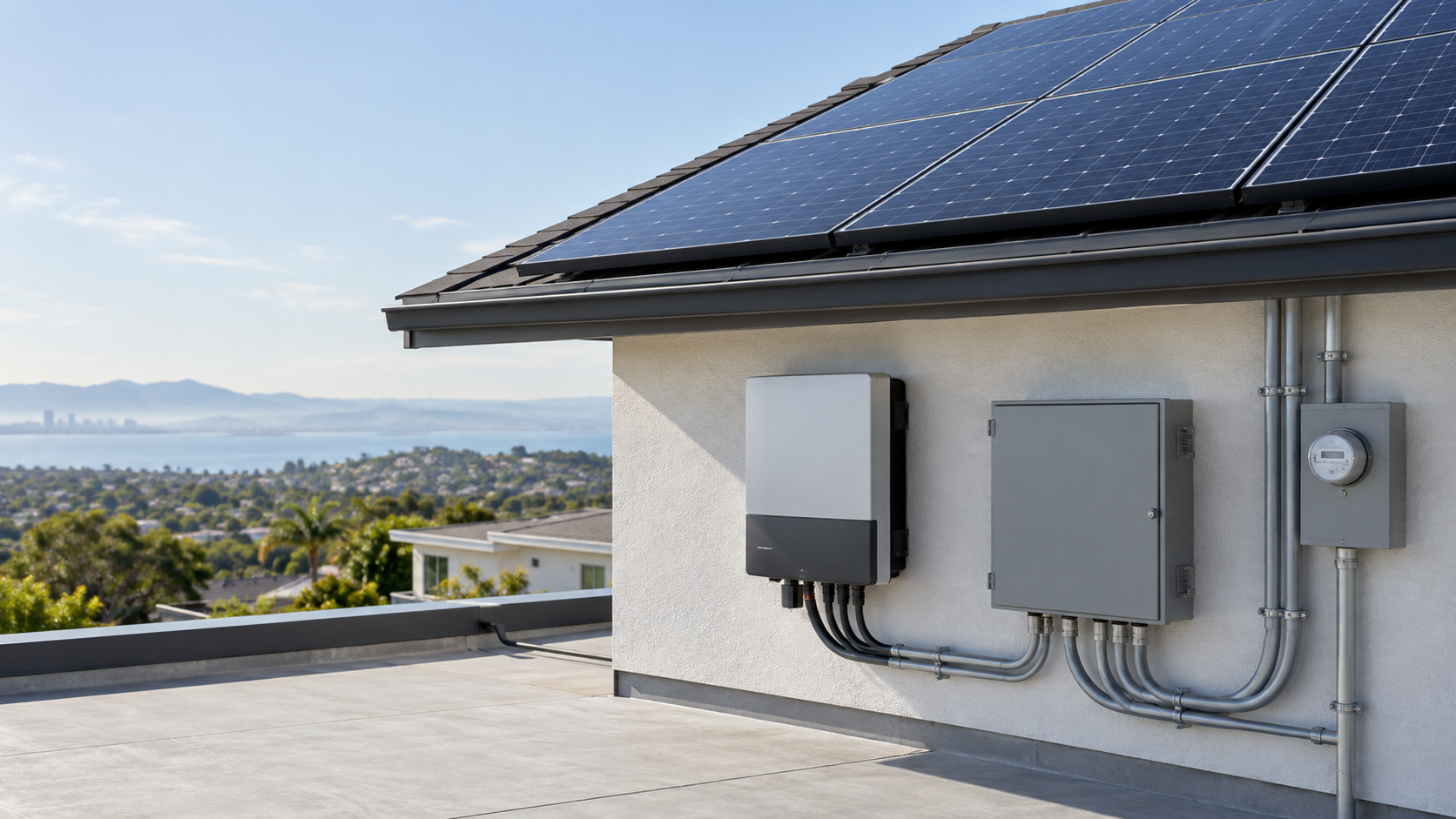
What an AC combiner box does on a rooftop
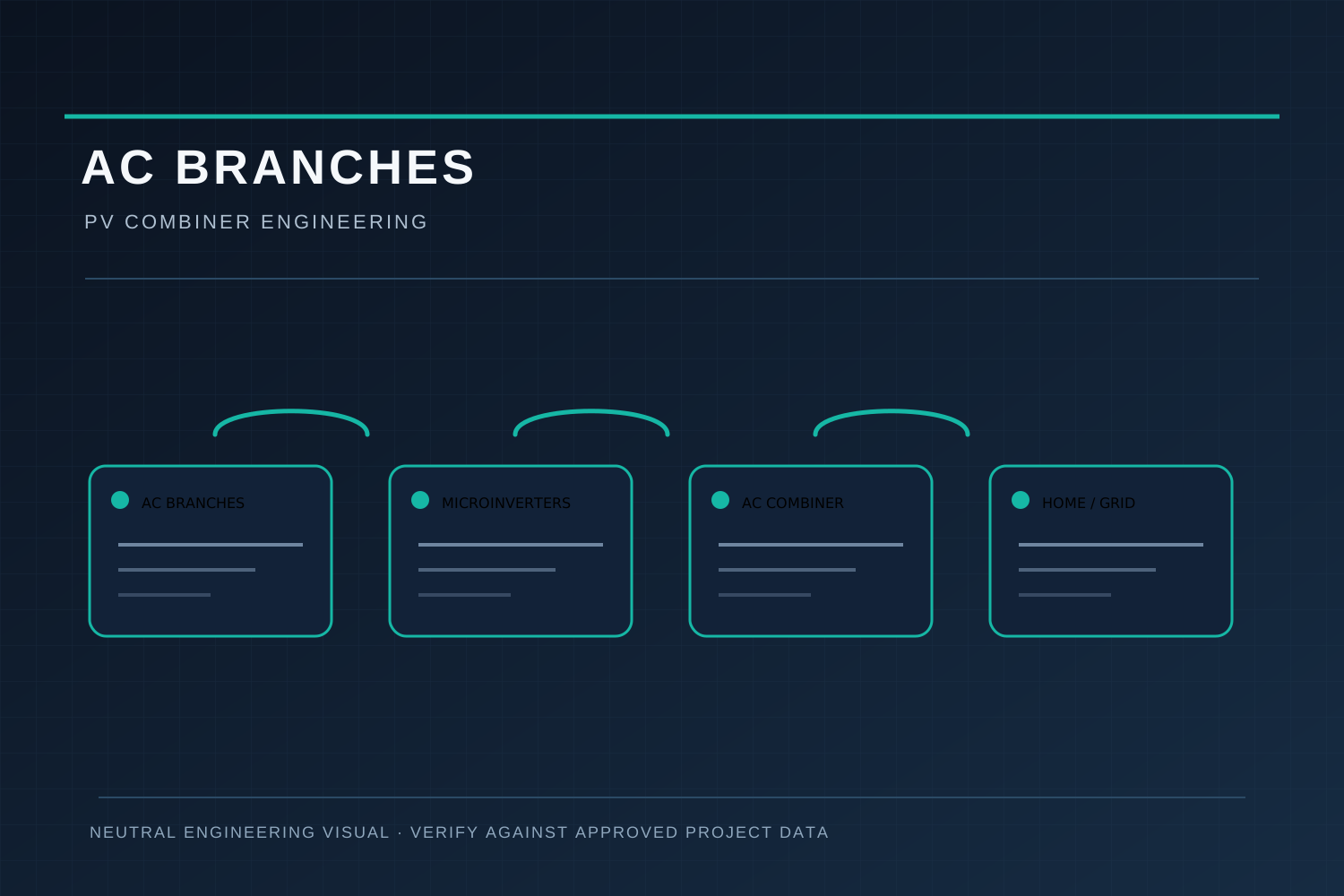
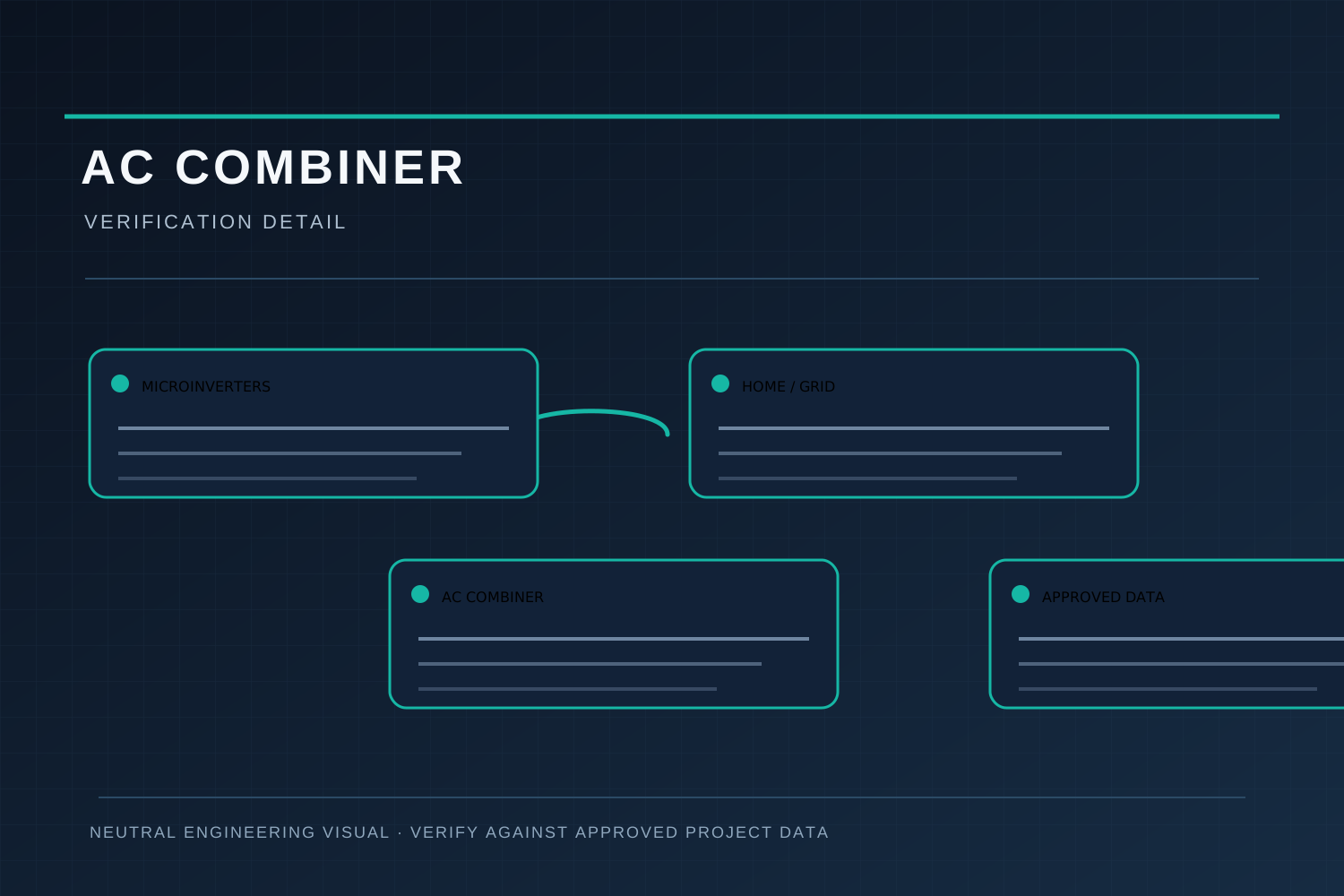
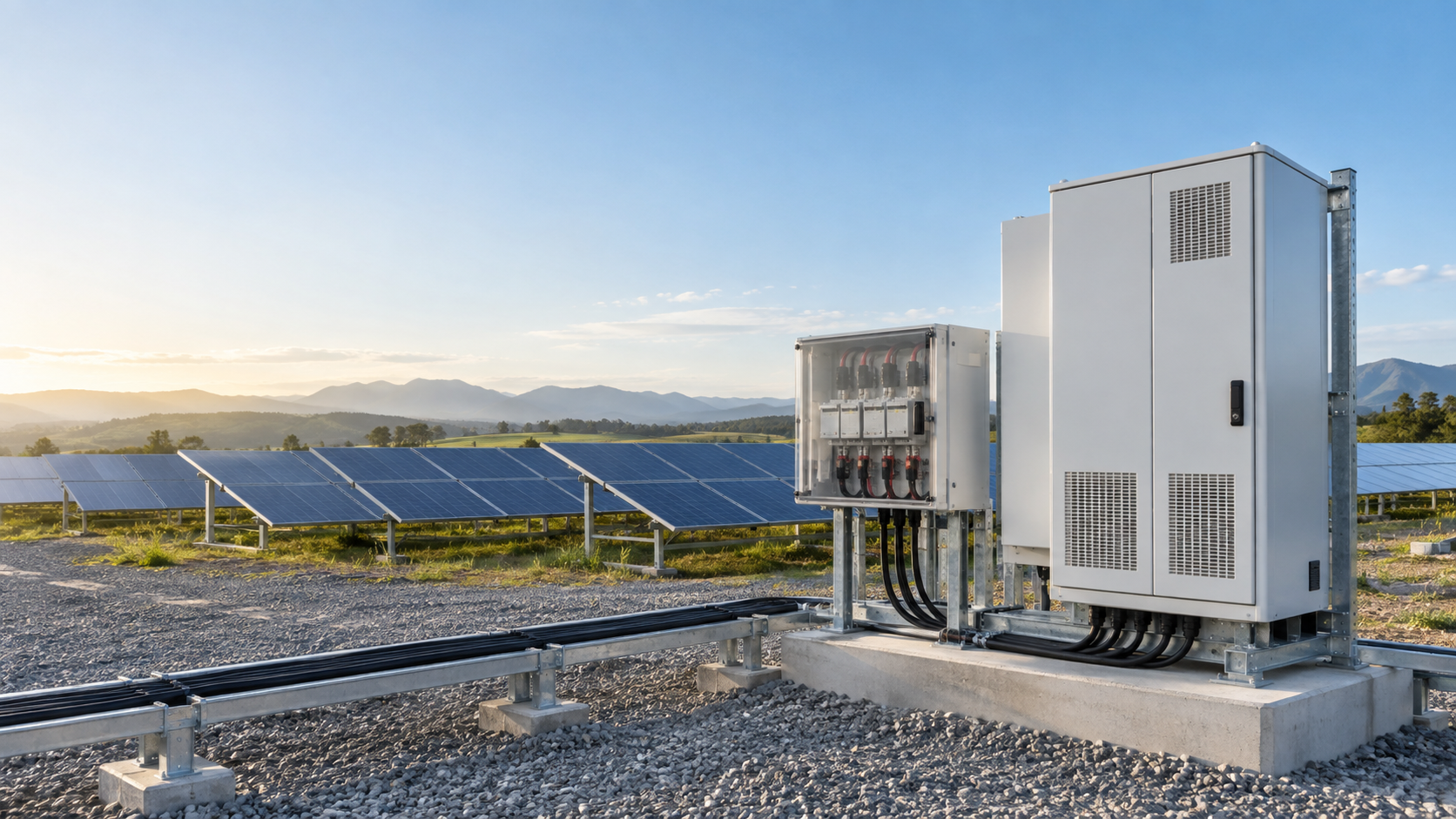
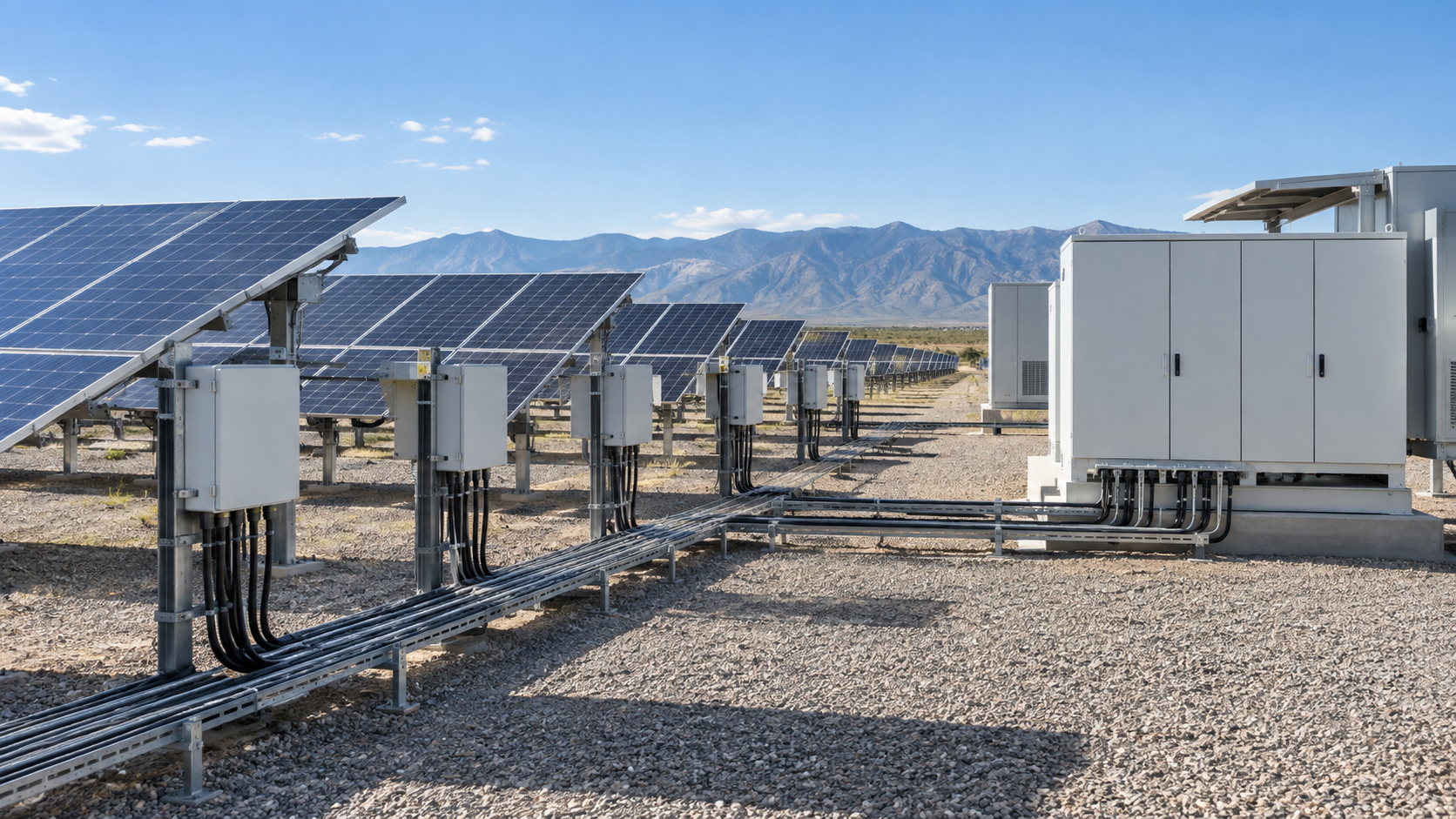
In a residential rooftop system, an AC combiner box groups the AC outputs of module-level power electronics into one feed toward the inverter or the home. The key is to know what sits upstream. A power optimizer is a DC/DC device mounted at the panel: it conditions the DC string and reports data, but the DC to AC conversion still happens in a central or string inverter. A microinverter, by contrast, converts DC to AC at the panel itself, so its output is already AC. An AC combiner box therefore collects circuits that are already AC; it does not create them.
This distinction matters because the enclosure's protective and monitoring role differs by architecture. Treat the claim that an AC box is always simpler and better as unproven; the gain depends on the topology actually installed.
When the AC combiner box actually helps
An AC combiner box adds value where many AC branch circuits must be consolidated, disconnected, and metered in one enclosure: fewer roof penetrations for conduit, one labeled disconnect, and easier per-circuit current readout. These gains are conditional on the layout, the number of module-level devices, and local wiring methods.
None of these gains are automatic. Verify the expected benefit against the as-built plan before specifying the assembly.
- Fewer combined AC runs when many microinverters share a roof plane.
- A single accessible disconnect for first responder and maintenance use.
- Optional per-branch monitoring, only per the approved model's listed functions.
RCD and rapid shutdown follow architecture and region
Do not apply AC residual-current rules to a DC section by analogy. A rooftop using microinverters produces AC at panel level, and any RCD requirement flows from the AC-side codes of the region. A system using DC/DC optimizers still carries DC on the roof, so rapid shutdown and DC isolation rules apply to that DC portion. Regional editions of the NEC and local amendments set the exact obligations; confirm the applicable version before design.
Only qualified persons should open the enclosure. Output switching isolates the downstream AC feed but does not de-energize PV input or busbar while sunlight is present on a DC-coupled portion. NEUTRON capability claims must be verified against approved model datasheets and test reports.
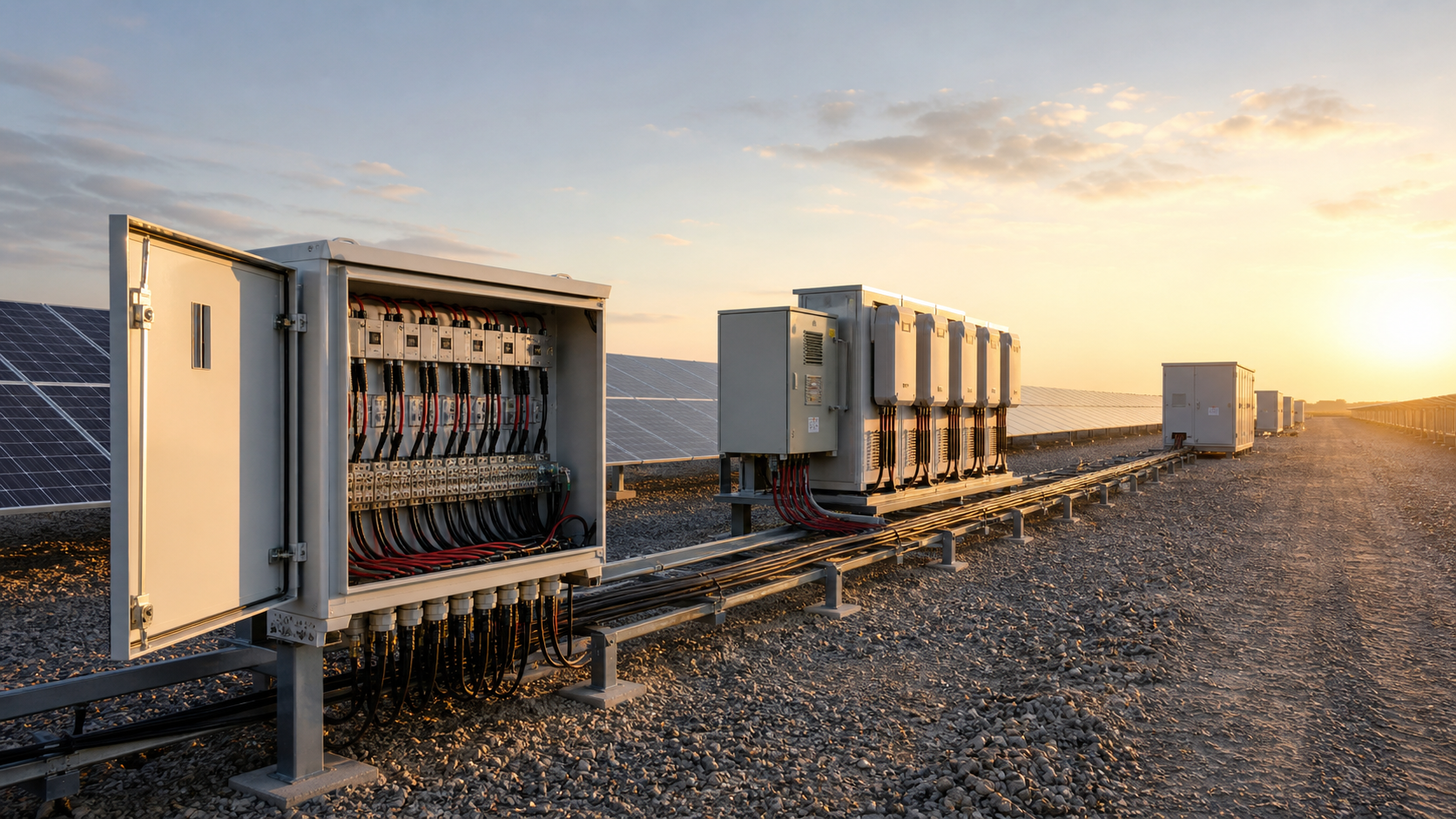
Safe working boundaries
Before any work, isolate all supplies and verify absence of voltage with a rated meter. A switch-disconnector is a means to open a circuit under load; it is not a fault-current breaker. No field surge test should be performed on a live system. Protection is configured per the approved NEUTRON model datasheet and test reports.
- Qualified-person only; apply lockout and verify zero voltage.
- Switch-disconnector does not equal fault interruption.
- Upstream PV conductors may remain energized under light.
This article preserves the accepted technical guidance but is not a substitute for the applicable local code, approved model datasheet, test report or a qualified engineer's design review.
Frequently asked questions
Is a power optimizer the same as a microinverter?
No. A power optimizer is a DC/DC device at the panel that conditions DC and passes it to a central or string inverter. A microinverter converts DC to AC at the panel, so an AC combiner box then collects AC outputs. The conversion stage sits in different places.
Does an AC combiner box remove the need for rapid shutdown?
Not by itself. Rapid shutdown applies to the DC portion of a roof. Systems with DC/DC optimizers still have DC wiring on the roof, so region-specific rapid shutdown rules still apply to that part.
Can I add an RCD inside the AC combiner box for safety?
Only where the regional AC code requires it and the device is listed for that AC circuit. Do not transfer AC RCD rules onto a DC section by assumption; the DC portion follows different protection rules.
Will the output disconnect make the whole roof safe to touch?
No. Opening the output switch isolates the downstream AC feed. PV input conductors and any DC busbar can remain energized while light hits the array. Always isolate all supplies and verify zero voltage first.
Bring the project inputs to the first review.
Share the array layout, ratings, site conditions and documentation requirements for a coordinated review.
Discuss a projectContinue learning
Explore related technical guidance in Solar PV.
Published from the accepted Period 13 manuscript (1.1); technical meaning and safety boundaries are retained from the approved source package.