
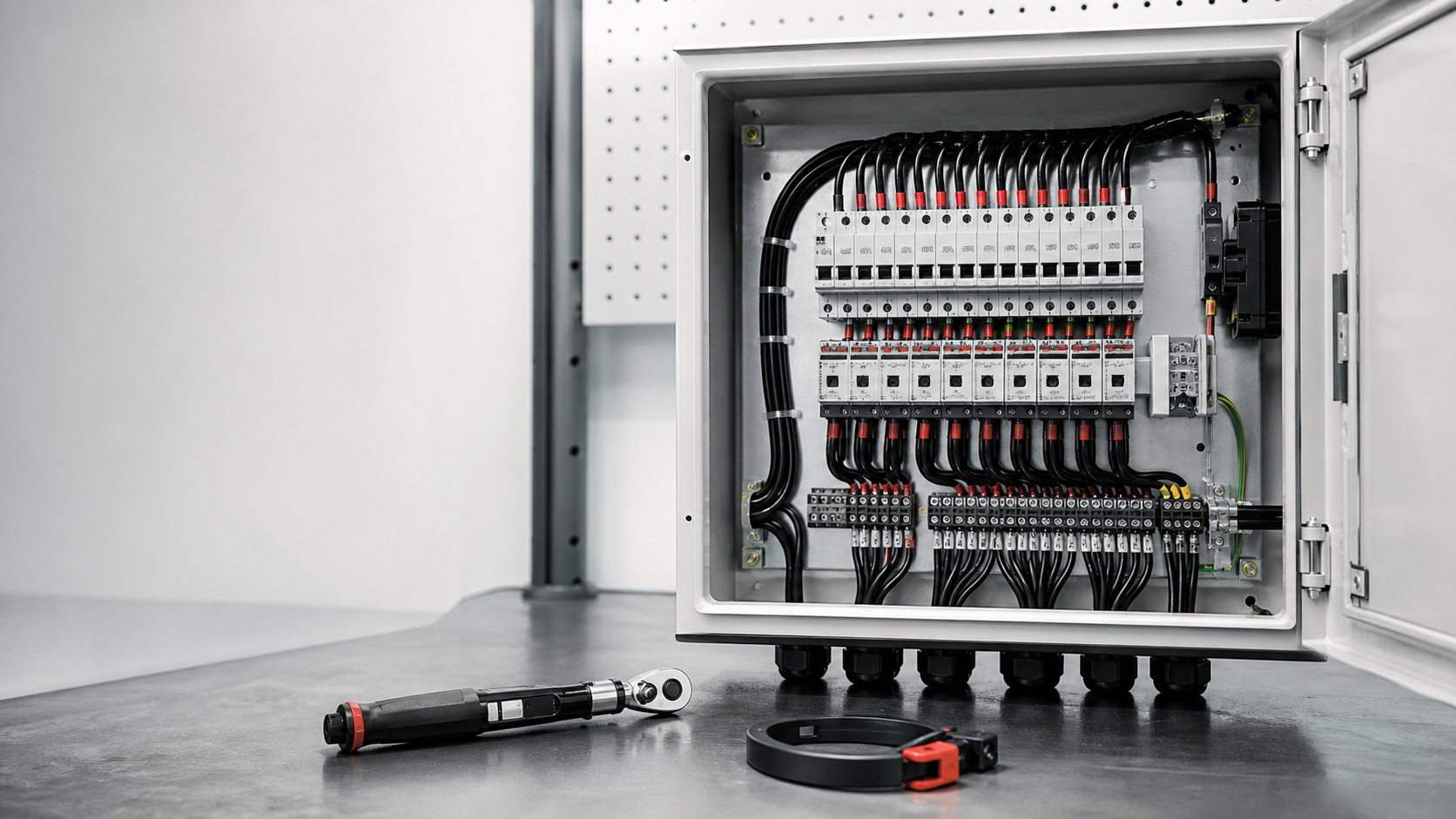
Why PSI matters
A pre-shipment inspection (PSI) verifies that the goods match the order before the container is sealed. Finding a defect at the factory is cheap; finding it at the project site is expensive. A structured checklist turns inspection from a formality into a gate.
Cable checks
- Verify cross-section, conductor material and insulation marking against the order.
- Check the standard marking on the sheath (EN 50618 or IEC 62930).
- Measure reel length or weight against the invoice quantity.
- Spot-check insulation resistance where a tester is available.
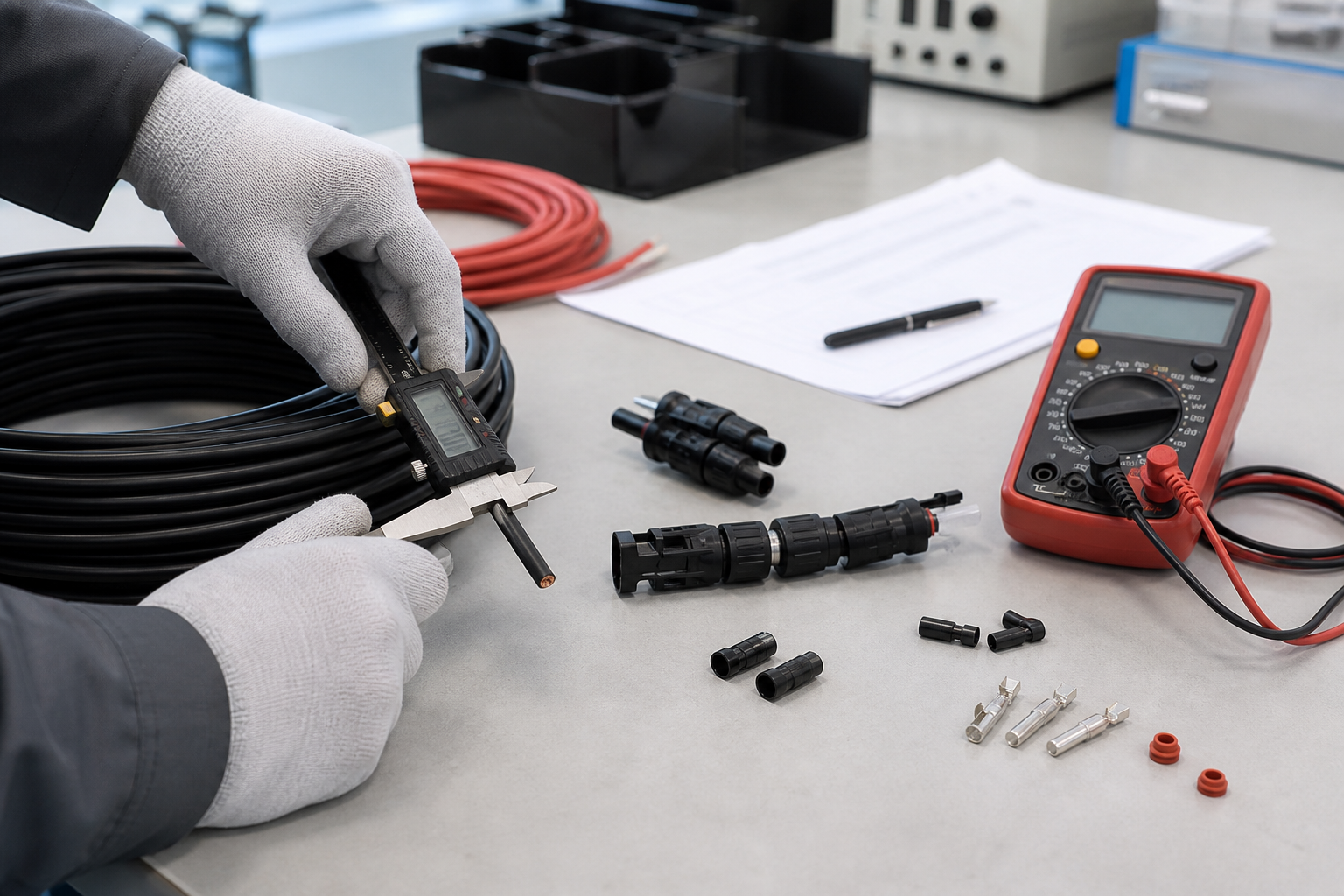
Connector checks
- Confirm brand, voltage class and current rating printed on the housing.
- Verify mating halves seat fully and lock with audible click.
- Check seals are present and free of damage.
- Confirm the same brand across cables, connectors and combiner inputs.
Protection device checks
- Confirm fuse rating and breaking capacity markings.
- Verify SPD class, voltage protection level and type on the label.
- Operate a sample of breakers and disconnects to confirm trip and switching function.
- Check certification references against the RFQ standard list.
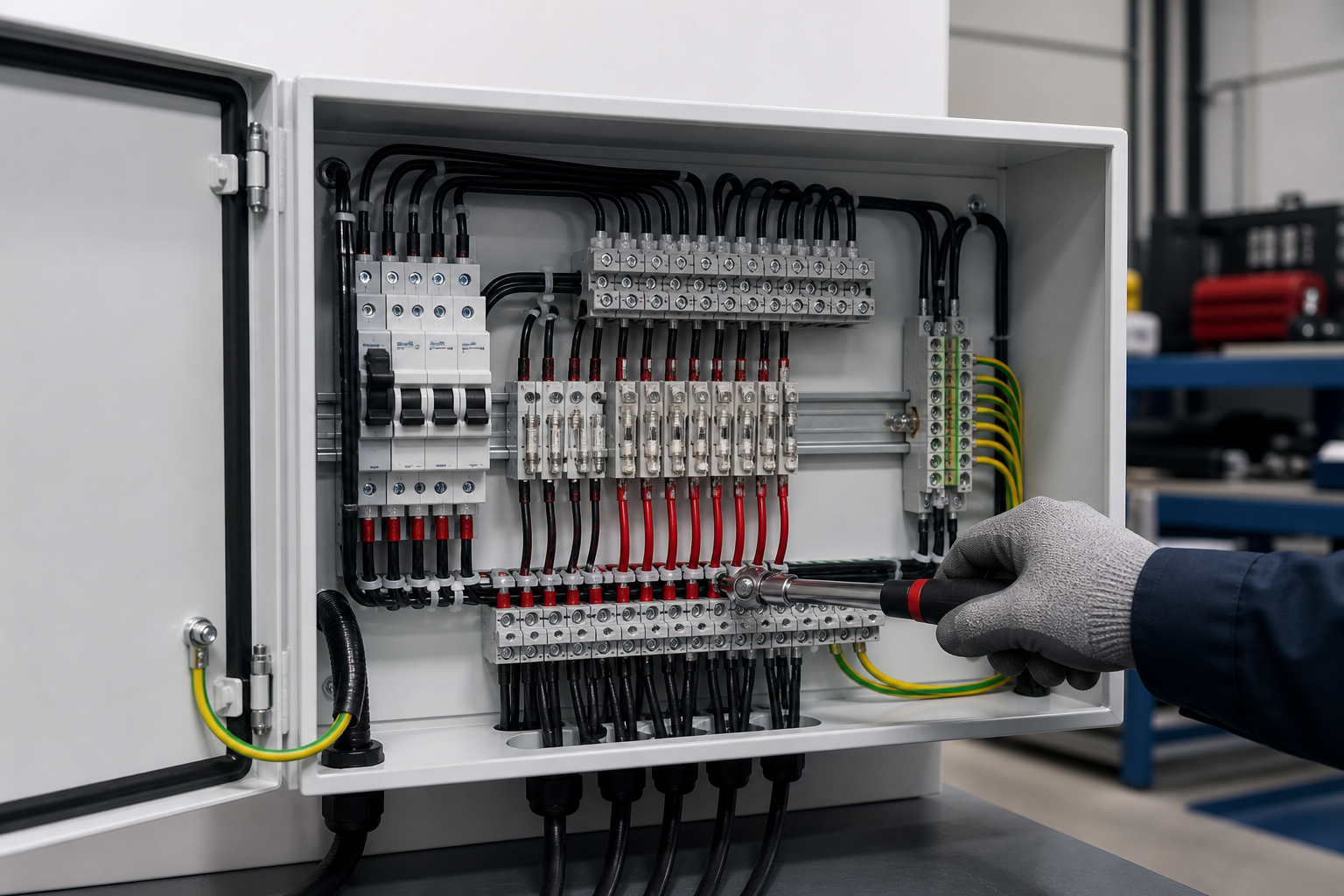
Combiner box checks
- Open the enclosure and verify busbar, wiring and terminations match the drawing.
- Check fuse holders, SPD and disconnect are the specified ratings.
- Verify IP rating, gaskets, gland entries and corrosion class for the site.
- Confirm the label plate shows the correct voltage class and string count.
Packing and labelling
- Verify carton and pallet labels match SKU and quantity.
- Check private labels are applied where specified.
- Confirm packing protects terminals and connectors from transit damage.
- Review the loading plan for mixed BOS containers before loading starts.
Sampling and documentation
Inspection is normally performed on a statistical sample agreed in advance. Capture photos of the sample, record measurements in a report, and note any non-conformance with its disposition. The report travels with the shipment so the project site knows what was verified.
Before loading
Review the inspection report, close open non-conformances, and confirm the final loading sequence. A PSI that ends with a signed report and matched photos gives the buyer the evidence they need before payment release.
This guide supports an initial technical or commercial review. Final ratings, standards, shipping terms, documentation and configuration must be confirmed for the actual project requirement.
Frequently asked questions
What should a pre-shipment inspection cover for a BOS order?
Cover cable cross-section and markings, connector brand and seating, protection device ratings, combiner box wiring and label plate, packing and labelling, plus a documented sample with photos. Each line item maps back to the RFQ.
Is inspection done on every unit?
No. Inspection is normally performed on a statistical sample agreed in advance, typically a percentage per SKU. The sample size and acceptance criteria should be written into the order so both sides know the rule.
What happens when a defect is found at PSI?
The defect is recorded with photos, the disposition is agreed (rework, replace or accept with concession), and the report is updated. Loading proceeds only when open items are closed.
Who writes the inspection report?
The inspection body or the supplier's QC team writes it, depending on the arrangement. Request a report format at the RFQ stage so the evidence structure is agreed before the order.
Bring the project inputs together
Use the checklist and technical inputs in this guide to prepare a clear project discussion.
Discuss a projectContinue learning
Explore related technical guidance in Power Distribution.

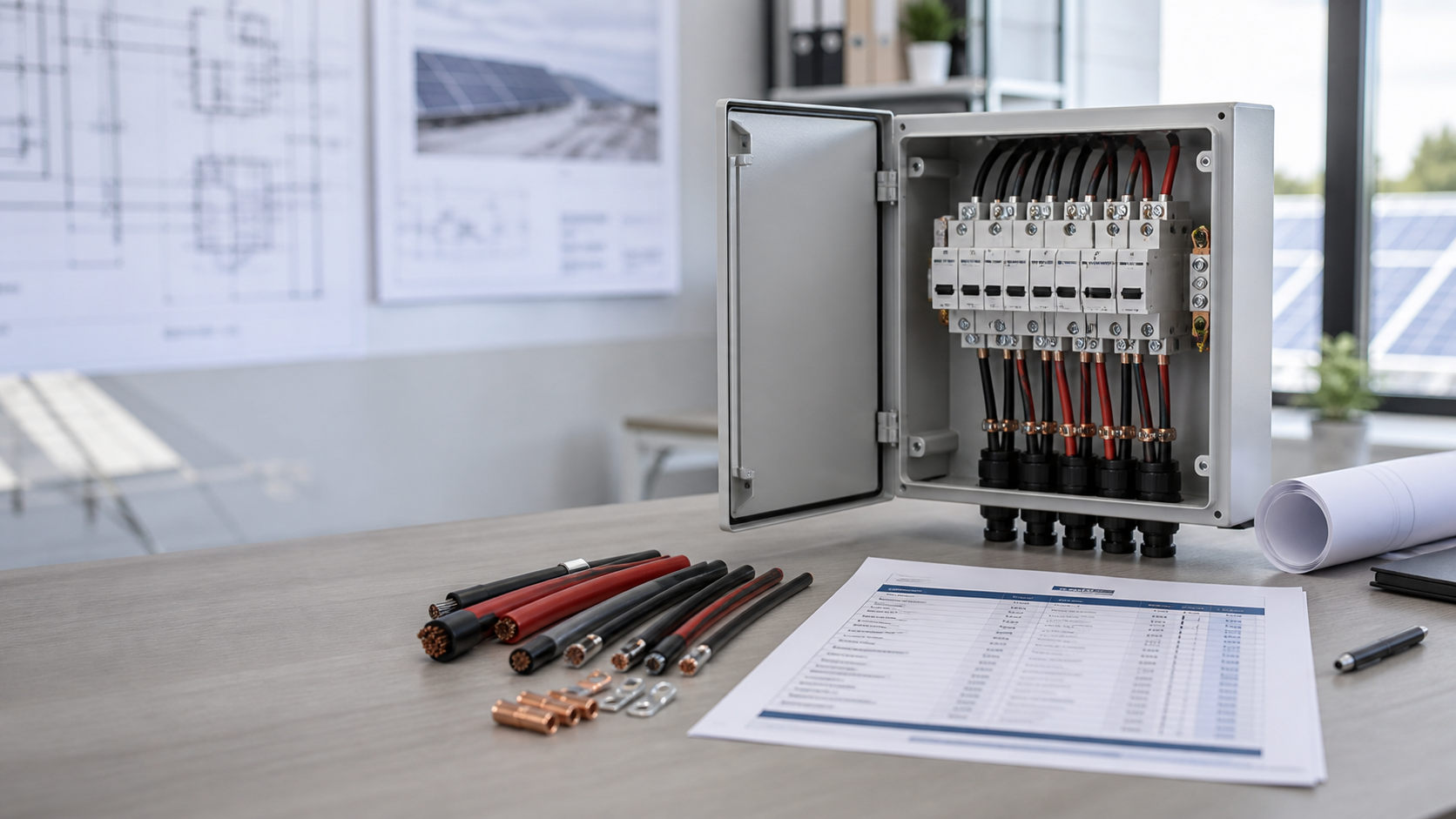

Technical note: final ratings, standards, shipping terms, documentation and configuration remain subject to the agreed project requirement.