
Why Incoterms matter in BOS trade
Incoterms define who arranges and pays for transport, where risk transfers from seller to buyer, and who handles customs. For solar BOS orders, the term you choose directly changes the quoted price and the number of logistics tasks on your side. The same equipment can differ in landed cost across terms.
EXW: buyer takes everything
Under EXW, the seller makes goods available at their premises and the buyer arranges all transport, export and import formalities. This gives the buyer maximum control over logistics cost but also maximum workload. It is common when the buyer has an established forwarder.
FOB: risk transfers at the port of loading
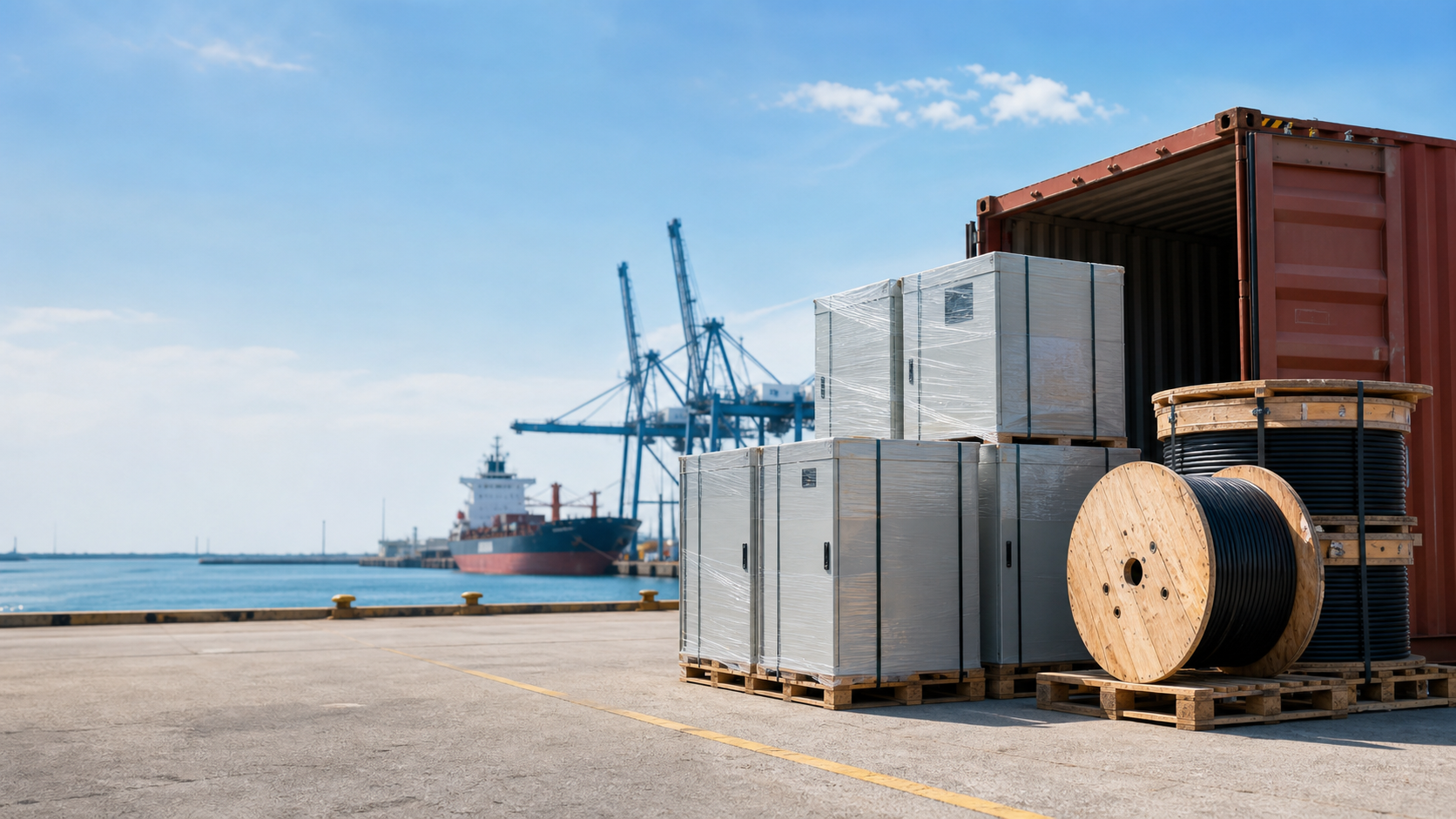
Under FOB, the seller delivers goods on board the vessel at the named port of loading. The seller clears export and pays inland freight to the port; the buyer pays ocean freight, insurance and import costs. FOB is a frequent choice for containerised BOS cargo because the split of responsibility is clear.
CIF and CFR: freight included
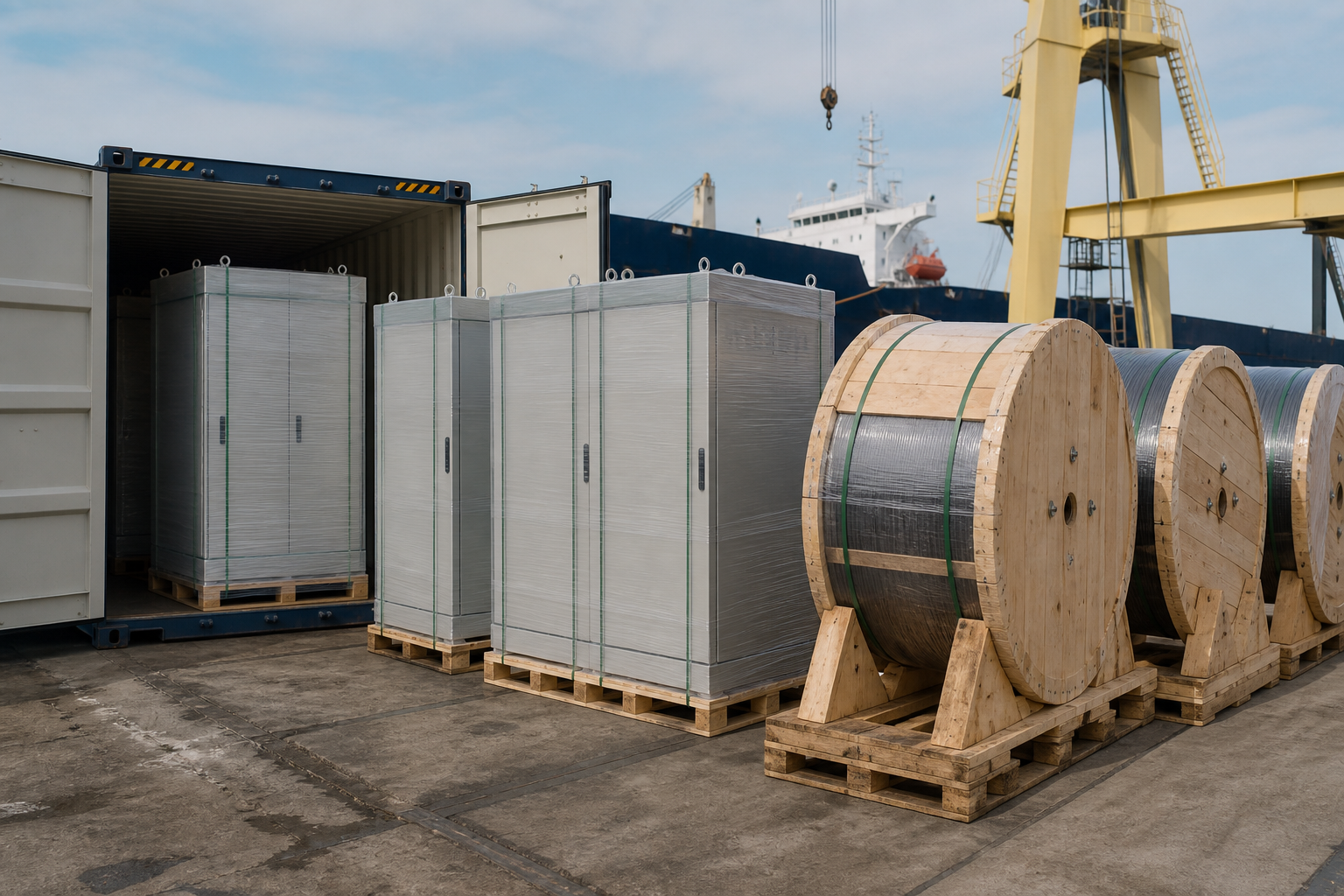
Under CFR, the seller pays freight to the destination port; under CIF, the seller also buys marine insurance. In both terms the risk transfers to the buyer when the goods are on board at the loading port. CIF is useful when the buyer wants the seller to arrange carriage, but the buyer still handles import clearance.
DAP and DDP: door delivery
Under DAP, the seller delivers goods at the named destination, ready for unloading, with all transport arranged and paid. Under DDP, the seller also handles import duty and customs clearance, delivering with duty paid. DDP removes logistics work from the buyer but concentrates it on the seller, so confirm the seller can handle import compliance in the destination market.
Choosing the right term for solar projects
For mixed BOS containers from China, FOB and CIF are the most common starting points because ocean freight is easy to obtain. Door-delivery terms suit smaller, consolidated shipments to residential and C&I project sites. Compare the full landed cost for each term before deciding.
Documentation checklist
- Commercial invoice and packing list matching the Incoterm.
- Bill of lading or waybill covering the agreed leg.
- Certificate of origin where the destination requires it.
- Insurance certificate if the term includes insurance.
Costs no term covers
Import duty, local taxes and destination inspection are never inside the Incoterm itself; they depend on the buyer arrangement or a specific variant. Clarify separately who pays duty and any destination charges so the landed cost is complete.
This guide supports an initial technical or commercial review. Final ratings, standards, shipping terms, documentation and configuration must be confirmed for the actual project requirement.
Frequently asked questions
What is the best Incoterm for importing solar BOS from China?
FOB and CIF are the most common for containerised BOS cargo because ocean freight is easy to arrange and the risk split is clear. For smaller consolidated shipments, DAP door delivery reduces buyer logistics work. Compare landed cost for each option.
What is the difference between CIF and DAP?
CIF covers freight and marine insurance to the destination port, with risk transferring on board at the loading port. DAP covers transport to the named destination ready for unloading, which is a later point of delivery. DAP does not include import duty; DDP does.
Who pays import duty under DDP?
The seller pays import duty and handles customs clearance under DDP, delivering with duty paid. Confirm the seller can manage destination compliance before choosing DDP, since import rules vary by market.
Does EXW include export clearance?
No. Under EXW the buyer arranges export clearance, transport and all formalities. The seller only makes the goods available at their premises. Choose EXW only when you have an established forwarder.
Bring the project inputs together
Use the checklist and technical inputs in this guide to prepare a clear project discussion.
Discuss a projectContinue learning
Explore related technical guidance in Power Distribution.

Technical note: final ratings, standards, shipping terms, documentation and configuration remain subject to the agreed project requirement.