
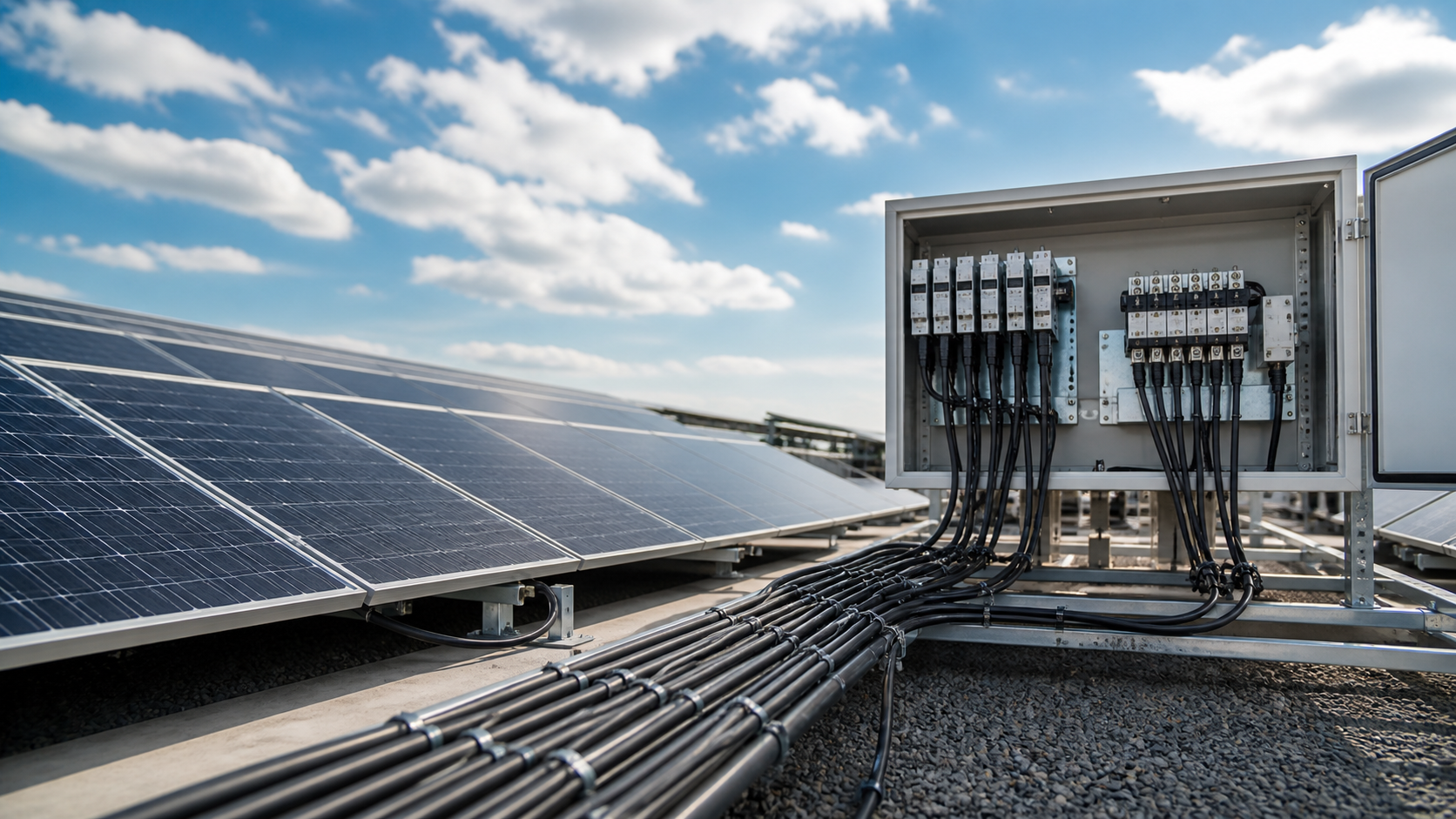
1. Why module evolution changes the box, not just the panel
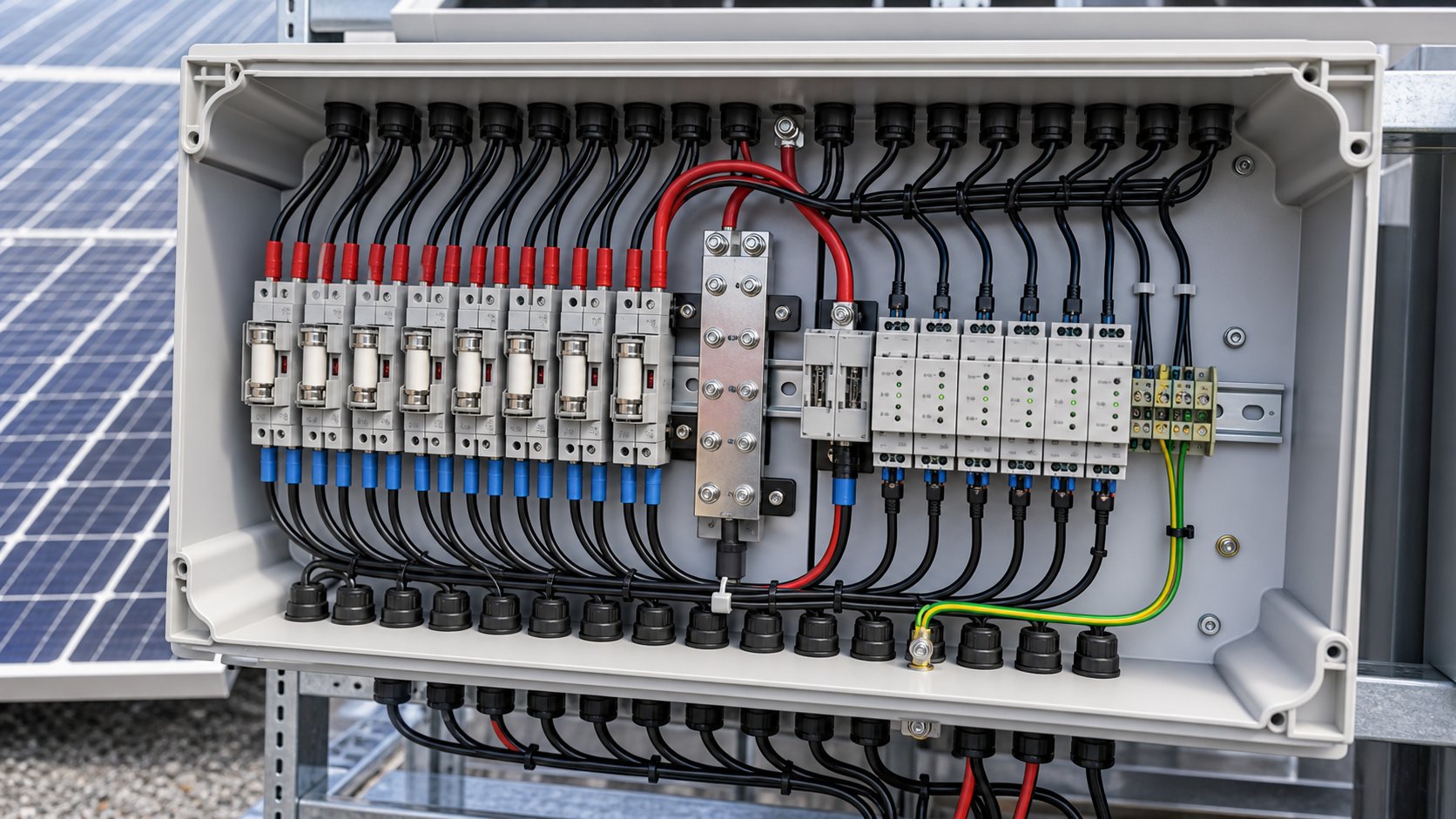
A combiner box does three jobs: collect string inputs, protect each string, and deliver a clean DC feed to the inverter or grid-connected cabinet. When module characteristics move, all three jobs shift:
- Short-circuit current (Isc) rises with bifacial gain and larger cells — overcurrent protection must cover the worst case, not the nameplate minimum.
- System voltage moves to 1500 V DC in utility-scale arrays — insulation, clearance and SPD ratings must follow.
- String counts per array grow — busbar and terminal current capacity become the limiting factor.
- Operating temperature profiles change with new cell chemistries — enclosure and ventilation design matters more.
2. Fuse and conductor sizing: the 1.25×Isc rule still rules
Where the protection study requires string-level fusing, use a gPV fuse selected for the string short-circuit current and available reverse current. A design-current margin may be part of the calculation, but IEC 60269-6 does not replace the need to check module limits, parallel-string backfeed, temperature derating and the selected fuse curve. With bifacial modules, Isc is no longer a fixed nameplate value: rear-side irradiation can lift operating current well above the front-side rating.
Worked example: a bifacial module with a front Isc of 15 A and a 8% rear gain can momentarily deliver ~16.2 A. This result cannot itself select a nominal fuse: the next suitable rating must be verified against module maximum series-fuse rating, voltage class, derating and the chosen fuse curve. An undersized fuse can contribute to nuisance operation, while an oversized selection can compromise the intended protection coordination.
Conductor cross-section inside the box must carry the fused current with acceptable temperature rise, and the busbar must aggregate the sum of all protected strings without exceeding its rated continuous current.
3. 1500 V systems: insulation and SPD coordination
As projects standardize on 1500 V DC, the combiner box must be specified for the higher insulation level end to end:
A common field failure is pairing a 1500 V array with an SPD selected for 1000 V systems. The protection level and maximum continuous operating voltage (Uc) must both clear the new envelope.
- DC isolation switch rated for 1500 V with adequate breaking capacity.
- Surge protective device (SPD) with a voltage protection level (Up) compatible with the insulated 1500 V bus and the equipment it feeds (IEC 61643-31).
- Clearance and creepage distances inside the enclosure sized for the maximum system voltage plus transient margin.
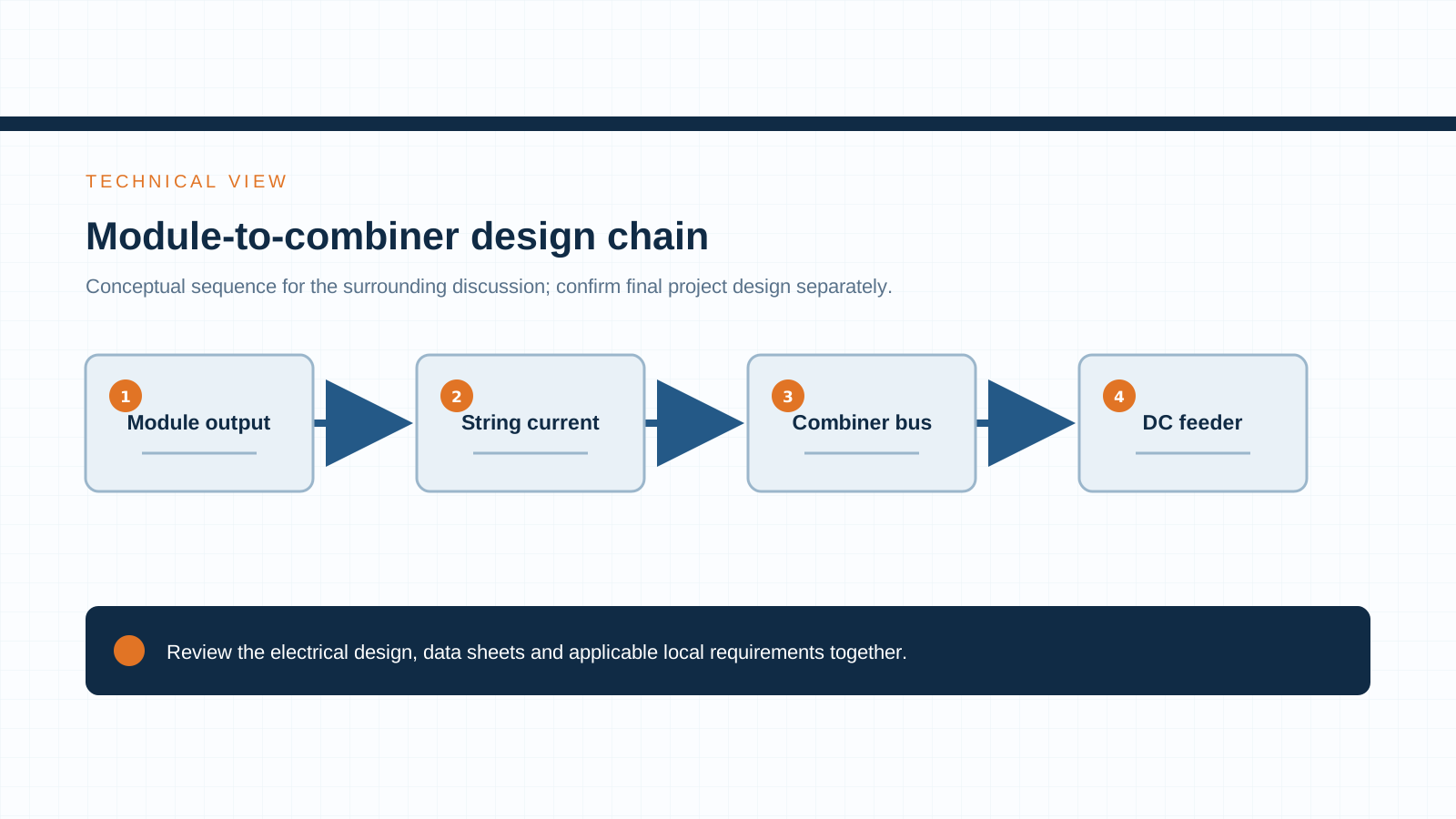
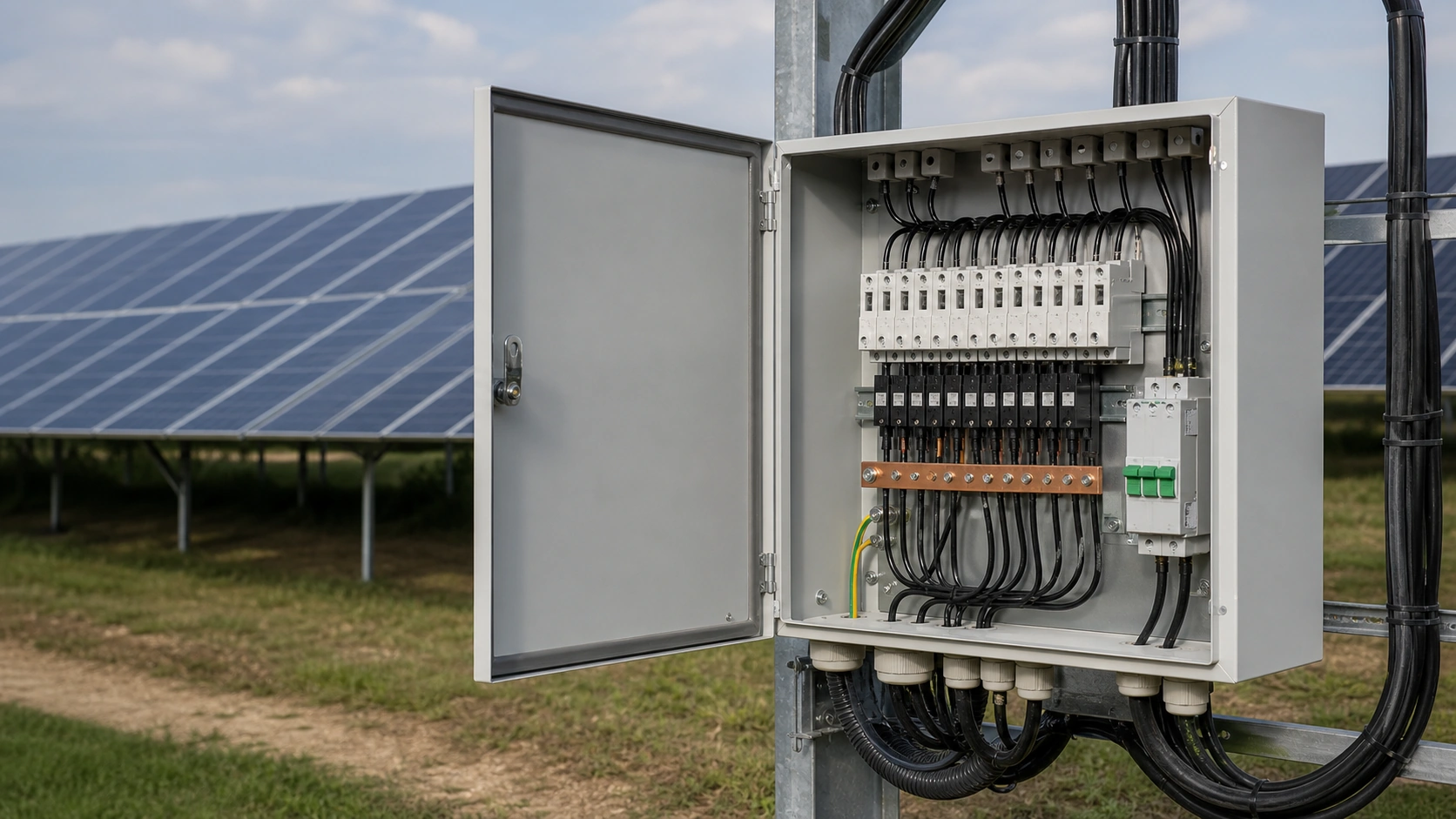
Technical diagram shown at a readable responsive scale.
4. More strings, more heat: busbar and termination limits
Utility-scale combiner boxes can collect multiple strings, subject to the selected busbar, enclosure and thermal design. The aggregated current at the output busbar can exceed several hundred amperes. The enclosure must therefore be specified for:
The internal busbar and terminal block should be checked against projected string count, per-string Isc, installation conditions and the final configuration rather than copied from a generic layout.
- Busbar cross-section and material rated for the summed continuous current.
- Termination torque and contact rating that will not degrade under thermal cycling.
- Ventilation or passive cooling path so the fuse and SPD operating temperatures stay inside their rated bands.
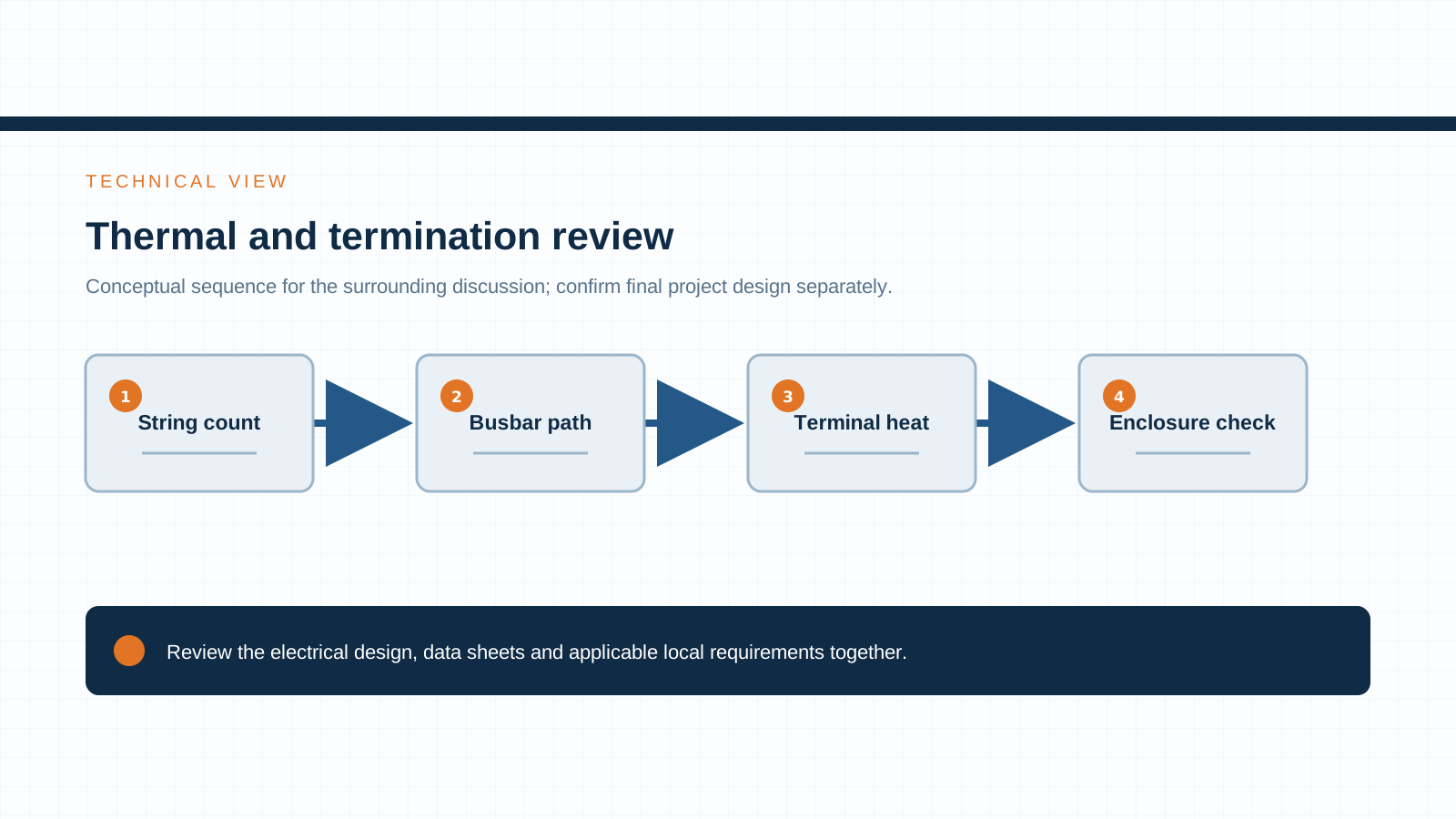
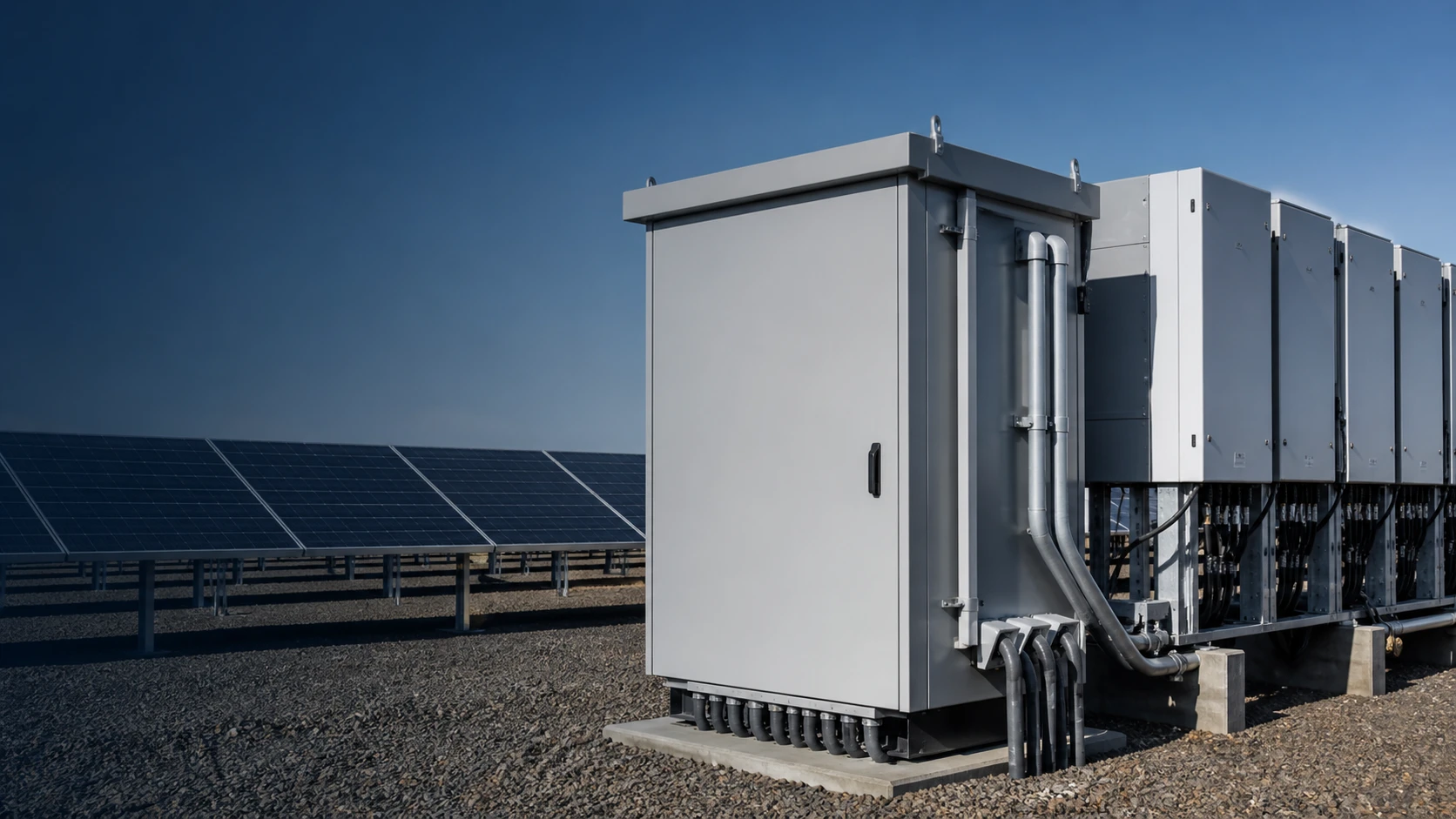
Technical diagram shown at a readable responsive scale.
5. Bifacial gain is variable — protect for the peak
Bifacial boost depends on albedo, mounting height and soiling. Because it is not constant, the combiner box protection must be set for the peak expected Isc, including the rear contribution, not the annual average. A fixed nominal fuse selected only from a front-side nameplate can be unsuitable when bifacial gain, temperature and reverse-current conditions are not included in the calculation.
6. Enclosure and environmental rating
Higher cell efficiencies change the thermal balance of the array, but the combiner box still sits outdoors. The enclosure must match the site: IP rating for dust and water ingress, corrosion class for coastal or desert sites, and, where lightning density is high, coordinated DC SPD staging. A box specified for a mild climate will not survive a coastal utility plant.
7. Standards that govern the design
Specifying to these standards — and verifying them on the datasheet — is what separates a compliant combiner box from a commodity enclosure.
- IEC 61439-8 — assemblies for use in photovoltaic installations.
- IEC 61643-31 — SPDs for PV systems.
- IEC 61439 — low-voltage switchgear and controlgear assemblies.
- IEC 60269-6 — gPV fuses for photovoltaic protection.
8. What this means for your specification
When you issue a combiner box enquiry in 2026, the four numbers that decide the design are: maximum system DC voltage (1000 V or 1500 V), string short-circuit current including bifacial gain, number of input strings, and site protection class. Hand these to the supplier and the box you receive will be built for the modules you are actually installing — not the modules of 2016.
NEUTRON reviews the application context and prepares a configuration discussion around your project requirements. See the Solar PV product range for combiner box options rated to 1500 V DC.
This is general technical guidance. Final ratings, standard editions, protection coordination and compliance evidence must be confirmed for the actual project and applicable local requirements.
Frequently asked questions
Do higher-efficiency modules require different combiner box fuses?
Yes. The fuse must cover the module Isc including any bifacial rear-side gain, typically 1.25×Isc per IEC 60269-6 gPV. A fixed fuse sized to the front-only nameplate will nuisance-trip under real bifacial output.
Are 1500 V PV systems changing combiner box design?
Yes. They require higher insulation ratings, a DC isolation switch rated for 1500 V, and an SPD whose voltage protection level and Uc match the 1500 V envelope.
How many PV strings can one combiner box handle?
It depends on the busbar current rating and enclosure size. Common configurations range from 4 to 24 strings, each protected by its own gPV fuse and monitored at the output.
Which standards apply to PV combiner boxes?
IEC 61439-8 (assemblies), IEC 61643-31 (SPD), IEC 61439 (switchgear assemblies) and IEC 60269-6 (gPV fuses).
Bring the project inputs to the first review.
NEUTRON reviews the application context and prepares a configuration discussion around project requirements and the applicable document package.
Discuss a projectContinue learning
Explore related technical guidance in Solar PV.
Technical note: confirm the applicable standard edition, project design basis, local requirements and evidence package before final equipment selection or release.