
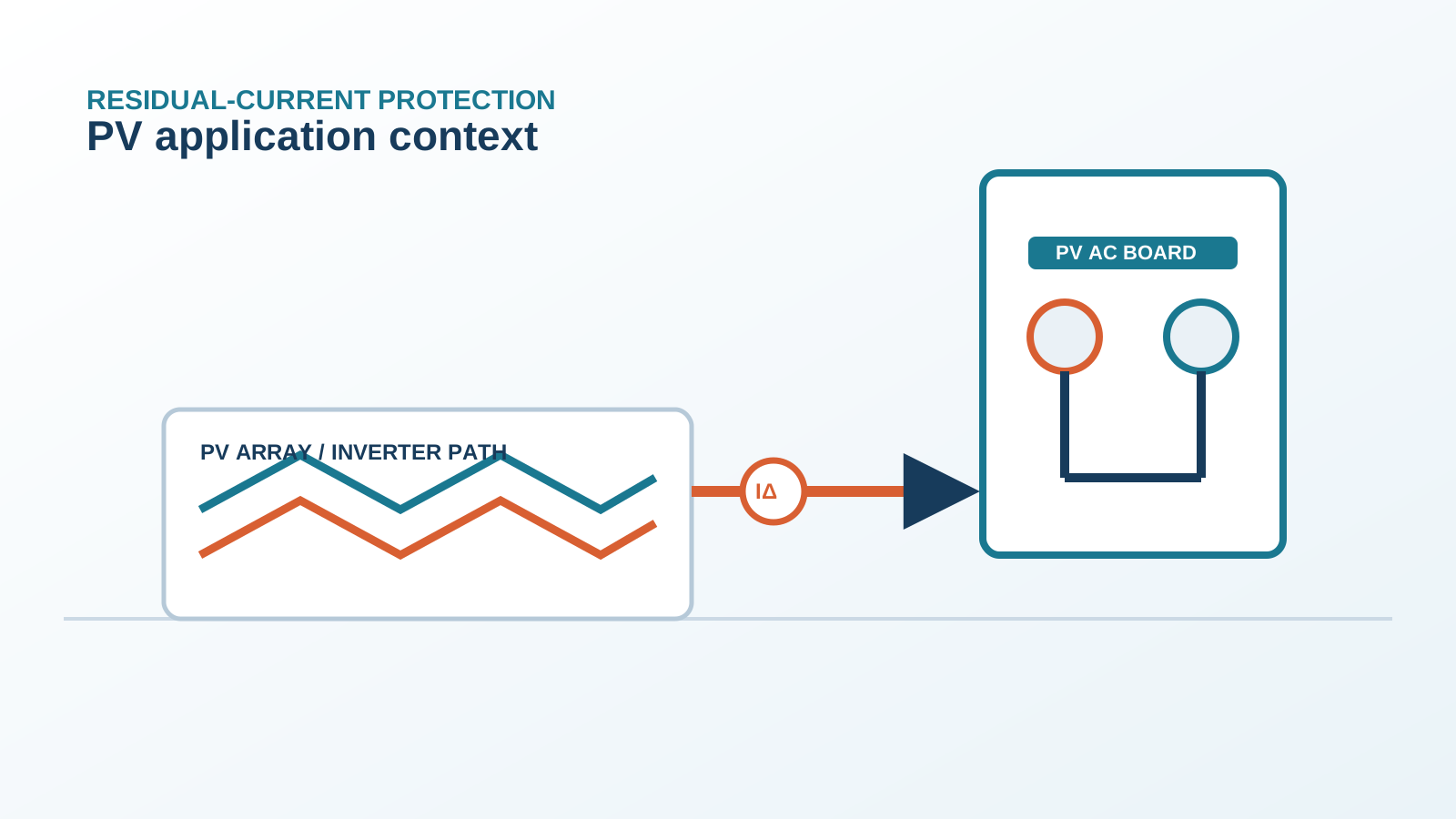
2. Line/Load Marking on a DC MCB
DC-rated breakers are marked with a line side and a load side that must follow the array polarity. The input from the string enters the line terminal and the protected feed leaves the load terminal.
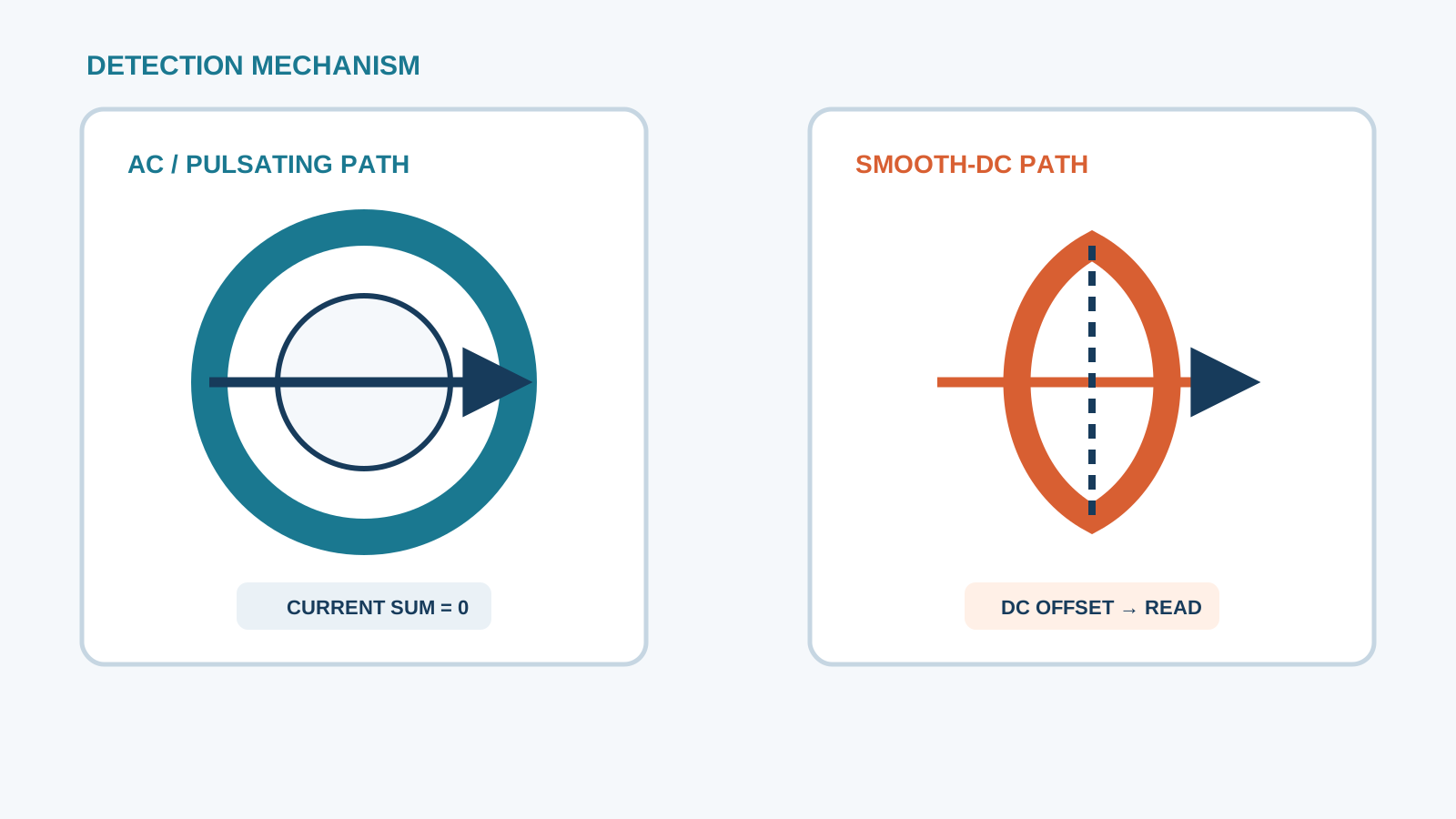
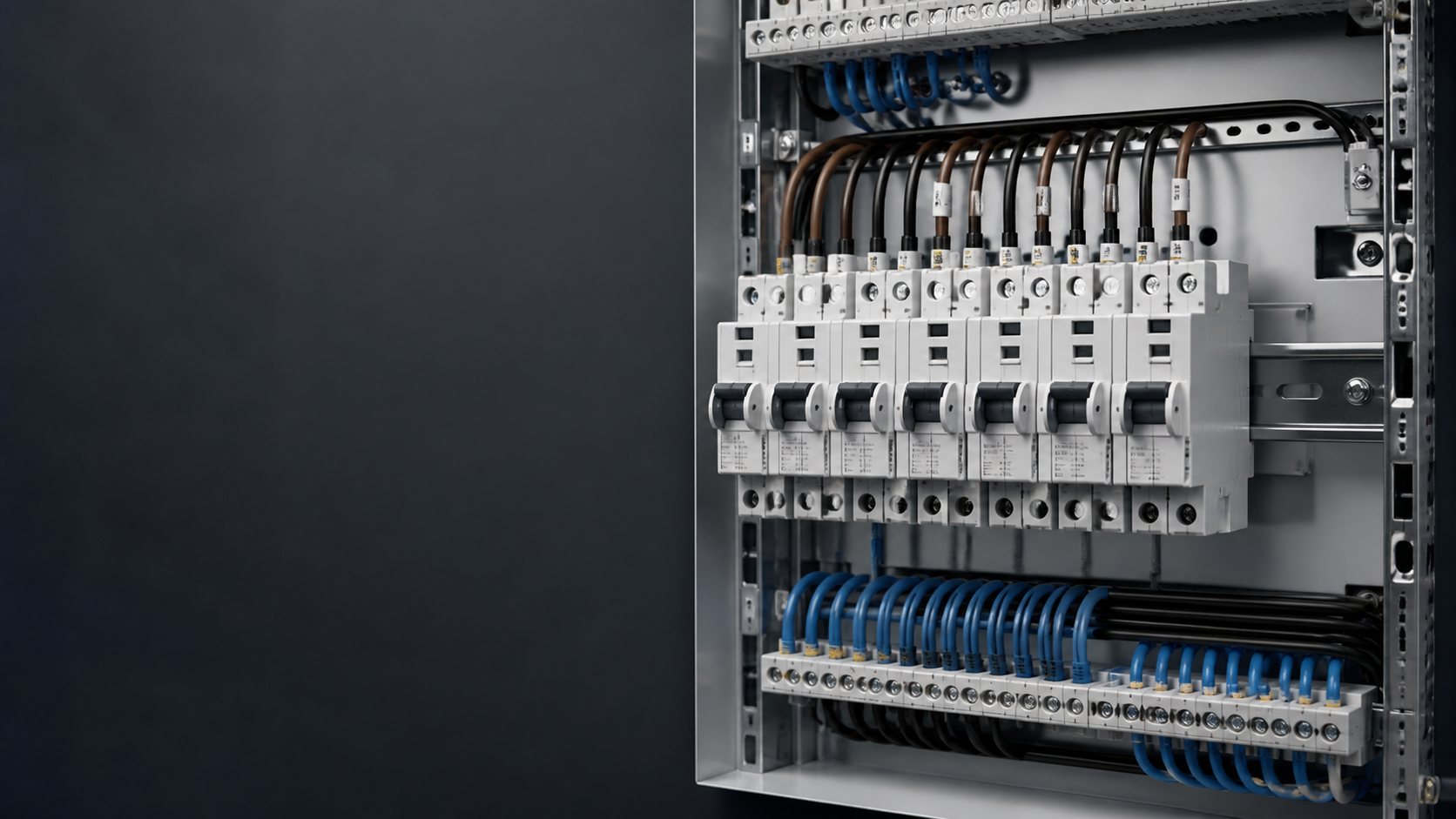
Technical diagram shown at a readable responsive scale.
3. Double-Pole Switching of Both Poles
A double-pole DC device opens both conductors with one handle, giving full isolation. Single-pole switching leaves the negative conductor energised and is unsafe for maintenance.
4. Common Wiring Error in a Combiner
The frequent mistake is landing the positive and negative on the same numbered terminal pair of neighbouring poles, or crossing polarity between strings. Either error defeats isolation and can back-feed a fault.
5. Torque and Contact
DC faults are unforgiving of loose terminals. Torque each connection to the maker value and use the rated conductor so the contact stays cool under continuous current.
6. Verification After Wiring
After wiring, prove polarity with a meter and confirm the breaker opens both poles. A documented check prevents a live pole from being assumed dead.
7. Labeling for O&M
Each breaker should carry the string number and polarity at the enclosure door, so operators know what they are isolating. Clear labels reduce human error during service.
8. Safety During Maintenance
Lock out and prove dead at both poles before touching a conductor. NEUTRON supplies DC-rated double-pole protection intended for correct, verifiable wiring in PV combiners.
This is general application guidance. Confirm final ratings, trip settings, standards, inverter instructions and local installation requirements against approved project documentation and a qualified engineer's review.
Frequently asked questions
Does PV DC breaker polarity matter?
Yes. Fixed DC polarity means wrong wiring leaves a pole live and defeats isolation.
Why double-pole DC?
A double-pole device opens both conductors, giving full isolation for safe maintenance.
What if wired reverse?
The breaker may not isolate correctly and can back-feed a fault; re-wire to the marked polarity.
How to verify after install?
Meter the polarity and confirm both poles open with the handle before energising.
Bring the protection inputs to the first review.
{ "@context": "https://schema.org", "@type": "Article", "headline": "Polarity Marking and Wiring of PV DC MCBs", "author": {"@type": "Organization", "name": "NEUTRON LLC"}, "publisher": {"@type": "Organization", "name": "NEUTRON LLC", "logo": {"@type": "ImageObject", "url": "https://www.neutronele.com/logo.png"}}, "datePublished": "2026-09-03", "dateModified": "2026-09-03", "mainEntityOfPage": "https://www.neutronele.com/insights/pv-dc-mcb-polarity-marking-wiring", "image": "https://www.neutronele.com/insights/img/pv-dc-mcb-polarity-marking-wiring-hero.jpg" }
Discuss a project requirementContinue learning
Explore related technical guidance in Electrical Protection.
Published from the approved period 10 source package; technical claims and source wording are retained for review.