
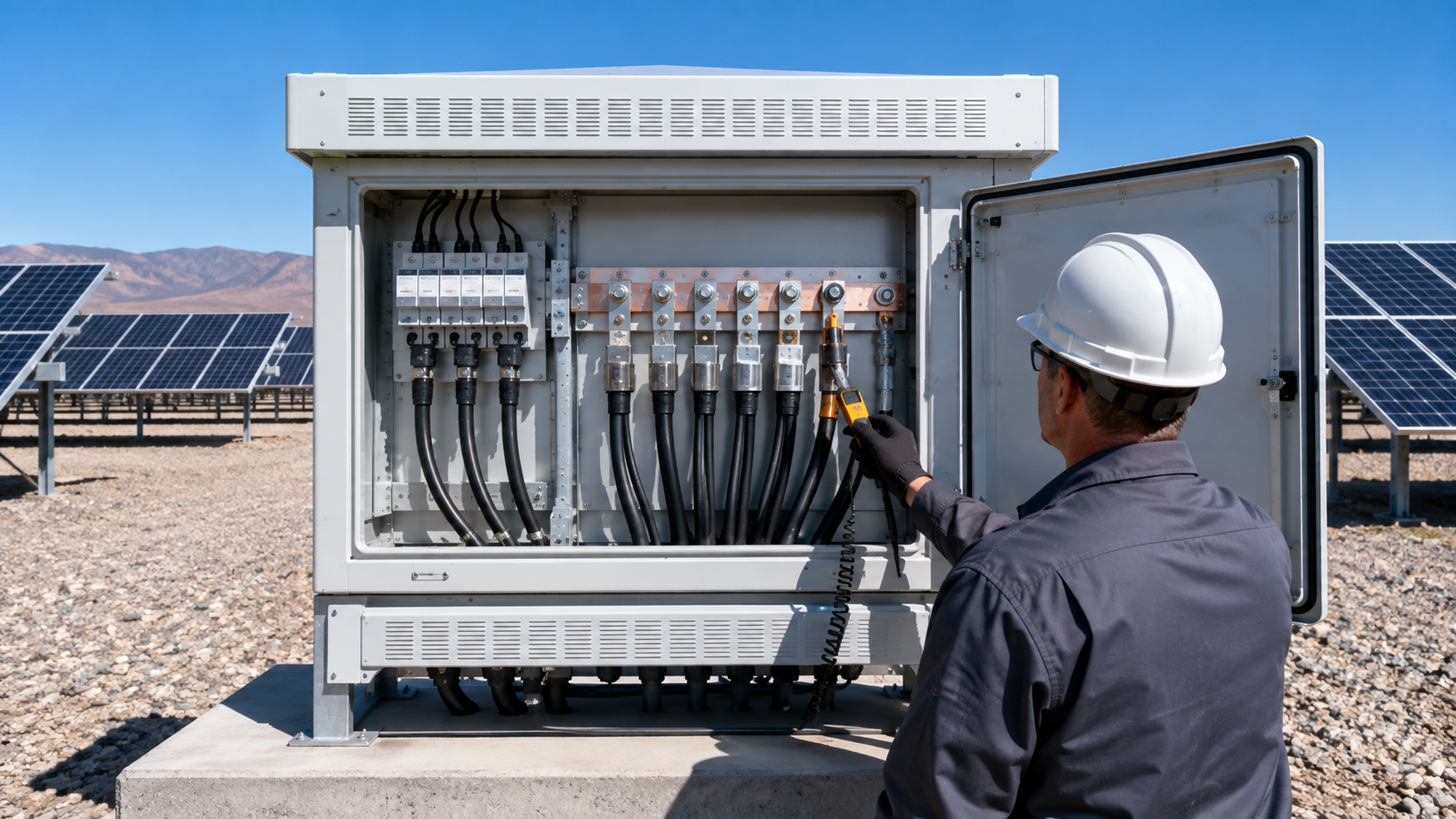
Heat generation inside the box
Almost all internal heat is I2R loss — current squared times resistance — distributed across the busbar, the terminal blocks and the device contacts. A small resistance at a high current still dissipates real power. On top of that, a dark outdoor enclosure absorbs solar radiation and warms the air inside, so the components see ambient plus self-heating plus solar gain.
- Busbar loss scales with current squared and with total path length.
- Terminal loss is sensitive to contact resistance and torque.
- Solar gain depends on enclosure colour, orientation and shade.
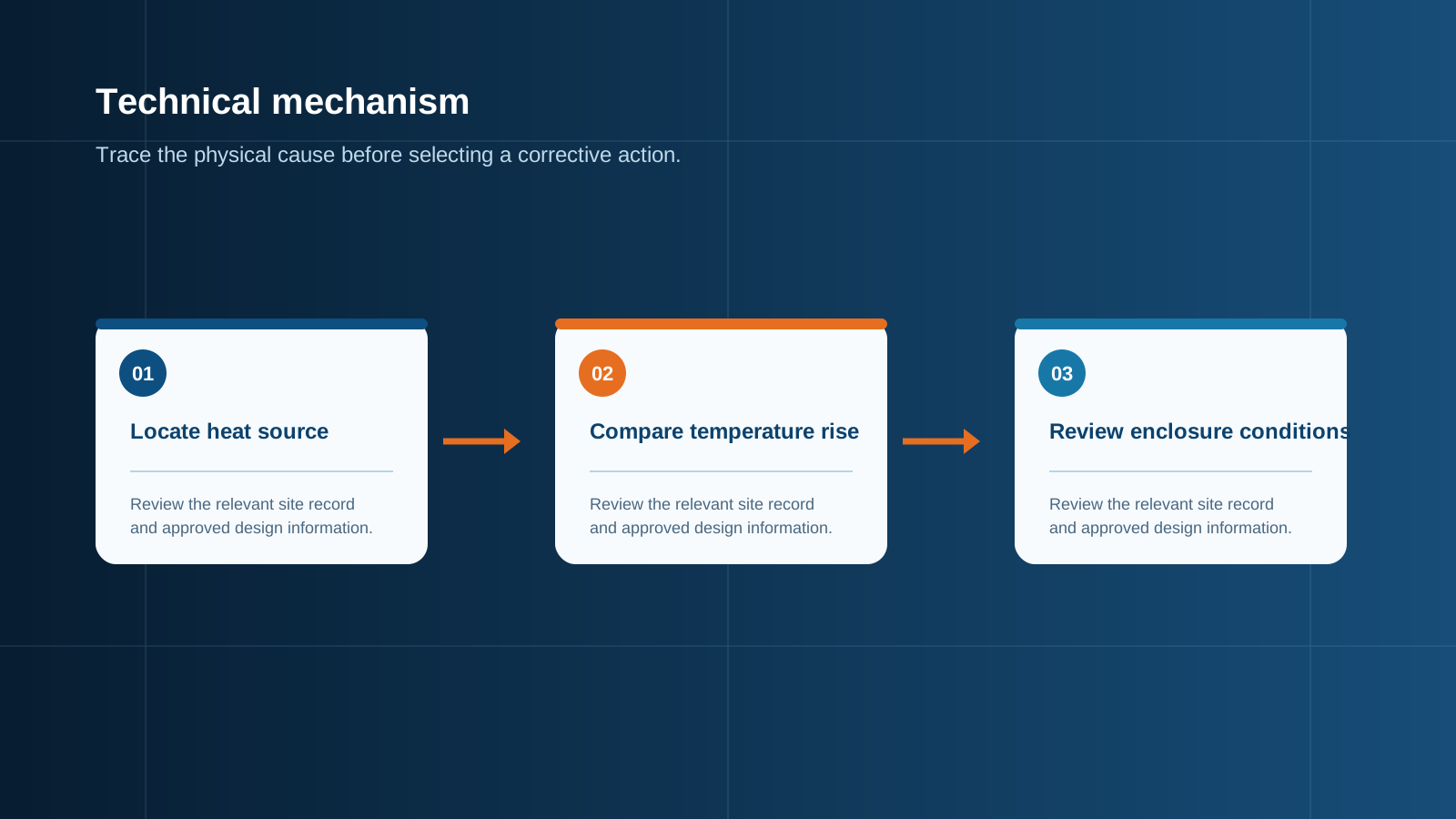
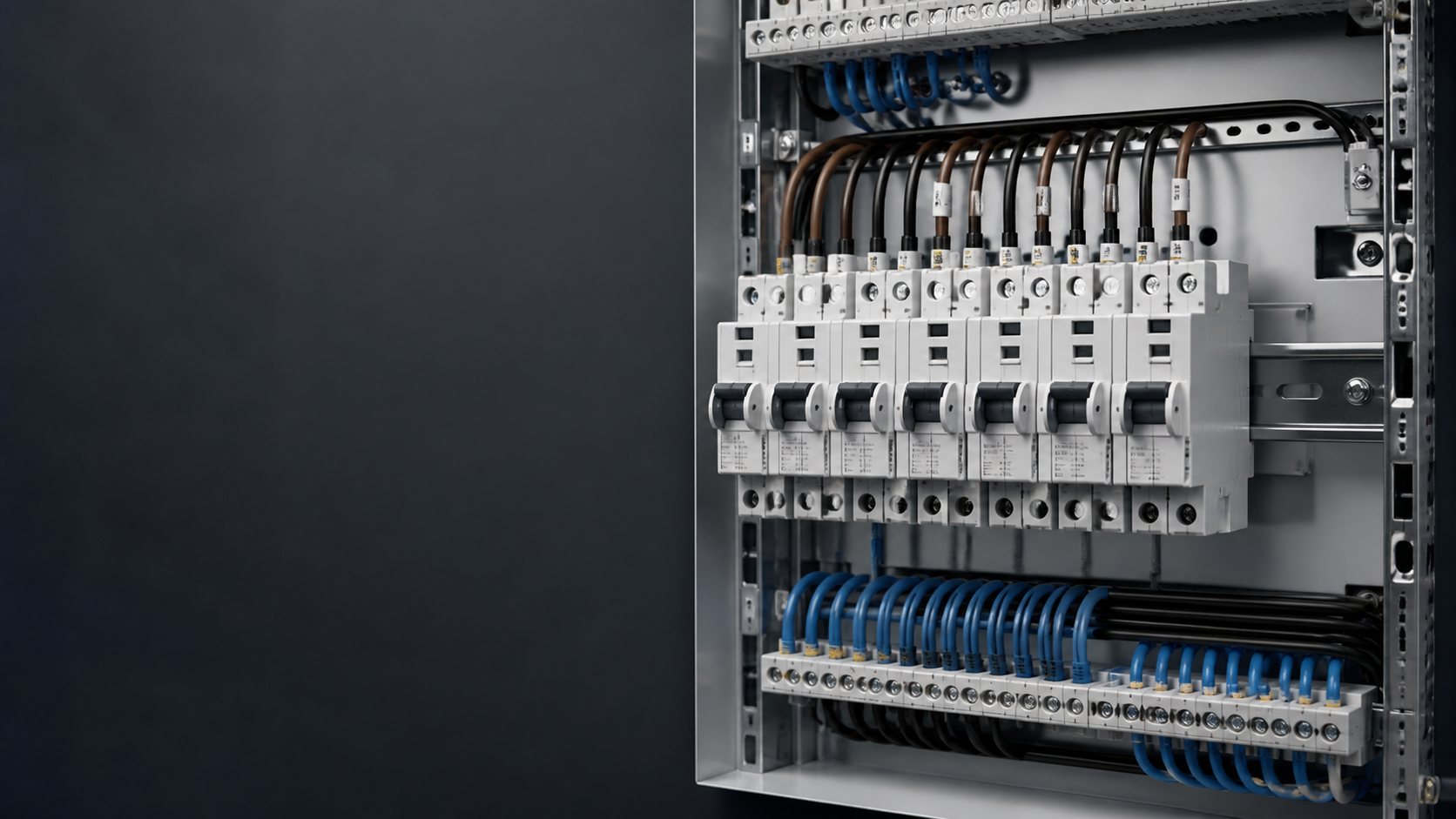
Technical diagram shown at a readable responsive scale.
Temperature rise calculation
A practical estimate treats the box as a thermal resistance between the internal heat and the outside air. Temperature rise equals the total dissipated power multiplied by the enclosure thermal resistance (deg C per watt). Start from the summed I2R loss of the busbar and terminals, add device losses, then divide by the cooling path. The result plus the site ambient gives the worst-case internal temperature to check against component ratings.
- Sum P = I2R for busbar, terminals and devices.
- Estimate enclosure thermal resistance from measured or published data.
- Delta T = P x Rth; T_internal = T_ambient + Delta T.
- Keep T_internal below the lowest component rating with margin.
Ventilation design
Ventilation removes heat by convection. A passive vent path uses buoyancy: cool air enters low, warm air leaves high, and the stack effect drives flow without power. For dusty or coastal sites, filtered vents or a sealed enclosure with an external finned heatsink may be preferred. The key is a continuous path that cannot block with debris.
- Place inlets low and outlets high to use the stack effect.
- Use mesh or filters rated for the site dust load.
- Avoid vent paths that let water or insects enter the busbar zone.
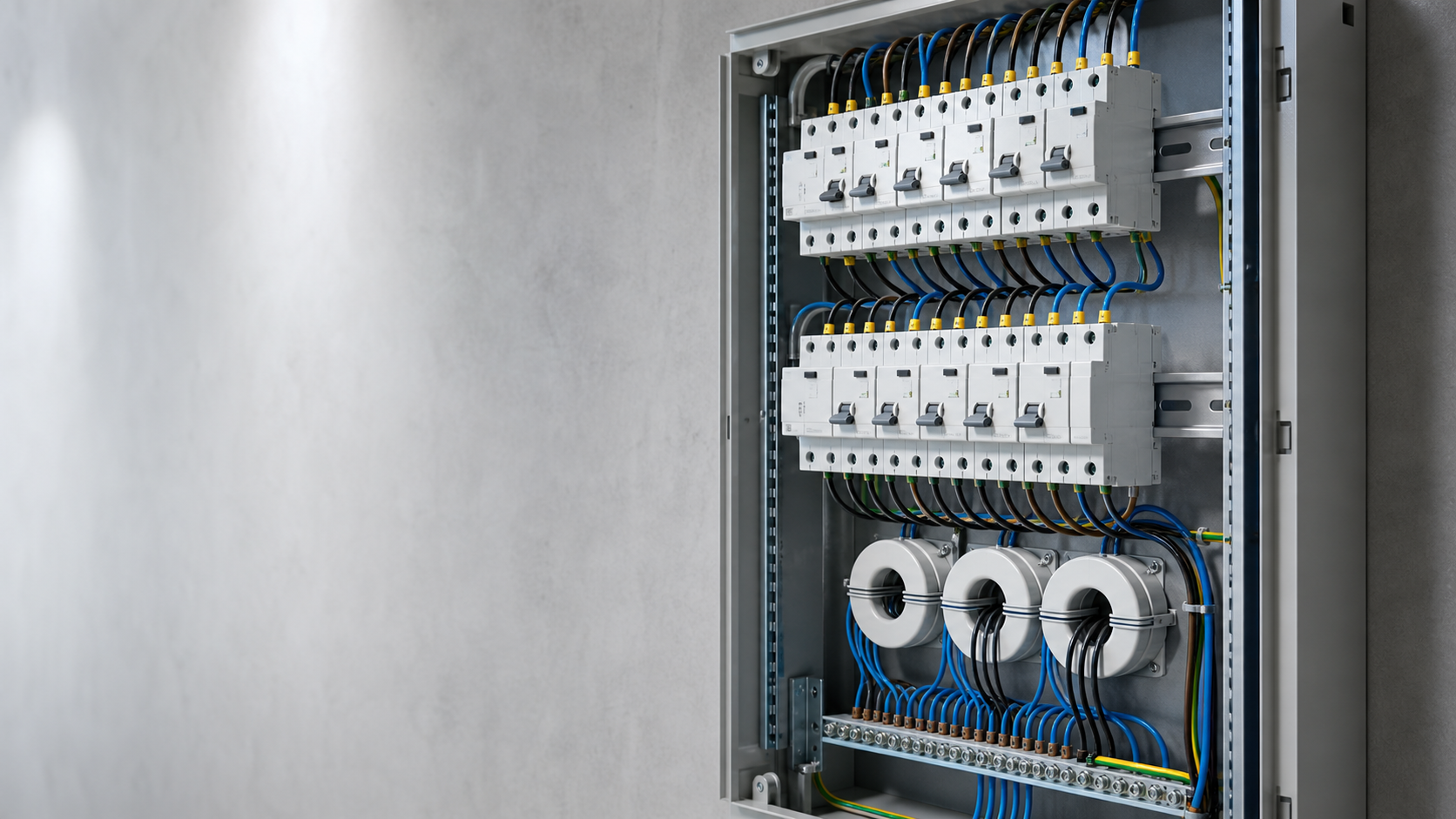
Technical diagram shown at a readable responsive scale.
Enclosure material effect
The enclosure material sets how heat moves and how the box ages. Painted steel, aluminium and polycarbonate each trade cost, weight and solar absorption differently. A light-coloured or reflective finish cuts solar gain; aluminium adds conduction to the frame; a thick wall adds thermal mass that slows swings but also slows cooling. The choice should follow the site, not the price list.
- Light colours lower radiant heating from the sun.
- Metal enclosures conduct heat to the frame and ground.
- UV-stable polymer resists corrosion in coastal air.
Derating in heat
Every DC device carries a derating curve: above a given ambient, its rated current must be reduced. Ignoring the curve is the usual reason a correctly sized box still trips in summer. Apply the manufacturer derating to the breaker, fuse and SPD, then size the continuous current to the derated value at the site's maximum ambient.
- Read the derating curve for each device, not just the breaker.
- Use the site's recorded peak ambient, not the annual average.
- Size for the derated current with a safety margin.
Monitoring
A temperature sensor on the busbar turns an invisible limit into an alarm. Logging internal temperature against irradiance shows the real thermal behaviour of the box and gives early warning before a component exceeds its rating. NEUTRON discusses sensor placement as part of the protection coordination for each project.
- Fit the sensor near the output busbar, not on the wall.
- Set an alarm below the lowest component rating.
- Trend data to catch slow thermal drift over seasons.
Desert and high-temperature sites
Desert and tropical sites combine high ambient, strong sun and dust, so the thermal budget is tightest there. Oversize the busbar cross-section, choose a reflective enclosure, add active or passive cooling, and apply a deeper derating margin. A box that is fine in a temperate climate can fail within a season in a desert plant.
- Increase busbar and terminal cross-section for headroom.
- Use a reflective finish and shaded mounting where possible.
- Apply the full high-ambient derating with extra margin.
Design rules
A cool combiner box is the product of a few consistent rules applied at specification time: size the busbar for the summed current with margin, keep contact resistance low with correct torque, vent or cool the enclosure for the site, and verify the internal temperature against every device rating. Done early, thermal management costs little; done after a trip, it means a rebuild.
- Specify busbar for summed Isc with thermal margin.
- Set torque to the rated value and verify it.
- Match ventilation and material to the site class.
- Confirm T_internal against all component ratings.
This is general technical guidance. Confirm final ratings, protection coordination, installation and applicable local requirements against current standards, manufacturer documentation and the approved project design.
Frequently asked questions
What causes heat inside a PV combiner box?
Heat comes from I2R losses in the busbar, terminals and device contacts, plus solar gain on the enclosure. A small resistance at high current still dissipates real power, and a dark outdoor box absorbs sun and warms the internal air.
How do I calculate temperature rise?
Sum the I2R loss of the busbar, terminals and devices, then multiply by the enclosure thermal resistance to get Delta T. Add the site ambient to get internal temperature, and keep it below the lowest component rating.
Does a combiner box need ventilation?
Usually yes. A passive stack-effect vent path removes heat by convection without power. For dusty or coastal sites a filtered vent or a sealed enclosure with an external heatsink may be used instead.
What is derating in high heat?
Each DC device must reduce its rated current above a given ambient per its derating curve. Ignoring it is why a correctly sized box can still trip in summer; size the continuous current to the derated value at the site peak ambient.
How do I manage hot desert sites?
Oversize the busbar cross-section, use a reflective enclosure, add cooling, and apply a deeper derating margin. A box fine in a temperate climate can fail within a season in a desert plant.
Discuss your PV combiner requirement
Share the system voltage, string count, inverter interface and installation environment. NEUTRON can review the equipment configuration around your project documentation.
Discuss a projectContinue learning
Explore related technical guidance in Electrical Protection.
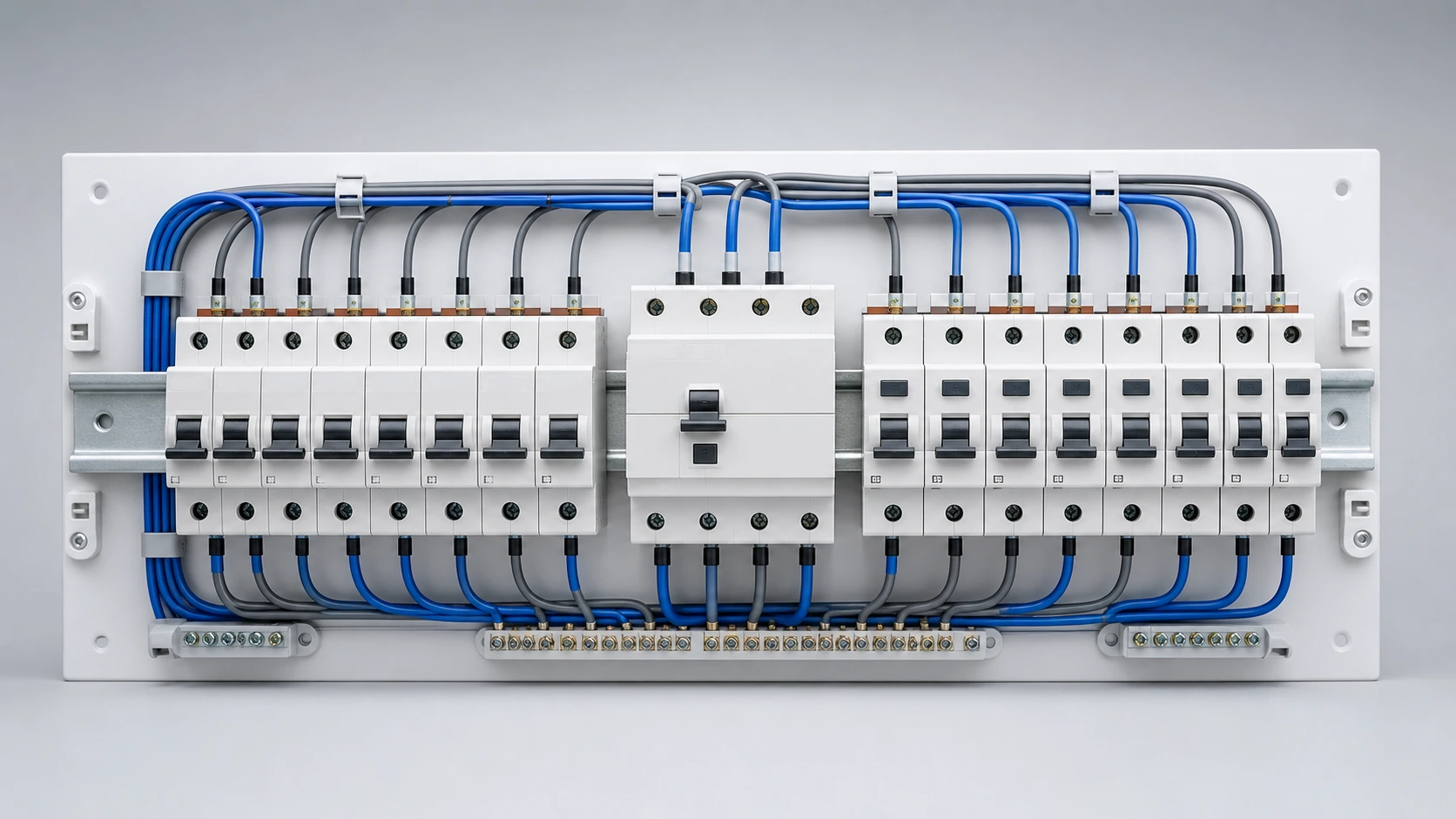
Published from the approved Period 09 source package. Technical values and final design decisions must be verified against the current applicable standard, manufacturer documentation and approved project design.