
Normal Current Drop Is Not a Fault
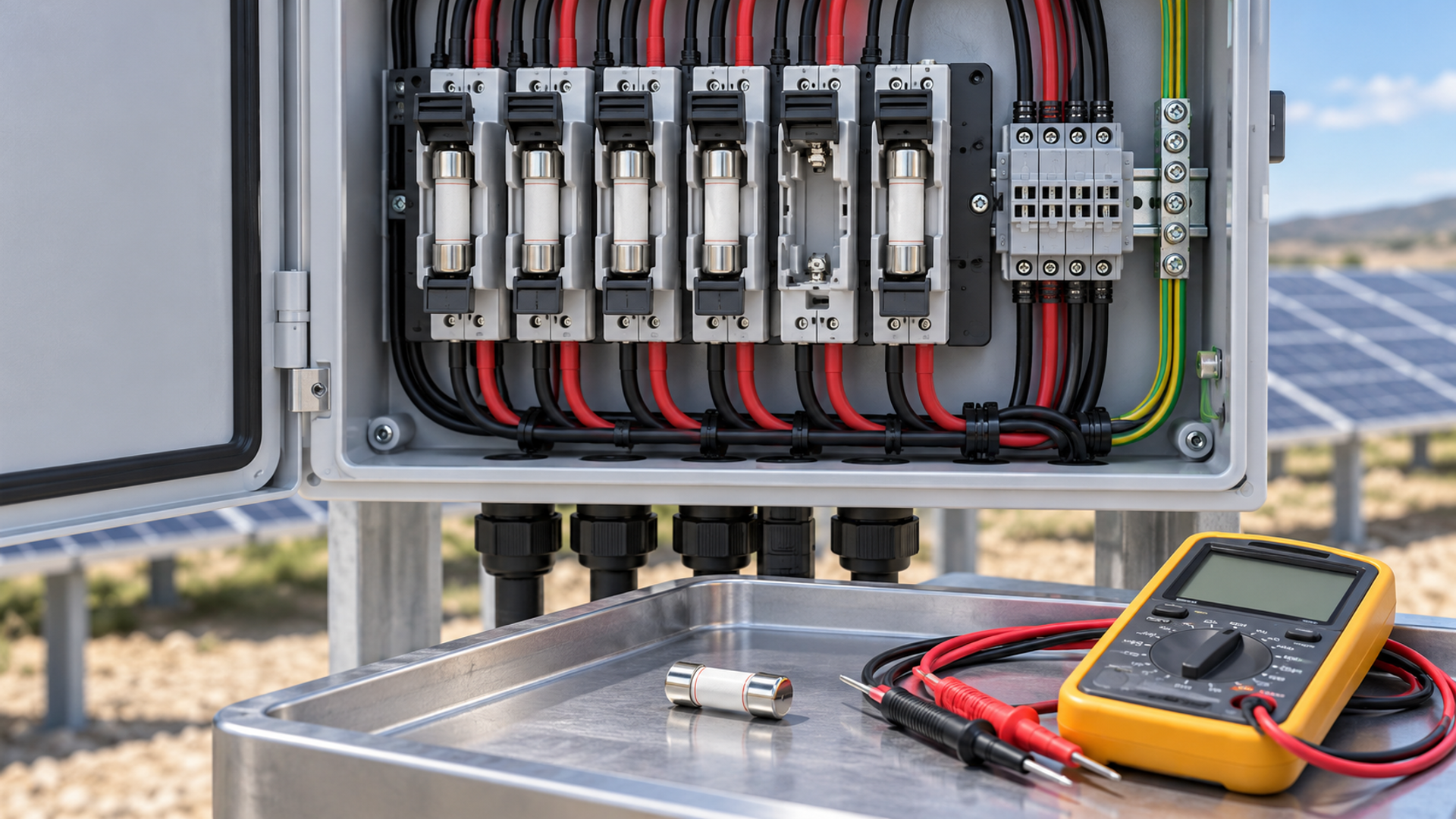
Lower irradiance normally reduces string current; a low reading does not establish fuse operation. Fuse-element heating depends on current and time, while ambient conditions and heat from poor contacts can affect behaviour. Investigate the characteristic, holder condition and temperature rather than treating marked current as an exact opening threshold.
Where monitoring is installed, compare similar strings under comparable irradiance, temperature and orientation and review the event history. Trends locate an abnormal branch but do not uniquely identify the failed component.
Voltage Readings and Fuse Continuity Are Different Tests
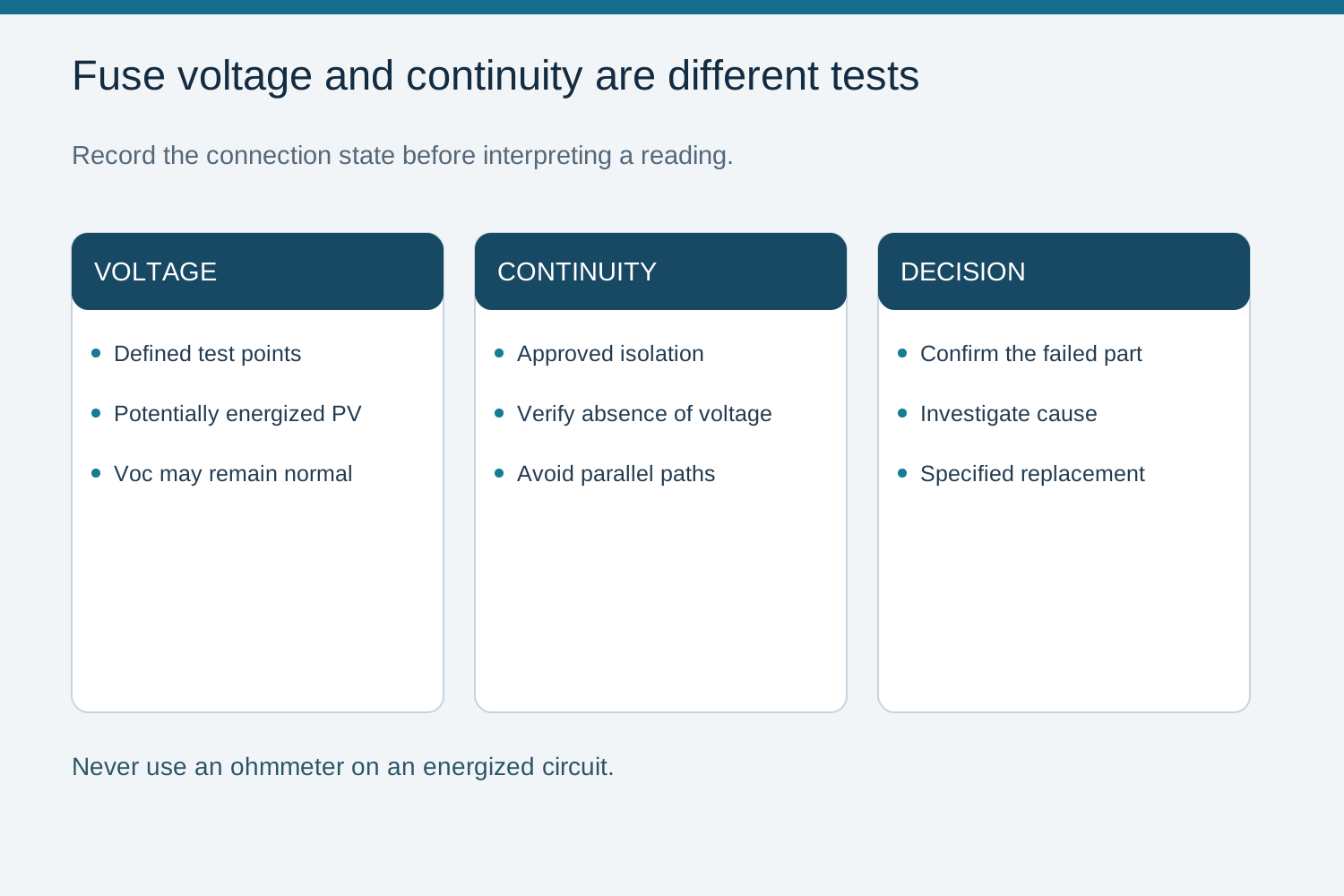
Record every voltage reading with its test points and connection state. An illuminated string upstream of an open fuse may still produce normal Voc; a downstream point may show bus voltage from other strings. Neither observation alone proves fuse continuity.
Confirm a suspected fuse by the approved continuity or resistance method after the relevant circuit is isolated and proved dead. Remove or isolate the fuse as instructed to eliminate misleading parallel paths. Never apply an ohmmeter to an energized circuit. A separate Voc measurement is a controlled voltage test, not a continuity test.
Use Separate Voltage and Current Design Checks
Voltage and current both depend on module operating conditions. Typical crystalline-silicon modules have higher Voc at lower cell temperature and a smaller, usually positive Isc temperature coefficient. Use actual module data and the applicable design method; cold Voc is not a fuse-current multiplier.
Check maximum voltage separately from design current. The current assessment considers irradiance, relevant temperature corrections, bifacial gain where applicable and project protection rules. A rise in Voc alone does not justify a higher-current fuse.
Shading and Mismatch Do Not Auto-Imply Backfeed Fusing
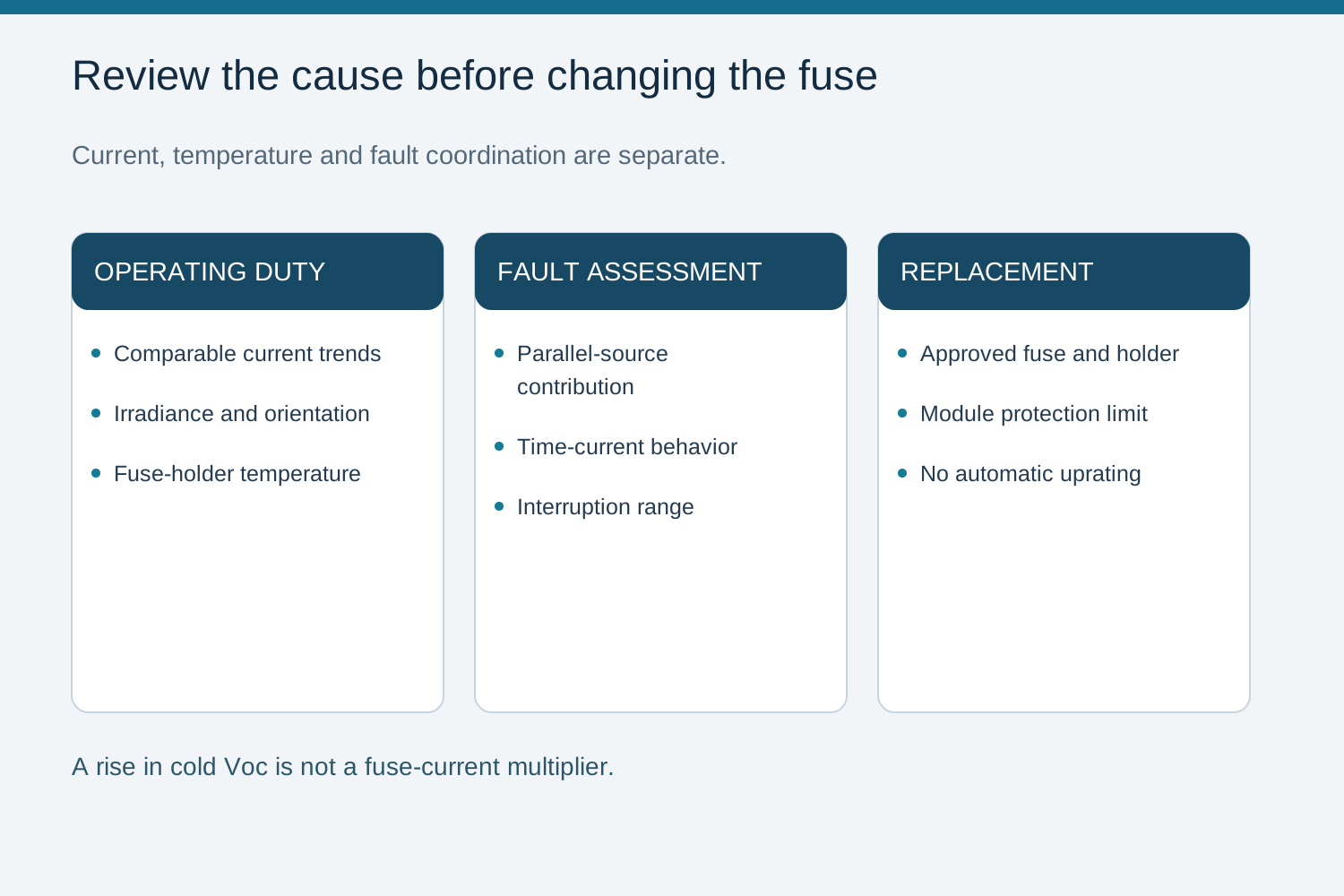
Ordinary shading or module mismatch lowers one string's current but does not by itself require backfeed fusing. Backfeed protection depends on the array configuration, the module maximum series fuse rating, and the approved coordination study. Claiming a fuse is needed after any shading is incorrect.
Consider credible parallel-string and other-source contributions, module protection limits, conductor and holder ratings and time-current characteristics. Replace a failed fuse with the specified equivalent only after assessing the cause; repeated operation requires investigation rather than automatic uprating.
Fuse Investigation Inputs for NEUTRON
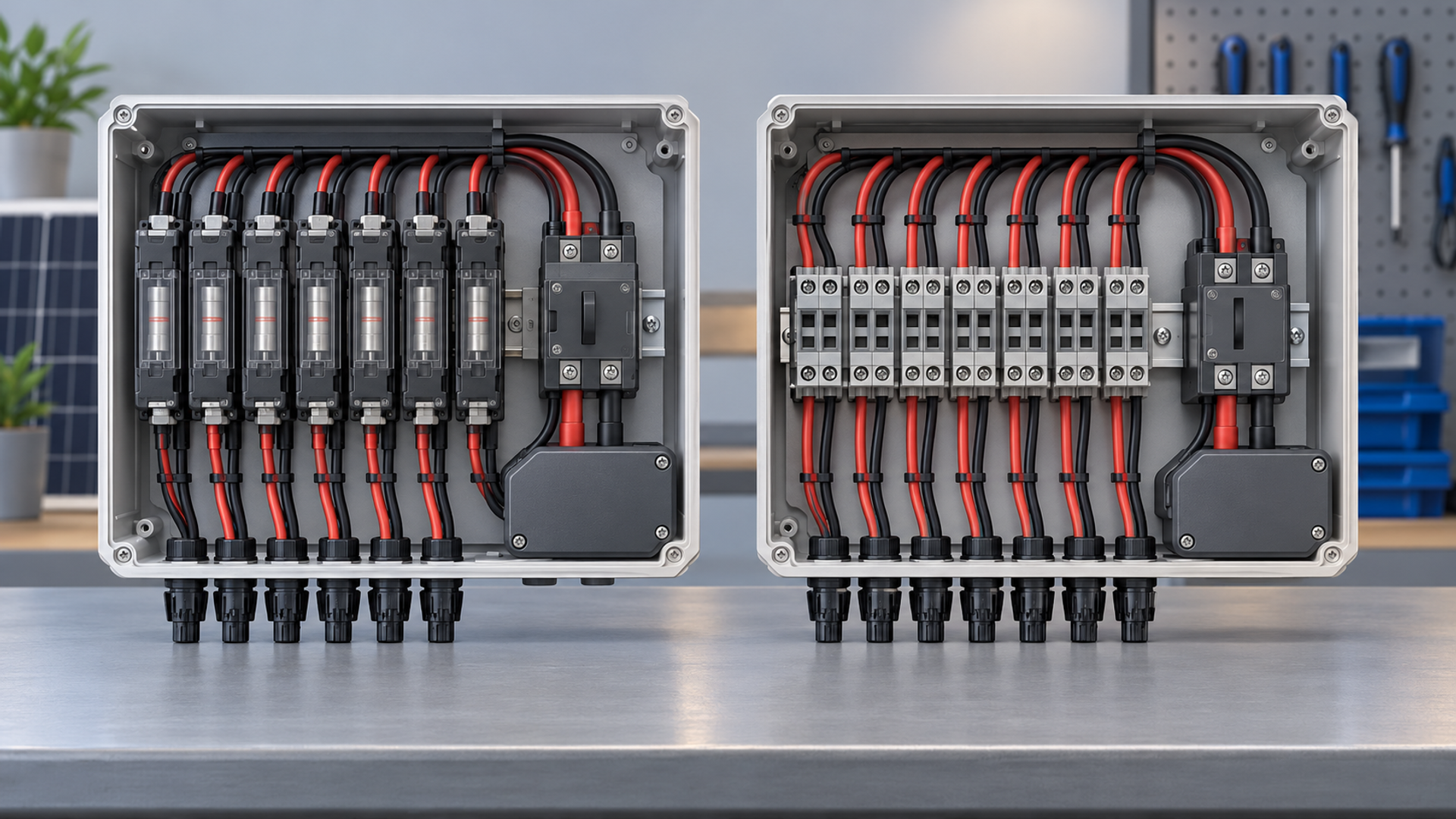
For a NEUTRON combiner protection review, provide the fuse and holder part numbers, string layout, module data, protection drawing, event current and temperature records, and photographs of terminal condition. Mark the exact voltage test points. Use these inputs to discuss the specified replacement or a configuration change; do not order a larger fuse as a remedy before the cause and protection limits have been assessed.
Qualified personnel must assess the actual configuration and isolation boundary. Verify equipment ratings, manufacturer instructions and the governing design procedure before selection or testing.
Frequently asked questions
Is a falling string current a blown fuse?
No. Low irradiance can reduce current normally. Locate the suspect branch from the operating history and confirm the fuse by an isolated continuity or resistance test; Voc alone is not a fuse test.
Does cold weather raise the fuse current?
Higher cold-condition Voc does not itself increase fuse current. Calculate current from irradiance and the module data, including its temperature coefficient, using the applicable project method.
Does shading mean I need backfeed fusing?
No. Shading and mismatch lower current but do not by themselves require backfeed fusing. The need follows the array configuration and the approved coordination study.
How do I separate a fuse fault from a wiring fault?
Record voltage test points and connection state, and use current trends to locate the suspect branch. Confirm fuse continuity separately after isolation and verification; a string upstream of an open fuse can still show normal Voc.
Bring the design and verification records to the review.
For a NEUTRON combiner protection review, provide the fuse and holder part numbers, string layout, module data, protection drawing, event current and temperature records, and photographs of terminal condition. Mark the exact voltage test points. Use these inputs to discuss the specified replacement or a configuration change; do not order a larger fuse as a remedy before the cause and protection limits have been assessed.
Discuss a projectContinue learning
Explore related technical guidance in Electrical Protection.

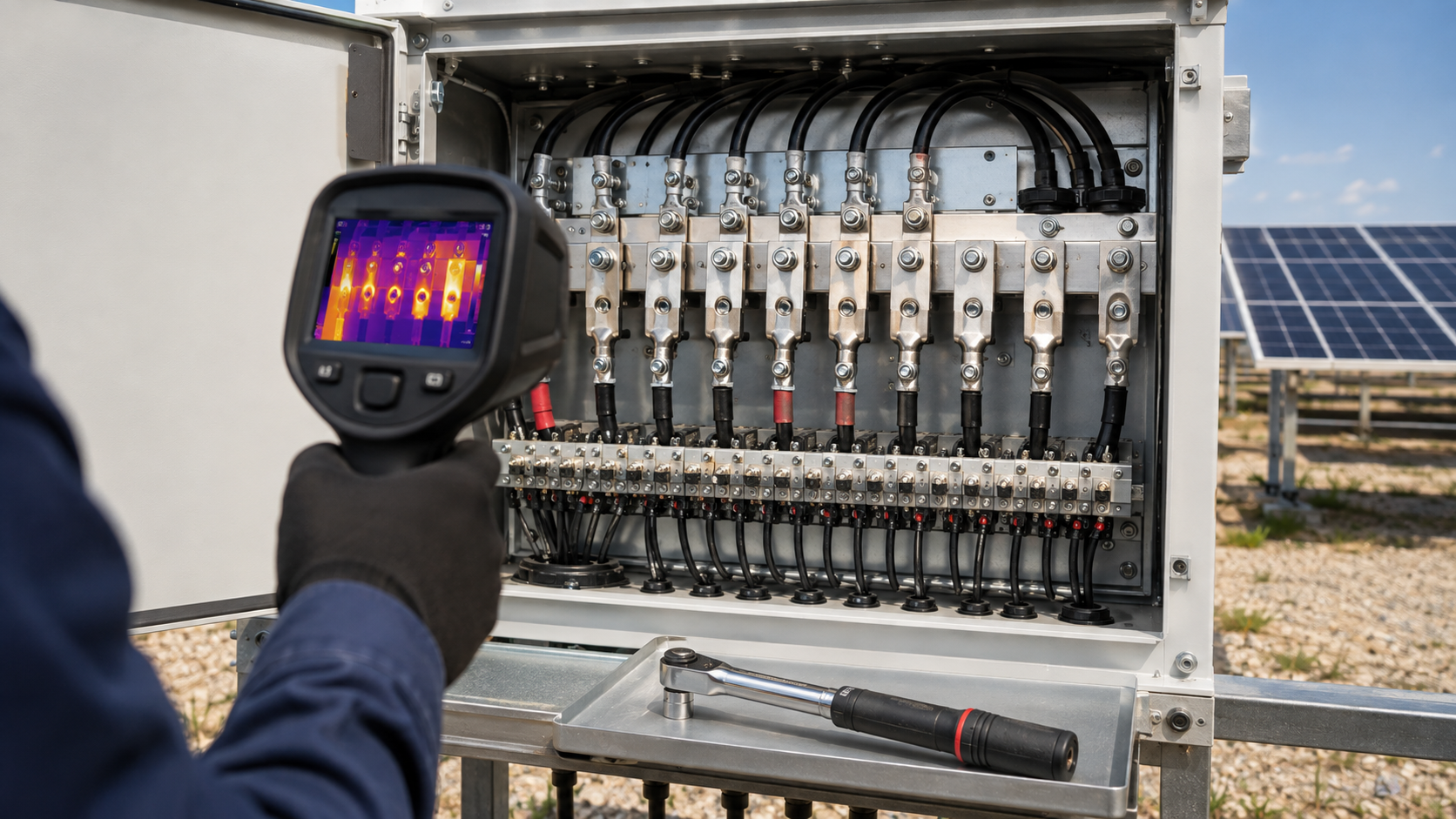
Engineering guidance: use the actual equipment instructions, applicable installation rules and project-specific evidence. Generated imagery is not evidence of an installed NEUTRON product.