

STC: the 25 °C lab test
Standard test conditions define a repeatable laboratory environment: 1000 W/m² irradiance, a cell temperature of exactly 25 °C, and an air mass of 1.5. Every manufacturer measures against the same reference, which is precisely the point — it makes modules comparable across suppliers and technologies.
What it does not do is describe a working array. A cell temperature of 25 °C under full sun is almost unheard of outside a flash tester; it would require a cold, breezy, brilliantly clear day. The nameplate value is therefore a benchmark for procurement, not a prediction of output.
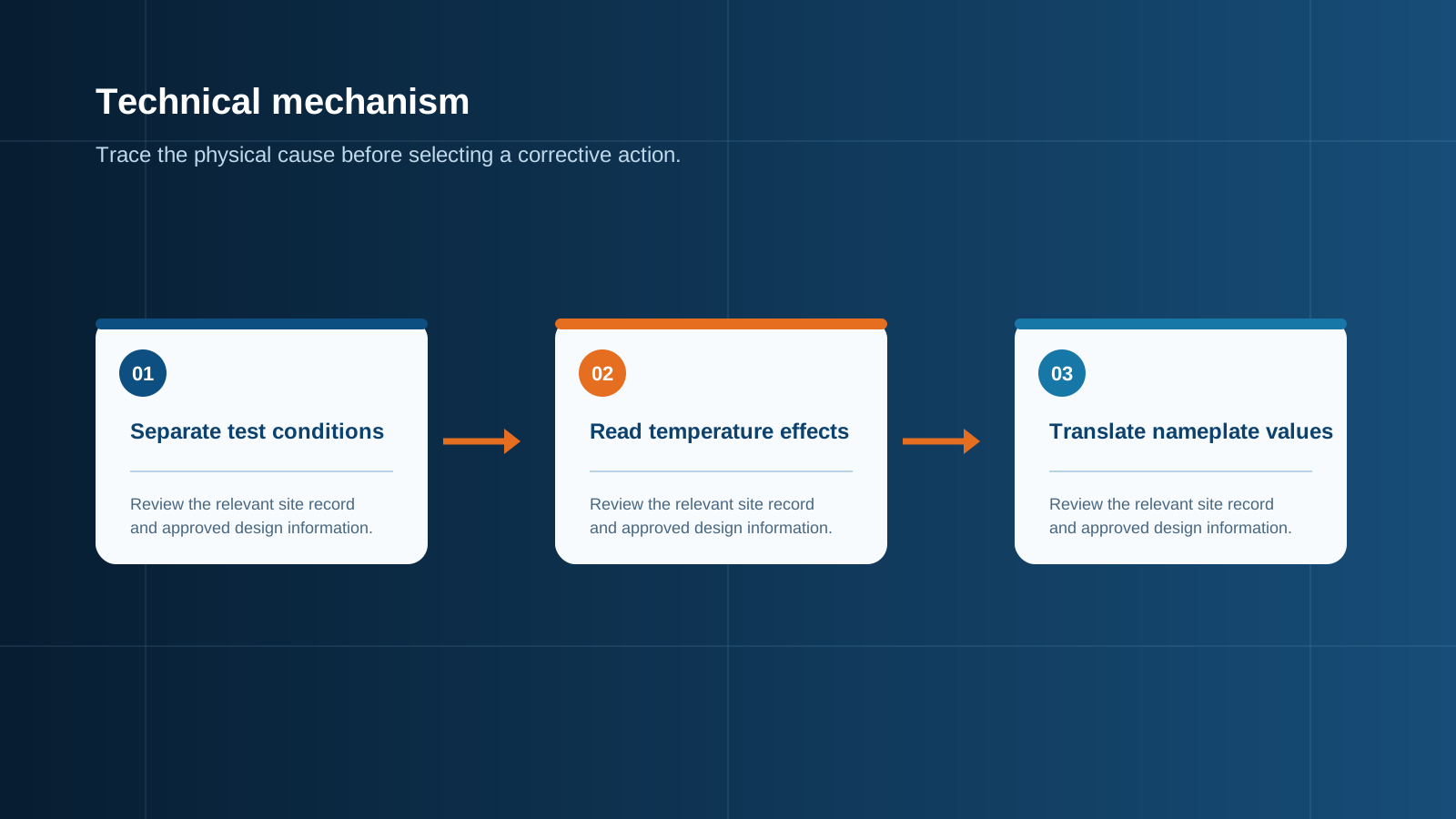
Technical diagram shown at a readable responsive scale.
NOCT: closer to your roof
Nominal operating cell temperature conditions were introduced to close that gap. The test uses 800 W/m² irradiance, 20 °C ambient air and a 1 m/s wind, and it reports the cell temperature the module reaches under those conditions — typically between 41 °C and 46 °C for a modern glass-backsheet module.
Two changes drive the lower power figure. Irradiance drops to 80% of the laboratory value, which cuts output almost proportionally, and cell temperature rises about 20 °C above the laboratory reference, which cuts output further through the temperature coefficient. Together they explain most of the difference between the two ratings on the datasheet.
Why real output is about 75% of the label
Work through a 580 W module with a power temperature coefficient of -0.30 %/°C and a nominal operating cell temperature of 44 °C:
On a hot summer rooftop the picture can be slightly worse still, because a poorly ventilated module in 35 °C ambient air may reach 65 °C or more, pushing the derate past 10%. Conversely, on a cold bright spring morning the same module can briefly exceed its nameplate power. Both extremes matter to the equipment behind the array.
- Irradiance scaling: 580 W multiplied by 800/1000 gives 464 W.
- Temperature derate: the cell sits 19 °C above the 25 °C reference, so 19 multiplied by 0.30% gives a 5.7% loss.
- Result: 464 W multiplied by 0.943 gives roughly 437 W, or about 75% of the nameplate value.
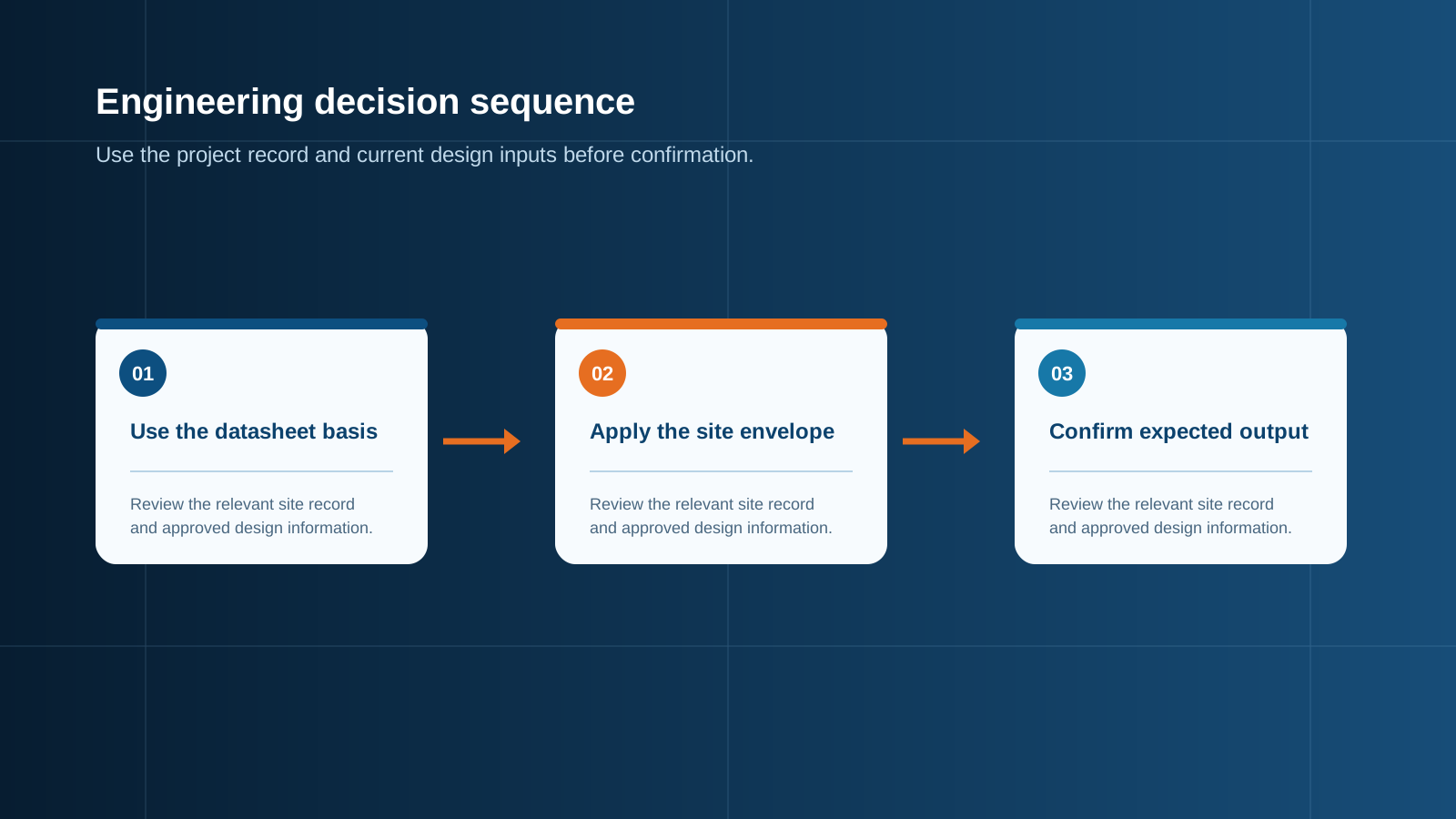
Technical diagram shown at a readable responsive scale.
Temperature coefficient and heat
The power temperature coefficient states how much output changes per degree of cell temperature away from 25 °C. Values around -0.34 %/°C are typical for older passivated-emitter designs, roughly -0.29 %/°C for tunnel-oxide passivated contact cells, and as low as -0.24 %/°C for heterojunction cells. A flatter coefficient means less loss on hot days and, at the other end, a smaller voltage rise in freezing weather.
Open-circuit voltage has its own, separate coefficient, and it is the one that governs safety limits. Power falls as the array heats up, but voltage rises as it cools, and the coldest expected morning — not the hottest afternoon — sets the maximum system voltage that the isolator, surge protective device and enclosure insulation must withstand.
Reading both ratings on a datasheet
Most datasheets present two electrical tables side by side. Read them in this order to avoid the common mistakes:
- Confirm which column is the laboratory rating and which is the nominal operating condition; the headings are often set in small type.
- Note the maximum power point voltage and current in both columns, because they set the operating window for the conversion equipment.
- Take open-circuit voltage and short-circuit current from the laboratory column, then apply the temperature coefficients yourself for the site extremes.
- Check the stated nominal operating cell temperature, since a module with a lower figure runs cooler and holds more of its rating.
- Record the power tolerance band, normally 0 to +5 W, and use the upper limit when sizing protection.
Predicting real-world yield
For a first-pass estimate, multiply the installed nameplate capacity by a performance factor that bundles temperature, soiling, mismatch, wiring and conversion losses. A well-ventilated array in a temperate climate commonly lands between 0.78 and 0.84; a hot, dusty site with a poorly ventilated roof mounting can fall below 0.72.
The nominal operating condition rating is the right anchor for that estimate because it already embeds a realistic cell temperature. Serious yield work still needs hourly modelling with local irradiance and temperature data, but the point stands: plan revenue on the smaller number.
Impact on string voltage and BOS
Here the two ratings pull in opposite directions, and the collection equipment must satisfy both. Average output is well below nameplate, which is why conversion equipment is routinely undersized relative to array capacity. Peak electrical stress, however, exceeds the laboratory rating: cold sunny mornings lift open-circuit voltage, and bright cloud-edge conditions or bifacial rear gain lift short-circuit current.
The engineering rule is simple: size protection for the electrical extremes taken from the laboratory column, and size the commercial case for the realistic output taken from the nominal operating column. Mixing the two produces either nuisance tripping or a disappointed owner.
- String voltage is calculated from open-circuit voltage at the coldest expected temperature, not from the nominal operating condition; this figure decides the isolator, surge protective device and insulation ratings.
- String fuse ratings follow short-circuit current at the laboratory condition with the usual 1.25 factor, plus any rear-side gain for bifacial modules.
- Busbar and terminal continuous current ratings follow the summed string current, sized for the peak rather than the seasonal average.
- Enclosure thermal design should assume the array runs near its full current for long midday periods in summer, even though power is below nameplate.
Sizing equipment to real output
In practice this means two calculations per project. First, a worst-case electrical calculation at the temperature extremes that fixes voltage class, fuse rating, busbar cross-section and enclosure insulation. Second, an energy calculation at realistic operating temperature that fixes the conversion rating, the export capacity and the financial model.
Supply the string count, the laboratory short-circuit current, the coldest expected ambient temperature and the site protection class, and the collection equipment can be configured correctly the first time. NEUTRON reviews those four inputs against the module datasheet before releasing a combiner box configuration.
This is general technical guidance. Confirm final ratings, protection coordination, installation and applicable local requirements against current standards, manufacturer documentation and the approved project design.
Frequently asked questions
What is NOCT?
Nominal operating cell temperature conditions describe a test at 800 W/m² irradiance, 20 °C ambient air and 1 m/s wind, and report both the resulting cell temperature — usually 41 °C to 46 °C — and the module power at that point.
How do I predict real output?
Start from the nominal operating condition rating rather than the laboratory rating, then apply a performance factor of roughly 0.78 to 0.84 for a well-ventilated temperate installation, or lower for hot and dusty sites.
Discuss your PV requirement
Share the system voltage, string arrangement, inverter interface and installation environment. NEUTRON can review the equipment configuration around your project documentation.
Discuss a projectContinue learning
Explore related technical guidance in Solar PV.



Published from the approved Period 06 source package. Technical values and final design decisions must be verified against the current applicable standard, manufacturer documentation and approved project design.