
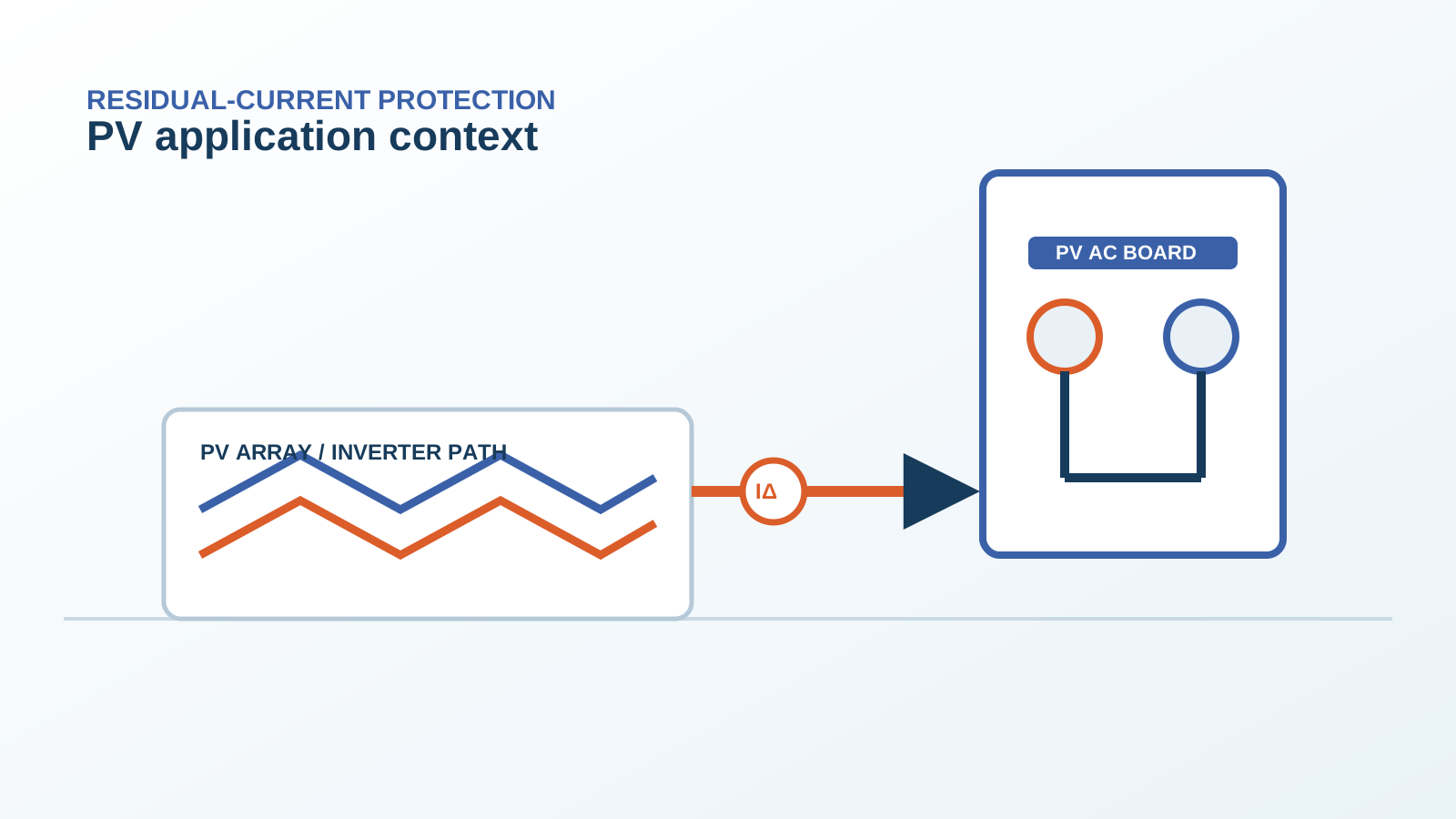
2. The dual-fault risk
The danger of an ungrounded system appears only with a second, opposing fault. Once one conductor has already drifted toward earth, a fault on the other conductor now closes a path through the array and can drive a substantial fault current with no single-point protection having acted.
Detecting and clearing the first fault promptly is therefore the control measure that prevents the dual-fault hazard from ever materialising.
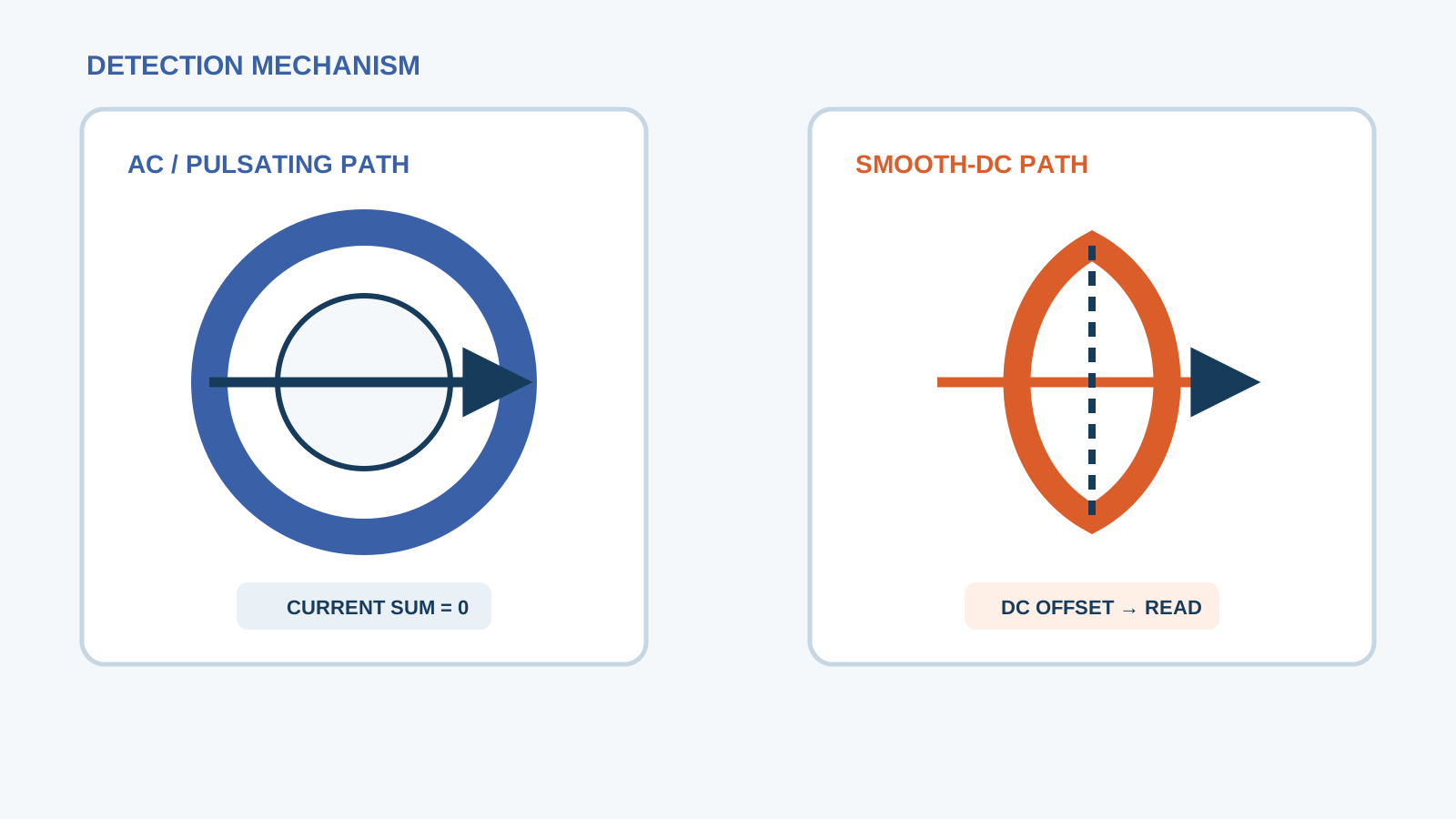
Technical diagram shown at a readable responsive scale.
3. IMD-based detection
An insulation monitoring device is the primary detector for the first fault on an ungrounded array. By measuring the resistance between each conductor and earth it reveals the insulation drop at the moment it begins, and it can indicate which polarity is involved.
The IMD turns an otherwise invisible fault into an actionable alarm that operations can act on during a planned window.
4. Locating the faulted string
Because the first fault carries negligible current, location cannot rely on fault current. The usual method is sectional isolation: strings are disconnected one group at a time and the IMD is re-read until the affected section is found, then individual connectors and modules are inspected.
Monitors that support per-string comparison shorten this search by pointing directly at the degraded branch.
5. Alarm vs trip strategy
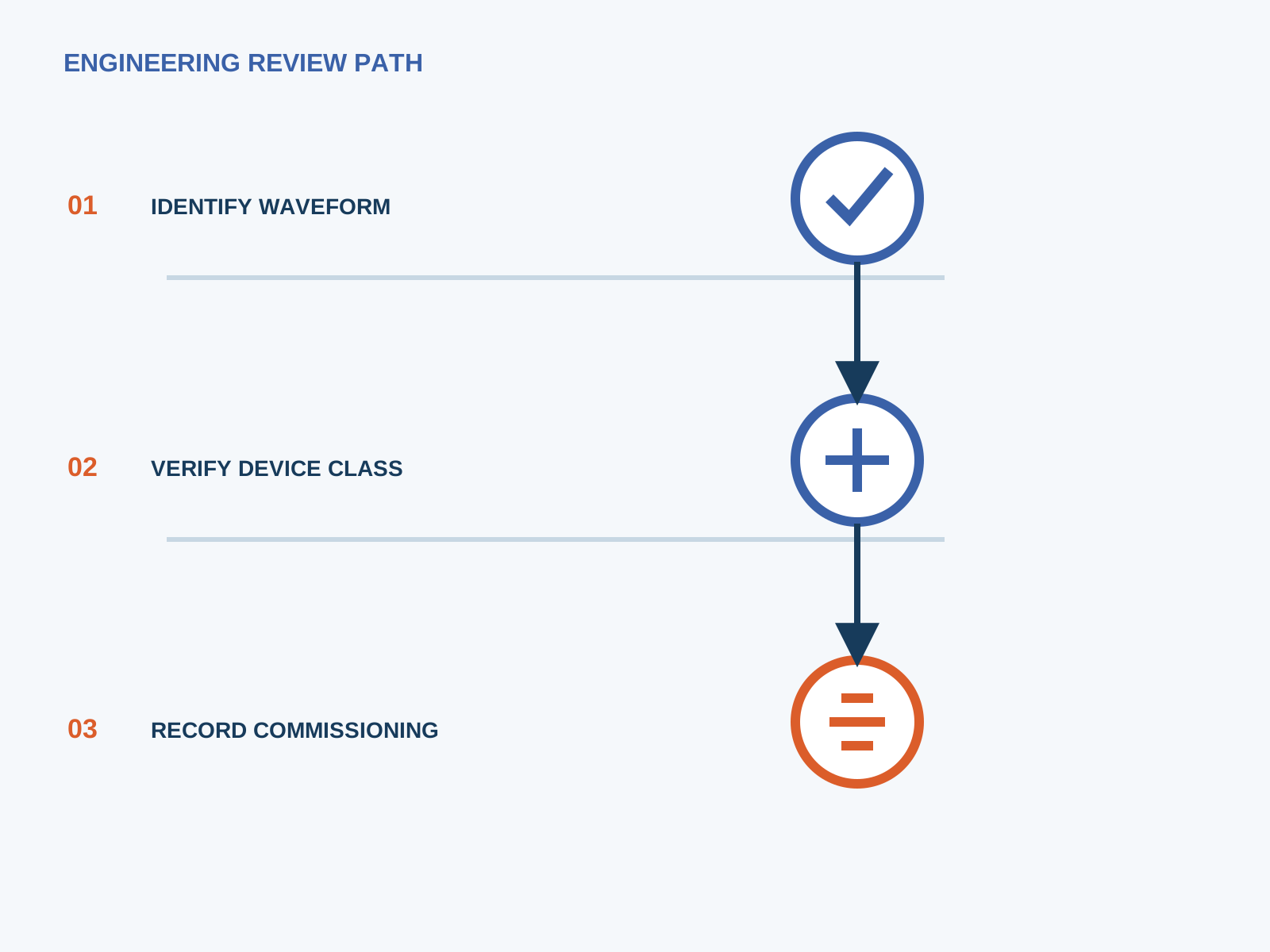
Best practice treats the first fault as an alarm event, not an automatic trip, because the array is still safe to run briefly and continuity is valuable. The response is a controlled isolation of the faulted section during a maintenance window.
A trip is reserved for the rare case where the insulation collapses toward a short or where a second fault is suspected, keeping generation available in the normal case.
6. Inverter contribution
The inverter's own residual-current function watches the AC side and the transition to earth, but it does not see a pure DC-side first fault on an ungrounded array. The IMD remains the DC-side detector, and NEUTRON's DC protection and switchgear provide the isolation and coordination that act on the IMD alarm.
The inverter is supplied separately by the project, so the detection split between inverter and IMD should be defined in the design.
7. Maintenance response
On receiving an IMD alarm, the team schedules sectional isolation, identifies the degraded string, and repairs the connector, junction box or seal that allowed the leakage path. The array is returned to service only after the insulation resistance is restored to the commissioning baseline.
Documenting each event builds the trend that predicts the next one and supports a condition-based maintenance plan.
8. Design to minimise fault exposure
Exposure is reduced by quality connectors and seals, careful routing away from grounded structures, and a monitored design that guarantees the first fault is always reported. Pairing the IMD with NEUTRON DC protection and low-voltage switchgear ensures that when a second fault does occur, coordinated isolation limits the consequence.
The aim is to keep a single fault a manageable alarm, never a hidden hazard that escalates into a dual-fault event.
This is general application guidance. Confirm final ratings, trip settings, standards, inverter instructions and local installation requirements against approved project documentation and a qualified engineer's review.
Frequently asked questions
Can a single ground fault trip an ungrounded array?
No. With neither conductor earthed, the first fault carries essentially no current, so nothing trips. The fault is detected by an IMD as an insulation-resistance drop and handled as an alarm, not an interruption.
How is the faulted string found?
By sectional isolation: groups of strings are disconnected until the IMD reading recovers, then the affected section is inspected connector by connector. Per-string monitoring can shorten the search.
Is IMD enough?
The IMD detects and indicates the first fault, but the scheme also needs coordinated DC isolation and, on the AC side, Type-B-sensitive protection. The IMD is necessary but not sufficient on its own.
What is the dual-fault risk?
If a first fault is left unaddressed, a second fault on the opposite polarity can close a path through the array and drive a real fault current. Prompt detection of the first fault is what prevents this combined hazard.
Bring the protection inputs to the first review.
{ "@context":"https://schema.org", "@type":"Article", "headline":"Ground-Fault Detection in Ungrounded PV Systems with IMD", "author":{ "@type":"Organization", "name":"NEUTRON LLC" }, "publisher":{ "@type":"Organization", "name":"NEUTRON LLC", "logo":{ "@type":"ImageObject", "url":"https://www.neutronele.com/logo.png" } }, "datePublished":"2026-09-03", "dateModified":"2026-09-03", "mainEntityOfPage":"https://www.neutronele.com/insights/ground-fault-detection-ungrounded-pv-system", "image":"https://www.neutronele.com/insights/img/ground-fault-detection-ungrounded-pv-system-hero.jpg" }
Discuss a project requirementContinue learning
Explore related technical guidance in Electrical Protection.
Published from the approved period 10 source package; technical claims and source wording are retained for review.