
1. Scope of IEC 62423 and what it adds
IEC 62423 does not replace the product standards for residual current devices; it layers on top of them. IEC 61008 covers residual current circuit breakers without integral overcurrent protection, and IEC 61009 covers residual current circuit breakers with integral overcurrent protection. IEC 62423 takes those base constructions and adds the extra type tests and performance criteria needed to declare a device as Type F or Type B, including tripping requirements for residual currents that are not a clean 50/60 Hz sinusoid.
The practical consequence is that a Type B device is always also a compliant RCCB or RCBO in the base sense. When you specify Type B, you are asking for the base standard plus the IEC 62423 supplement, and the certification paperwork should show both. A device marked only to IEC 61008 with a hand-written claim of DC capability is not evidence of compliance.
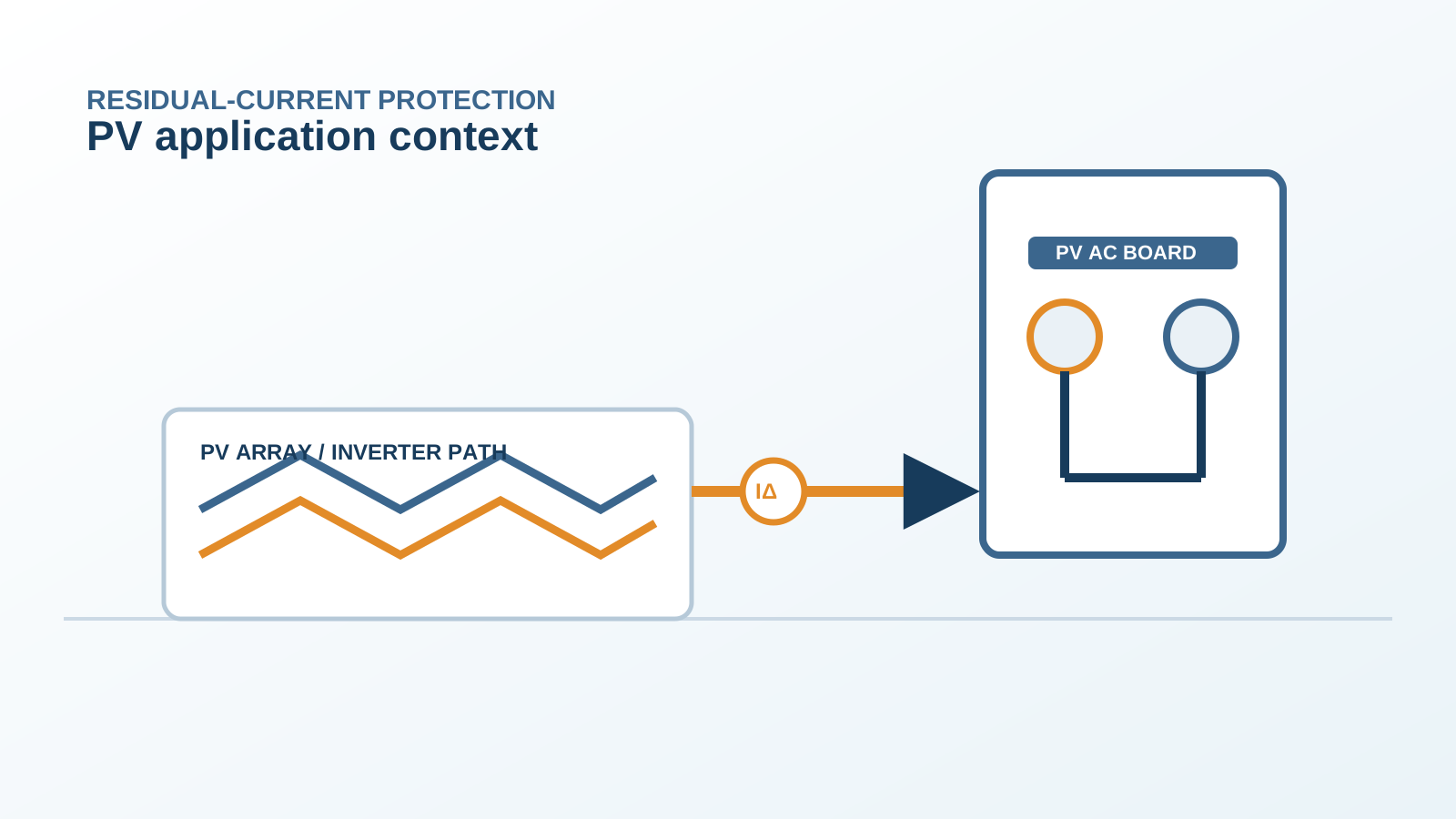
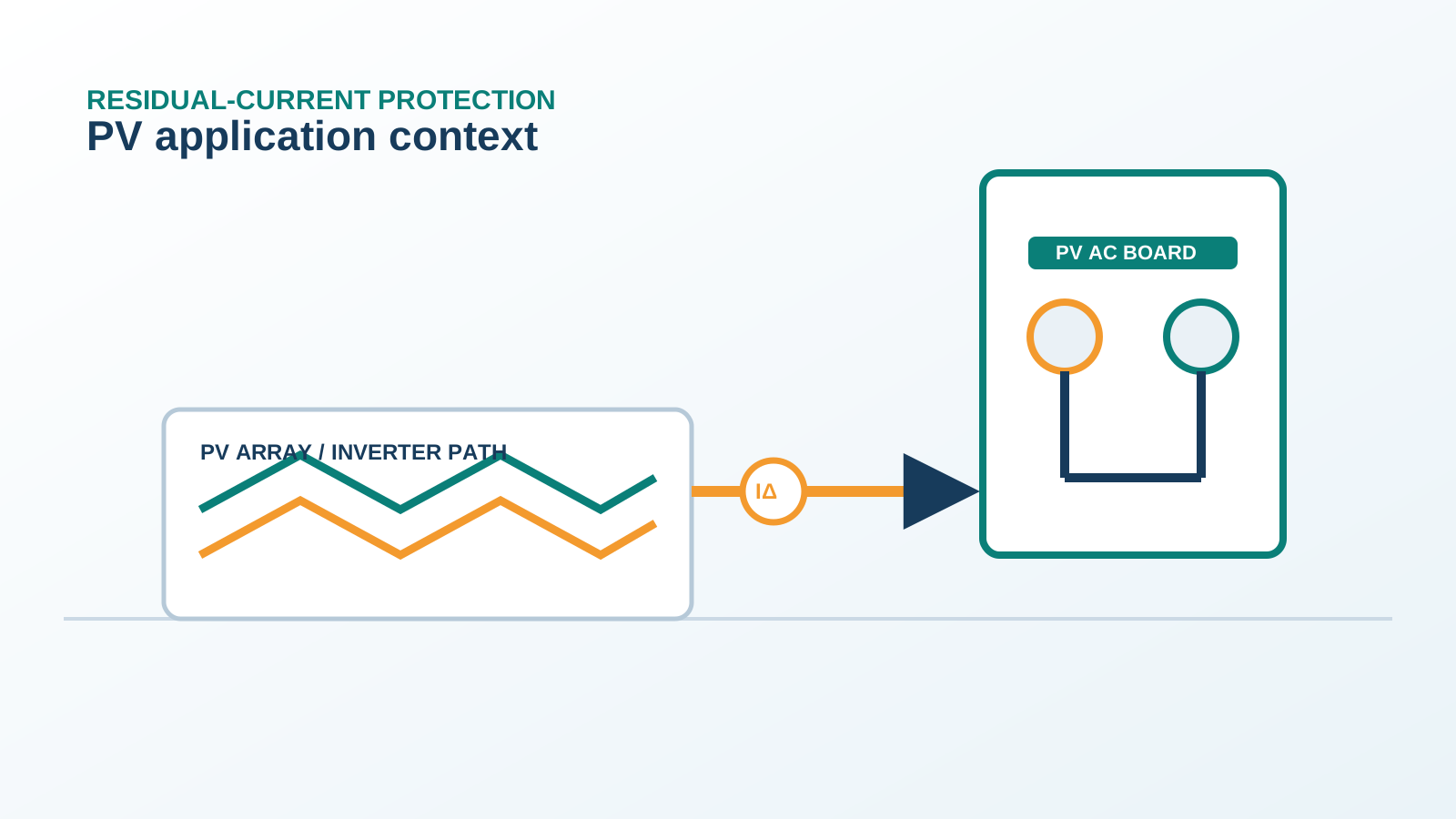
Technical diagram shown at a readable responsive scale.
2. Type A, Type F and Type B in measurable terms
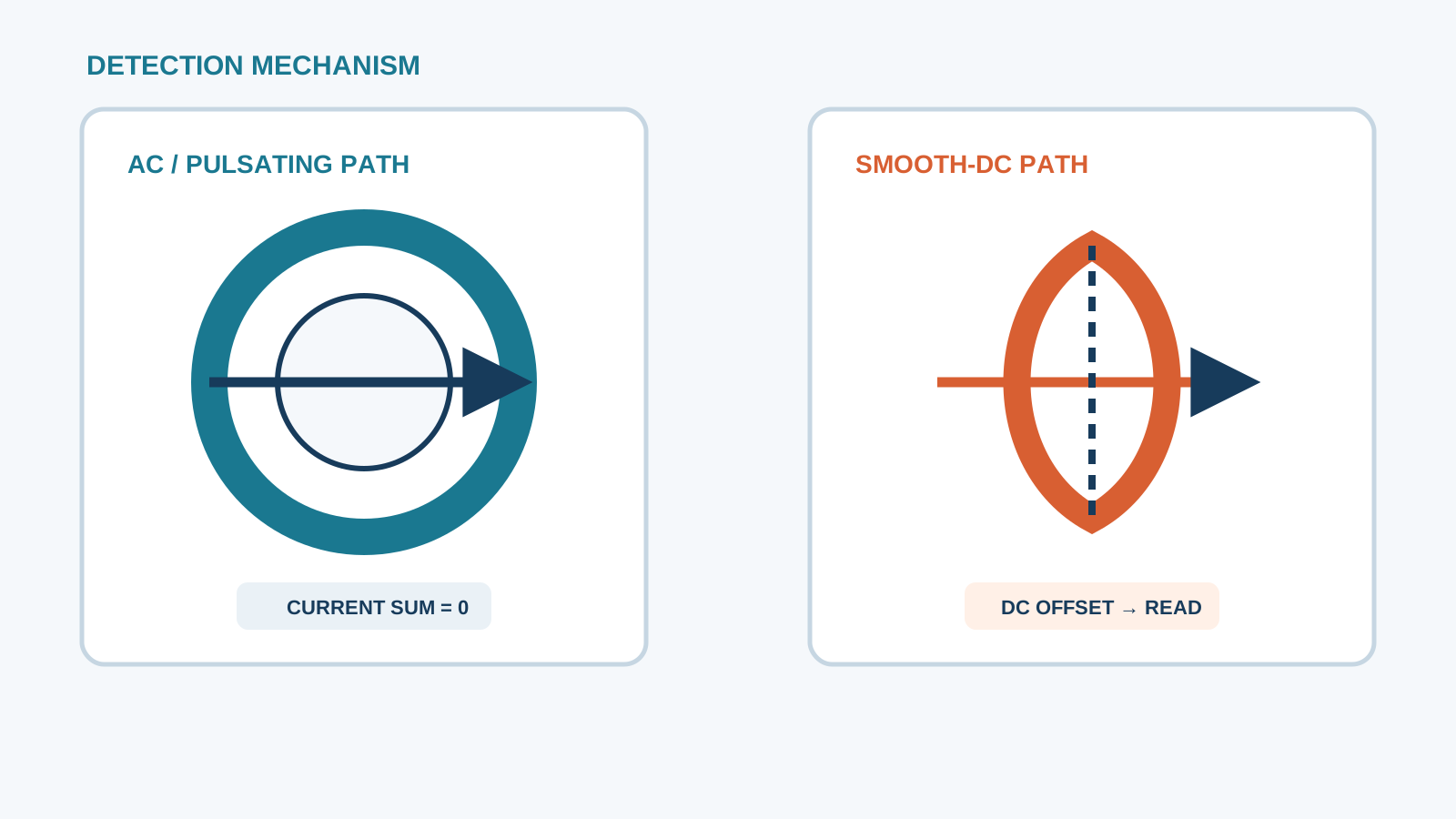
Type AC devices respond only to alternating residual current. Type A extends this to pulsating direct residual current, the waveform produced by a half-wave rectified load, and is verified with a superimposed smooth direct component of up to 6 mA. Type F, introduced for frequency-converter loads, adds tripping requirements for composite residual currents containing mixed frequencies typically up to about 1 kHz, and raises the superimposed smooth direct component tolerance.
Type B is the only class in the family that must trip on a genuinely smooth direct residual current in its own right, with a defined threshold for pure DC residual current in addition to the alternating and pulsating duties. It also carries detection requirements extending into the higher-frequency band. That single distinction — mandatory tripping on smooth DC rather than mere tolerance of a small smooth DC offset — is the whole reason the class exists for PV.
3. What all-current-sensitive really means
The phrase all-current-sensitive is shorthand for a device whose detection envelope covers alternating, pulsating direct and smooth direct residual current across the specified frequency range. It is a functional description of the Type B duty rather than a separate certification class, and in catalogue language the two terms are used interchangeably.
The distinction worth holding onto is that all-current-sensitive describes the sensing capability, not the trip level. A Type B device rated 30 mA still has a 30 mA alternating trip band; the smooth DC duty is a separate, lower figure. Reading a datasheet as if one number governed every waveform is the most common technical error in PV protection specification.
4. Why a PV circuit needs Type B or all-current-sensitive protection
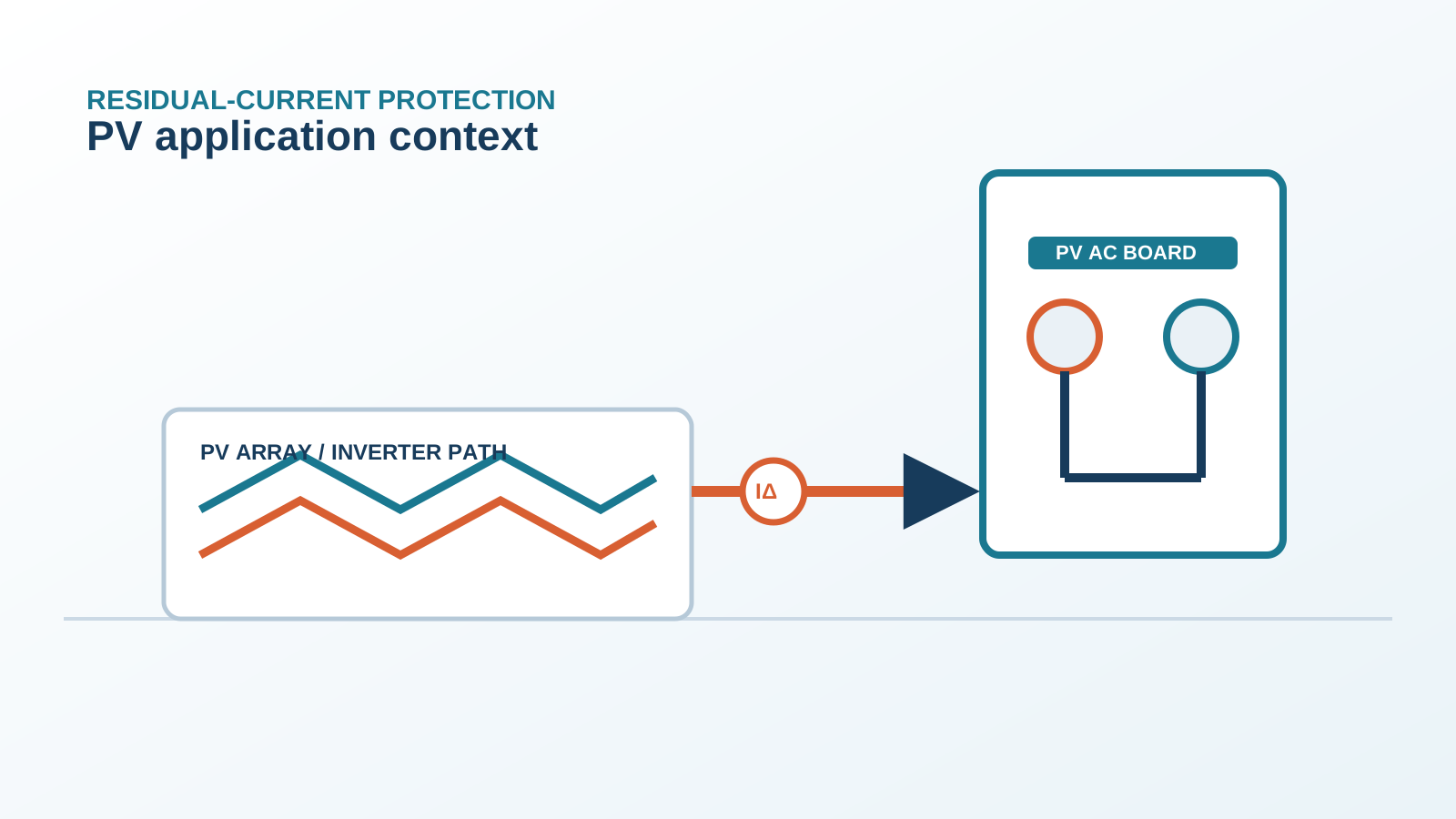
A transformerless grid-tied inverter has no galvanic barrier between the array and the AC network. The switching bridge couples the DC array potential to the AC side through the array parasitic capacitance, and the residual current that flows to earth therefore contains a smooth direct component alongside the alternating and higher-frequency content. A Type A device presented with that smooth component does not trip on it; instead the component biases the magnetic core of the sensing transformer and degrades sensitivity to the alternating current the device is supposed to catch.
The failure mode is silent. The device still looks healthy, the test button still works because it injects an alternating test current, and nothing indicates that the protective function has been eroded. Type B protection, or an equivalent all-current-sensitive arrangement, is what closes that gap on the AC side of an inverter that is not transformer-isolated.
5. Reading the label before you install
A compliant Type B device carries the type symbol on the front face, not only in the catalogue. Alongside it you should be able to read the rated residual operating current, the rated current and breaking capacity, the standards list including IEC 62423, and the frequency range over which the residual detection is declared. If the front face shows only the pulsating-DC waveform symbol, the device is Type A regardless of what the packaging says.
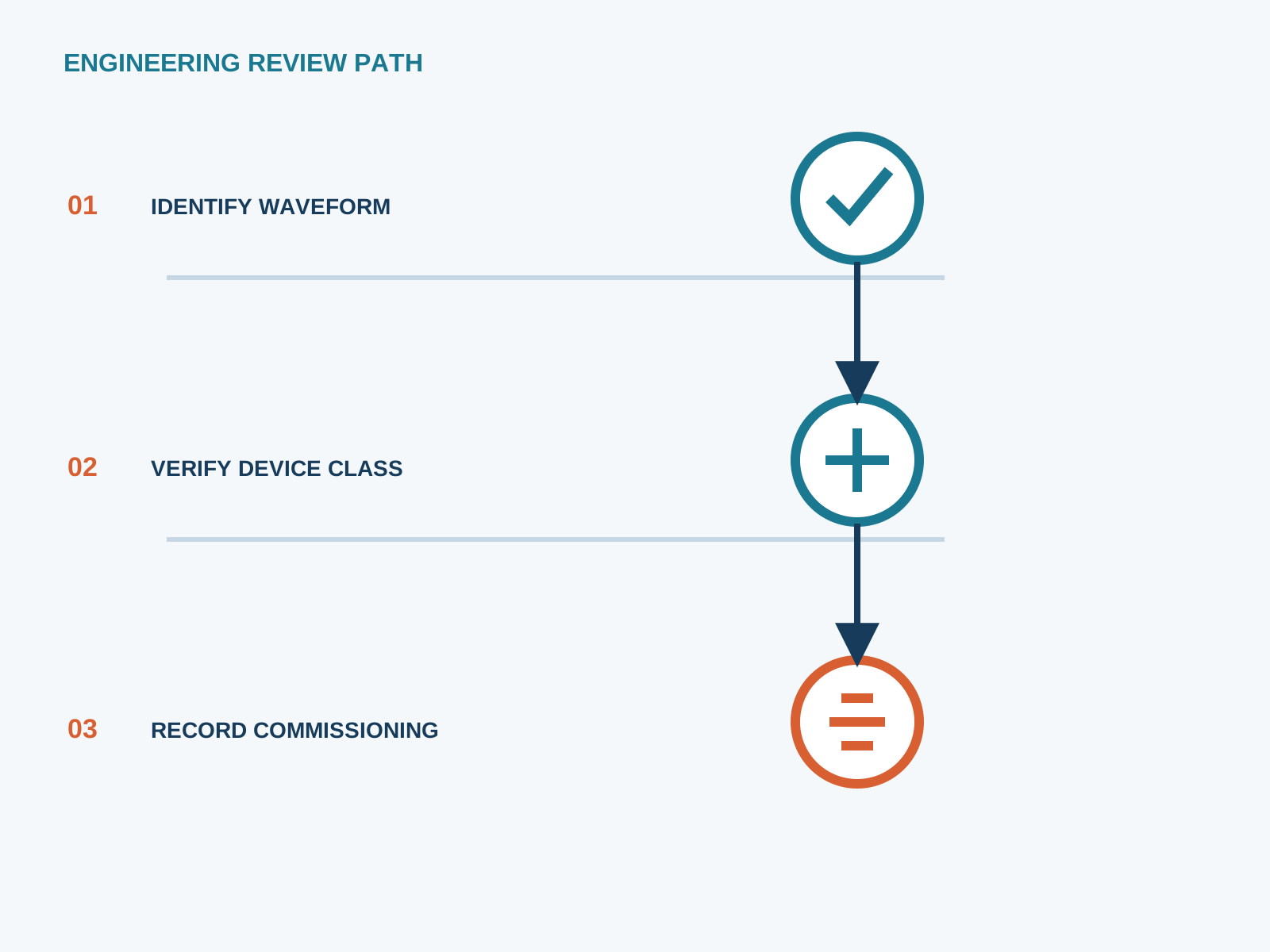
On a commissioning walk-down, photograph the label of every residual current device on the inverter AC board and file it with the handover pack. This costs minutes and settles any later dispute about whether the delivered class matched the design.
6. Testing to the standard versus testing on site
Type testing under IEC 62423 is a laboratory activity: the manufacturer demonstrates tripping across the declared waveform and frequency set on sample devices under controlled conditions. Nothing in a site test replicates that. What a field test can do is confirm that the installed device operates, that the trip time at rated residual current is inside the declared band, and that the residual current already present in the circuit is well below the trip threshold.
A useful commissioning sequence is: measure standing residual current with the inverter idle, repeat with the inverter exporting at high output, then perform an instrument-injected trip test. If the standing value is a large fraction of the trip level before any fault exists, the design margin is too thin and the cause should be investigated rather than absorbed.
7. Writing the requirement into a specification
Vague wording produces the wrong hardware. A specification line that works reads roughly: residual current device shall be Type B to IEC 62423 in addition to IEC 61008 or IEC 61009 as applicable, rated residual operating current 30 mA, declared residual detection frequency range stated on the device, type symbol marked on the front face, and certification for both standards supplied with the delivery.
Adding the phrase all-current-sensitive as a parenthetical helps bidders whose catalogue uses that language, but the standard reference is what makes the requirement enforceable at inspection. NEUTRON supplies the DC protection and low-voltage switchgear side of PV projects and can align a protection board build against exactly this kind of specification wording, with the inverter and battery equipment provided by others.
8. Common misreadings of the standard
Assuming Type A is acceptable because it tolerates a small smooth direct component; tolerance is not detection, and the tolerance figure is not a trip level.
Treating Type F as a lighter Type B; Type F targets mixed-frequency content from converters and does not carry the smooth DC tripping duty.
Reading the 30 mA alternating rating as if it also governed smooth direct residual current, which has its own much lower figure.
Accepting an inverter internal monitoring function as automatic proof that the board-level device can be downgraded, without checking what part of the installation each one actually watches.
Specifying Type B only for the inverter feeder while leaving downstream sub-circuits on AC-only devices that share the same earthing system.
Each of these appears regularly in tender documents. Checking the four points above against the delivered label is a five-minute task that prevents an entire board from being rebuilt after inspection.
This is general application guidance. Confirm final ratings, trip settings, standards, inverter instructions and local installation requirements against approved project documentation and a qualified engineer's review.
Frequently asked questions
What does IEC 62423 cover?
IEC 62423 specifies the additional requirements for Type F and Type B residual current devices, layered on top of the base RCCB and RCBO standards IEC 61008 and IEC 61009. It defines the waveform and frequency duties a device must satisfy to be declared Type F or Type B, including tripping on smooth direct residual current for Type B.
Which RCD type should be used on a PV inverter circuit?
For a transformerless grid-tied inverter the AC-side device should be Type B, or an all-current-sensitive equivalent, unless the installation documentation demonstrates that smooth direct residual current cannot reach the device. Type B is the only class in IEC 62423 with a mandatory tripping duty for smooth DC residual current.
Is a Type F device sufficient for PV?
Generally no. Type F adds mixed-frequency detection aimed at frequency-converter loads and raises the tolerated smooth direct offset, but it does not carry a tripping requirement for smooth direct residual current. Type F suits PV-fed pump drives on the load side; it does not substitute for Type B on a transformerless inverter feeder.
How do I read an RCD label to confirm the type?
The type symbol is marked on the front face of a compliant device. Look for the Type B symbol together with the standards list including IEC 62423, the rated residual operating current, the rated current and breaking capacity, and the declared residual detection frequency range. A front face showing only the pulsating-DC waveform indicates Type A.
Bring the protection inputs to the first review.
Adding the phrase all-current-sensitive as a parenthetical helps bidders whose catalogue uses that language, but the standard reference is what makes the requirement enforceable at inspection. NEUTRON supplies the DC protection and low-voltage switchgear side of PV projects and can align a protection board build against exactly this kind of specification wording, with the inverter and battery equipment provided by others.
Discuss a project requirementContinue learning
Explore related technical guidance in Electrical Protection.
Published from the approved period 10 source package; technical claims and source wording are retained for review.